
Water Damage Restoration in Alexandria, VA
Water damage restoration in Alexandria, VA is shaped by the Potomac more than by any pipe. Alexandria is a low-lying waterfront city, and the water that damages homes here is often not clean supply water from inside the house — it is tidal flooding, storm surge, and flash runoff that comes up through the streets of Old Town and pushes into basements and ground floors. That distinction matters enormously, because floodwater is contaminated Category 3 water that has to be handled with disinfection and selective removal, not treated like a burst pipe. Restoration Doctor responds across the City of Alexandria 24/7 and classifies every loss by its real source and category from the moment we arrive.
Alexandria's building stock compounds the challenge. Old Town is a National Register district of 18th- and 19th-century colonial-era buildings whose brick foundations and cellars were built long before modern drainage, damp-proofing, or sump systems existed — they were never meant to stay dry, and they take on water in ways a 1990s house never would. Del Ray, Rosemont, and Beverley Hills add 1920s bungalows with the same never-dry cellars, while Potomac Yard and Cameron Station bring newer infill with its own modern-construction failure patterns. One Alexandria loss is a historic masonry cellar, the next is a new townhouse — and we scope each for what it actually is.
Whether the water is tidal flooding lapping into an Old Town ground floor, storm runoff in a Del Ray bungalow basement, or a clean supply-line break in a Cameron Station townhome, the sequence adapts to the source: identify the category, extract and disinfect appropriately, dry to a verified standard, and — in Alexandria's historic stock — respect the lead and asbestos protocols older buildings demand. Here is how water actually behaves in a low-lying waterfront city like Alexandria.
| Metric | Value | Notes |
|---|---|---|
| Median on-site arrival time | 47 minutes | Measured median arrival across dispatched emergency projects — the middle value, not an average. Distinct from the 60-minute response SLA below. |
| Restoration projects completed to date | 10,000+ | Aggregate count of completed restoration projects to date across the VA / MD / D.C. tri-state service area. |
| Customers who file through insurance | 83% | Share of CUSTOMERS who use insurance. Restoration Doctor works for the homeowner — you pay us directly, and we build a carrier-ready claim file documented to IICRC S500 with a line-item Xactimate estimate, which you submit to your insurer when you seek reimbursement. |
| Average structural dry-out time | 4.5 days | Average time to bring a structure to documented dry standards; monitored daily with moisture readings. Individual projects vary by saturation class. |
| Emergency response SLA (NoVA core) | 60 minutes | The PROMISED response commitment across the NoVA core — a broader guarantee than the measured 47-minute median arrival. |
| Google rating (live) | 4.9★ | 4.9★ is the verified average. The review count changes nightly and is served live at /api/reviews-summary — never hardcoded. |
How water damage behaves in Alexandria
Tidal and storm-surge flooding: why Category 3 is the Alexandria default
Alexandria's waterfront location means flooding here is frequently river water, not rainwater — and river and tidal water is Category 3, the most contaminated classification, carrying silt, sewage cross-contamination, and biological hazards. Old Town's recurring street and tidal flooding is well documented, and when that water enters a home it cannot be dried in place and called done. The affected porous materials — carpet, pad, saturated drywall, insulation — have to come out, hard surfaces have to be cleaned and disinfected, and the structure has to be dried and verified before anything is rebuilt.
This is exactly why we lead with source and category identification on every Alexandria dispatch. Treating a contaminated flood like a clean spill is how homeowners end up with mold and lingering contamination behind a nicely painted wall. Our storm damage restoration and Category 3 sewage and biohazard cleanup capabilities exist for precisely this: an Alexandria loss that starts as floodwater gets the disinfection and removal protocol it actually requires.
Historic foundations that predate modern drainage
The masonry cellars under Old Town's colonial-era buildings were built without any of the drainage technology a modern basement relies on — no perimeter drain, no vapor barrier, no sump. During heavy rain, groundwater migrates straight through old brick and stone, and during tidal events the river backs into them from below. These spaces stay damp long enough to support persistent mold, which is why so much of our Old Town work is as much moisture-management and remediation as it is emergency extraction.
Drying a historic Alexandria foundation is a patient, monitored process. We use desiccant dehumidification suited to masonry, track moisture in the structure over days rather than assuming a single pass will do it, and coordinate with preservation-minded approaches so we are not destroying original fabric to chase a reading. It is a fundamentally different project than drying a new poured-concrete basement, and it rewards a company that understands the difference.
Del Ray and Rosemont bungalow basements
The 1920s bungalows of Del Ray and Rosemont come with basements that were never engineered to stay dry, and a century of settling, aging plumbing, and modest grading means they take on water readily. A failed supply line, a water-heater burst, or storm runoff finds a finished basement full of drywall, carpet, and stored belongings and soaks in fast. Because these below-grade spaces are cool and poorly ventilated, in-place moisture lingers and mold follows unless drying is aggressive and verified.
We handle these as the Category 1 or 2 losses they usually are — extract, dry the lower wall assembly and floor in place where the water is clean, and remove selectively where it is not — while watching for the historic-material and older-plumbing wrinkles these homes carry. When a bungalow's old cast-iron drain backs up, the same project crosses into sewage cleanup, and we treat it accordingly.
Lead paint and asbestos in historic demolition
Any Alexandria home built before 1978 may carry lead paint, and the city's oldest stock is full of asbestos-era plaster, floor tile, mastic, and pipe insulation. When a flood or leak requires removing those materials, testing and controlled handling are not optional — disturbing them without protection is a genuine health hazard in a densely occupied historic neighborhood.
Our crews approach Old Town and Del Ray demolition as a lead- and asbestos-aware operation, identifying and testing suspect materials before disturbance and containing removal properly. Combined with our respect for irreplaceable historic finishes, that means the restoration protects both the people in the home and the character of the building itself.
Alexandria homes and how they fail
Old Town Alexandria is the defining building stock — one of the largest concentrations of intact 18th- and 19th-century architecture in the country, much of it on the National Register. These are brick and frame buildings with masonry foundations and cellars dug generations before waterproofing, perimeter drains, or sump pumps were standard. They flood from below in heavy rain and from the river during tidal and surge events, and their historic materials — old plaster, heart-pine floors, lime mortar — hold water and are painstaking to restore in kind. Nearby Old Town North, Parker-Gray, and the streets toward the waterfront share this pre-modern, water-exposed character.
Away from the river, Del Ray, Rosemont, North Ridge, and Beverley Hills are dominated by 1920s–40s bungalows and Cape Cods, most with the kind of shallow, unfinished-then-finished basements that were, in the builder's mind, never meant to stay perfectly dry. Aging plumbing and modest below-grade drainage make them recurring water-loss addresses. Then there is the modern Alexandria — Potomac Yard, Cameron Station, and Seminary Hill infill — newer single-family homes, townhomes, and condos where the failures look like the rest of the region: appliance lines, second-floor bathrooms, and water heaters rather than tidal river water.
Alexandria neighborhoods we serve
Real City of Alexandria communities — and the water losses we most often see in each.
18th-19th-century National Register buildings with masonry cellars that flood from tidal surge and groundwater — Category 3 exposure.
Historic frame and brick homes near the waterfront with pre-modern foundations and heart-pine floors.
1920s bungalows with never-meant-to-stay-dry basements where storm runoff and aging plumbing recur.
Interwar bungalows and Cape Cods with shallow basements and dated below-grade drainage.
Established homes on higher ground where supply-line and second-floor bathroom leaks drive most losses.
Newer infill townhomes and condos with modern-construction appliance-line and shared-wall failures.
Documented Alexandria projects
Real CompanyCam-documented restoration work in this city — every project photographed with date and time stamps.
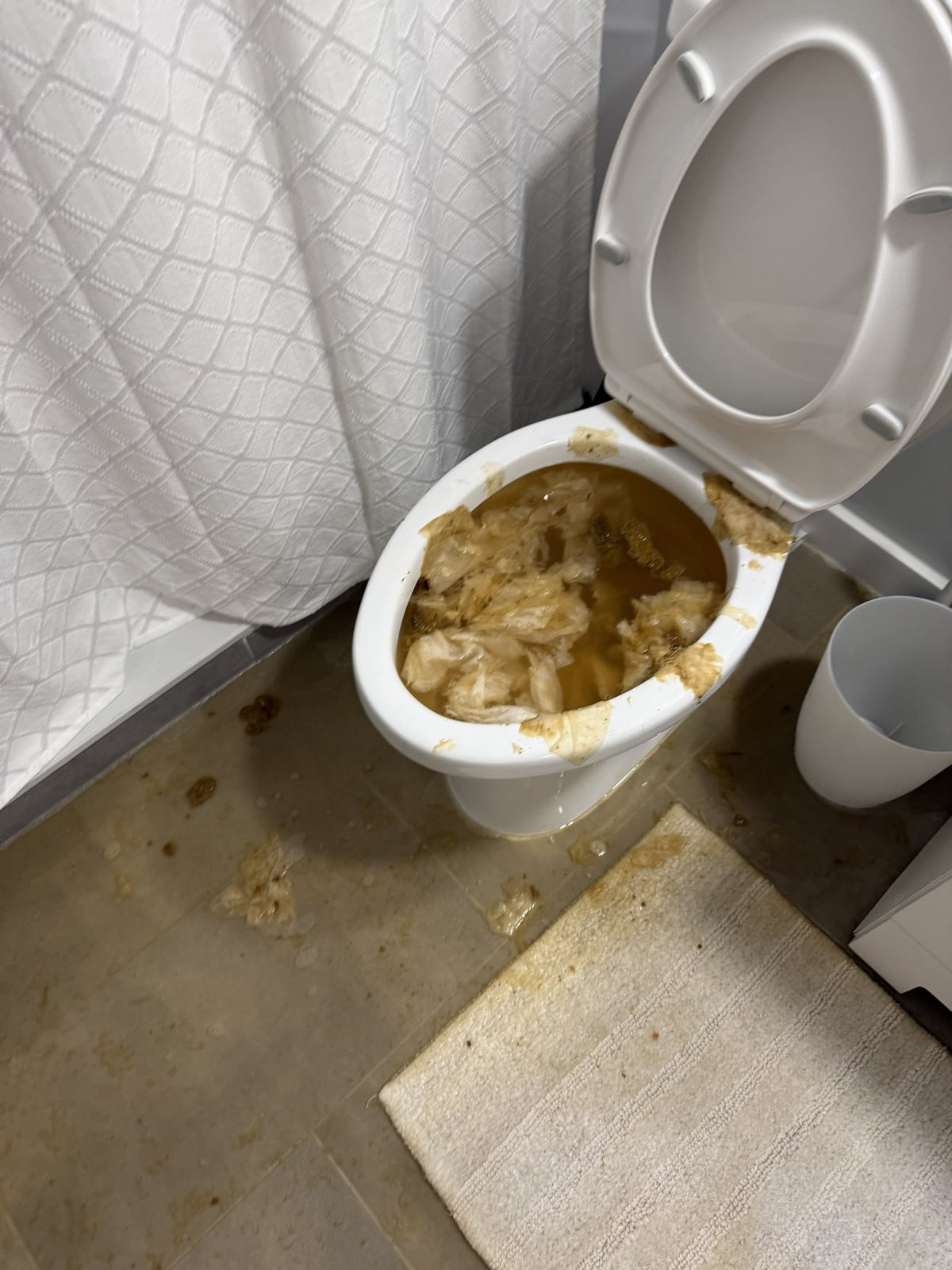
Category 3 sewage backup cleanup — Alexandria
A documented Alexandria Category 3 backup extracted, with saturated porous materials removed and hard surfaces cleaned and disinfected before drying.
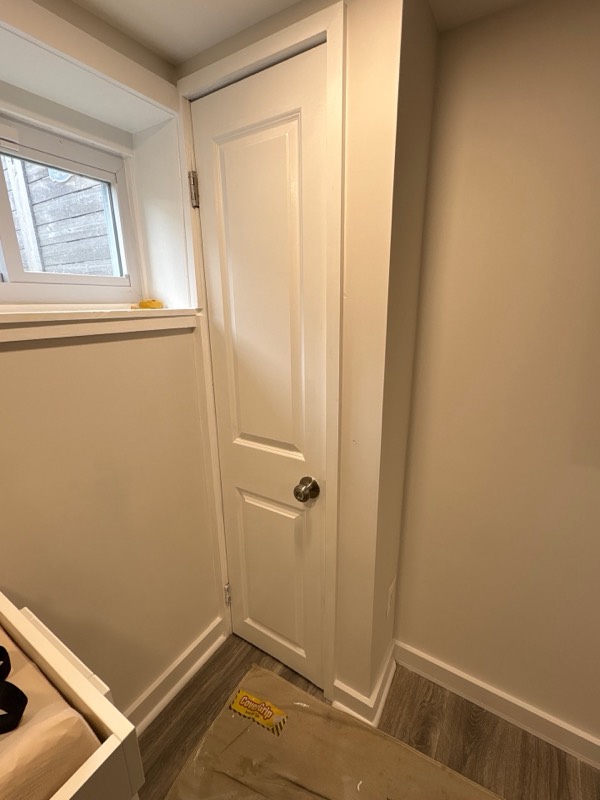
Emergency flood response & structural drying — Alexandria
Emergency flood response on an Alexandria loss, with rapid extraction followed by monitored structural drying to verified dry standards.
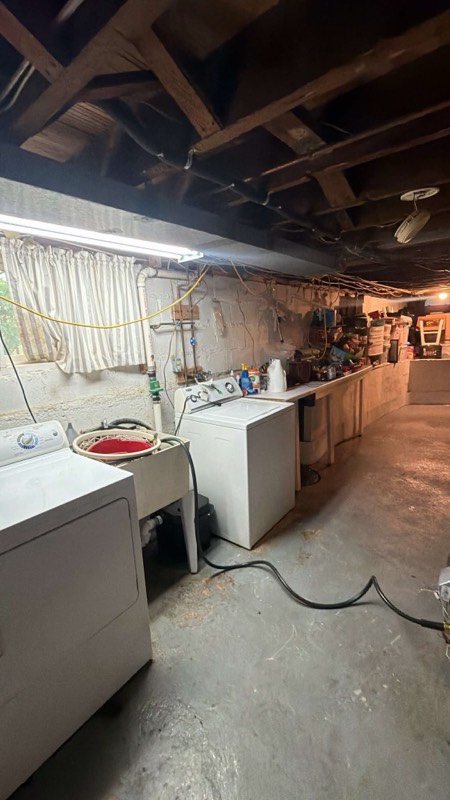
Moisture mapping & structural drying — Alexandria
Moisture mapping used to trace hidden water through an Alexandria structure so drying equipment is placed exactly where the water went.
Recent Alexandria water damage projects — on video
Real jobsite footage from documented restoration projects in this city — filmed by our crews, not stock.
Hidden Water Under the Floors in Alexandria
ALEXANDRIA, VA · WHOLE-HOME WATER DAMAGE · DOCUMENTED ON SITE
Sewage Backup to Finished-Basement Restoration in Alexandria
ALEXANDRIA, VA · CATEGORY-3 WATER DAMAGE (SEWAGE/TOILET OVERFLOW) · DOCUMENTED ON SITE
Basement Flood & Hardwood Water Damage in Alexandria VA — Dried, Cleaned, Restored
ALEXANDRIA, VA · BASEMENT FLOOD AND HARDWOOD WATER DAMAGE · DOCUMENTED ON SITE
Large-Loss Water Damage in Alexandria VA — Dried to Framing, Ready to Rebuild
ALEXANDRIA, VA · LARGE-LOSS INTERIOR WATER DAMAGE - MULTI-ROOM INTRUSION WITH HIDDEN-MOISTURE MIGRATION · DOCUMENTED ON SITE
Full restoration services in Alexandria
One operation covers every category — from emergency mitigation to full reconstruction.
Water Damage Restoration
Extraction, structural drying, and moisture verification for burst pipes, appliance leaks, and basement flooding.
Fire & Smoke Damage Restoration
Soot and smoke residue removal, odor neutralization, contents pack-out, and reconstruction after a fire.
Storm Damage Restoration
Emergency tarping, water extraction, and reconstruction after wind, hail, and heavy-rain storm events.
Mold Remediation
IICRC S520 containment, HEPA filtration, safe removal, and post-remediation clearance verification.
Sewage & Biohazard Cleanup
Category 3 black-water decontamination with full PPE, safe removal, antimicrobial treatment, and verification.
Odor Removal & Deodorization
Source-based smoke, sewage, mold, pet, and musty-odor removal using thermal fogging, hydroxyl and ozone treatment, and HVAC deodorization.
Reconstruction & Repairs
Drywall, flooring, cabinetry, trim, and paint — the same in-house crew that dried the loss rebuilds it, with no handoff between mitigation and reconstruction.
What Alexandria homeowners look for
In Alexandria — and especially in Old Town — homeowners are protective of historic properties and wary of contractors who treat a colonial-era house like any other project. The reviews that matter here describe judgment: whether a crew classified a river flood correctly, whether they dried a masonry cellar without gutting original fabric, and whether they handled a lead- or asbestos-era demo the right way. Those are the experiences an Old Town homeowner actually wants to read about.
We do not post star ratings or review counts on this page. Curious what Alexandria-area customers actually say? Our verified feedback and the real Google aggregate live on RestorationDoctorsReviews.com — read them there, then come back to arrange service for your Alexandria home. Housing the ratings on a separate, source-linked hub is intentional: those are the genuine Google numbers, not figures we inflated onto a marketing page.
Frequently asked
Active water, mold, fire, or sewage event?
Connect directly with the Restoration Doctor team for your region. Crews are on standby 24/7 with documented response protocols.