Water Damage Restoration in Tysons, VA
Water damage restoration in Tysons, VA is, more than anywhere else we serve, a vertical and commercial problem. Since the Silver Line arrived in 2013, Tysons has grown into a downtown of high-rise luxury condos, apartment towers, and office buildings — The Boro, Scotts Run, the Capital One district, Tysons Central — where a single plumbing failure does not stay on one floor. Water on the fourteenth floor becomes water on the tenth, the sixth, and the parking garage, migrating down through the structure and across many units and tenants before anyone reaches a shutoff. Restoration Doctor responds across Tysons 24/7 and is built for the multi-floor, multi-party losses this skyline produces.
Tysons is overwhelmingly a stacked-density environment, and that shapes every loss. Post-2013 residential towers stack dozens of homes with plumbing running directly over the ceilings below; office and mixed-use buildings add commercial tenants, retail, and restaurants with their own supply and drain systems; and beneath all of it sit large below-grade parking and mechanical levels that collect whatever water works its way down. At the edges, older single-family Pimmit Hills — 1950s ramblers with dated plumbing — offers a completely different, ground-level kind of loss. We scope a Tysons project by which of those worlds it is in.
Whether the call is a burst supply line cascading through a Boro high-rise, a failed fire-suppression or HVAC line flooding an office floor, or standing water in a below-grade garage, the sequence adapts: isolate the source, run fast multi-floor extraction, dry the structure and cavities to a verified standard, and document the loss floor-by-floor and tenant-by-tenant for the separate claims involved. Here is how water actually behaves in a vertical, high-rise district like Tysons.
| Metric | Value | Notes |
|---|---|---|
| Median on-site arrival time | 47 minutes | Measured median arrival across dispatched emergency projects — the middle value, not an average. Distinct from the 60-minute response SLA below. |
| Restoration projects completed to date | 10,000+ | Aggregate count of completed restoration projects to date across the VA / MD / D.C. tri-state service area. |
| Customers who file through insurance | 83% | Share of CUSTOMERS who use insurance. Restoration Doctor works for the homeowner — you pay us directly, and we build a carrier-ready claim file documented to IICRC S500 with a line-item Xactimate estimate, which you submit to your insurer when you seek reimbursement. |
| Average structural dry-out time | 4.5 days | Average time to bring a structure to documented dry standards; monitored daily with moisture readings. Individual projects vary by saturation class. |
| Emergency response SLA (NoVA core) | 60 minutes | The PROMISED response commitment across the NoVA core — a broader guarantee than the measured 47-minute median arrival. |
| Google rating (live) | 4.9★ | 4.9★ is the verified average. The review count changes nightly and is served live at /api/reviews-summary — never hardcoded. |
How water damage behaves in Tysons
Stacked units and vertical migration in high-rises
In a Tysons tower, water obeys gravity and finds the fastest way down. A failure on an upper floor sends water through the floor assembly into the unit directly below, then continues — floor to floor — soaking ceilings, wall cavities, and the mechanical chases that run vertically through the building, until it finally pools in the lowest occupied level or the garage. By the time a resident on the top floor calls it in, three or four homes beneath them may already be affected. Getting ahead of that loss requires extracting on several floors at once, not working one unit and hoping.
We run those multi-floor losses as a single coordinated operation: rapid extraction on every affected level, a properly sized drying system for the full vertical footprint, and moisture mapping to catch water that has traveled inside the assembly. We document the damage floor-by-floor and unit-by-unit for the multiple insurance claims a stacked loss generates, and we coordinate access with building management throughout.
Below-grade parking and mechanical levels
Nearly every Tysons building sits over large below-grade parking and mechanical levels, and those levels are where water ends up. A break several floors up, a failed fire-suppression line, or storm runoff off the district's hardscape collects at the bottom of the structure, threatening electrical rooms, elevator pits, pumps, and the building systems that keep the tower running. Water down here is not just a cleanup — it is a life-safety and continuity issue for the whole building.
We extract standing water from below-grade levels fast with truck-mounted capacity, protect and dry around critical mechanical and electrical systems, and coordinate with building engineers on what has to be de-energized or protected. Because water that has run down through a structure or off a parking deck is contaminated, we classify and treat it as the Category 2 or 3 event it is, not a clean spill.
Commercial and mixed-use losses
Tysons' commercial and mixed-use density means many of our losses here involve businesses, not just residents — offices, retail, restaurants, and the mall. A commercial water loss carries costs a home does not: tenant downtime, damaged inventory and equipment, and the pressure to reopen fast. Restaurant grease-line and drain backups add a Category 3 sewage and biohazard dimension that has to be handled to health-code standards, not just mopped.
Our commercial response is built around keeping a business operating: we extract and set drying equipment to contain the affected area while adjacent spaces stay usable where possible, work around business hours, and document the loss to the standard a commercial policy and a landlord-tenant split require. Fast, well-documented commercial drying is what keeps a Tysons water loss from turning into weeks of closure.
Pimmit Hills: Tysons' ground-level exception
At the residential edge of Tysons, Pimmit Hills is a different world — 1950s single-family ramblers on slab and basement foundations with the aging galvanized supply lines and cast-iron drains typical of post-war construction. Losses here look like the rest of suburban Northern Virginia: a supply-line break, a water-heater failure, or a basement seep, at ground level, in a single home.
We handle these the way the material calls for — extract, dry the affected assemblies in place where the water is clean, remove selectively where it is not — and we repair the failed plumbing that caused the loss with licensed in-house plumbing. It is a useful reminder that a Tysons address can mean a forty-story tower or a seventy-year-old rambler, and the two demand different playbooks.
Tysons homes and how they fail
The Tysons that has emerged since the Silver Line is a high-rise district. The Boro, Scotts Run, Tysons Central, and the towers around Capital One are dense stacks of luxury condos and apartments, most post-2013, with the plumbing serving each unit running above the ceilings of the homes below. That geometry is the central fact of residential water loss here: a dishwasher line, a water heater, an angle-stop, or an overflowed tub on an upper floor is not a single-unit event, it is a vertical loss that drops through multiple homes and into corridors and shared chases in minutes.
Interwoven with the towers is Tysons' enormous commercial and mixed-use footprint — office buildings, retail, restaurants, and Tysons Corner Center, the largest mall in the region — plus the large below-grade parking and mechanical levels that sit under nearly everything. Commercial losses here mean tenant downtime, sensitive equipment, and the need to keep a business operating, not just a wet living room. And at the district's residential edge, Pimmit Hills remains a neighborhood of 1950s single-family ramblers with aging galvanized plumbing that fail the old-fashioned, ground-level way — a reminder that Tysons is not only towers.
Tysons neighborhoods we serve
Real Fairfax County communities — and the water losses we most often see in each.
Post-2013 high-rise condos and apartments where an upper-floor failure migrates vertically through multiple homes.
Dense mixed-use towers near the Silver Line with stacked-unit supply-line and appliance failures.
Office and residential high-rises where commercial and residential losses meet large below-grade levels.
Office and mixed-use towers with commercial water losses that demand fast, continuity-minded response.
Established properties near the Old Courthouse Spring Branch drainage with storm and stream exposure.
1950s single-family ramblers at the district's edge with aging galvanized plumbing — ground-level supply-line losses.
Documented Tysons projects
Real CompanyCam-documented restoration work in this city — every project photographed with date and time stamps.
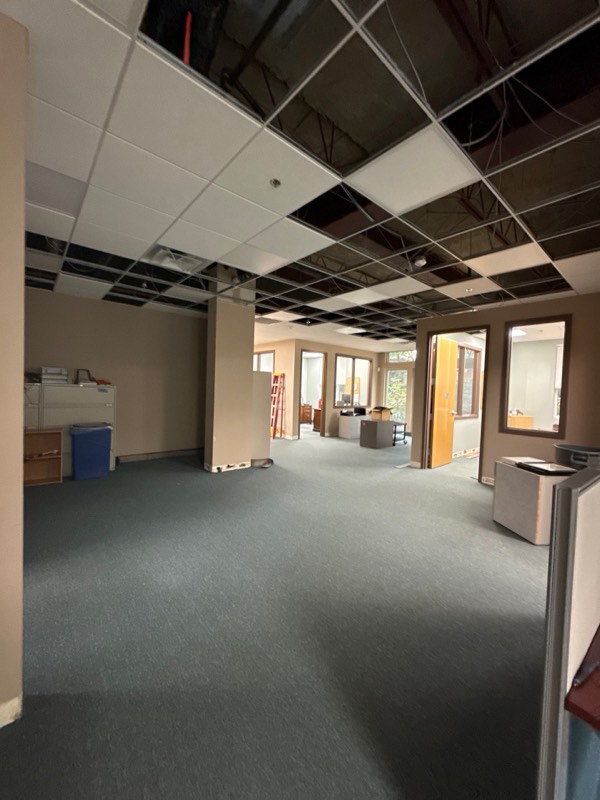
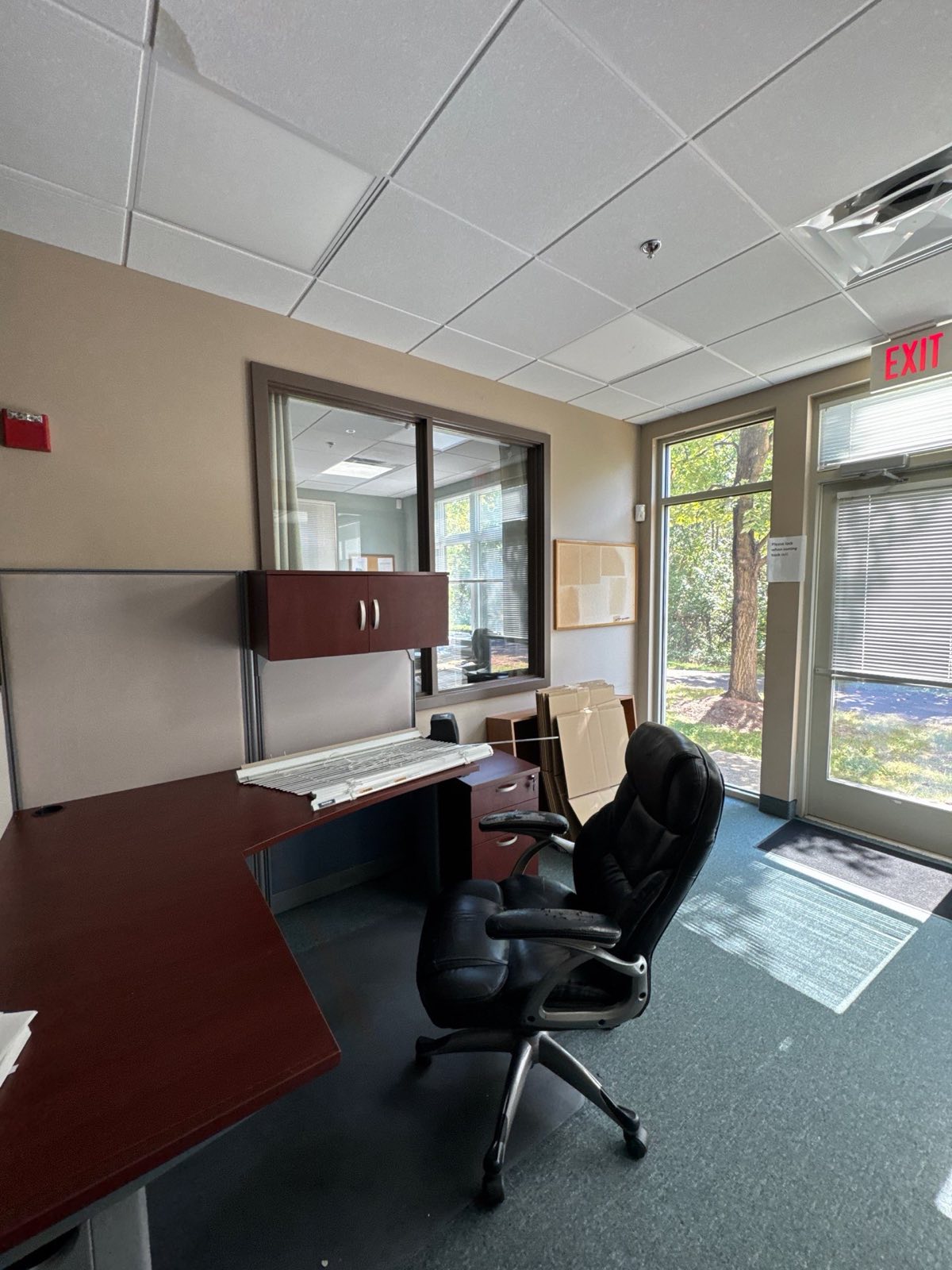
Commercial office water damage dry-out — Tysons
A documented Tysons commercial office water loss extracted and dried with contained equipment to limit tenant downtime while adjacent space stayed usable.
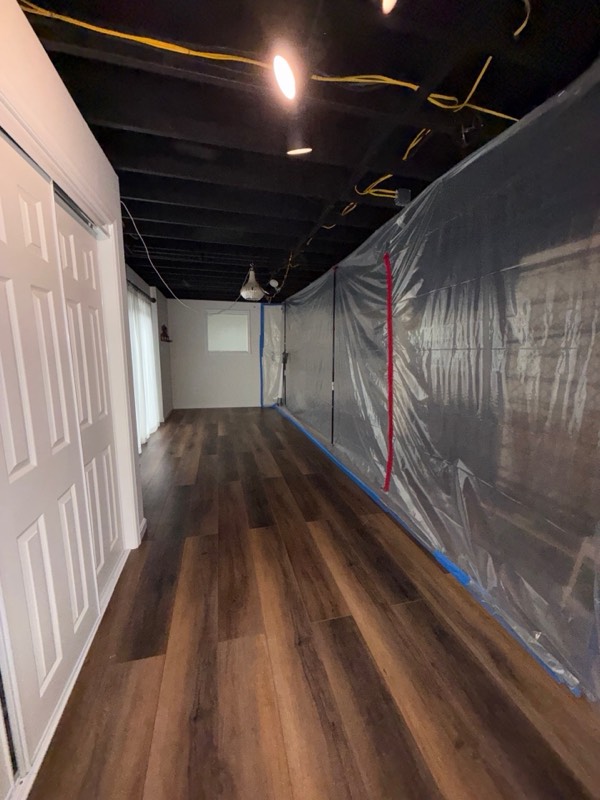
Basement / below-grade dry-out — Tysons
Extraction and structural drying on a Tysons below-grade water loss, with equipment staged to the affected footprint and monitored to verified dry standards.
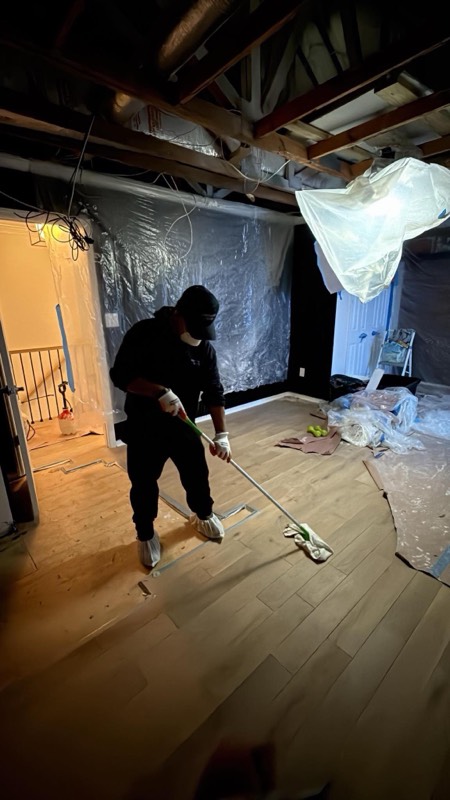
Flood cleanup & dehumidification — Tysons
Flood cleanup with high-capacity dehumidification on a Tysons loss, pulling moisture from the structure and air across a large affected area.
Full restoration services in Tysons
One operation covers every category — from emergency mitigation to full reconstruction.
Water Damage Restoration
Extraction, structural drying, and moisture verification for burst pipes, appliance leaks, and basement flooding.
Fire & Smoke Damage Restoration
Soot and smoke residue removal, odor neutralization, contents pack-out, and reconstruction after a fire.
Storm Damage Restoration
Emergency tarping, water extraction, and reconstruction after wind, hail, and heavy-rain storm events.
Mold Remediation
IICRC S520 containment, HEPA filtration, safe removal, and post-remediation clearance verification.
Sewage & Biohazard Cleanup
Category 3 black-water decontamination with full PPE, safe removal, antimicrobial treatment, and verification.
Odor Removal & Deodorization
Source-based smoke, sewage, mold, pet, and musty-odor removal using thermal fogging, hydroxyl and ozone treatment, and HVAC deodorization.
Reconstruction & Repairs
Drywall, flooring, cabinetry, trim, and paint — the same in-house crew that dried the loss rebuilds it, with no handoff between mitigation and reconstruction.
What Tysons homeowners look for
In Tysons, the people vetting a restoration company are often property managers, condo boards, HOA and commercial-building engineers, and business owners — not just individual homeowners — and what they need to see is proof of capacity: can a company run a multi-floor tower loss, keep a business open during a commercial dry-out, and document a stacked loss cleanly for several claims at once. Those are the experiences that matter here.
We keep our verified reviews and the genuine Google aggregate off this page and on a dedicated reputation hub instead. See how Northern Virginia customers rate the work at RestorationDoctorsReviews.com, then come back to arrange service for your Tysons building or home. Putting the ratings on a separate, source-linked site is intentional — the numbers there are the true Google totals, not figures we typed onto a marketing page.
Frequently asked
Active water, mold, fire, or sewage event?
Connect directly with the Restoration Doctor team for your region. Crews are on standby 24/7 with documented response protocols.