
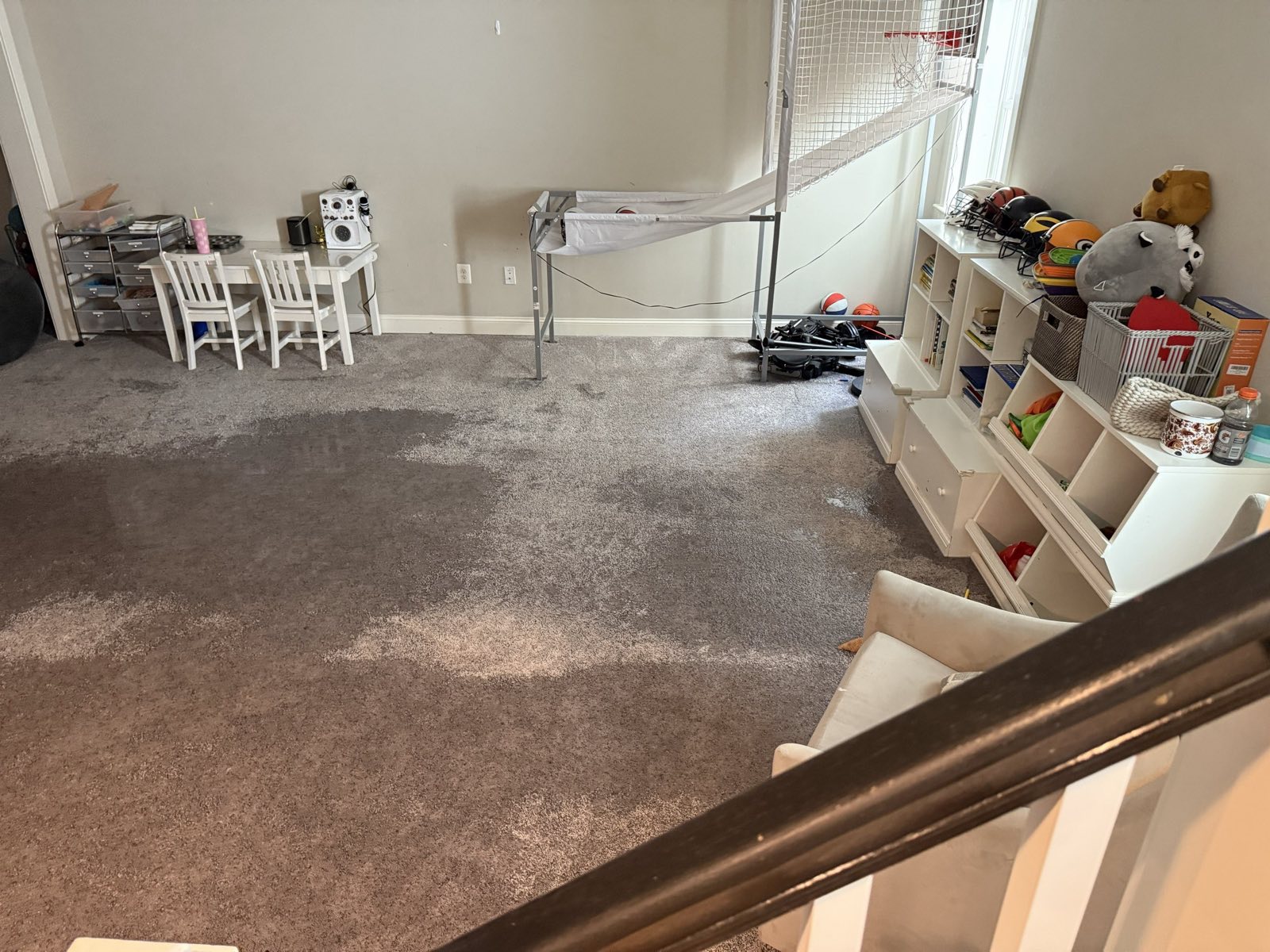
Water Damage Restoration in Burke, VA
Water damage restoration in Burke, VA is, more than anywhere else in the county, a story about a single generation of houses all aging at once. Burke was built out in the 1970s and 1980s — the planned Burke Centre community of clustered townhomes, colonials, and split-levels dominates it, wrapped around wooded commons, pathways, and stormwater ponds — and nearly every one of those homes has a basement and plumbing that is now four or five decades old. Original supply lines, water heaters, and in a notable share of homes failure-prone polybutylene piping are giving out on roughly the same schedule across whole clusters, which is why a quiet street in Cherry Run or Longwood Knolls can turn into a burst-pipe call at two in the morning. Restoration Doctor answers those calls across Burke 24/7, with crews staged nearby for a fast response.
The Burke Centre layout is part of the picture. Its five villages are built as clusters of attached and semi-attached homes threaded by wooded pathways, common greens, and ponds, so water losses here tend to involve shared walls, tight cluster grading, and finished basements sitting low against saturated ground. A failure in one townhome moves through the party wall into the next; a heavy rain across a wooded common sheets toward a cluster of walkout basements at once. It's a different environment than a detached-home subdivision, and it changes how water behaves.
This page is written for Burke specifically — its 1970s–80s housing stock, the aging-plumbing failures that define its losses, and the Pohick Creek, South Run, Burke Lake, and Lake Accotink watershed that surrounds it — because a 45-year-old Burke Centre townhouse fails in predictable places, and knowing that is how we find and stop the water fast.
| Metric | Value | Notes |
|---|---|---|
| Median on-site arrival time | 47 minutes | Measured median arrival across dispatched emergency projects — the middle value, not an average. Distinct from the 60-minute response SLA below. |
| Restoration projects completed to date | 10,000+ | Aggregate count of completed restoration projects to date across the VA / MD / D.C. tri-state service area. |
| Customers who file through insurance | 83% | Share of CUSTOMERS who use insurance. Restoration Doctor works for the homeowner — you pay us directly, and we build a carrier-ready claim file documented to IICRC S500 with a line-item Xactimate estimate, which you submit to your insurer when you seek reimbursement. |
| Average structural dry-out time | 4.5 days | Average time to bring a structure to documented dry standards; monitored daily with moisture readings. Individual projects vary by saturation class. |
| Emergency response SLA (NoVA core) | 60 minutes | The PROMISED response commitment across the NoVA core — a broader guarantee than the measured 47-minute median arrival. |
| Google rating (live) | 4.9★ | 4.9★ is the verified average. The review count changes nightly and is served live at /api/reviews-summary — never hardcoded. |
How water damage behaves in Burke
Aging and polybutylene plumbing failures
The most common Burke loss starts inside a wall that hasn't been touched since the Carter or Reagan administration. Four-to-five-decade-old copper and galvanized supply lines corrode and spring pinhole leaks, original water heaters finally rust through and dump their tanks, and — critically — many Burke homes still run polybutylene supply piping, a gray plastic line from the 1970s–80s that fails suddenly and without warning, often flooding a home while the family is out or asleep.
We stop these losses at the source and fix the cause, not just the aftermath. Our in-house licensed plumbers repair or replace the failed line or fixture, so a home that lost a polybutylene run doesn't simply flood again from the next section of the same brittle pipe. Then we extract and dry — and because Burke homes are so consistently basement-heavy, we treat the finished lower level as the place the water is most likely to have collected.
Cluster and townhome shared-wall losses
Burke Centre's cluster design puts homes close together and shares walls between them, which creates a loss pattern detached subdivisions don't have. A failed washing-machine hose, an overflowing tub, or a burst supply line in one townhome travels through the party wall and down into the finished space of the unit next door or below, so a single failure routinely involves two or three households and, often, the cluster's HOA.
We handle these as multi-party events: mapping the true moisture footprint across the shared assembly with thermal imaging and meters, drying every affected unit to a verified standard, and documenting the work cleanly so responsibility and coverage can be sorted out without finger-pointing. Coordinating the drying across attached units is what keeps trapped moisture from lingering inside a shared wall and resurfacing as mold months later.
Burke's watershed: Pohick Creek, South Run, and the lakes
Burke is ringed by water — Pohick Creek and South Run drain it, and Burke Lake and nearby Lake Accotink sit in the surrounding parkland — so floodplain lots and heavy stormwater are part of the local reality. Add Burke Centre's wooded commons and pond systems, where rain sheets across shared green space toward clusters of walkout and below-grade basements, and you get groundwater intrusion that a single dehumidifier will never resolve.
Most Burke basements rely on a sump pump to hold that groundwater back, and when a storm overwhelms the pump or knocks out power to a home with a dead backup battery, water seeps in through the foundation — a Category 2 event once it has moved through soil. We extract, remove what can't be saved, and treat the affected materials appropriately rather than mopping and hoping, then dry the assembly to a verified standard.
Finished basements and slow-drying lower levels
The finished basement is nearly universal in Burke, and it is the single most common site of a serious loss. When water reaches a below-grade rec room, it pools at the lowest point, wicks up into drywall, saturates carpet and pad, and soaks the bottom plates of framed walls — and because basements are cool and poorly ventilated, that moisture dries slowly on its own and readily supports mold.
That's why monitored, in-place drying matters so much in Burke. We dry carpet, pad, and the lower wall assembly with properly sized equipment and daily moisture readings, opening only what genuinely can't be dried in place, so we save finishes where the readings allow and shorten the reconstruction that follows. Left to air-dry, a finished Burke basement is a mold claim waiting to happen.
Burke homes and how they fail
Burke's residential fabric is a product of the 1970s and 1980s, and the planned Burke Centre community is its centerpiece: five villages of cluster townhomes, semi-detached homes, colonials, and split-levels arranged around wooded commons, walking paths, and stormwater ponds, nearly all with basements. Cherry Run, Longwood Knolls, Signal Hill, Burke Station, and the Lake Braddock area fill in around it with more of the same era — attached and detached homes on modest lots, most with finished lower levels used as rec rooms, offices, and guest space.
The defining risk is age. Homes from the 1970s and 1980s are now decades past their original plumbing's easy years — supply lines corrode, water heaters rust through, and shutoff valves seize — and a significant subset of Burke homes were plumbed with polybutylene supply lines, a 1970s–80s material notorious for sudden, catastrophic failure. Combine that with cluster and townhome construction, where an appliance or bathroom failure in one unit sends water straight through the shared wall or down into the neighbor below, and you have a housing stock built to spread a single leak across finished basements and multiple households.
Burke neighborhoods we serve
Real Fairfax County communities — and the water losses we most often see in each.
Five-village planned community of cluster townhomes and homes where shared-wall failures and aging plumbing drive most losses.
1970s–80s homes on sump-dependent basements where original supply lines and water heaters are now failing.
Established single-family neighborhood where polybutylene and aging pipe failures flood finished lower levels.
Homes near the lake and stream valleys facing groundwater intrusion and storm-driven basement seepage.
Colonials and split-levels with finished basements exposed to sump-pump failures during heavy rain.
Cluster and townhome runs near the VRE where upstairs and appliance leaks travel down through the structure.
Documented Burke projects
Real CompanyCam-documented restoration work in this city — every project photographed with date and time stamps.
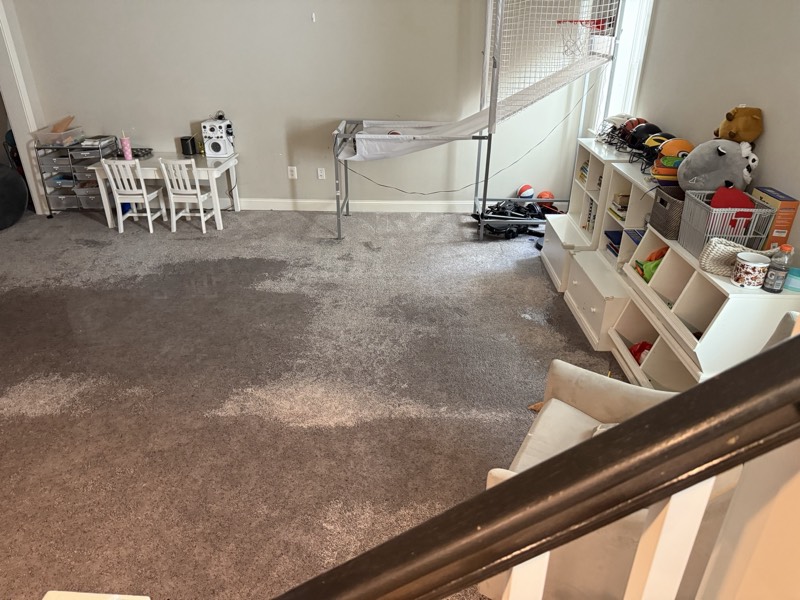
Finished-basement extraction & drying
Water extraction and drying of a saturated finished lower-level rec room — the below-grade loss that a 1970s–80s Burke home on a sump-dependent basement most often takes on. A documented Restoration Doctor project.
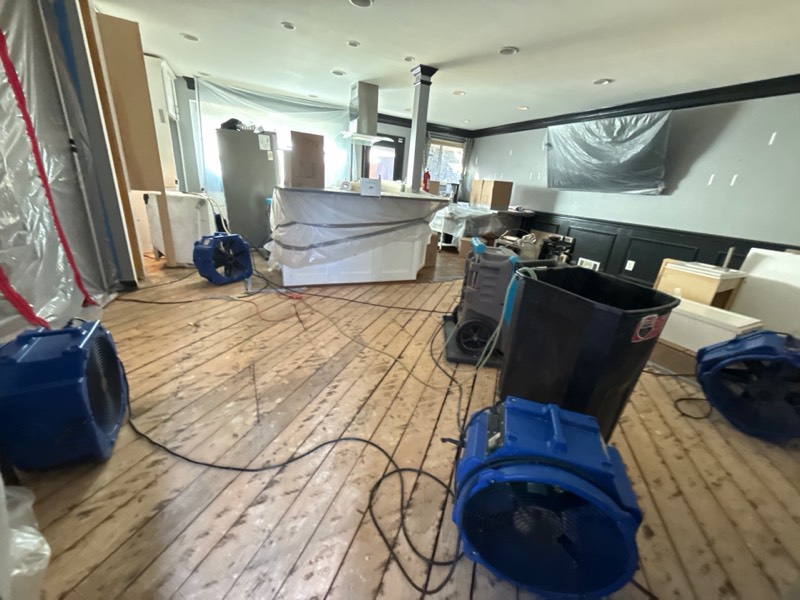
Structural drying with staged equipment
Extraction and structural drying with air movers and portable dehumidification set to the affected footprint — the response an aging-plumbing or shared-wall Burke loss calls for. A documented Restoration Doctor project.
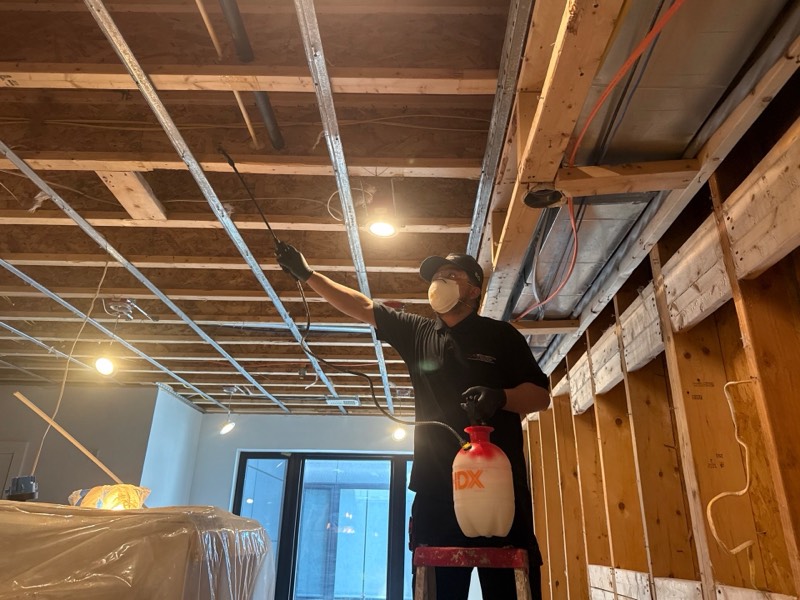
Antimicrobial treatment after demolition
Antimicrobial application to exposed framing after selective flood-cut demolition — the decontamination step a saturated basement or shared-wall assembly needs before drying and rebuild. A documented Restoration Doctor project.
Full restoration services in Burke
One operation covers every category — from emergency mitigation to full reconstruction.
Water Damage Restoration
Extraction, structural drying, and moisture verification for burst pipes, appliance leaks, and basement flooding.
Fire & Smoke Damage Restoration
Soot and smoke residue removal, odor neutralization, contents pack-out, and reconstruction after a fire.
Storm Damage Restoration
Emergency tarping, water extraction, and reconstruction after wind, hail, and heavy-rain storm events.
Mold Remediation
IICRC S520 containment, HEPA filtration, safe removal, and post-remediation clearance verification.
Sewage & Biohazard Cleanup
Category 3 black-water decontamination with full PPE, safe removal, antimicrobial treatment, and verification.
Odor Removal & Deodorization
Source-based smoke, sewage, mold, pet, and musty-odor removal using thermal fogging, hydroxyl and ozone treatment, and HVAC deodorization.
Reconstruction & Repairs
Drywall, flooring, cabinetry, trim, and paint — the same in-house crew that dried the loss rebuilds it, with no handoff between mitigation and reconstruction.
What Burke homeowners look for
Burke is a community of long-tenured homeowners who talk to their neighbors, and in a place where the same aging pipes are failing across whole clusters, word travels about who showed up fast and did it right. The feedback that carries weight here speaks to quick response on a burst-pipe emergency, honest handling of a shared-wall loss between townhomes, and drying that was verified rather than guessed. Those are the experiences worth documenting in a community like Burke.
Rather than reprint selected quotes here, our review hub at RestorationDoctorsReviews.com carries the verified Northern Virginia ratings alongside the true aggregate Google score, so you can read them at the source and then come back to arrange service. Keeping the ratings on a separate, linked hub is intentional — it means the number you see is the real Google aggregate, not a figure curated for a marketing page.
Frequently asked
Active water, mold, fire, or sewage event?
Connect directly with the Restoration Doctor team for your region. Crews are on standby 24/7 with documented response protocols.