
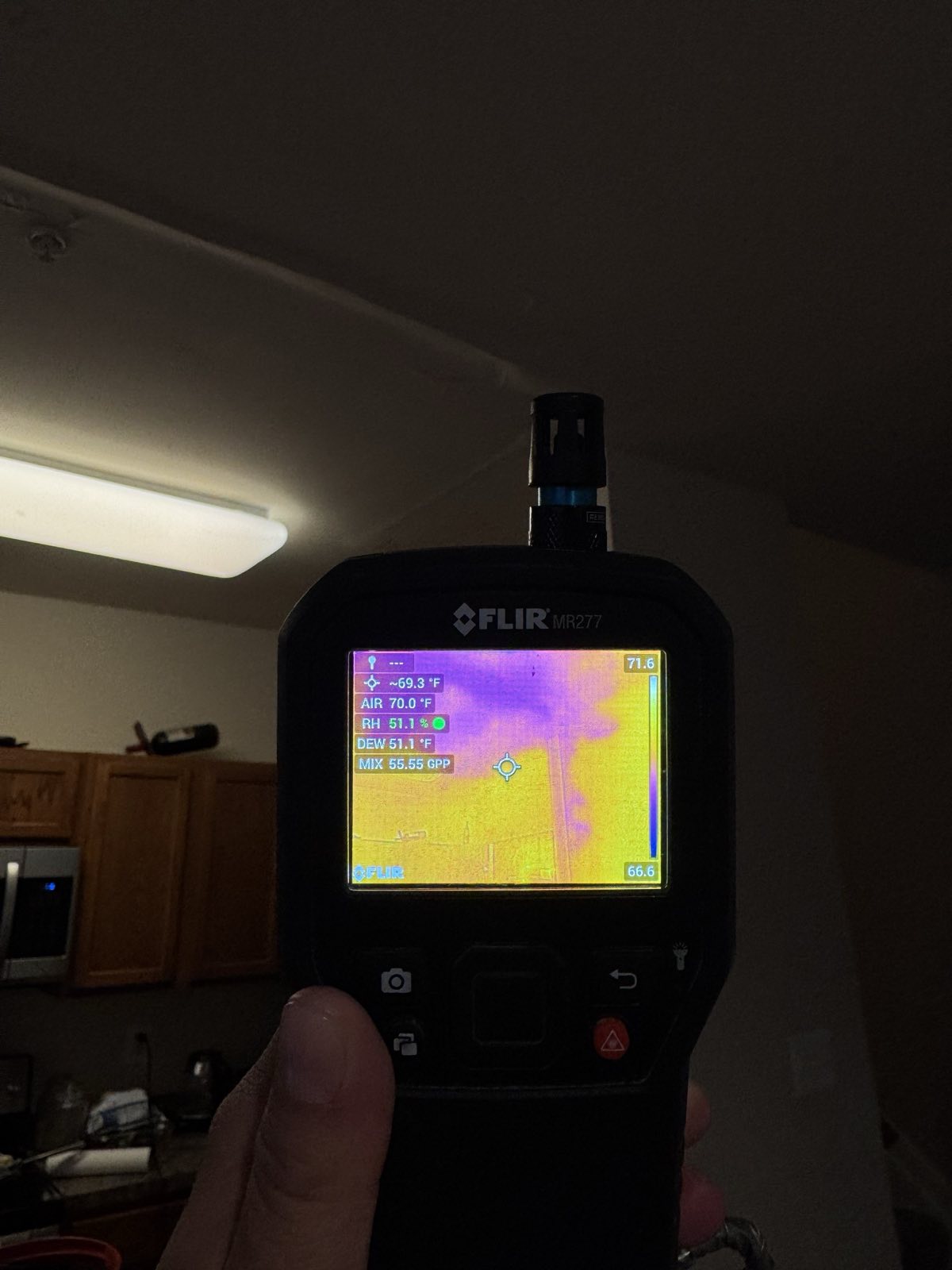
Water Damage Restoration in Lorton, VA
Water damage restoration in Lorton, VA has to account for two very different Lortons at once. On one side of Route 123 you have Laurel Hill and the newer South County subdivisions — 2000s-and-later single-family homes and townhomes built on the reclaimed grounds of the former Lorton reformatory, with poured-concrete basements, sump pits, and modern PEX or copper supply lines. On the other side, along the Richmond Highway (Route 1) corridor and out toward Gunston and Mason Neck, you have older ranch and frame homes, crawl spaces, and properties that sit close enough to the Occoquan River and Pohick Bay to carry real flood-zone exposure. Restoration Doctor answers water emergencies across every corner of it, 24/7.
That split matters on every dispatch, because the failure that floods a five-year-old Laurel Hill basement is not the failure that soaks a fifty-year-old rambler off Route 1, and the drying plan is different for each. A newer home fails at the sump pump, the water-heater connection, or an upstairs supply line; an older home fails at aging plumbing, a saturated crawl space, or groundwater pushing in through a foundation that predates modern drainage. We scope Lorton losses for what the specific house actually is, rather than running one generic playbook.
Whether you just found a slow leak under a Gunston kitchen or you are standing in an inch of water in a Laurel Hill lower level at 2 a.m., the sequence is the same: stop the source, extract before the water soaks deeper, dry to a verified moisture standard, and document every reading for your insurance carrier. Below is how that plays out across Lorton's two very different halves.
| Metric | Value | Notes |
|---|---|---|
| Median on-site arrival time | 47 minutes | Measured median arrival across dispatched emergency projects — the middle value, not an average. Distinct from the 60-minute response SLA below. |
| Restoration projects completed to date | 10,000+ | Aggregate count of completed restoration projects to date across the VA / MD / D.C. tri-state service area. |
| Customers who file through insurance | 83% | Share of CUSTOMERS who use insurance. Restoration Doctor works for the homeowner — you pay us directly, and we build a carrier-ready claim file documented to IICRC S500 with a line-item Xactimate estimate, which you submit to your insurer when you seek reimbursement. |
| Average structural dry-out time | 4.5 days | Average time to bring a structure to documented dry standards; monitored daily with moisture readings. Individual projects vary by saturation class. |
| Emergency response SLA (NoVA core) | 60 minutes | The PROMISED response commitment across the NoVA core — a broader guarantee than the measured 47-minute median arrival. |
| Google rating (live) | 4.9★ | 4.9★ is the verified average. The review count changes nightly and is served live at /api/reviews-summary — never hardcoded. |
How water damage behaves in Lorton
Riverfront and tidal flood exposure: Lorton's defining risk
More than most inland Fairfax communities, parts of Lorton sit inside genuine flood territory. The Occoquan River, Pohick Bay, and the Potomac around the Mason Neck peninsula create riverfront and tidal exposure, and properties in those low-lying areas fall inside NFIP flood zones for a reason. When a storm drives the river up or a heavy-rain event overwhelms the low ground along Route 1, the water that enters a Lorton home is not clean Category 1 water — it has moved through soil, storm drains, and sometimes tidal backflow, which changes everything about how it has to be handled.
We treat those events as the Category 2 or Category 3 losses they are: aggressive extraction, selective removal of porous materials that sat in contaminated water, and thorough antimicrobial treatment rather than a quick dry-and-done. Flood-zone documentation also matters for the claim, and we photograph and log the loss to the standard an NFIP or homeowner's carrier expects. A riverfront Lorton loss handled like an ordinary spill is how mold and contamination problems surface weeks later.
Newer basements still fail — usually at the sump or an appliance
The Laurel Hill and South County basements are newer, but new does not mean immune. The most common serious loss we see in these homes is a sump-pump failure during heavy rain — the power blips in a summer thunderstorm, the pump stops, and the groundwater it was holding back seeps up through the pit and across a finished floor. A dead battery backup turns an inconvenience into a claim. Water-heater tanks in below-grade mechanical rooms and washing-machine supply lines are the other frequent culprits.
Because these are finished spaces, we extract fast and then dry carpet, pad, and the lower wall assembly in place with monitored equipment wherever the water was clean, opening only what genuinely has to come out. Sealed, cooler basements dry slowly on their own and readily grow mold, so in-place, metered drying — not a couple of box fans and an open window — is what actually protects a Lorton lower level.
Older Route 1-corridor homes and crawl spaces
The mid-century homes along Richmond Highway and out toward Gunston carry a different risk profile. Aging galvanized or copper supply lines, worn water-heater connections, and tired drain stacks fail in the ways fifty-year-old plumbing fails, and homes built on crawl spaces hide a particular problem: water that collects under the floor where no one looks until the smell or the sagging subfloor gives it away. A saturated crawl space wicks moisture up into framing and insulation and becomes a persistent mold source if it is not dried and treated properly.
On these losses we inspect the crawl space and substructure directly, extract standing water, remove ruined insulation, and dry the framing and subfloor to a verified standard before anything gets closed back up. Where the failure was a plumbing fault, we repair the actual source with licensed in-house plumbing so you are not drying the same leak twice.
Northern Virginia's climate works against natural drying
Lorton summers are hot and humid, and that ambient moisture fights natural drying — a basement or crawl space that would air-dry in a week somewhere dry can stay damp long enough to grow mold here. That is why professional drying relies on low-grain refrigerant and desiccant dehumidification to actively pull moisture out of the structure and the air rather than hoping open windows do the job.
In winter the risk flips to freeze-thaw. Cold snaps freeze water in exterior-wall and attic plumbing, and a burst pipe on the coldest night of the year is one of the most common calls we get anywhere in southern Fairfax. Around-the-clock response is not a slogan for us in Lorton — it is the difference between catching a burst line at gallon ten and catching it at gallon a thousand.
Lorton homes and how they fail
Lorton's newest housing defines its reputation. When the District's old Lorton prison and workhouse were decommissioned, the Laurel Hill land was redeveloped into large single-family and townhome communities built largely from the early 2000s onward. These homes have modern below-grade construction — poured-concrete foundations, interior perimeter drains, and sump pumps with (sometimes) battery backups — plus finished basements built out into rec rooms, home offices, and guest suites. That finished lower level is exactly where a Lorton water loss becomes expensive, because a sump failure or a water-heater leak puts water across drywall, carpet, and stored belongings at the lowest point of the house.
The other half of Lorton is older and closer to the water. Along the Route 1 corridor and out toward Gunston, Pohick, and the Mason Neck peninsula, you find mid-century ranches and frame homes, some on crawl spaces rather than full basements, with plumbing that has aged into its failure window — supply lines, water heaters, and drain stacks past their service life. Newington sits adjacent to the north with a similar mix. The lesson across both halves of Lorton is the same: knowing when and how a home was built tells us where the water went and how fast we have to move.
Lorton neighborhoods we serve
Real Fairfax County communities — and the water losses we most often see in each.
2000s-and-later single-family homes and townhomes on the former reformatory land — finished basements where sump and water-heater failures dominate.
Older homes near the Occoquan and Gunston Hall with crawl spaces, aging plumbing, and riverfront flood exposure.
Peninsula properties between the Potomac and Pohick Bay with genuine tidal and NFIP flood-zone risk.
Newer subdivisions and townhomes with modern below-grade construction and sump-dependent basements.
Low-lying homes near Pohick Bay and creek stormwater where heavy rain drives Category 2 groundwater intrusion.
Mid-century ranch and frame homes with aging supply lines and stormwater exposure along the low corridor.
Documented Lorton projects
Real CompanyCam-documented restoration work in this city — every project photographed with date and time stamps.
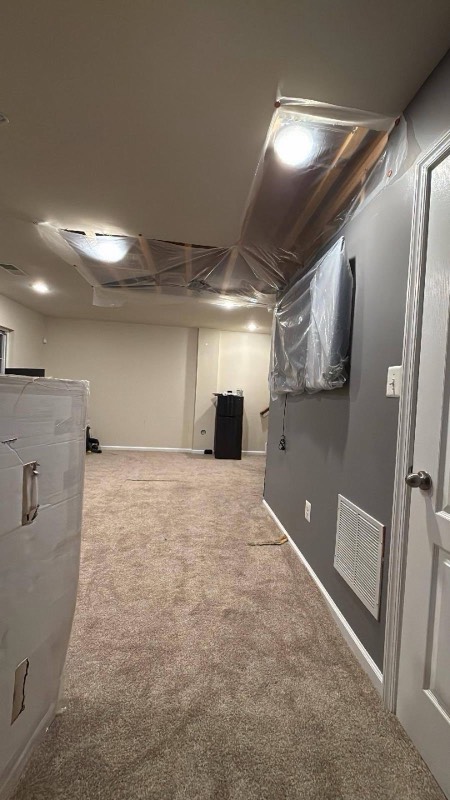
Residential water damage restoration — Lorton
A documented Lorton home water loss taken from extraction through monitored structural drying, with equipment staged to the affected footprint.
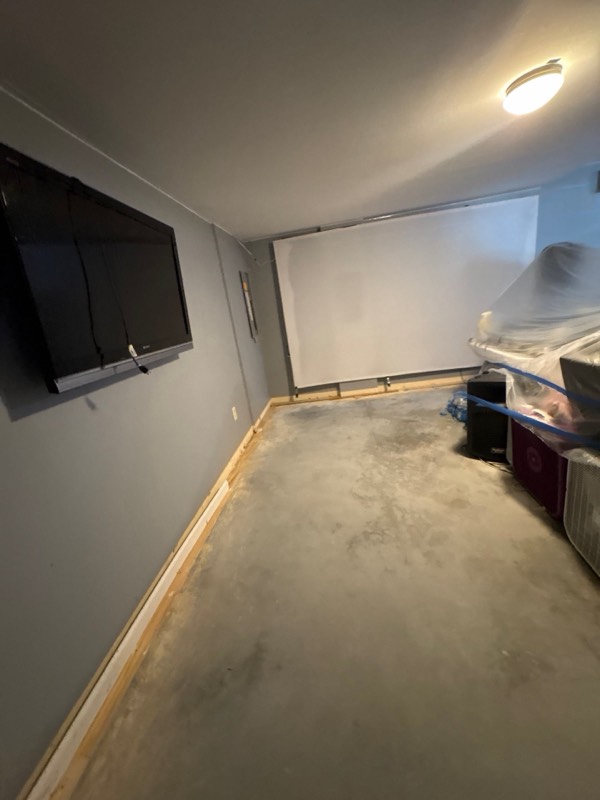
Moisture mapping & structural drying — Lorton
Moisture mapping used to trace the true footprint of a Lorton loss so drying equipment goes where the water actually migrated, not just where it shows on the surface.
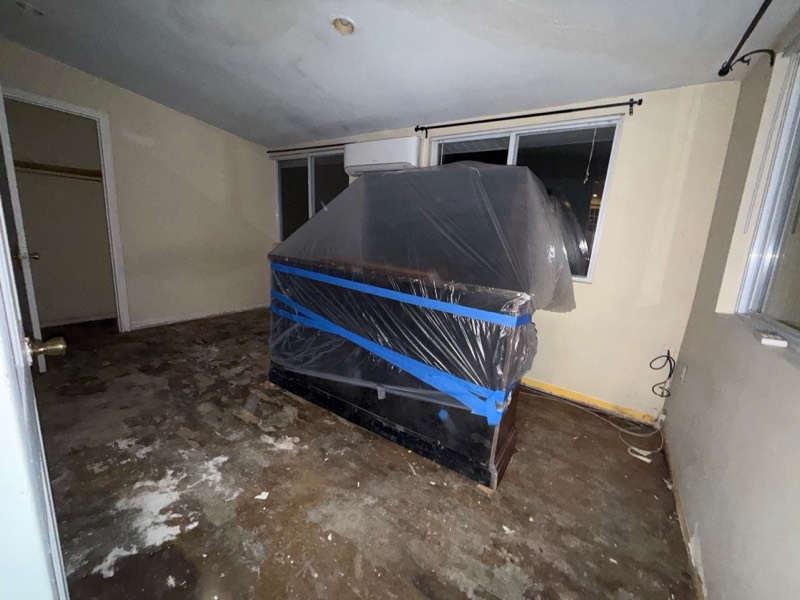
Water extraction & contents protection — Lorton
Standing-water extraction with early contents protection on a Lorton loss, moving at-risk belongings to dry staging before the water could ruin them.
Recent Lorton water damage projects — on video
Real jobsite footage from documented restoration projects in this city — filmed by our crews, not stock.
Hardwood Water Damage in Lorton VA — Dried, Sanitized, Ready to Rebuild
LORTON, VA · WHOLE-HOME HARDWOOD WATER DAMAGE · DOCUMENTED ON SITE
Full restoration services in Lorton
One operation covers every category — from emergency mitigation to full reconstruction.
Water Damage Restoration
Extraction, structural drying, and moisture verification for burst pipes, appliance leaks, and basement flooding.
Fire & Smoke Damage Restoration
Soot and smoke residue removal, odor neutralization, contents pack-out, and reconstruction after a fire.
Storm Damage Restoration
Emergency tarping, water extraction, and reconstruction after wind, hail, and heavy-rain storm events.
Mold Remediation
IICRC S520 containment, HEPA filtration, safe removal, and post-remediation clearance verification.
Sewage & Biohazard Cleanup
Category 3 black-water decontamination with full PPE, safe removal, antimicrobial treatment, and verification.
Odor Removal & Deodorization
Source-based smoke, sewage, mold, pet, and musty-odor removal using thermal fogging, hydroxyl and ozone treatment, and HVAC deodorization.
Reconstruction & Repairs
Drywall, flooring, cabinetry, trim, and paint — the same in-house crew that dried the loss rebuilds it, with no handoff between mitigation and reconstruction.
What Lorton homeowners look for
Lorton is a community of newer homeowners and long-time Route 1-corridor residents alike, and both do their homework before letting a restoration crew into the house. The reviews that carry weight here describe the things a Lorton loss actually turns on: how fast a crew arrived after a late-night basement flood, whether the drying was verified with real moisture readings instead of a guess, and whether a flood-zone claim held up without a fight. Those are the experiences we want on the record.
Instead of reprinting testimonials on this page, we point Lorton homeowners to our dedicated reputation hub. You can read verified Northern Virginia customer reviews and the true aggregate Google rating on RestorationDoctorsReviews.com, then come back here to book service. We keep the ratings on a separate, source-linked hub on purpose — those numbers are the real Google aggregates, not figures typed onto a marketing page to look good.
Frequently asked
Active water, mold, fire, or sewage event?
Connect directly with the Restoration Doctor team for your region. Crews are on standby 24/7 with documented response protocols.