
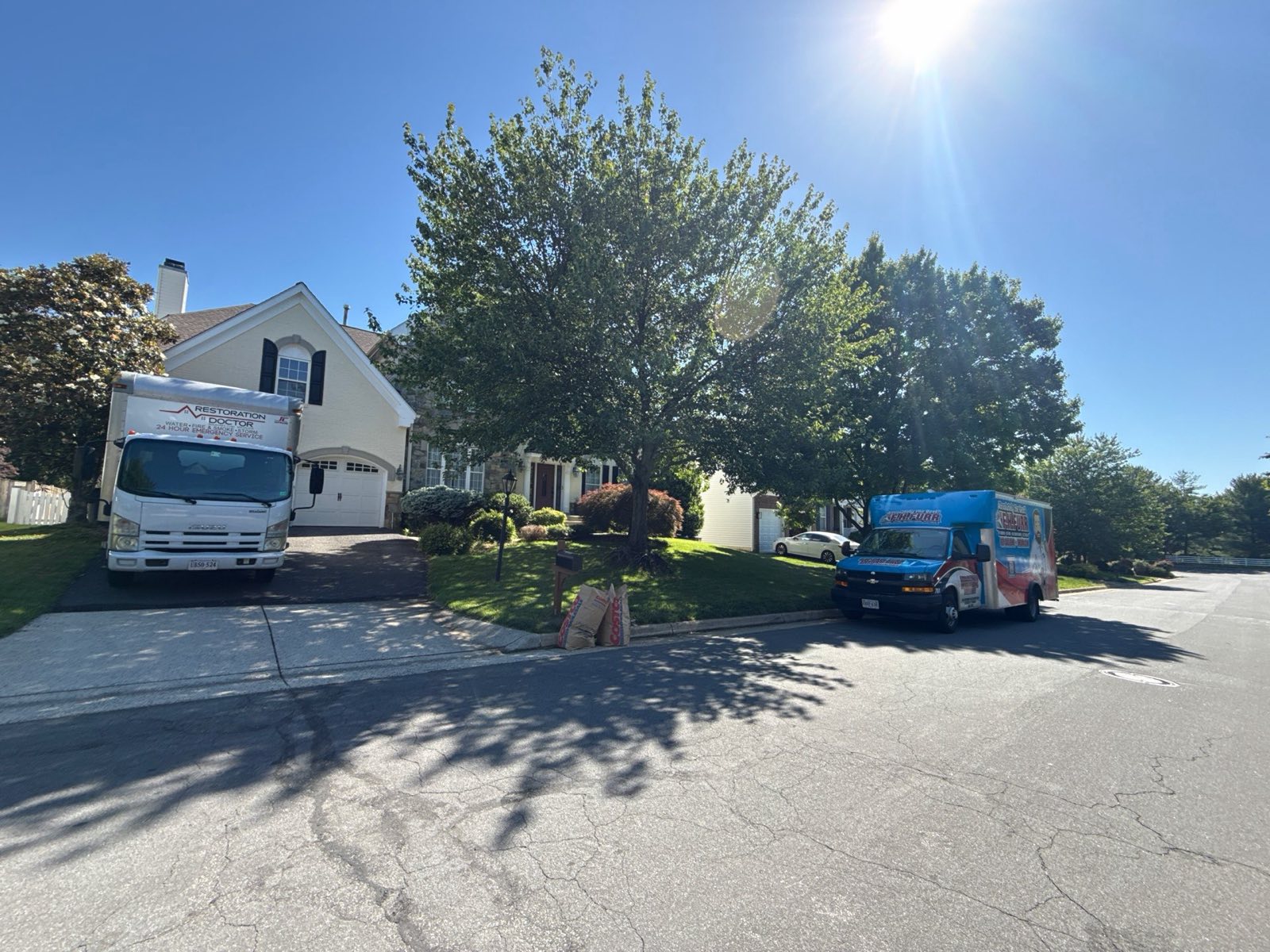
Water Damage Restoration in Clifton, VA
Water damage restoration in Clifton, VA is a specialized project, because Clifton is unlike almost anywhere else we serve. It is one of the smallest incorporated towns in Virginia — a preserved 1800s Victorian rail village at its core, ringed by large custom homes sitting on multi-acre wooded lots, most of them on private well and septic rather than public water and sewer. That combination of century-old village construction and big, well-and-septic homes on heavily treed acreage produces water losses that a standard suburban playbook simply does not fit. Restoration Doctor answers Clifton water emergencies 24/7.
The two halves of Clifton fail in different ways. In the historic village, you have 1800s frame homes with plaster, solid wood, and older foundations that predate modern drainage. Out on the wooded acreage, you have large custom homes with deep finished basements, well systems, and septic fields — where a well-tank failure, a sump-pump outage, or a septic backup can put a lot of water into an expensive, moisture-sensitive lower level far from the nearest hydrant. Knowing which Clifton home we are standing in is the first thing our crews establish.
Whether it is a leak behind a village plaster wall or a well-line failure flooding a finished basement on five acres at 2 a.m., the sequence is the same: stop the source, extract before the water soaks deeper, dry to a verified moisture standard, and document every reading for your carrier. Below is how a water loss actually behaves in Clifton's two very different kinds of home.
| Metric | Value | Notes |
|---|---|---|
| Median on-site arrival time | 47 minutes | Measured median arrival across dispatched emergency projects — the middle value, not an average. Distinct from the 60-minute response SLA below. |
| Restoration projects completed to date | 10,000+ | Aggregate count of completed restoration projects to date across the VA / MD / D.C. tri-state service area. |
| Customers who file through insurance | 83% | Share of CUSTOMERS who use insurance. Restoration Doctor works for the homeowner — you pay us directly, and we build a carrier-ready claim file documented to IICRC S500 with a line-item Xactimate estimate, which you submit to your insurer when you seek reimbursement. |
| Average structural dry-out time | 4.5 days | Average time to bring a structure to documented dry standards; monitored daily with moisture readings. Individual projects vary by saturation class. |
| Emergency response SLA (NoVA core) | 60 minutes | The PROMISED response commitment across the NoVA core — a broader guarantee than the measured 47-minute median arrival. |
| Google rating (live) | 4.9★ | 4.9★ is the verified average. The review count changes nightly and is served live at /api/reviews-summary — never hardcoded. |
How water damage behaves in Clifton
Well and septic systems change the whole equation
Most Clifton homes are on private well and septic, and that fundamentally changes how a water loss unfolds. A failed well pressure tank, a burst well line, or a stuck valve can flood a mechanical room and adjacent finished space with clean water — but a septic backup is the opposite: Category 3 black water carrying biological contamination that demands aggressive removal, disinfection, and disposal, not drying. Distinguishing clearly between a clean well-side failure and a contaminated septic backup is the single most important call we make on a Clifton dispatch, because the two require completely different responses.
On a septic-related loss, we run the full Category 3 protocol — removing saturated porous materials, cleaning and antimicrobially treating affected surfaces, and drying and verifying the structure before any rebuild — and we coordinate with septic professionals on the source. On a clean well-side failure, we can often dry far more in place. Either way, understanding the home's private systems is what keeps a Clifton loss from being mishandled.
Large wooded lots, creeks, and groundwater
Clifton's setting works against its basements. Homes sit on large, wooded, often sloping lots near Popes Head Creek and Johnny Moore Creek, with the Occoquan Reservoir and Bull Run nearby, and that terrain pushes surface water toward foundations while a high seasonal water table keeps the surrounding soil saturated for weeks after heavy rain. On a big lot with a deep basement, that combination turns an afternoon of storms into sustained hydrostatic pressure against below-grade walls long after the sky clears.
The result is intrusion that a single portable dehumidifier will never resolve. We determine whether a Clifton loss is a plumbing or well failure, a groundwater event, or both, address the actual source, and dry the assembly to a verified standard — because treating a grading-and-groundwater problem as a simple spill is how a deep Clifton basement grows mold behind a finished wall.
Historic village homes need preservation-minded drying
The 1800s homes in the village core demand a careful, precise approach. Plaster over wood lath does not behave like modern drywall — it holds moisture deep in the assembly and can be ruined by the wrong drying method as easily as by the water. Period hardwood floors cup and crown fast when the subfloor stays wet. We map the true moisture footprint with meters and thermal imaging and dry these assemblies in place wherever possible to preserve original material, rather than defaulting to demolition of finishes that cannot be replaced.
These older homes also carry the safety obligations that come with their age. Pre-1978 lead paint and asbestos-containing materials are common in this stock, so when demolition is genuinely necessary we test first and follow the required containment and disposal procedures — protecting your family and keeping both the project and the claim clean.
Distance and climate raise the stakes on response time
Clifton's rural character means homes are spread across wooded acreage rather than packed into a subdivision, so a water loss can run longer before anyone notices — a basement filling on a five-acre property is not something a neighbor spots from the driveway. Combined with well systems that keep pumping until they are shut off, that makes fast, around-the-clock response especially valuable here. The sooner we reach a Clifton loss, the less water ends up in the structure.
Northern Virginia's climate compounds every loss. Hot, humid summers fight natural drying, so we use low-grain refrigerant and desiccant dehumidification to actively pull moisture from the structure and the air; cold-snap winters freeze exterior-wall and attic plumbing, and a burst pipe on the coldest night of the year is a frequent Clifton call. Deep basements and older village homes both hold moisture, which is exactly why verified, monitored drying matters here.
Clifton homes and how they fail
The historic Town of Clifton is a genuinely preserved Victorian rail village — 1800s frame homes with plaster-and-lath walls, solid-wood floors and trim, and masonry foundations built long before modern drainage or plumbing standards. These materials are moisture-hungry and irreplaceable: plaster holds water deep in the wall, period hardwood cups quickly over a wet subfloor, and demolition in this stock can trigger asbestos and lead-paint testing before anything comes out. A loss in one of these homes is a preservation project as much as a drying project.
Surrounding the village, Clifton is defined by large custom homes on wooded acreage — properties often measured in multiple acres, with deep finished basements built out into rec rooms, home theaters, wine storage, and mechanical rooms, and nearly all of them on private well and septic rather than municipal utilities. That well-and-septic reality is central to Clifton restoration: the water supply, the pressure tank, and the wastewater system are all on the property, which means a failure in any of them becomes a water-damage event with no city main to shut off from the street. Our crews scope each Clifton home for both its era and its systems, because those two facts determine how the water behaves and how it has to be handled.
Clifton neighborhoods we serve
Real Fairfax County communities — and the water losses we most often see in each.
1800s Victorian frame homes with plaster, solid-wood floors, and asbestos/lead demo protocols in the preserved town core.
Large custom homes on wooded acreage with deep finished basements and private well-and-septic systems.
Upscale acreage properties where well-tank failures and sump outages reach expensive lower levels.
Custom homes near the creek valleys where grading and groundwater drive basement intrusion.
Neighboring subdivision stock with finished basements and sump-pump dependence.
Wooded-lot homes near the creek and Occoquan Reservoir with seasonal high-water-table exposure.
Documented Clifton projects
Real CompanyCam-documented restoration work in this city — every project photographed with date and time stamps.
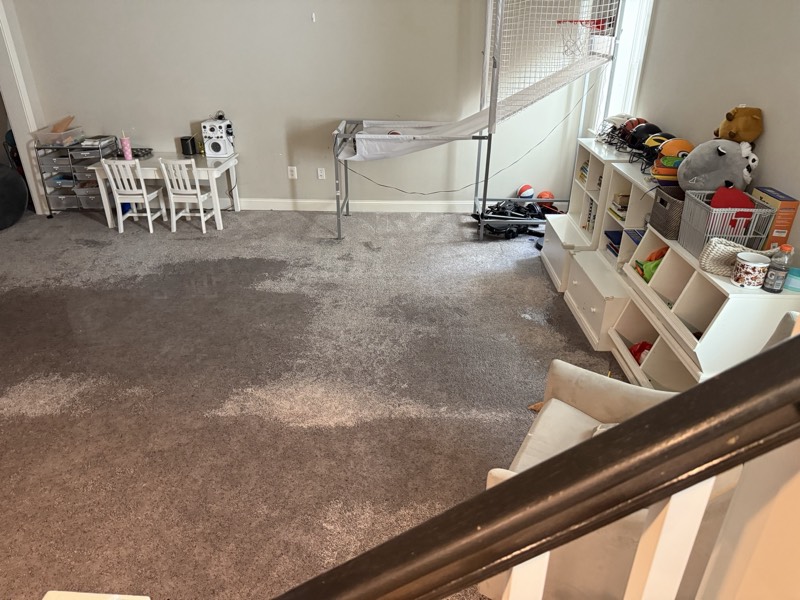
Structural drying with monitored equipment
How we dry a finished lower level like those common in Clifton's acreage homes — staged air movers and dehumidification held to daily moisture readings until the structure hits a verified dry standard.
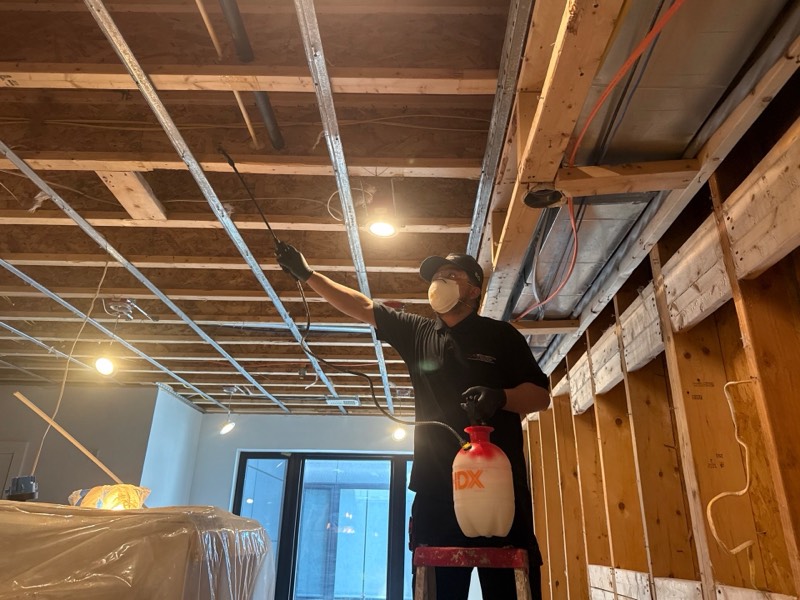
Category 3 removal and disinfection
The protocol we run on a contaminated loss such as a septic backup — selective removal of saturated porous materials, cleaning, and antimicrobial treatment before any rebuild.
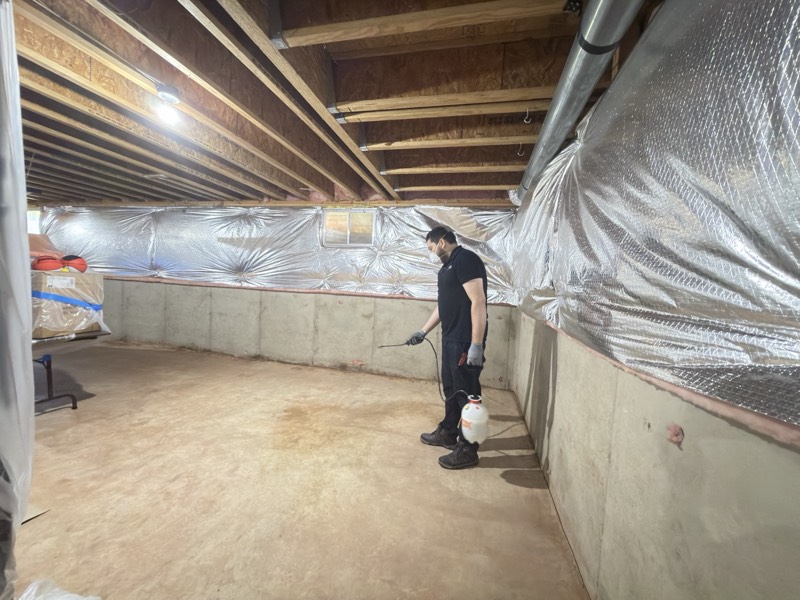
Moisture mapping and thermal inspection
Thermal imaging and moisture meters used to trace hidden water behind walls and under floors, so drying equipment is placed where the water actually went — the same method we bring to Clifton homes.
Full restoration services in Clifton
One operation covers every category — from emergency mitigation to full reconstruction.
Water Damage Restoration
Extraction, structural drying, and moisture verification for burst pipes, appliance leaks, and basement flooding.
Fire & Smoke Damage Restoration
Soot and smoke residue removal, odor neutralization, contents pack-out, and reconstruction after a fire.
Storm Damage Restoration
Emergency tarping, water extraction, and reconstruction after wind, hail, and heavy-rain storm events.
Mold Remediation
IICRC S520 containment, HEPA filtration, safe removal, and post-remediation clearance verification.
Sewage & Biohazard Cleanup
Category 3 black-water decontamination with full PPE, safe removal, antimicrobial treatment, and verification.
Odor Removal & Deodorization
Source-based smoke, sewage, mold, pet, and musty-odor removal using thermal fogging, hydroxyl and ozone treatment, and HVAC deodorization.
Reconstruction & Repairs
Drywall, flooring, cabinetry, trim, and paint — the same in-house crew that dried the loss rebuilds it, with no handoff between mitigation and reconstruction.
What Clifton homeowners look for
Clifton is a small, tight-knit town where homeowners talk to one another and reputation travels fast, and the properties involved — historic village homes and high-value custom houses alike — are not the kind you hand over to just anyone. The reviews that carry weight here speak to careful work in irreplaceable homes, correct handling of well-and-septic losses, and documentation that held up with the carrier. Word of mouth counts for a lot in Clifton, and those verified experiences are what earn it.
We keep our reviews off this page and on a dedicated hub by design. You can read genuine Northern Virginia customer reviews and the real aggregate Google rating over at RestorationDoctorsReviews.com, then return here to arrange service for your Clifton home. Hosting the ratings on a separate, source-linked hub is a deliberate honesty choice — the numbers there are the true Google aggregates, not figures inflated onto a landing page.
Frequently asked
Active water, mold, fire, or sewage event?
Connect directly with the Restoration Doctor team for your region. Crews are on standby 24/7 with documented response protocols.