
Water Damage Restoration in Sterling, VA
Water damage restoration in Sterling, VA has to account for two very different Sterlings at once. There is the original Sterling Park — one of the first large subdivisions in Loudoun County, built out from 1962 with modest ramblers and split-levels whose plumbing is now six decades old — and there is the newer Sterling of Cascades, Countryside, and Lowes Island, planned communities from the 1980s and 1990s stacked along the Potomac River and Sugarland Run. A supply line lets go in a Sterling Park kitchen, a sump pump quits in a Cascades basement during a storm, and within hours the water you can see has soaked into subfloor and framing you can't. Restoration Doctor answers those calls across eastern Loudoun around the clock, staged out of nearby Vienna with an arrival target measured in minutes.
Sterling's position matters to how water behaves here. It wraps around Washington Dulles International Airport, sits on the flat, poorly draining clay soils typical of eastern Loudoun, and its northern edge drops toward the Potomac at Lowes Island and Great Falls Crossing. That combination — aging first-generation housing, dense newer subdivisions, and real riverfront exposure on the north side — means no two Sterling losses are quite the same, and a generic 'we serve the DMV' pitch tells a Sterling homeowner nothing useful about their own home.
Whether the loss is a slow leak you just found or an inch of standing water at 2 a.m., the response is the same: stop the source, extract before it soaks deeper, dry to a verified standard, and document every step for your insurance carrier. Below is how that unfolds across Sterling's older streets, its newer basements, and its riverfront edge.
| Metric | Value | Notes |
|---|---|---|
| Median on-site arrival time | 47 minutes | Measured median arrival across dispatched emergency projects — the middle value, not an average. Distinct from the 60-minute response SLA below. |
| Restoration projects completed to date | 10,000+ | Aggregate count of completed restoration projects to date across the VA / MD / D.C. tri-state service area. |
| Customers who file through insurance | 83% | Share of CUSTOMERS who use insurance. Restoration Doctor works for the homeowner — you pay us directly, and we build a carrier-ready claim file documented to IICRC S500 with a line-item Xactimate estimate, which you submit to your insurer when you seek reimbursement. |
| Average structural dry-out time | 4.5 days | Average time to bring a structure to documented dry standards; monitored daily with moisture readings. Individual projects vary by saturation class. |
| Emergency response SLA (NoVA core) | 60 minutes | The PROMISED response commitment across the NoVA core — a broader guarantee than the measured 47-minute median arrival. |
| Google rating (live) | 4.9★ | 4.9★ is the verified average. The review count changes nightly and is served live at /api/reviews-summary — never hardcoded. |
How water damage behaves in Sterling
Finished basements and sump-pump failures: Sterling's most common loss
Across Cascades, Countryside, and the newer Sterling subdivisions, the defining loss is a finished basement that floods when the sump pump quits during heavy rain. Eastern Loudoun's flat clay soils drain slowly and hold a high water table, so a great many Sterling homes rely on a sump to stay dry — and when the power blips in a summer thunderstorm and the battery backup is dead, the groundwater the pump was holding back seeps up across a finished floor. Water that has moved through soil is no longer clean Category 1 water, so we treat those losses as the Category 2 seepage events they are: extraction, selective removal, and antimicrobial treatment, not a quick mop-and-fan.
Because basements are cooler and less ventilated, that trapped moisture dries slowly on its own and readily supports mold, which is why in-place, monitored drying matters so much down here. We extract fast, dry carpet, pad, and the lower wall assembly in place wherever the water was clean, and open only what genuinely has to come out — protecting the finished space while making sure the structure behind it actually reaches a verified dry standard.
Potomac and Sugarland Run: Sterling's riverfront exposure
Sterling's northern edge tells a wetter story. Lowes Island, Great Falls Crossing, and the Cascades communities that back onto the Potomac River and Algonkian Regional Park carry real riverfront flood exposure, and Sugarland Run threads through the middle of Sterling on its way to the river. When that water enters a home during a major storm it is contaminated — Category 3 in most cases — because it has carried soil, storm-drain overflow, and river sediment with it. That classification dictates that saturated porous materials come out, that surfaces are cleaned and antimicrobially treated, and that the structure is dried and verified before anything is rebuilt.
The failure mode we see most often after a flood is a homeowner or a cut-rate contractor drying the surface and closing the walls back up, which traps contamination and moisture and produces a mold problem within weeks. We handle Sterling flood losses with the aggressive extraction, controlled demolition, and disinfection a Category 3 event demands, and we document the loss thoroughly for both NFIP and homeowner's claims.
Aging Sterling Park plumbing and multi-level townhome leaks
In the original Sterling Park ramblers and split-levels, the risk is the plumbing itself. Six-decade-old galvanized supply lines corrode from the inside and eventually fail, and cast-iron drain stacks crack and leak inside walls where the damage stays hidden until a ceiling stains. Our licensed in-house plumbers fix the line that actually failed rather than just drying the mess it left, so the same run does not let go again a few feet down.
In the two- and three-story colonials and the townhome sections of Cascades and Countryside, the classic loss travels vertically. An angle-stop valve under a second-floor vanity, a failed toilet supply line, or an overflowing washing machine lets water find the fastest path down through the subfloor and out through the ceiling below, often soaking two or three levels before anyone notices. We use thermal imaging and moisture meters to trace the actual footprint of the water rather than guessing from the visible stain, then dry the wall and ceiling cavities in place wherever we can — which saves finishes and shortens the reconstruction that follows.
Loudoun's climate is part of the problem
Sterling summers are hot and humid, and that ambient moisture works against natural drying — a basement that would air-dry in a week in a dry climate can stay damp long enough to grow mold here. That is exactly why professional drying uses low-grain refrigerant and desiccant dehumidification to actively pull moisture out of the structure and the air rather than relying on open windows and box fans.
Winter flips the risk to freeze-thaw. Cold snaps freeze water in exterior-wall and attic plumbing, and a burst pipe on the coldest night of the year is one of the most common calls we get in Sterling. Between the seasonal plumbing risk, the sump-dependent basements, and the river on the north side, around-the-clock response is not a marketing line here but an operational necessity — the faster we reach a loss, the smaller and cleaner it stays.
Sterling homes and how they fail
Sterling Park anchors the old side of town. Developed beginning in 1962 as one of Loudoun County's earliest planned subdivisions, it filled with modest single-story ramblers and split-levels aimed at first-time buyers, and much of that original plumbing is still in service. Homes of that vintage commonly ran galvanized-steel supply lines and cast-iron drain stacks that are now well past their service life, and a subset of 1970s–80s additions in the area carry failure-prone polybutylene supply piping. When those lines let go, the water is clean at first but the damage is not small — it soaks into aging subfloor and plaster before anyone notices.
The newer Sterling is a different animal. Countryside (1980s), the sprawling Cascades communities (late 1980s–1990s), and the upscale Lowes Island and Great Falls Crossing enclaves along the Potomac brought two- and three-story colonials and townhomes, nearly all with finished basements and sump pumps. Those basements are the single most common site of serious water loss in Sterling because they combine below-grade exposure with drywall, carpet, and stored belongings that hold water and grow mold fast. In the townhome sections, shared-wall construction means one unit's upstairs or basement failure readily becomes the neighbor's problem. Knowing which Sterling a home belongs to tells us where the water went before we ever open a wall.
Sterling neighborhoods we serve
Real Loudoun County communities — and the water losses we most often see in each.
Loudoun's original 1960s subdivision — ramblers and split-levels with six-decade-old galvanized and cast-iron plumbing.
Large late-1980s–1990s planned communities along the Potomac where finished basements on sump pumps are the usual failure point.
1980s single-family and townhome sections where upstairs-bathroom leaks travel down through multiple levels.
Upscale riverfront enclaves backing onto the Potomac and Algonkian Park with real flood-zone exposure.
Established homes near the Sugarland Run stream corridor with stormwater and drainage-driven basement intrusion.
Newer single-family homes on eastern Loudoun's flat clay soils, heavily reliant on sump pumps to stay dry.
Documented Sterling projects
Real CompanyCam-documented restoration work in this city — every project photographed with date and time stamps.
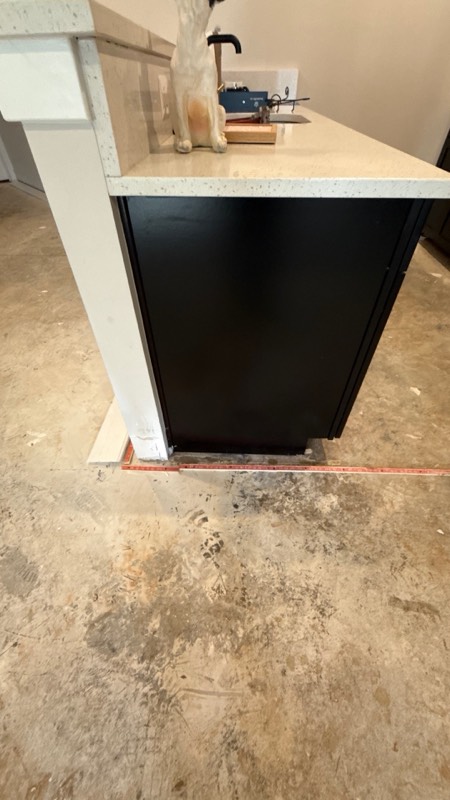
Emergency extraction & dry-out — Sterling
Rapid truck-mount extraction and a staged drying system on a documented Sterling loss, sizing air movers and dehumidification to the affected footprint.
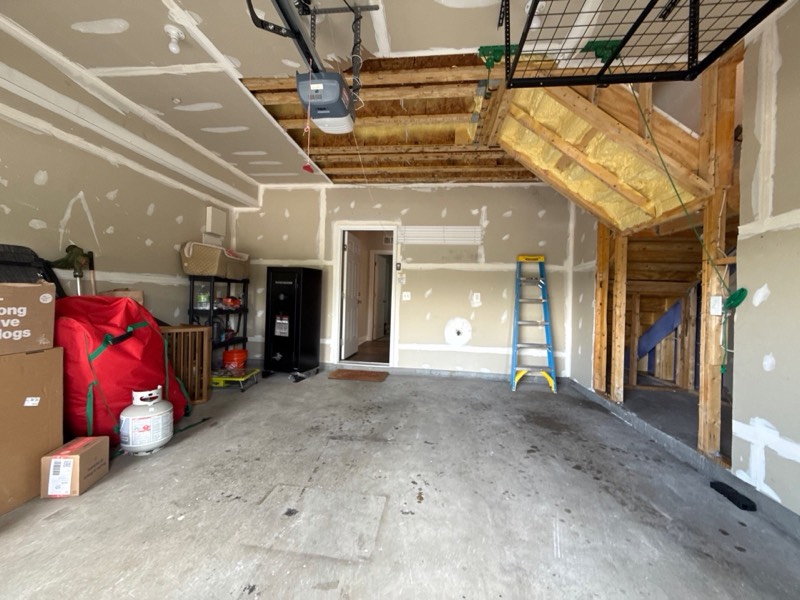
Moisture mapping & structural drying — Sterling
A documented Sterling file using moisture mapping to trace hidden water through the structure so drying equipment is placed where the water actually went.
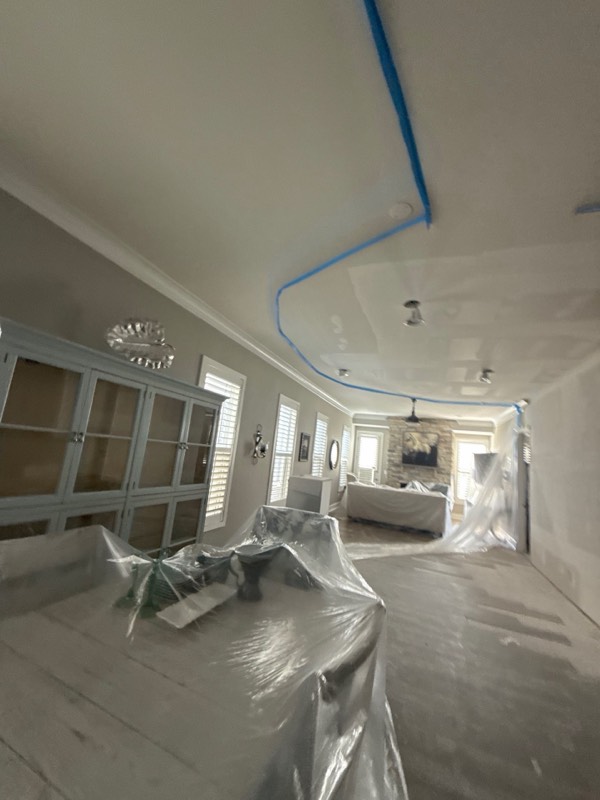
Loudoun County dry-out standard
Monitored in-place drying to a verified dry standard on an eastern Loudoun loss, with daily moisture logs assembled for the insurance file.
Recent Sterling water damage projects — on video
Real jobsite footage from documented restoration projects in this city — filmed by our crews, not stock.
Sterling — Multi-level water intrusion — saturated ceilings/walls, flood-cut demo, structural drying (mitigation-only)
STERLING, VA · MULTI-LEVEL WATER INTRUSION — SATURATED CEILINGS/WALLS, FLOOD-CUT DEMO, STRUCTURAL DRYING (MITIGATION-ONLY) · DOCUMENTED ON SITE
Full restoration services in Sterling
One operation covers every category — from emergency mitigation to full reconstruction.
Water Damage Restoration
Extraction, structural drying, and moisture verification for burst pipes, appliance leaks, and basement flooding.
Fire & Smoke Damage Restoration
Soot and smoke residue removal, odor neutralization, contents pack-out, and reconstruction after a fire.
Storm Damage Restoration
Emergency tarping, water extraction, and reconstruction after wind, hail, and heavy-rain storm events.
Mold Remediation
IICRC S520 containment, HEPA filtration, safe removal, and post-remediation clearance verification.
Sewage & Biohazard Cleanup
Category 3 black-water decontamination with full PPE, safe removal, antimicrobial treatment, and verification.
Odor Removal & Deodorization
Source-based smoke, sewage, mold, pet, and musty-odor removal using thermal fogging, hydroxyl and ozone treatment, and HVAC deodorization.
Reconstruction & Repairs
Drywall, flooring, cabinetry, trim, and paint — the same in-house crew that dried the loss rebuilds it, with no handoff between mitigation and reconstruction.
What Sterling homeowners look for
Sterling homeowners tend to compare notes across a tight-knit set of established neighborhoods, and word travels fast about which crew actually showed up when a basement flooded at midnight and which one strung the project out. The reviews that matter most here describe the things a Sterling loss really turns on: how quickly a crew arrived after a storm-driven basement flood, whether the drying was verified with real moisture readings instead of a guess, and whether the insurance paperwork held up without a fight.
Rather than duplicating testimonials on this page, we point Sterling homeowners to our dedicated reputation hub. You can read verified Northern Virginia customer reviews — including Loudoun County homeowners — and see the true aggregate Google rating at RestorationDoctorsReviews.com, then come back here to arrange service. Keeping the ratings on a separate, source-linked hub is a deliberate honesty choice: those are the real Google aggregates, not numbers typed onto a marketing page.
Frequently asked
Active water, mold, fire, or sewage event?
Connect directly with the Restoration Doctor team for your region. Crews are on standby 24/7 with documented response protocols.