
Reconstruction & Repairs in Northern Virginia, Maryland & Washington, DC
Drywall, flooring, cabinetry, trim, and paint — the rebuild half of one in-house operation. The crew that dried your home is the crew that puts it back together, so nothing falls into the gap between two companies.
| Metric | Value | Notes |
|---|---|---|
| Median on-site arrival time | 47 minutes | Measured median arrival across dispatched emergency projects — the middle value, not an average. Distinct from the 60-minute response SLA below. |
| Restoration projects completed to date | 10,000+ | Aggregate count of completed restoration projects to date across the VA / MD / D.C. tri-state service area. |
| Customers who file through insurance | 83% | Share of CUSTOMERS who use insurance. Restoration Doctor works for the homeowner — you pay us directly, and we build a carrier-ready claim file documented to IICRC S500 with a line-item Xactimate estimate, which you submit to your insurer when you seek reimbursement. |
| Average structural dry-out time | 4.5 days | Average time to bring a structure to documented dry standards; monitored daily with moisture readings. Individual projects vary by saturation class. |
| Emergency response SLA (NoVA core) | 60 minutes | The PROMISED response commitment across the NoVA core — a broader guarantee than the measured 47-minute median arrival. |
| Google rating (live) | 4.9★ | 4.9★ is the verified average. The review count changes nightly and is served live at /api/reviews-summary — never hardcoded. |
Mitigation gets your home dry — reconstruction gives it back
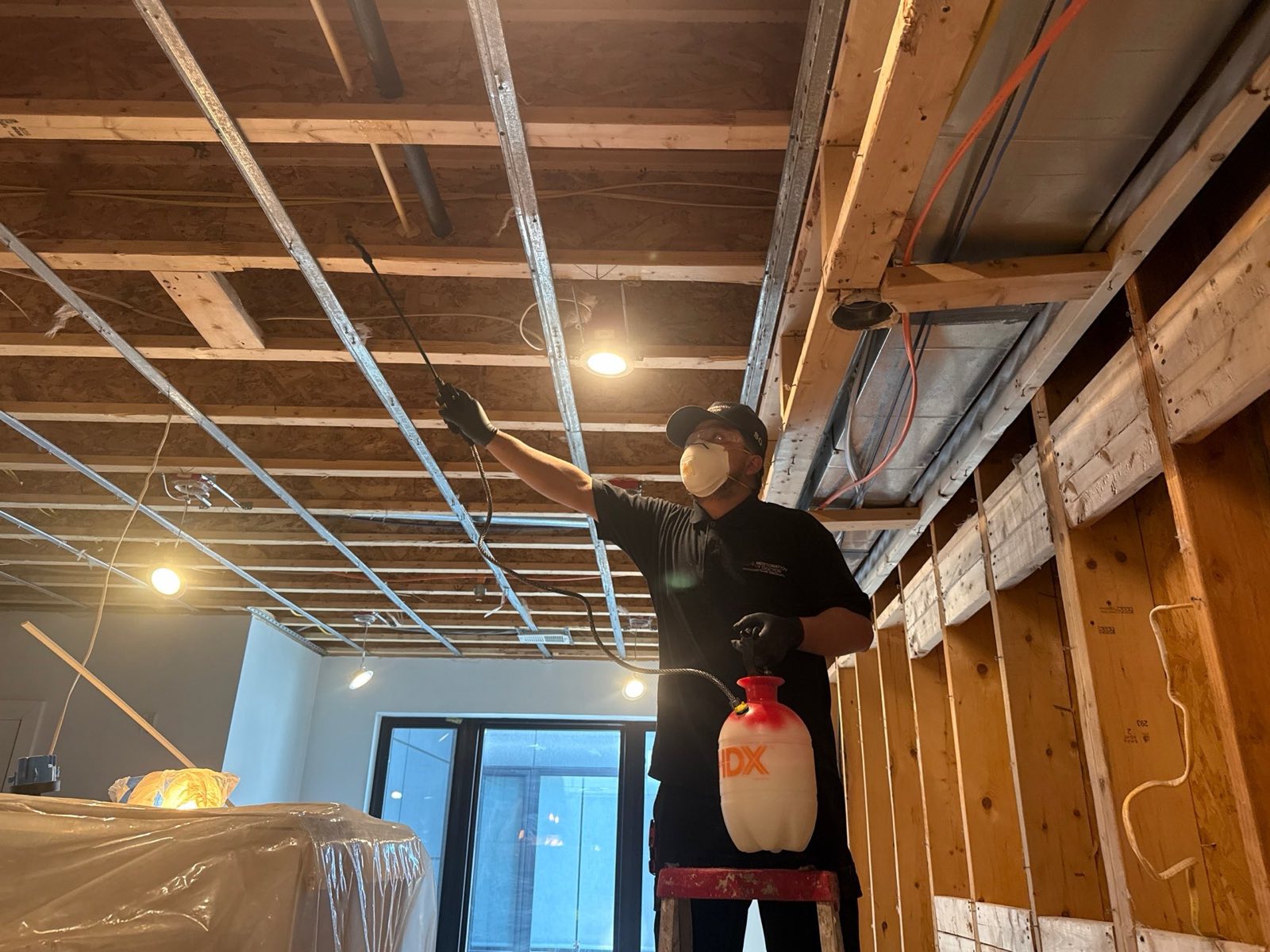
Drying a home is only half of a restoration. When a burst pipe or a fire is brought under control, what's left behind is a house that has been deliberately opened up: drywall flood-cut to expose wall cavities, baseboards and trim pulled, flooring removed, cabinetry taken out, sometimes whole rooms stripped back to the studs so they could dry. Mitigation stops the damage and gets the structure to a verified-dry, decontaminated state. Reconstruction is the phase that closes all of that back up and returns your home to the way it was before the loss — the phase where your house stops being a work site and becomes your home again.
For most homeowners, reconstruction is the part of the process they actually see and live with. It's the new drywall hung and finished, the floors replaced and refinished, the cabinets reset, the trim reinstalled, the walls repainted. Done well, the goal is invisibility: when the project is finished, there should be no trace that the loss ever happened. Getting there takes real construction trades — carpenters, drywall finishers, flooring installers, painters — working to a finish standard, not just patching holes.
One in-house operation, no handoff
The single biggest problem in restoration is the handoff. At most companies, a mitigation crew dries your home and then leaves, and you're on your own to find a general contractor to rebuild it — or you're passed to a separate reconstruction outfit that wasn't there for the drying and has to relearn your project from scratch. That gap is where restorations stall: two companies pointing at each other, a claim split across two scopes that don't reconcile, and a homeowner living in a half-finished house for months waiting for someone to take ownership.
Restoration Doctor eliminates that gap because reconstruction is in-house. The same operation that extracted the water, dried the structure, and documented the loss also carries the carpentry, licensed plumbing, licensed electrical, flooring, and finish trades to rebuild it. There's no re-bidding, no relearning, no seam in the schedule or the claim. The crew already knows what was removed and why, because they're the ones who removed it — so the rebuild picks up exactly where the drying left off, under one accountable point of contact from the emergency call to the final walk-through.
What we rebuild
Reconstruction covers the full range of interior repair a water or fire loss leaves behind. Drywall is the most common: we hang, tape, finish, and texture new board to match the surrounding surfaces so the repair disappears into the wall. Flooring is next — we replace and refinish hardwood, install tile and luxury vinyl, and lay carpet, matching the existing material wherever possible so a repaired room reads as one continuous floor rather than a patch.
Cabinetry and millwork are where craftsmanship shows. We remove and reset or replace kitchen and bath cabinetry, reinstall baseboards, casings, crown molding, and other trim, and rebuild the built-ins that a loss often takes out. Then paint ties it together: we prime and paint repaired surfaces and, where needed, whole rooms so the color and sheen match and there's no visible line between old and new. Along the way, any plumbing or electrical that was disturbed by the loss or the demolition is repaired by our licensed trades, so the walls close up over work that's done to code.
The finish standard is the whole point. A reconstruction that looks like a repair isn't finished — the measure of the work is that a room comes back looking the way it did before the loss, or better. Because our crews do this every day as the back half of restoration projects, they're building to that standard from the first sheet of drywall, not treating the rebuild as an afterthought to the drying.
A rebuild that reconciles with your claim
Reconstruction is also where a restoration claim is finished on paper. The mitigation scope documents what was removed; the reconstruction scope documents what it takes to put it back. When those two halves are written by the same company, they reconcile cleanly — the drywall that was flood-cut in the mitigation scope is the drywall that's rebuilt in the reconstruction scope, line for line. When they're split between two companies, the seams between the scopes are exactly where a carrier finds reasons to push back.
We estimate reconstruction in Xactimate with the same line-item discipline as the mitigation, photograph the rebuild in CompanyCam, and fold it into one coherent, carrier-ready claim file. We work for you, not your carrier: you pay us directly and we hand you a complete file covering mitigation, contents, and reconstruction together, which you submit to your insurer when you seek reimbursement for the cost of making your home whole. One operation, one claim, one finished house.
Frequently asked
Active water, mold, fire, or sewage event?
Connect directly with the Restoration Doctor team for your region. Crews are on standby 24/7 with documented response protocols.