
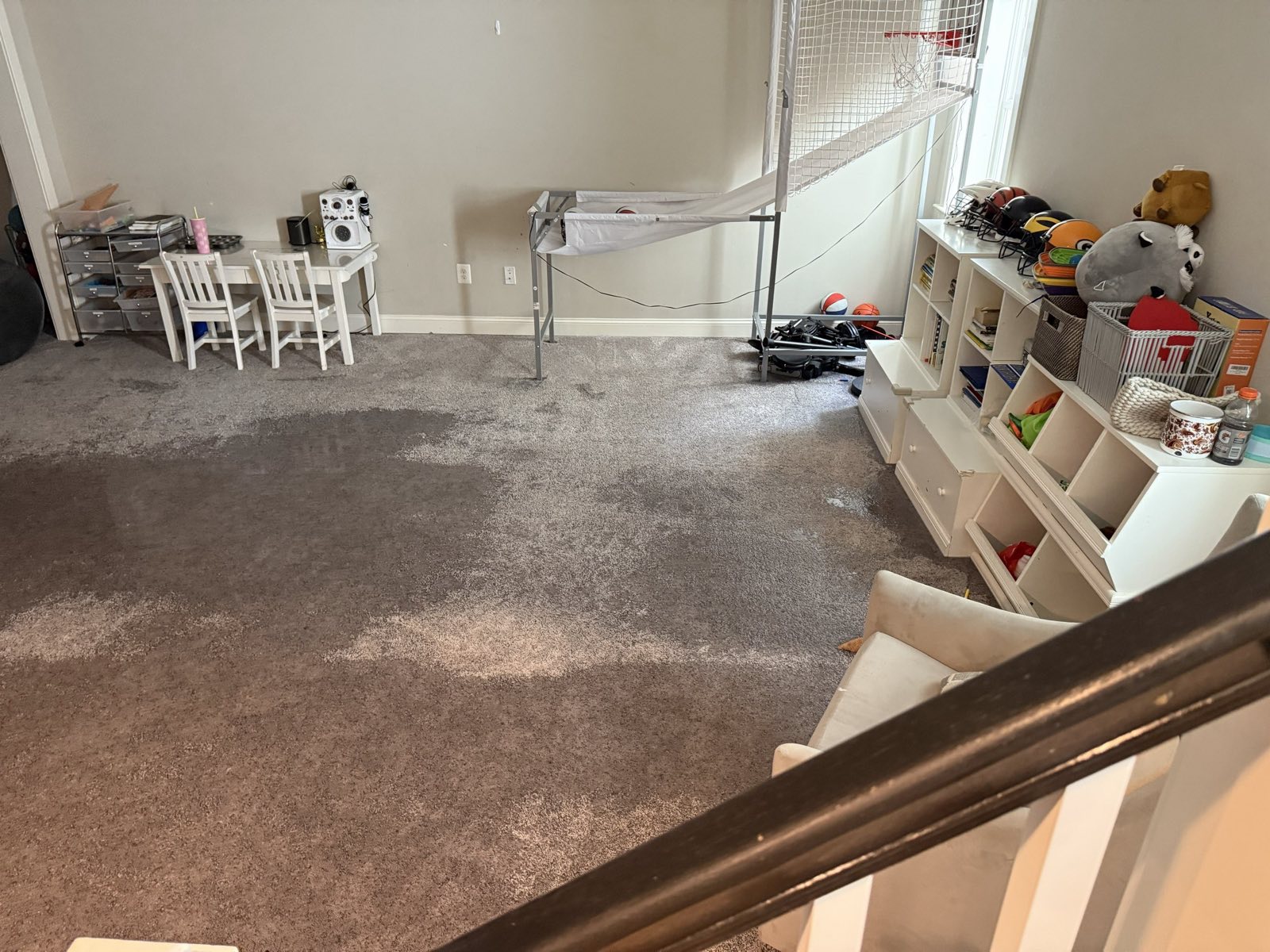
Water Damage Restoration in Northern Virginia, Maryland & Washington, DC
Emergency extraction, structural drying, and dry-standard verification for burst pipes, appliance failures, and basement flooding — documented to the standard your carrier expects.
| Metric | Value | Notes |
|---|---|---|
| Median on-site arrival time | 47 minutes | Measured median arrival across dispatched emergency projects — the middle value, not an average. Distinct from the 60-minute response SLA below. |
| Restoration projects completed to date | 10,000+ | Aggregate count of completed restoration projects to date across the VA / MD / D.C. tri-state service area. |
| Customers who file through insurance | 83% | Share of CUSTOMERS who use insurance. Restoration Doctor works for the homeowner — you pay us directly, and we build a carrier-ready claim file documented to IICRC S500 with a line-item Xactimate estimate, which you submit to your insurer when you seek reimbursement. |
| Average structural dry-out time | 4.5 days | Average time to bring a structure to documented dry standards; monitored daily with moisture readings. Individual projects vary by saturation class. |
| Emergency response SLA (NoVA core) | 60 minutes | The PROMISED response commitment across the NoVA core — a broader guarantee than the measured 47-minute median arrival. |
| Google rating (live) | 4.9★ | 4.9★ is the verified average. The review count changes nightly and is served live at /api/reviews-summary — never hardcoded. |
The first 48 hours decide the size of your loss
Water damage restoration is a race against saturation. When a supply line fails behind a Northern Virginia kitchen or a water heater lets go in a finished basement, the water you can see is a fraction of the water already moving. Within minutes it wicks into drywall, sill plates, subfloor, and carpet pad; within hours it climbs behind baseboards and into wall cavities where a paper towel will never reach it. Under the IICRC S500 standard, clean Category 1 water begins degrading toward Category 2 in roughly 48 hours and toward Category 3 within 72 — and every category jump enlarges the scope, extends the drying timeline, and raises the cost.
That progression is exactly why response speed matters more than any single piece of equipment. Restoration Doctor runs 24/7 emergency dispatch out of Vienna, and our response standard is on-site within 60 minutes across the Northern Virginia core. The goal on the first visit is simple: stop the source, remove standing water before it soaks deeper, and get the structure into a controlled drying environment while the loss is still small and still clean.
Homeowners often assume that once the visible water is gone the emergency is over. It rarely is. The materials that feel dry to the touch on day one can hold enough trapped moisture to grow mold and rot framing for weeks. Professional restoration exists to find and remove that hidden water — not just the puddle on the floor.
How our extraction and drying process works
Every project opens with an IICRC S500 inspection: we classify the water category and the saturation class, then map moisture room by room with pinless meters and thermal imaging so nothing is guessed. Thermal cameras reveal cold, wet patches behind walls and under floors that look perfectly normal to the eye, which is how we decide where drying equipment actually needs to go instead of blanketing a room and hoping.
Extraction comes next. For a small supply-line break we use portable units; for a flooded basement or a multi-room loss we bring truck-mounted extractors that pull water at a far higher rate and get the structure out of standing water fast. Once the bulk water is gone, we build the drying system — air movers to sweep moisture off surfaces and low-grain refrigerant (LGR) or desiccant dehumidifiers to pull that moisture out of the air and exhaust it. Where hardwood or dense assemblies are involved, we add specialty systems like floor-drying mats and injection drying rather than tearing out material that can be saved.
Then we monitor. Drying is not a set-it-and-forget-it process; we log a pre-drying baseline and take daily moisture readings, repositioning equipment as the numbers fall. Materials are dry when they hit documented targets — drywall and carpet at 0%, framing lumber in the 10-15% range, masonry at 5% or below — not when the calendar says a week has passed. We only demolish what genuinely cannot be dried in place, because controlled drying saves finishes, saves your money, and shortens the reconstruction phase.
Documentation built for a first-pass insurance approval
A water loss is also a paperwork event, and a restoration company that dries your home beautifully but documents it poorly can still leave you fighting your carrier. Our crews photograph every phase in CompanyCam with date and time stamps, record daily moisture logs, and write our estimates in Xactimate — the platform adjusters use — with line-item F9 notes explaining what was done and why.
That discipline is deliberate. A scope that arrives as a proper Xactimate workfile with photo support, a moisture log, and equipment specifications is one an adjuster can approve on first review instead of kicking back for revisions. Fewer revision cycles means your claim moves faster and your home gets rebuilt sooner. We work for you, not your carrier: you pay us directly and we hand you a carrier-ready claim file, which you submit to your insurer when you seek reimbursement.
One operation from first call to final walk-through
Water damage rarely ends at drying. Once the structure is dry, someone has to replace the drywall that was flood-cut, reset the baseboards, refinish or replace flooring, and repaint. When mitigation and reconstruction are split between two companies, homeowners get stuck in the gap — each side pointing at the other while the house sits half-finished.
Restoration Doctor keeps the whole project in-house. Our teams cover mitigation, licensed plumbing to repair the failure that caused the loss, licensed electrical, carpentry, and full reconstruction, so your home goes from emergency to finished under one accountable operation. That continuity is the difference between a claim that closes cleanly and one that drags on for months.
Categories and classes: why the labels change everything
Two numbers drive the entire scope, cost, and timeline of a water loss, and understanding them helps you understand your own claim. The first is the water category, which describes how contaminated the water is. Category 1 is clean water from a broken supply line or overflowing tub — sanitary at the source. Category 2, 'gray water,' carries some contamination, such as discharge from a dishwasher or washing machine, or clean water that has sat long enough to begin degrading. Category 3, 'black water,' is grossly contaminated — sewage, a main-line backup, or floodwater that has run across the ground. The category dictates how much can be cleaned and dried versus how much must be removed as contaminated waste, which is why an honest category call on the first visit is so important.
The second number is the saturation class, which describes how much water the structure absorbed and how hard it will be to dry. Class 1 is a minor loss affecting part of a room with low-porosity materials; Class 4 involves deeply saturated, low-evaporation materials like hardwood, plaster, and masonry that demand specialty drying and longer timelines. A small Category 1, Class 1 loss might dry in a few days with a couple of pieces of equipment, while a Category 3, Class 4 loss is a different order of project entirely.
We put both determinations in writing at the inspection, with the IICRC S500 reference behind each, because those labels are exactly what your carrier's adjuster is checking against. A scope that documents category and class correctly, with moisture data to support it, is a scope that gets approved — and a homeowner who understands those two numbers is far better positioned to know their loss is being handled honestly rather than padded or shortchanged.
It is worth adding that category and class are not fixed for the life of the project — they can shift, almost always for the worse, when a loss sits. Clean Category 1 water left in contact with contaminated materials or given enough time will degrade to Category 2 and then Category 3, and a Class 2 loss can climb to Class 4 as water migrates into hardwood, plaster, and wall cavities. That drift is the whole reason speed matters so much: the same burst pipe that is a modest, cleanable Category 1 loss on the night it happens can become a contaminated, tear-out-heavy project by the time it is discovered days later. Calling early does not just shorten the timeline; it can literally keep your loss in a lower, cheaper, less invasive category.
Still happening right now? Emergency response for an active water loss in Northern Virginia
Frequently asked
Active water, mold, fire, or sewage event?
Connect directly with the Restoration Doctor team for your region. Crews are on standby 24/7 with documented response protocols.