
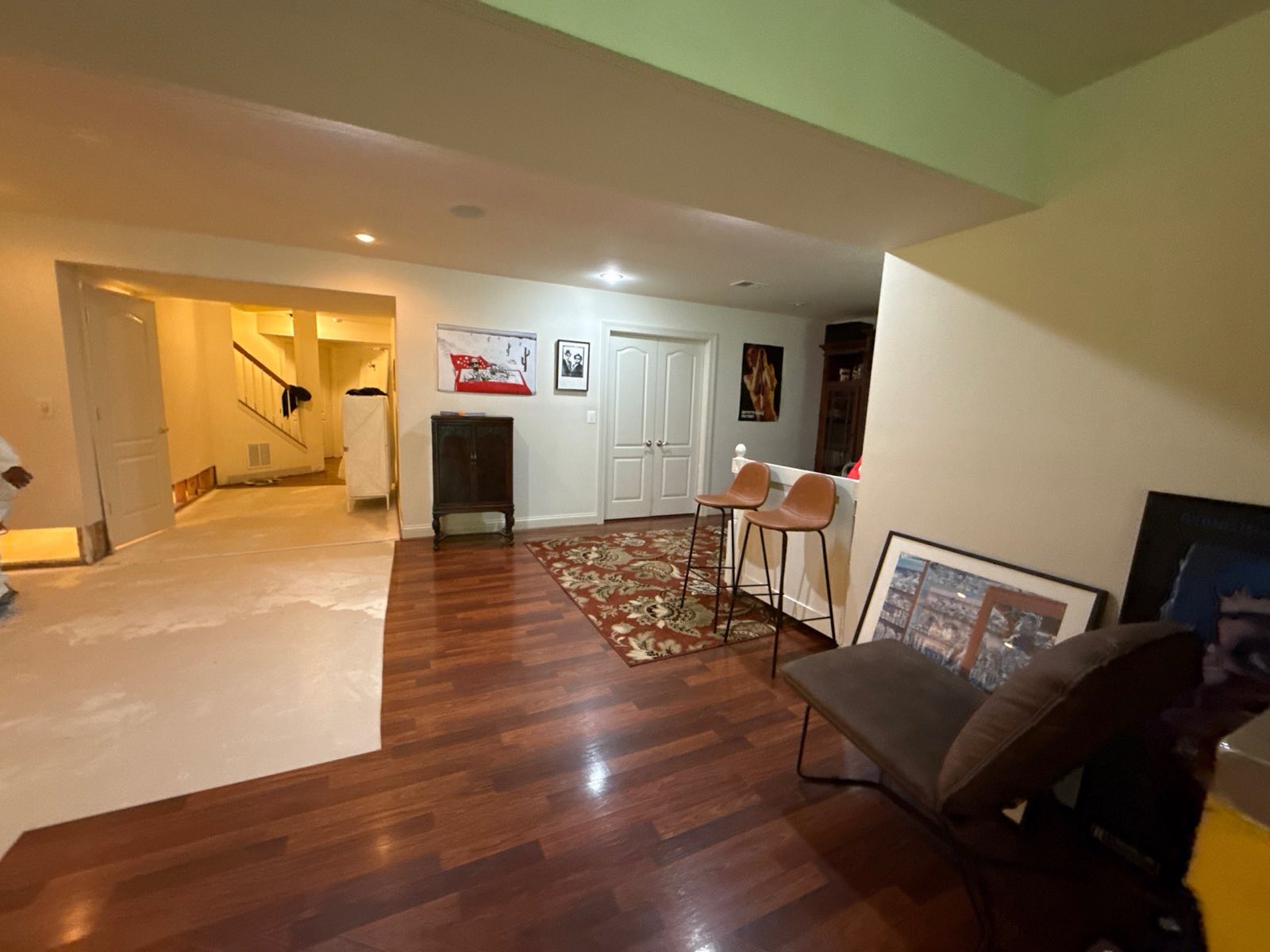
Water Damage Restoration in Leesburg, VA
Water damage restoration in Leesburg, VA runs the full span of Northern Virginia building history, because Leesburg is Loudoun County's historic seat — a town where 18th- and 19th-century brick and stone homes stand around the courthouse a few minutes from 1990s and 2000s subdivisions and upscale golf-community homes near the Potomac. A supply line failing in a two-century-old downtown rowhouse and a burst pipe in an Exeter colonial are both Leesburg water losses, and they are handled very differently. Restoration Doctor answers both around the clock, dispatching from nearby Vienna with rapid response into Loudoun and the historic core.
Leesburg's water risk is defined by both its age and its rivers. Tuscarora Creek runs straight through downtown and has a documented flash-flood history, while the Potomac River and Goose Creek floodplains on the north and east edges of town put a real number of properties into NFIP flood zones. Layer the historic masonry-and-plaster stock — which requires asbestos and lead-paint protocols before any demolition — over that flood exposure, and Leesburg becomes one of the more nuanced restoration environments in the region. We built this page for Leesburg homeowners specifically because a generic regional pitch tells you nothing about how water behaves in an 1850s plaster-walled townhouse versus a new River Creek home on the Potomac.
Whatever the source — a slow leak behind a plaster wall or flash-flood water rising off Tuscarora Creek at 2 a.m. — the response is the same discipline: stop the source, extract fast, dry to a verified standard, and document every step to the standard your carrier — or an NFIP claim — expects. Here is how that plays out across historic and riverfront Leesburg alike.
| Metric | Value | Notes |
|---|---|---|
| Median on-site arrival time | 47 minutes | Measured median arrival across dispatched emergency projects — the middle value, not an average. Distinct from the 60-minute response SLA below. |
| Restoration projects completed to date | 10,000+ | Aggregate count of completed restoration projects to date across the VA / MD / D.C. tri-state service area. |
| Customers who file through insurance | 83% | Share of CUSTOMERS who use insurance. Restoration Doctor works for the homeowner — you pay us directly, and we build a carrier-ready claim file documented to IICRC S500 with a line-item Xactimate estimate, which you submit to your insurer when you seek reimbursement. |
| Average structural dry-out time | 4.5 days | Average time to bring a structure to documented dry standards; monitored daily with moisture readings. Individual projects vary by saturation class. |
| Emergency response SLA (NoVA core) | 60 minutes | The PROMISED response commitment across the NoVA core — a broader guarantee than the measured 47-minute median arrival. |
| Google rating (live) | 4.9★ | 4.9★ is the verified average. The review count changes nightly and is served live at /api/reviews-summary — never hardcoded. |
How water damage behaves in Leesburg
Tuscarora Creek and Leesburg's flash-flood history
Tuscarora Creek runs right through downtown Leesburg and has a documented history of flash flooding — it can rise fast and hard in an intense storm, pushing water into low-lying downtown properties and basements before the rain even lets up. Flash-flood water is not clean water: it carries soil, street runoff, and contaminants, which routinely puts these losses into Category 3 territory, the classification that demands the most careful extraction, removal, and antimicrobial treatment. For a historic downtown home, that combination of dirty water and irreplaceable plaster and trim makes speed and correct classification everything.
When we respond to a Leesburg flood loss, we classify the water first, because it dictates the entire scope. A Category 3 event means saturated porous materials come out and the structure is cleaned and treated before drying, and in a historic home it means doing that while protecting the finishes worth saving and following asbestos and lead protocols on anything we open. Treating a contaminated flash-flood loss as a simple spill is how a Leesburg homeowner ends up with mold behind restored walls months later.
Potomac and Goose Creek floodplains and NFIP properties
On the north and east edges of Leesburg, the Potomac River and Goose Creek floodplains put a real number of properties into FEMA-designated flood zones, and the riverfront golf communities like River Creek sit closest to that exposure. Homes in these areas can take on floodwater from the rivers rising rather than from any plumbing failure, and that water arrives as Category 3 — carrying river sediment and contaminants — across finished basements and lower levels that may hold significant square footage and value.
These losses need the response a contaminated flood event calls for: fast, high-capacity extraction, removal of unsalvageable porous materials, thorough cleaning and antimicrobial treatment, and a properly sized drying system monitored to verified standards. We also document the loss to the standard an NFIP or high-value carrier claim expects, because floodplain properties often carry separate flood coverage with its own documentation requirements, and getting that paperwork right is part of a complete claim file.
Newer subdivisions, finished basements, and sump dependence
Away from the rivers and the historic core, Leesburg's newer subdivisions look like the rest of newer Loudoun: large finished basements on sump pumps, modern plumbing that still fails at connections, and the fast-spreading clean-water losses that come with big below-grade footprints. When a supply line or water heater fails in an Exeter or Potomac Station basement, water spreads quickly across the finished level, wicking up into drywall and soaking carpet pad and wall plates before anyone catches it.
We extract fast and set a properly sized drying system — enough air movers and high-capacity dehumidification for the footprint — then monitor daily until the structure hits verified dry standards, verifying with meters rather than guessing from the surface. And when a sump fails during a storm and lets groundwater seep in, we treat that Category 2 event with the extraction, selective removal, and antimicrobial treatment it requires, not a quick mop-and-fan.
Leesburg homes and how they fail
Leesburg's housing stock is genuinely bimodal. Historic Downtown, around the Loudoun County Courthouse, is built of 18th- and 19th-century brick, stone, and frame homes — many with original plaster walls, solid-wood trim, and hand-built basements that predate modern drainage by more than a century. These materials hold moisture stubbornly and drive mold after any loss that isn't dried quickly, and because homes of this age commonly contain asbestos-bearing materials and lead paint, any demolition has to follow the proper testing and abatement protocols before work begins. Restoring a downtown Leesburg home is as much about preserving irreplaceable historic finishes as it is about drying the structure.
Ringing that historic core are the large subdivisions built from the 1990s through the 2010s — Exeter, Potomac Station, Woodlea Manor — plus the upscale golf-community homes of River Creek and adjacent Lansdowne near the Potomac. These newer homes bring finished basements on sump pumps and modern plumbing that still fails at fittings and appliance connections, and the riverfront and floodplain properties among them carry flood exposure the downtown blocks don't. On a single day we may scope an 1840s plaster townhouse with a masonry basement and a 2008 River Creek home with a 2,000-square-foot finished lower level — and each gets a plan built for what it actually is.
Leesburg neighborhoods we serve
Real Loudoun County communities — and the water losses we most often see in each.
18th–19th century brick, stone, and plaster homes near the courthouse needing asbestos and lead protocols on any demo.
1990s–2000s single-family homes on finished basements with sump dependence and fast-spreading clean-water losses.
Newer subdivision stock where supply-line and water-heater failures reach large finished lower levels.
Established homes ringing the old town with finished basements and stormwater exposure.
Upscale golf-community homes near the Potomac with floodplain exposure and high-value finished lower levels.
Riverfront-area homes near Goose Creek and the Potomac with NFIP flood-zone risk and large basements.
Documented Leesburg projects
Real CompanyCam-documented restoration work in this city — every project photographed with date and time stamps.
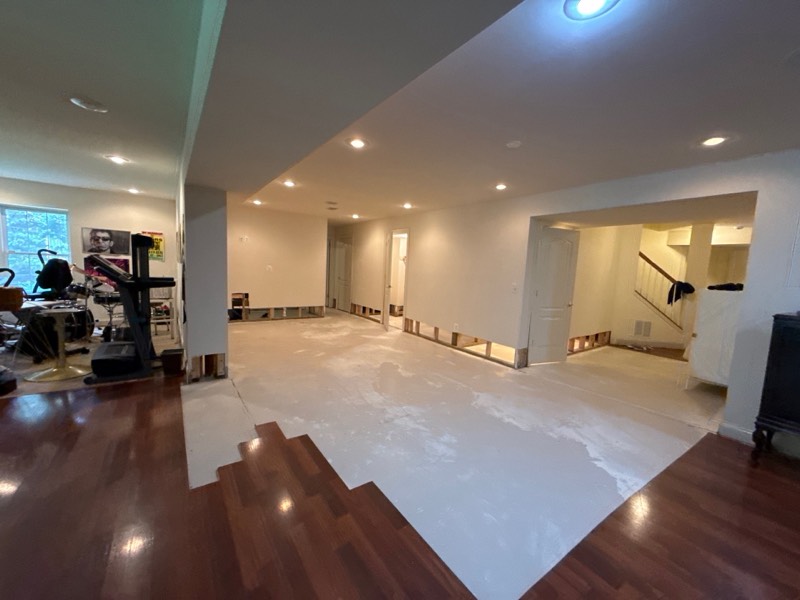
Finished-basement extraction & dry-out — Leesburg
A documented Leesburg finished-basement water loss extracted and dried with staged air movers and high-capacity dehumidification sized to the affected footprint.
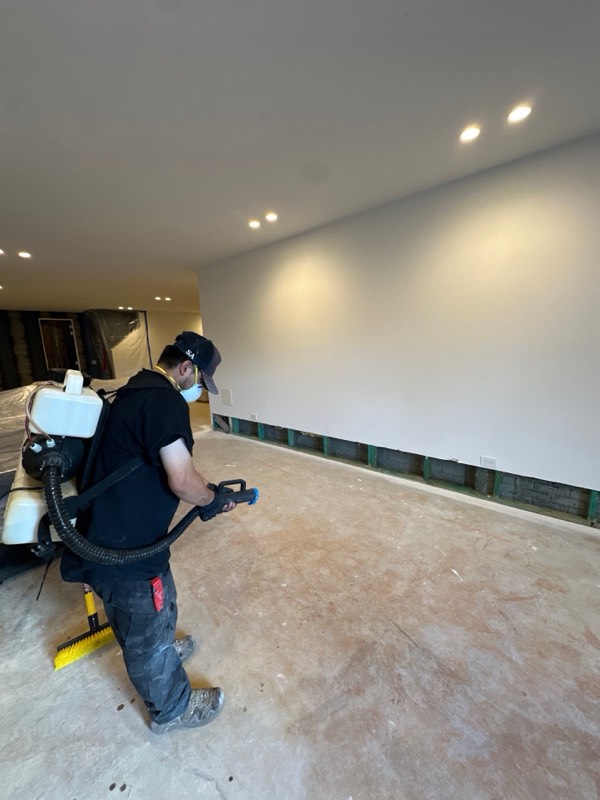
Flood cleanup & dehumidification
A documented Restoration Doctor flood cleanup showing high-capacity dehumidification drying a lower level to a verified dry standard — the process we run on Leesburg floodplain and Tuscarora Creek losses.
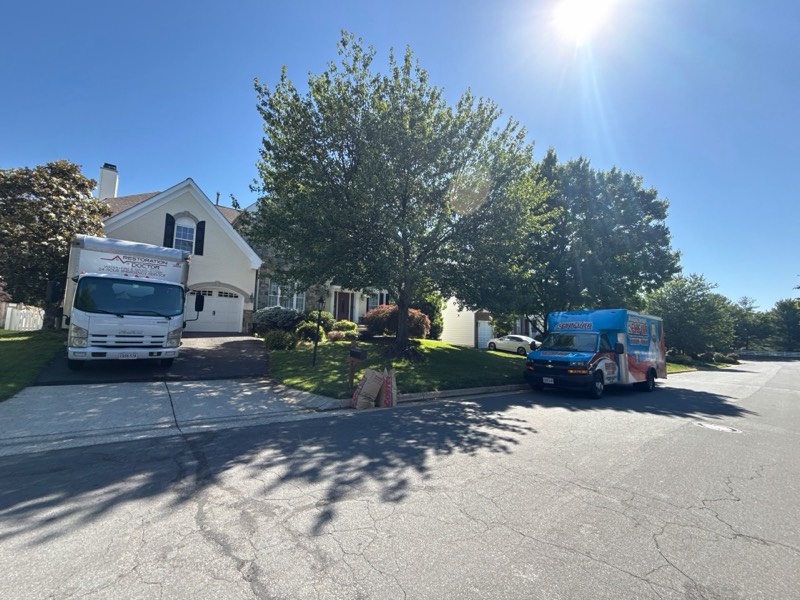
Selective demolition & structural drying
A documented Restoration Doctor project where saturated, unsalvageable material was selectively removed so the framing and cavity behind it could be cleaned, treated, and dried — the approach a contaminated flood loss requires.
Recent Leesburg water damage projects — on video
Real jobsite footage from documented restoration projects in this city — filmed by our crews, not stock.
Hidden Water Damage in Leesburg VA — Hardwood Saved, Dried to Standard, Ready to Rebuild
LEESBURG, VA · WATER DAMAGE · DOCUMENTED ON SITE
Leesburg Sewage Backup — Midnight Response, Dry-Verified in 5 Days
LEESBURG, VA · SEWAGE BACKUP - CATEGORY 3 (FINISHED BASEMENT) · DOCUMENTED ON SITE
Full restoration services in Leesburg
One operation covers every category — from emergency mitigation to full reconstruction.
Water Damage Restoration
Extraction, structural drying, and moisture verification for burst pipes, appliance leaks, and basement flooding.
Fire & Smoke Damage Restoration
Soot and smoke residue removal, odor neutralization, contents pack-out, and reconstruction after a fire.
Storm Damage Restoration
Emergency tarping, water extraction, and reconstruction after wind, hail, and heavy-rain storm events.
Mold Remediation
IICRC S520 containment, HEPA filtration, safe removal, and post-remediation clearance verification.
Sewage & Biohazard Cleanup
Category 3 black-water decontamination with full PPE, safe removal, antimicrobial treatment, and verification.
Odor Removal & Deodorization
Source-based smoke, sewage, mold, pet, and musty-odor removal using thermal fogging, hydroxyl and ozone treatment, and HVAC deodorization.
Reconstruction & Repairs
Drywall, flooring, cabinetry, trim, and paint — the same in-house crew that dried the loss rebuilds it, with no handoff between mitigation and reconstruction.
What Leesburg homeowners look for
Leesburg blends longtime residents of the historic town with newer subdivision and golf-community homeowners, and both do their homework — historic-home owners especially want a restorer who won't destroy irreplaceable plaster and trim, and floodplain owners want one who documents a flood claim correctly. The reviews that carry weight here speak to exactly those concerns: careful work in old homes, correct handling of contaminated flood water, verified drying, and insurance paperwork that held up. Those are the experiences we want documented by the people who lived them.
Rather than print star ratings on this page, we keep our verified reviews and the true aggregate Google rating on a dedicated reputation hub. You can read them at RestorationDoctorsReviews.com and then come back here to arrange service for your Leesburg home. Keeping the ratings on a separate, source-linked hub is a deliberate honesty choice: what you see there are the real Google aggregates, not numbers assembled on a marketing page.
Frequently asked
Active water, mold, fire, or sewage event?
Connect directly with the Restoration Doctor team for your region. Crews are on standby 24/7 with documented response protocols.