
Water Damage Restoration in Oakton, VA
Water damage restoration in Oakton, VA deals with a particular kind of house: the larger-lot, wooded single-family home that fills the semi-rural pocket between Vienna and Fairfax City. Oakton is unincorporated Fairfax County, and its homes — mostly 1970s–90s colonials on generous, tree-shaded lots, with a growing layer of newer custom infill — sit among the stream valleys of Difficult Run and Rocky Branch. That setting produces water losses defined as much by terrain, mature tree canopy, and deep basements as by the plumbing inside the walls. Restoration Doctor answers Oakton water emergencies 24/7 from nearby Vienna.
Oakton's larger homes tend to have deep, finished basements built out into rec rooms, home offices, and guest suites, and those below-grade spaces are the lowest point for water to collect — whether it comes from a failed sump pump, a burst supply line, or groundwater pushing in after a storm rolls through the Difficult Run valley. A subset of older Oakton properties still runs on private well and septic, which adds its own failure modes. Knowing which kind of Oakton home we are in shapes the entire response.
Whether it is a slow leak discovered under a Waples Mill kitchen or an inch of water in a Vale basement at 2 a.m., the sequence is the same: stop the source, extract before the water soaks deeper, dry to a verified moisture standard, and document every reading for your carrier. Below is how that plays out across Oakton's wooded, larger-lot homes.
| Metric | Value | Notes |
|---|---|---|
| Median on-site arrival time | 47 minutes | Measured median arrival across dispatched emergency projects — the middle value, not an average. Distinct from the 60-minute response SLA below. |
| Restoration projects completed to date | 10,000+ | Aggregate count of completed restoration projects to date across the VA / MD / D.C. tri-state service area. |
| Customers who file through insurance | 83% | Share of CUSTOMERS who use insurance. Restoration Doctor works for the homeowner — you pay us directly, and we build a carrier-ready claim file documented to IICRC S500 with a line-item Xactimate estimate, which you submit to your insurer when you seek reimbursement. |
| Average structural dry-out time | 4.5 days | Average time to bring a structure to documented dry standards; monitored daily with moisture readings. Individual projects vary by saturation class. |
| Emergency response SLA (NoVA core) | 60 minutes | The PROMISED response commitment across the NoVA core — a broader guarantee than the measured 47-minute median arrival. |
| Google rating (live) | 4.9★ | 4.9★ is the verified average. The review count changes nightly and is served live at /api/reviews-summary — never hardcoded. |
How water damage behaves in Oakton
Difficult Run, Rocky Branch, and stream-valley groundwater
Oakton is threaded by Difficult Run and Rocky Branch and their wooded stream valleys, and that geography drives a lot of the water we deal with here. Homes on or near the floodplain lots along these streams see storm runoff and a high seasonal water table, and on a large wooded lot the grading often channels surface water straight toward the foundation. After a heavy rain, that combination builds hydrostatic pressure against below-grade walls and seeps into deep basements long after the storm passes.
Water that has moved through soil is Category 2 seepage, not clean water, so we treat it accordingly — extraction, selective removal, and antimicrobial treatment rather than a quick dry-and-done. We determine whether an Oakton loss is a plumbing failure, a groundwater event, or both, address the actual source, and dry the assembly to a verified standard, because treating a grading-and-groundwater problem as a simple spill is how a deep Oakton basement grows mold behind a finished wall.
Deep finished basements are Oakton's most expensive loss
The finished basement is the defining feature of the larger Oakton home and the defining challenge of Oakton water restoration. When a sump pump fails during a storm, a water heater lets go, or a supply line bursts, water pools at the lowest point in the house and immediately begins wicking up into drywall, saturating carpet pad, and soaking the bottom plates of framed walls — often across a large, finished footprint full of belongings. Because basements are cooler and less ventilated, that trapped moisture dries slowly on its own and readily supports mold.
Sump-pump failures during heavy rain are a recurring Oakton scenario, especially given the stream-valley groundwater. When the power blips in a summer thunderstorm and the battery backup is dead, the groundwater the pump was holding back seeps in. We extract fast, then dry carpet, pad, and the lower wall assembly in place with monitored equipment wherever the water was clean, opening only what genuinely has to come out — protecting the finished space while making sure the structure behind it truly reaches a verified dry standard.
Multi-level leaks in larger homes
In Oakton's two- and three-story colonials and larger custom homes, the classic loss travels vertically. An angle-stop valve under a second-floor vanity, a failed toilet supply line, a burst washing-machine hose, or a cracked tub drain lets water find the fastest path down — through the subfloor, into the joist bays, and out through the ceiling below, frequently soaking two or three levels and finishing up in the basement before anyone notices.
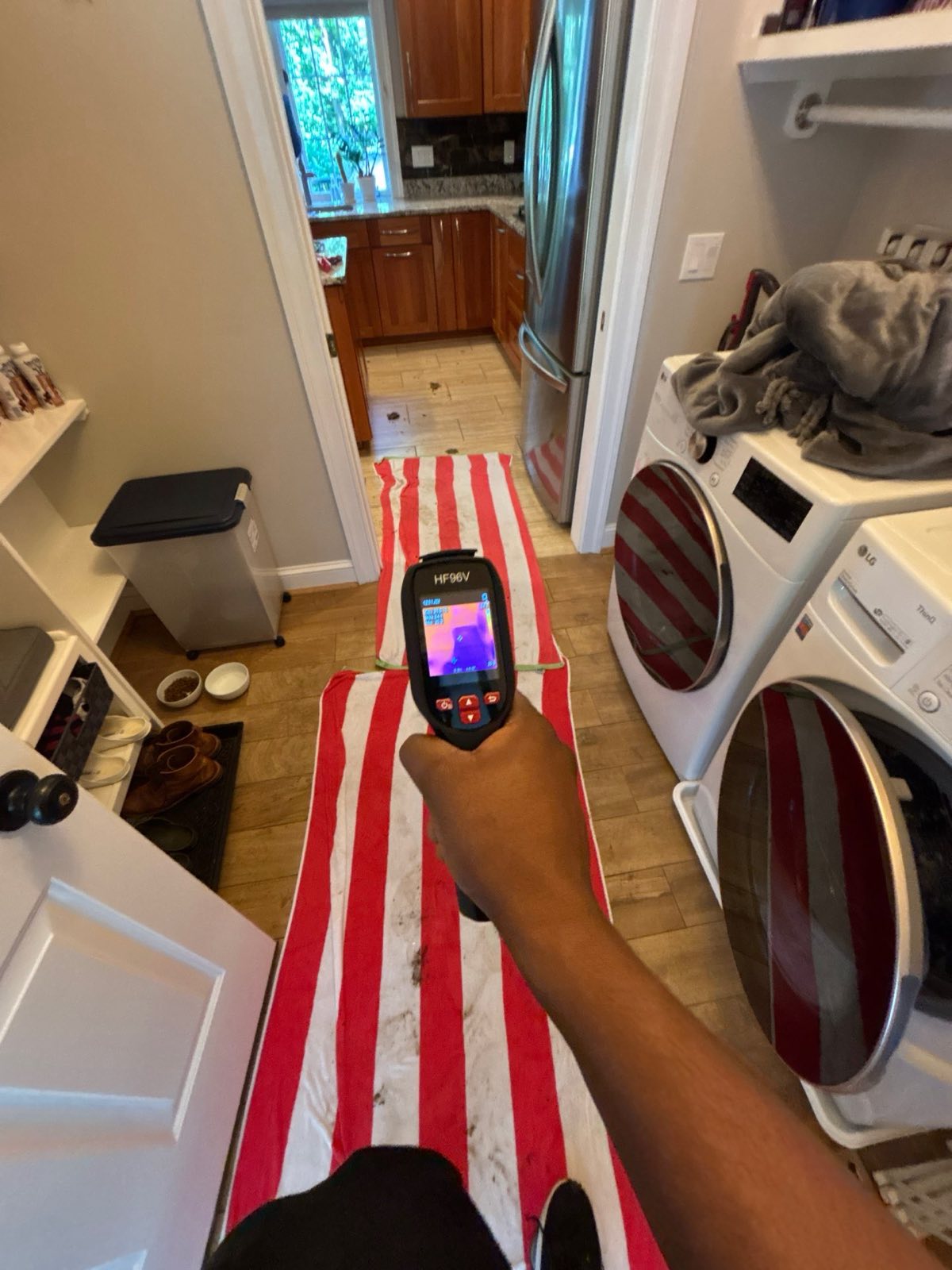
A small ceiling stain in an Oakton colonial usually means a much larger wet footprint inside the structure. We map that footprint with thermal imaging and moisture meters instead of trusting the visible stain, then dry the wall and ceiling cavities in place where we can and open only what truly must come out. In a home with high-end finishes, that in-place approach saves expensive material and shortens the reconstruction that follows.
Well, septic, and the wooded-lot climate
The older Oakton properties on private well and septic bring failure modes public-utility homes do not have. A failed well pressure tank or supply line can flood a mechanical room with clean water, while a septic backup is Category 3 black water that demands aggressive removal and disinfection rather than drying. We distinguish clearly between the two on site and coordinate with well and septic professionals on the source when needed.
Oakton's climate compounds all of it. Hot, humid summers fight natural drying — a deep basement that would air-dry in a week somewhere dry stays damp long enough to grow mold here — so we use low-grain refrigerant and desiccant dehumidification to actively pull moisture from the structure and the air. Cold-snap winters freeze exterior-wall and attic plumbing, and a burst pipe on the coldest night of the year is one of our most common Oakton calls, which is why 24/7 response is a necessity, not a slogan.
Oakton homes and how they fail
Oakton's residential fabric is dominated by 1970s–90s single-family homes on larger, wooded lots — colonials and contemporaries with two and three stories over full, often finished basements. These are substantial houses with more plumbing runs, more bathrooms, and more below-grade finished space than a typical townhouse, which means a single failure can send water across multiple levels and into an expensive lower level before anyone is home to catch it. Newer custom infill homes, built on subdivided or teardown lots, layer in high-end finishes — hardwood, custom cabinetry, and moisture-sensitive materials that raise the stakes on any loss.
The wooded, semi-rural character of Oakton is more than aesthetic. Mature tree canopy means heavy leaf litter in gutters and grading that channels surface water toward foundations, and a share of older Oakton properties still operate on private well and septic rather than public utilities. That mix — deep finished basements, larger lots, mature trees, and some well-and-septic systems — is why an Oakton loss rarely behaves like a tidy suburban spill. Our crews scope each home for its era, its finishes, and its systems, because those details tell us where the water went and how far it traveled.
Oakton neighborhoods we serve
Real Fairfax County communities — and the water losses we most often see in each.
1970s–90s colonials on wooded lots with deep finished basements where sump and supply-line failures reach the lower level.
Semi-rural larger-lot homes, some on well and septic, near the Difficult Run stream valley.
Established single-family homes along the Hunter Mill corridor where second-floor leaks travel down through multiple levels.
Subdivision stock partly in Oakton with finished basements and sump-pump dependence.
Mix of original 1970s–90s homes and newer custom infill with high-end, moisture-sensitive finishes.
Wooded floodplain-adjacent lots where grading and groundwater drive basement intrusion after storms.
Documented Oakton projects
Real CompanyCam-documented restoration work in this city — every project photographed with date and time stamps.
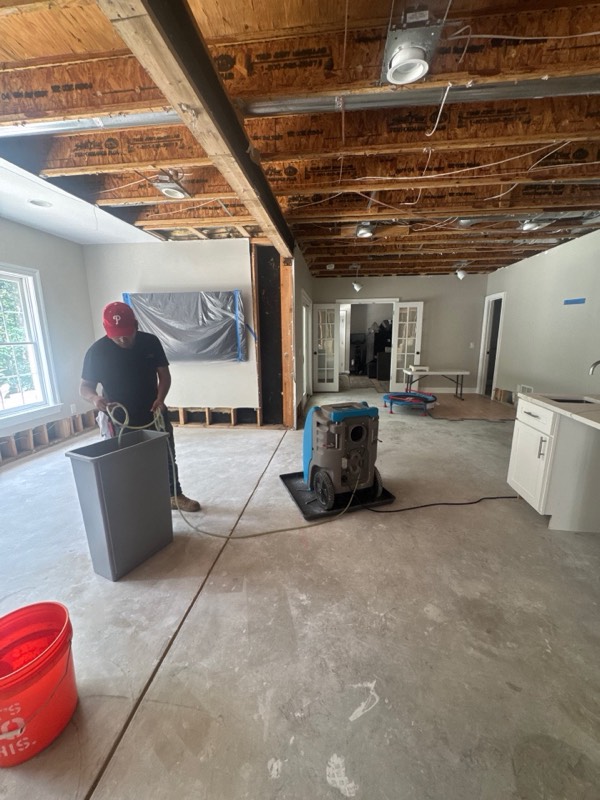
Emergency water extraction & dry-out — Oakton
Truck-mount extraction and monitored structural drying on a documented Oakton water loss, with equipment staged across the deep-basement footprint the water reached.
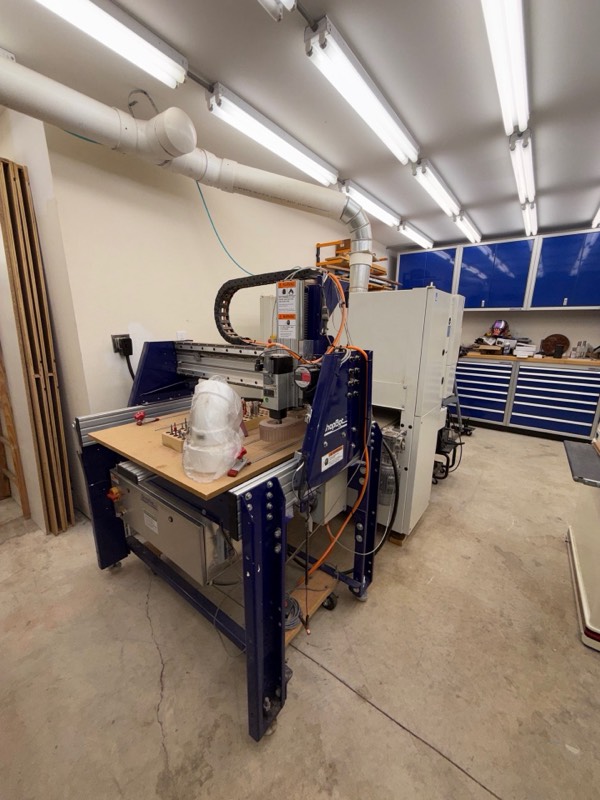
Moisture mapping & structural drying — Oakton
Moisture mapping used to follow an Oakton loss to its real edges so drying equipment is set where the water traveled, not only where it's visible.
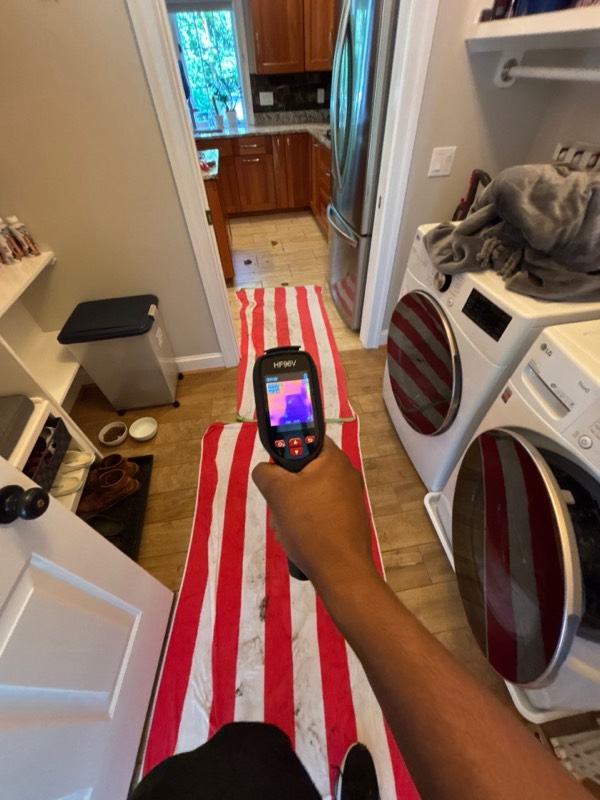
Second extraction & dry-out file — Oakton
A separate documented Oakton file showing selective material removal and monitored in-place drying to verified dry standards.
Recent Oakton water damage projects — on video
Real jobsite footage from documented restoration projects in this city — filmed by our crews, not stock.
Finished Basement Water Damage in Oakton VA — Dried, Cleaned & Verified
OAKTON, VA · FINISHED BASEMENT WATER DAMAGE · DOCUMENTED ON SITE
Full restoration services in Oakton
One operation covers every category — from emergency mitigation to full reconstruction.
Water Damage Restoration
Extraction, structural drying, and moisture verification for burst pipes, appliance leaks, and basement flooding.
Fire & Smoke Damage Restoration
Soot and smoke residue removal, odor neutralization, contents pack-out, and reconstruction after a fire.
Storm Damage Restoration
Emergency tarping, water extraction, and reconstruction after wind, hail, and heavy-rain storm events.
Mold Remediation
IICRC S520 containment, HEPA filtration, safe removal, and post-remediation clearance verification.
Sewage & Biohazard Cleanup
Category 3 black-water decontamination with full PPE, safe removal, antimicrobial treatment, and verification.
Odor Removal & Deodorization
Source-based smoke, sewage, mold, pet, and musty-odor removal using thermal fogging, hydroxyl and ozone treatment, and HVAC deodorization.
Reconstruction & Repairs
Drywall, flooring, cabinetry, trim, and paint — the same in-house crew that dried the loss rebuilds it, with no handoff between mitigation and reconstruction.
What Oakton homeowners look for
Oakton homeowners tend to research carefully before letting anyone into a home full of high-end finishes and a deep finished basement, and restoration is no exception. The reviews that carry weight here describe the things an Oakton loss actually turns on: how fast a crew arrived after a storm-driven basement flood, whether the drying was verified with real moisture readings instead of a guess, and whether the finishes were protected and the insurance paperwork held up. Those are the experiences worth putting on the record.
We keep our verified reviews on a source-linked reputation hub instead of reprinting them on this page. You can read genuine Northern Virginia customer reviews — including from homeowners near Oakton — and see the true aggregate Google rating on RestorationDoctorsReviews.com, then come back here to arrange service. Keeping the ratings on a separate, source-linked hub is a deliberate honesty choice: those are the real Google aggregates, not numbers typed onto a marketing page.
Frequently asked
Active water, mold, fire, or sewage event?
Connect directly with the Restoration Doctor team for your region. Crews are on standby 24/7 with documented response protocols.