
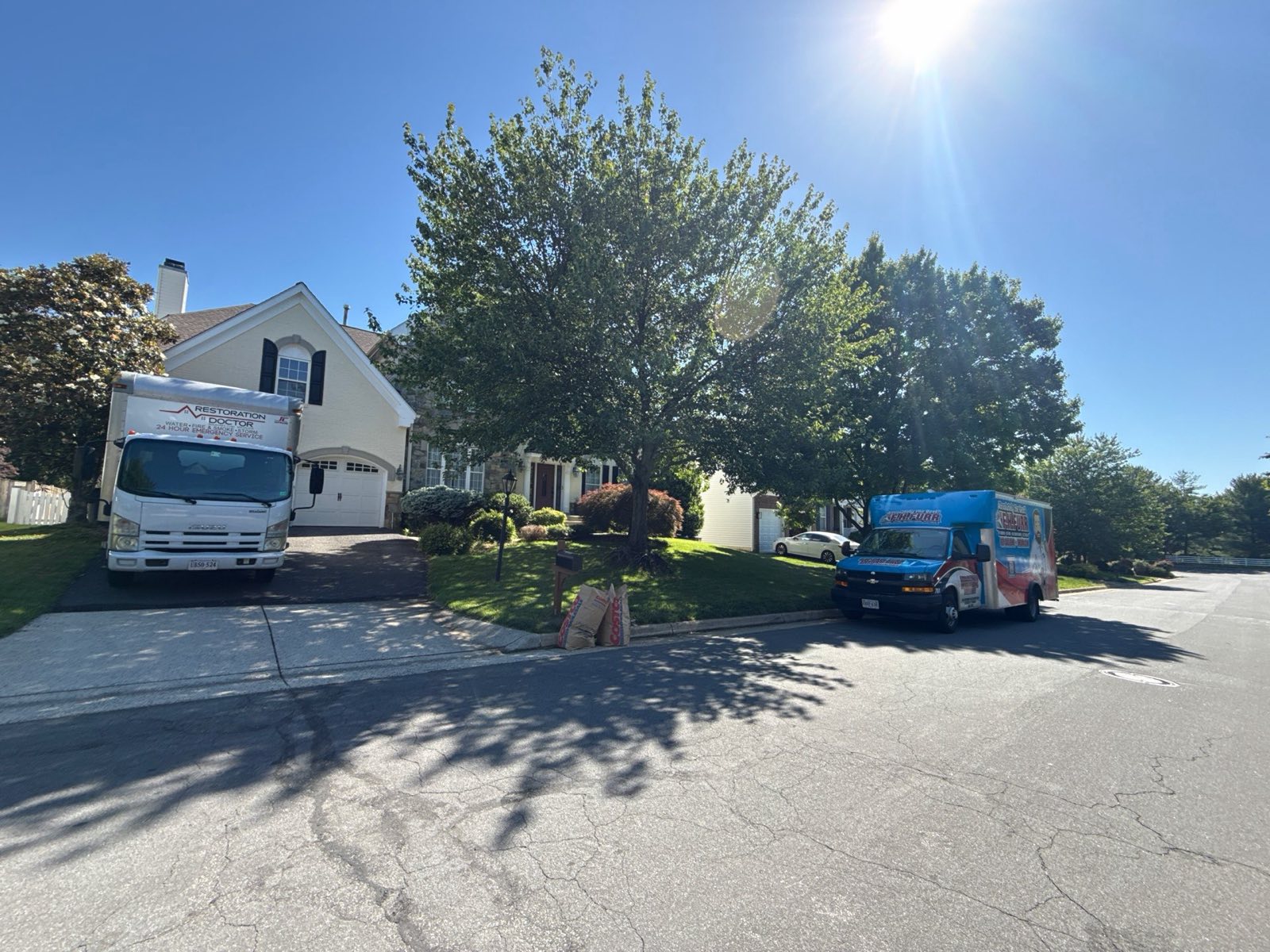
Storm Damage Restoration in Northern Virginia, Maryland & Washington, DC
Emergency board-up and tarping, water extraction, and full reconstruction after the wind, hail, and downpours that roll through NoVA every storm season.
| Metric | Value | Notes |
|---|---|---|
| Median on-site arrival time | 47 minutes | Measured median arrival across dispatched emergency projects — the middle value, not an average. Distinct from the 60-minute response SLA below. |
| Restoration projects completed to date | 10,000+ | Aggregate count of completed restoration projects to date across the VA / MD / D.C. tri-state service area. |
| Customers who file through insurance | 83% | Share of CUSTOMERS who use insurance. Restoration Doctor works for the homeowner — you pay us directly, and we build a carrier-ready claim file documented to IICRC S500 with a line-item Xactimate estimate, which you submit to your insurer when you seek reimbursement. |
| Average structural dry-out time | 4.5 days | Average time to bring a structure to documented dry standards; monitored daily with moisture readings. Individual projects vary by saturation class. |
| Emergency response SLA (NoVA core) | 60 minutes | The PROMISED response commitment across the NoVA core — a broader guarantee than the measured 47-minute median arrival. |
| Google rating (live) | 4.9★ | 4.9★ is the verified average. The review count changes nightly and is served live at /api/reviews-summary — never hardcoded. |
Northern Virginia's storm season is its own kind of emergency
Storm damage restoration in Northern Virginia has a distinct rhythm. Summer brings fast, violent thunderstorms and the remnants of tropical systems tracking up the Atlantic coast, both capable of dropping several inches of rain in an afternoon and driving straight-line winds that strip shingles and snap limbs. Winter brings the freeze-thaw cycle, where snowmelt refreezes at the roof edge into ice dams that force water back under the shingles and into the ceiling below. Different seasons, same result: water finds a way into the building envelope.
What makes storm damage urgent is that the breach and the flooding happen together. A tree limb punches through the roof and the same storm that dropped it is still pouring water through the hole. A window blows in and wind-driven rain saturates a room in minutes. Until the envelope is closed, the interior keeps taking on water — so the first job is always to stop the intrusion, not to start the cleanup.
Emergency stabilization comes first
When you call after a storm, our priority is to make the building weather-tight before more water gets in. That means emergency roof tarping over impact damage and missing shingles, board-up of broken windows and doors, and temporary shoring where structure has been compromised. Getting a secure cover over the opening stops the loss from growing hour by hour while the weather is still active.
Only once the envelope is closed does interior mitigation begin in earnest. Storm water is treated like any other water loss under IICRC S500 — categorized, extracted, and dried — but it comes with wrinkles: rain that has run across a roof or through soil can carry contaminants, and wind-driven debris and mud often come with it. We extract standing water, remove unsalvageable saturated materials, set up structural drying with air movers and dehumidifiers, and monitor to documented dry standards, all while the temporary weather protection holds.
From the roof down to the drywall
Storm losses are unusually broad because a single event can hit the roof, the exterior envelope, and the interior finishes all at once. A summer microburst might tear off shingles, drive water through the decking, soak the attic insulation, and blister the ceiling in the bedroom below — four different repairs from one storm. Restoration piecemeal, and the seams between contractors become the places your claim stalls.
Because we carry mitigation, carpentry, and full reconstruction in-house, we can take a storm-damaged home from the emergency tarp all the way through permanent roof and envelope repair, interior drying, and finish work. Coordinating the exterior repair with the interior drying under one schedule keeps the timeline tight and keeps a second storm from re-flooding a home that is still open.
Documenting a storm claim that holds up
Storm and wind claims draw closer scrutiny from carriers than a simple burst pipe, because insurers want to separate storm damage from pre-existing wear. Good documentation is your protection. We photograph the point of intrusion, the path of the water, and every affected material in CompanyCam with time stamps, and we write the scope in Xactimate with line-item notes that tie the damage to the event.
That evidence — the tarp over the impact point, the moisture readings, the itemized workfile — is what lets an adjuster approve a legitimate storm claim without a fight. We work for you, not your carrier: we build a carrier-ready claim file and manage the fire-hose of paperwork so you can focus on your household, not on chasing revisions. When the wind and rain in Northern Virginia do their worst, one call starts the whole recovery.
Storm water versus flood: the distinction that decides coverage
One of the most consequential things to understand about a storm loss is the difference between storm water and flood water, because your insurance treats them very differently. When wind or a falling limb breaches the building envelope and rain enters from above — through a damaged roof, a broken window, or torn siding — that is generally covered as wind-driven storm damage under a standard homeowners policy. When water rises from the ground up — an overwhelmed creek, surface runoff pooling against the foundation, a storm surge — that is 'flood,' and flood is excluded from standard homeowners policies. It is covered only by separate flood insurance, typically through the National Flood Insurance Program or a private flood policy.
That line matters enormously in Northern Virginia, where a single severe thunderstorm can produce both at once: a limb through the roof letting rain into the attic (storm damage) while runoff simultaneously seeps into the basement from outside (flood). The two halves of that loss may fall under two different policies, and how the cause of each is documented determines what gets paid. This is precisely why our crews photograph and record the intrusion path so carefully — establishing whether water came from above or below is not a technicality, it is the difference between a covered claim and a denied one.
There is also a prevention conversation worth having once the emergency is handled. Recurring storm losses often trace back to fixable conditions — aging or under-flashed roofs, gutters and downspouts that dump water at the foundation, negative grading that channels runoff toward the house, or a sump system with no battery backup. As we rebuild, we flag the conditions that invited the loss so the same storm next season does not produce the same call, turning a one-time repair into a genuine reduction in risk.
Northern Virginia's storm calendar makes that prevention worth taking seriously, because the threats rotate through the year rather than clustering in one season. Late spring and summer bring the violent, fast-moving thunderstorms and the occasional tropical remnant that drop enormous rainfall in a short window and drive the straight-line winds that lift shingles. Autumn can deliver the tail end of the Atlantic hurricane season as saturated, wind-heavy systems track inland. Winter shifts the risk to snow load, ice dams, and the freeze-thaw cycle that bursts exterior plumbing and forces meltwater under roofing. A home that is envelope-tight and well-drained heading into each of those seasons is far less likely to become an emergency call — which is why we treat the rebuild after a storm loss as a chance to close the specific gaps that let the weather in.
Frequently asked
Active water, mold, fire, or sewage event?
Connect directly with the Restoration Doctor team for your region. Crews are on standby 24/7 with documented response protocols.