
Water Damage Restoration in Annandale, VA
Water damage restoration in Annandale, VA is old-house work, in the best and worst senses. Annandale is a first-ring, inside-the-Beltway postwar suburb — its residential core is 1950s and 1960s brick ramblers and split-levels with finished basements — and that means the housing here is older than almost any of its neighbors, with the aging galvanized supply lines and cast-iron drain stacks to match. The losses that define Annandale aren't dramatic burst pipes so much as slow, quiet failures: a pinhole leak weeping inside a wall for weeks, a corroded drain seeping under a slab, a supply line that finally lets go behind sixty-year-old plaster. Restoration Doctor answers Annandale water emergencies 24/7 with crews staged nearby, and just as importantly, we find the slow leaks that older Annandale homes hide.
The age of these homes changes where the danger is. A slow leak in a 1950s rambler doesn't announce itself with an inch of standing water — it saturates a wall cavity, a subfloor, or the back of a finished basement quietly, and by the time a musty smell or a warped baseboard gives it away, the moisture has usually been feeding mold behind the drywall for weeks. In a sixty-year-old house full of original plaster, framing, and finished lower levels, hidden-cavity mold is the real exposure, and catching it early is the whole game.
This page is written for Annandale specifically — its mid-century housing stock, the aging-plumbing and slow-leak failures that produce hidden-cavity mold, and the Accotink Creek and Holmes Run drainages that cross it — because a 1950s Annandale home fails differently than a 1990s subdivision, and knowing where a slow leak hides is how we stop the damage before it becomes a mold remediation.
| Metric | Value | Notes |
|---|---|---|
| Median on-site arrival time | 47 minutes | Measured median arrival across dispatched emergency projects — the middle value, not an average. Distinct from the 60-minute response SLA below. |
| Restoration projects completed to date | 10,000+ | Aggregate count of completed restoration projects to date across the VA / MD / D.C. tri-state service area. |
| Customers who file through insurance | 83% | Share of CUSTOMERS who use insurance. Restoration Doctor works for the homeowner — you pay us directly, and we build a carrier-ready claim file documented to IICRC S500 with a line-item Xactimate estimate, which you submit to your insurer when you seek reimbursement. |
| Average structural dry-out time | 4.5 days | Average time to bring a structure to documented dry standards; monitored daily with moisture readings. Individual projects vary by saturation class. |
| Emergency response SLA (NoVA core) | 60 minutes | The PROMISED response commitment across the NoVA core — a broader guarantee than the measured 47-minute median arrival. |
| Google rating (live) | 4.9★ | 4.9★ is the verified average. The review count changes nightly and is served live at /api/reviews-summary — never hardcoded. |
How water damage behaves in Annandale
Slow leaks and hidden-cavity mold
The signature Annandale loss is the one you can't see. A pinhole leak in a corroded galvanized line, a weeping cast-iron drain joint, or a slow supply-line seep can run inside a wall or under a finished basement for weeks, saturating framing, drywall, and insulation without ever producing visible standing water. Because sixty-year-old plaster and wood hold moisture so well, that trapped dampness feeds mold behind the finish long before a musty smell, a stain, or a warped baseboard finally gives it away.
This is where diagnosis matters more than horsepower. We use thermal imaging and moisture meters to trace the actual extent of a hidden leak rather than opening walls at random, isolate and repair the failing pipe with in-house licensed plumbing, and dry the cavity to a verified standard. When mold has already taken hold — as it often has by the time a slow Annandale leak is discovered — we remediate it under IICRC S520 with proper containment, not by spraying bleach and hoping.
Galvanized supply lines and cast-iron drains
The plumbing behind Annandale's walls is the root of most of its losses. Galvanized-steel supply lines from the 1950s–60s corrode internally over decades until they leak or fail outright, and the cast-iron drain and waste stacks of the same era rust, crack at the joints, and can back up or seep — a drain-side failure that carries Category 2 or 3 water rather than clean supply water. Both are well past their intended service life across much of Annandale's housing.
We don't just dry the aftermath of these failures — we fix the cause. Our in-house plumbers repair or replace the failed galvanized line or cast-iron section that caused your loss, so the same corroded run doesn't fail again a few feet down the pipe. Classifying the water correctly matters here too: a supply-line leak and a cracked drain stack are very different projects, and we scope each for what it actually is.
Accotink Creek, Holmes Run, and basement seepage
Annandale is crossed by Accotink Creek and Holmes Run, with floodplain pockets and low-lying stretches that take on stormwater in heavy rain. The finished basements that are nearly universal here depend on sump pumps to hold groundwater back, and on mature-canopy lots, decades-old grading and clogged gutters push roof and surface water toward the foundation, adding to the load. When a storm overwhelms the pump or knocks out power to a home with a dead backup, water seeps in through the foundation — a Category 2 event once it has moved through soil.
We treat these seepage losses for what they are, with extraction, selective removal, and antimicrobial treatment appropriate to the water class rather than a quick mop-and-fan. And because Annandale's finished basements combine below-grade exposure with old materials and stored belongings, monitored in-place drying is essential — a cool, slow-drying mid-century basement grows mold quickly if it's left damp.
Older materials and the Little River Turnpike corridor
Working in sixty-year-old Annandale homes means respecting what they're built from. Pre-1978 homes can contain lead paint, and older finishes and flooring may involve asbestos, so demolition in this stock is approached carefully with the testing those materials require before anything comes out — a step newer-construction projects simply don't need.
Annandale is also more than ramblers on quiet streets. The Little River Turnpike (Route 236) corridor and the Koreatown business district bring shops, restaurants, and mixed-use buildings into the service area, each with its own commercial water exposure — supply and drain failures, roof and envelope leaks, and after-hours flooding that has to be dried around an operating business. We handle those with the same fast extraction and containment, documented to the standard a commercial carrier expects.
Annandale homes and how they fail
Annandale's residential fabric is classic first-ring postwar suburbia, built out largely in the 1950s and 1960s as one of the earliest bedroom communities inside the Beltway. Neighborhoods like Broyhill Crest, Hillbrook, Camelot, Sleepy Hollow, Wakefield, Ravensworth, and Little River Hills are dominated by brick ramblers and split-levels on established, mature-canopy lots, nearly all with finished basements that were built out into rec rooms, offices, and in-law suites over the decades. This is some of the oldest single-family stock in the service area, and its age is the defining restoration factor.
Sixty-year-old plumbing is a real and constant risk here. Many Annandale homes still run aging galvanized-steel supply lines that corrode from the inside and spring pinhole leaks, and cast-iron drain stacks from the same era that crack, rust through, and leak inside walls and under slabs. A subset of later homes carry failure-prone polybutylene supply lines. The finished basements that make these homes livable are also the lowest point where water collects, and combined with old plaster and framing that hold moisture well, they make Annandale a place where a small, slow leak quietly becomes a hidden-cavity mold problem.
Annandale neighborhoods we serve
Real Fairfax County communities — and the water losses we most often see in each.
1950s–60s brick ramblers where corroded galvanized supply lines produce slow, hidden leaks and cavity mold.
Established mid-century homes with finished basements exposed to cast-iron drain failures and storm seepage.
Postwar single-family neighborhood where aging plumbing behind old plaster leaks quietly for weeks before it's found.
Split-levels and ramblers on mature-canopy lots where grading and gutter issues drive basement intrusion.
Older homes near Accotink Creek floodplain pockets facing sump-dependent basement seepage.
Shops, restaurants, and mixed-use buildings with commercial supply, drain, and roof-leak exposure.
Documented Annandale projects
Real CompanyCam-documented restoration work in this city — every project photographed with date and time stamps.
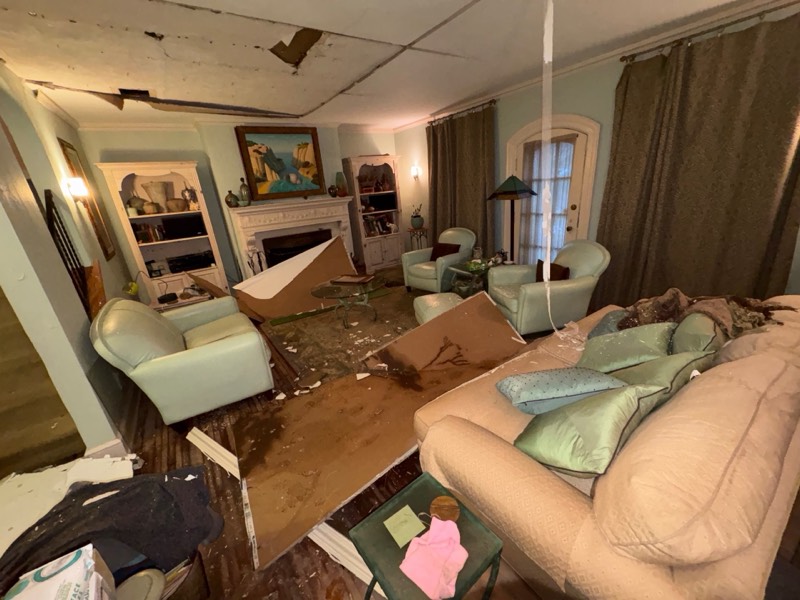
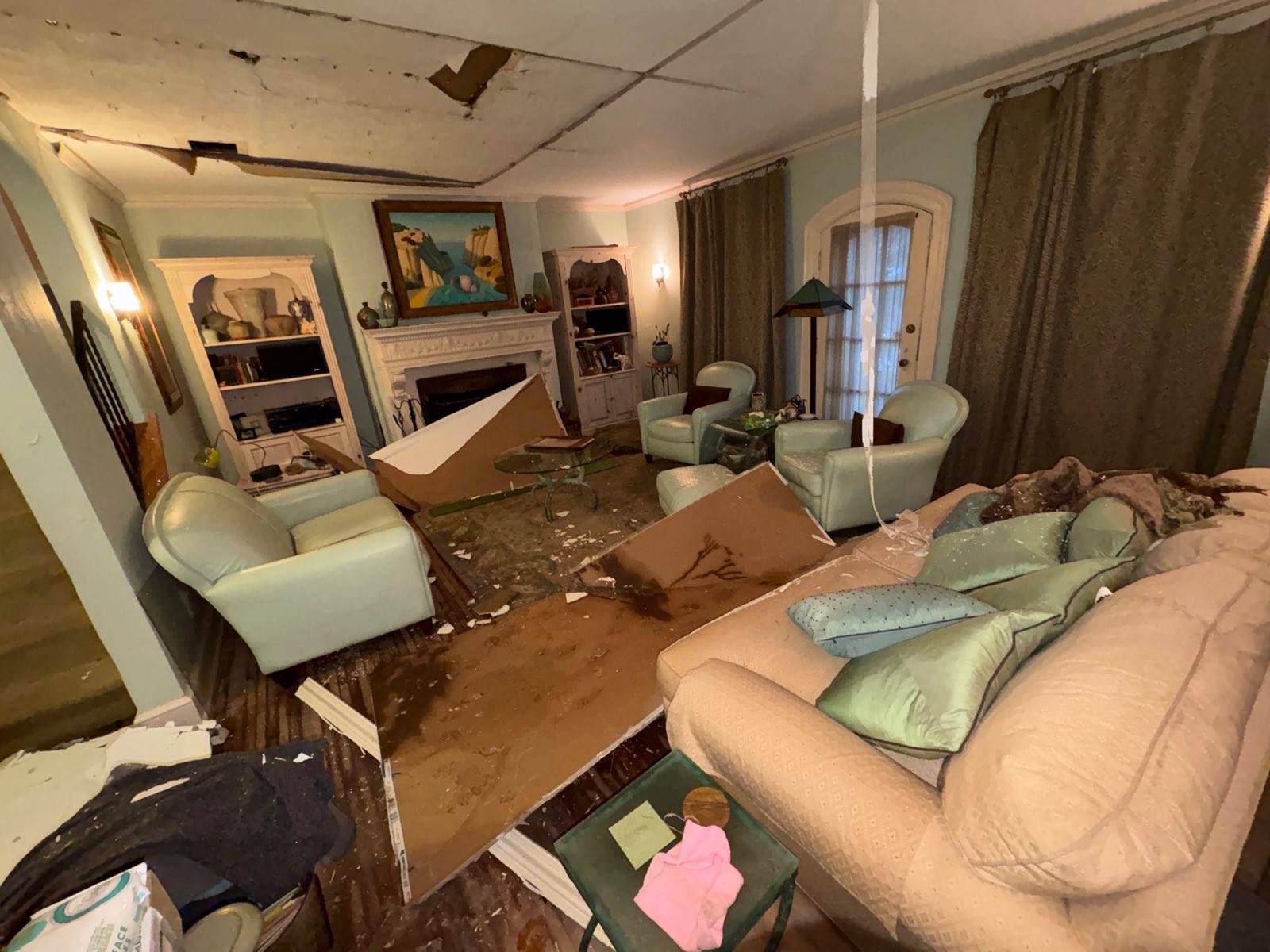
Ceiling & wall damage from a hidden leak
Ceiling and drywall failure in a finished living space after a leak worked through the assembly — the kind of slow, hidden loss an aging Annandale supply line produces before it's discovered. A documented Restoration Doctor project.
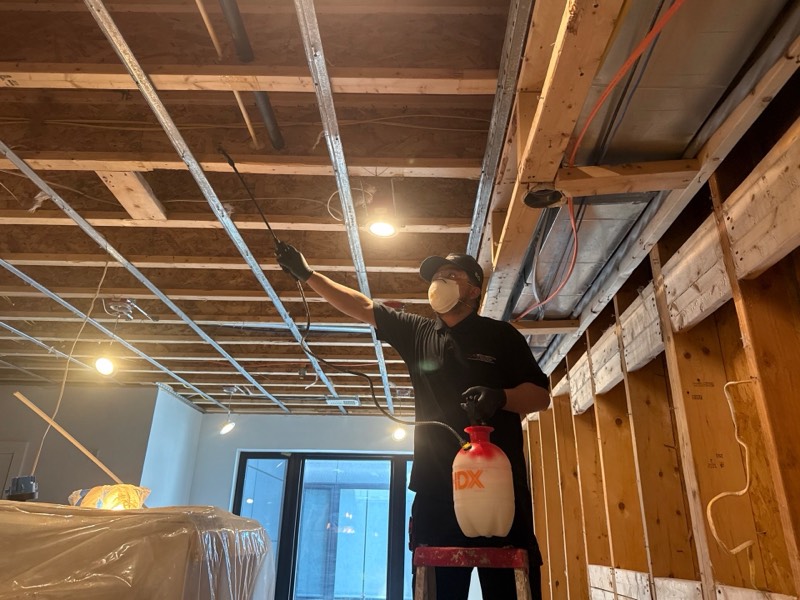
Antimicrobial treatment & mold control
Antimicrobial application to exposed framing after selective demolition — the hidden-cavity mold control an older Annandale home so often needs once a slow leak is finally found. A documented Restoration Doctor project.
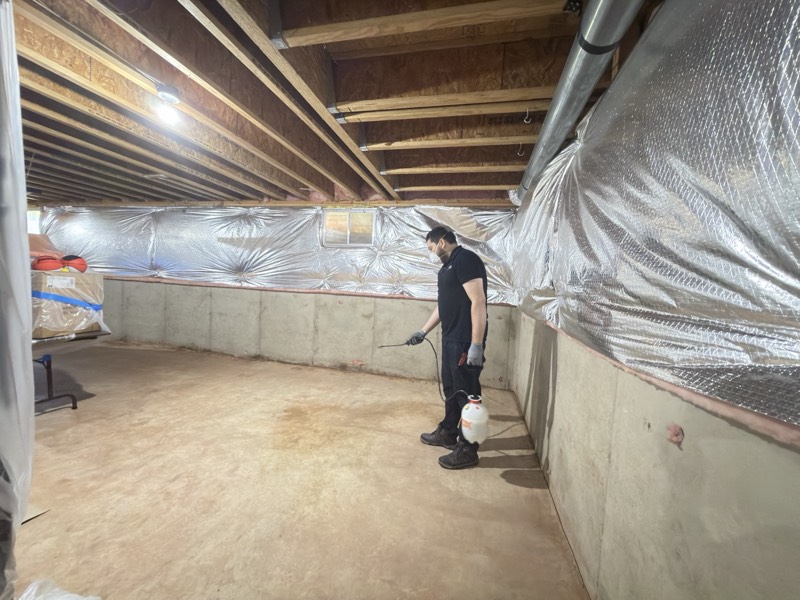
Below-grade drying & decontamination
Antimicrobial treatment across an unfinished below-grade space after a water loss — the basement decontamination that mid-century Annandale homes on sump-dependent lower levels regularly require. A documented Restoration Doctor project.
Full restoration services in Annandale
One operation covers every category — from emergency mitigation to full reconstruction.
Water Damage Restoration
Extraction, structural drying, and moisture verification for burst pipes, appliance leaks, and basement flooding.
Fire & Smoke Damage Restoration
Soot and smoke residue removal, odor neutralization, contents pack-out, and reconstruction after a fire.
Storm Damage Restoration
Emergency tarping, water extraction, and reconstruction after wind, hail, and heavy-rain storm events.
Mold Remediation
IICRC S520 containment, HEPA filtration, safe removal, and post-remediation clearance verification.
Sewage & Biohazard Cleanup
Category 3 black-water decontamination with full PPE, safe removal, antimicrobial treatment, and verification.
Odor Removal & Deodorization
Source-based smoke, sewage, mold, pet, and musty-odor removal using thermal fogging, hydroxyl and ozone treatment, and HVAC deodorization.
Reconstruction & Repairs
Drywall, flooring, cabinetry, trim, and paint — the same in-house crew that dried the loss rebuilds it, with no handoff between mitigation and reconstruction.
What Annandale homeowners look for
Annandale's long-tenured homeowners tend to know their old houses well, and they want a restorer who can find the slow leak they suspect and handle the mold it may already have caused. The feedback that matters here speaks to careful diagnosis of a hidden leak, honest remediation of hidden-cavity mold, and respect for the older materials in a mid-century home — not just a crew that runs fans. Those are the experiences worth recording for an Annandale homeowner.
We don't paste review quotes onto this page. You can see the real Google aggregate — and read the reviews behind it — on RestorationDoctorsReviews.com, our dedicated reputation hub, then return here to arrange service for your Annandale home. Keeping the ratings on a separate, source-linked hub is a deliberate honesty choice: the score you see there is the genuine Google aggregate, not a number selected to flatter a marketing page.
Frequently asked
Active water, mold, fire, or sewage event?
Connect directly with the Restoration Doctor team for your region. Crews are on standby 24/7 with documented response protocols.