
Water Damage Restoration in Reston, VA
Water damage restoration in Reston, VA is defined by the way Robert E. Simon designed the place: a planned community built around water and woods, with four man-made lakes, ribbons of stream-valley greenway, and homes clustered close together by design. That layout is beautiful and it is also a water-loss map. Homes back up to lakes, ponds, and drainage ways, townhomes share walls so a leak in one unit becomes a problem in the next, and the 1960s–70s contemporary architecture that gives Reston its character was built with flat roofs and wood siding that are prone to envelope leaks. Restoration Doctor responds across Reston 24/7 and reads a loss here through that planned-community lens.
Reston's housing stock is unusually specific. The original village is clustered townhomes, garden condominiums, and contemporary wood-sided single-family homes from Simon's 1960s–70s build-out around Lake Anne, Hunters Woods, and South Lakes — low-slung, wood-forward, and intentionally woven into the landscape. Layered onto that is the newer Reston: luxury high-rise condos and apartments at Reston Town Center that went up after the 2014 Silver Line arrived, with the stacked-unit water risks that come with tower living. A loss in a 1970s cedar-sided townhome and a loss on the twelfth floor of a Town Center high-rise are different projects, and we scope each accordingly.
Whether the water is an envelope leak weeping into a wall cavity of a South Lakes contemporary, a shared-wall overflow between Hunters Woods townhomes, or an appliance-line failure in a Reston Town Center condo, the response holds: find the true source, extract before it spreads, dry the hidden cavities to a verified standard, and document every reading for your carrier. Here is how water actually behaves across Reston's clustered, lakeside community.
| Metric | Value | Notes |
|---|---|---|
| Median on-site arrival time | 47 minutes | Measured median arrival across dispatched emergency projects — the middle value, not an average. Distinct from the 60-minute response SLA below. |
| Restoration projects completed to date | 10,000+ | Aggregate count of completed restoration projects to date across the VA / MD / D.C. tri-state service area. |
| Customers who file through insurance | 83% | Share of CUSTOMERS who use insurance. Restoration Doctor works for the homeowner — you pay us directly, and we build a carrier-ready claim file documented to IICRC S500 with a line-item Xactimate estimate, which you submit to your insurer when you seek reimbursement. |
| Average structural dry-out time | 4.5 days | Average time to bring a structure to documented dry standards; monitored daily with moisture readings. Individual projects vary by saturation class. |
| Emergency response SLA (NoVA core) | 60 minutes | The PROMISED response commitment across the NoVA core — a broader guarantee than the measured 47-minute median arrival. |
| Google rating (live) | 4.9★ | 4.9★ is the verified average. The review count changes nightly and is served live at /api/reviews-summary — never hardcoded. |
How water damage behaves in Reston
Lakes, ponds, and stream-valley greenways
Reston's four man-made lakes — Lake Anne, Lake Thoreau, and Lake Audubon among them — plus its extensive stormwater ponds and stream-valley greenways put a remarkable number of homes near standing water. Lakefront and pond-adjacent townhomes and condos sit low relative to the water table, and after heavy rain the surrounding soil stays saturated, driving hydrostatic pressure against below-grade and ground-level walls and pushing water in through slabs and foundations. Water that arrives this way has moved through soil and stormwater and is Category 2 or worse, not clean supply water.
We classify and treat those lakeside and pond-adjacent losses accordingly — extraction, selective removal of unsalvageable porous materials, and antimicrobial treatment — rather than a quick dry-out. It is also where our storm damage restoration work overlaps: the storms that raise Reston's lakes and overwhelm its ponds are frequently the same events that drive water in through a roof or a wall, and we handle the envelope and interior as one loss.
Envelope leaks and hidden-cavity mold in 1970s contemporaries
Reston's signature 1960s–70s contemporaries were built with flat or low-slope roofs and wood siding on wooded lots — an aesthetic that ages into a specific vulnerability. Over decades, roof membranes fail at seams, siding and trim let water past, and windows integrated into large glass walls leak, so moisture enters wall and roof cavities and travels unseen. Because that water is hidden inside the assembly, homeowners often do not know they have a problem until a stain, a soft spot, or the smell of mold finally surfaces — by which point growth is established in the cavity.
This is where thermal imaging and moisture meters earn their keep in Reston. We trace the true path of an envelope leak rather than guessing from the visible mark, dry the cavity in place where we can, and remediate hidden mold under IICRC S520 when we find it. Catching a Reston envelope leak early is the difference between drying a wall and rebuilding one.
Shared-wall losses in clustered townhomes and condos
Clustering is central to Reston's design, and it means water rarely respects a property line. In the townhome courts of Hunters Woods, South Lakes, and Tall Oaks, a burst supply line or an overflowed fixture follows the fastest path — through the party wall into the neighbor's home or down into a stacked lower unit — turning one owner's failure into two or three households' problem. Getting ahead of that requires drying on both sides of the shared wall and a clear map of exactly which units the water reached.
We are set up for those multi-party losses: we contain and dry each affected unit, document the damage separately for the individual insurance claims involved, and coordinate with the cluster association or condo management on access and any common-element work. It keeps a shared-wall Reston loss from becoming a neighbor dispute on top of a water emergency.
High-rise losses at Reston Town Center
The post-2014 towers around Reston Town Center bring high-rise water dynamics to Reston: stacked units, vertical migration, and plumbing that runs directly above other homes. A single upper-floor failure can send water cascading down through multiple floors, into corridors, elevator lobbies, and the mechanical chases that thread the building. Portable equipment and a single-unit mindset are not enough for that footprint.
We respond to tower losses with fast multi-floor extraction and a properly sized drying system, documenting the loss floor-by-floor for the separate claims and coordinating with building management on access and common areas. When an upper-floor sanitary line is the source, the same call becomes a Category 3 sewage and biohazard cleanup, handled with the containment and disinfection those losses require.
Reston homes and how they fail
The heart of Reston is Simon's planned village: clustered townhomes, garden-style condominiums, and contemporary wood-sided single-family homes built from the mid-1960s through the 1970s around Lake Anne, Hunters Woods, South Lakes, and North Point. Two features of this stock drive most of our work. First, the architecture — flat and low-slope roofs, deep wood siding, and lots of glass integrated into wooded, sloping sites — is prone to envelope leaks that let water into wall and roof cavities where it hides and feeds mold long before a stain appears. Second, the clustering — party walls and stacked units — means a single failure rarely stays in one home; water crosses the shared wall or drops to the unit below.
The newer Reston is vertical and dense. Around Reston Town Center and the Silver Line stations, post-2014 luxury high-rise condos and apartment towers stack dozens of units with plumbing running directly over the ceilings below. A dishwasher line, a water heater, or an overflowed tub on an upper floor becomes a multi-floor loss in minutes. Between the two Restons sit the community's stormwater ponds and stream valleys, which keep many lots — old and new — close to standing water and elevated groundwater after heavy rain.
Reston neighborhoods we serve
Real Fairfax County communities — and the water losses we most often see in each.
Simon's original village center — clustered townhomes and condos beside the lake with envelope-leak and groundwater exposure.
1970s contemporary townhomes and garden condos where shared-wall losses spread between units.
Wood-sided contemporaries on wooded, sloping lots near Lake Thoreau prone to hidden-cavity envelope leaks.
Clustered townhomes and single-family homes with 1970s-80s plumbing now reaching failure age.
Townhome community where party-wall supply-line failures become multi-unit losses.
Post-2014 luxury high-rise condos where an upper-floor failure drops water through multiple stacked floors.
Documented Reston projects
Real CompanyCam-documented restoration work in this city — every project photographed with date and time stamps.
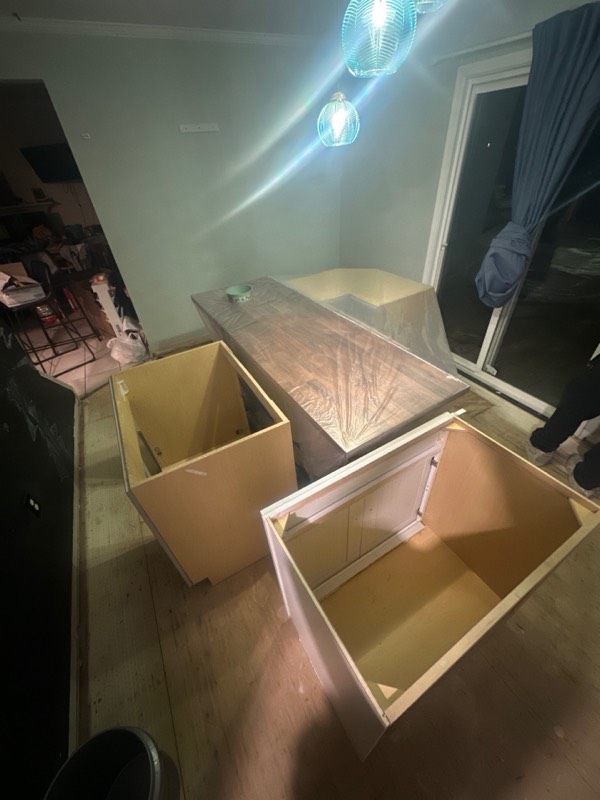
Emergency flood response & structural drying — Reston
Emergency flood response on a Reston loss, with quick extraction and a properly sized drying system monitored until the structure hits a verified dry standard.
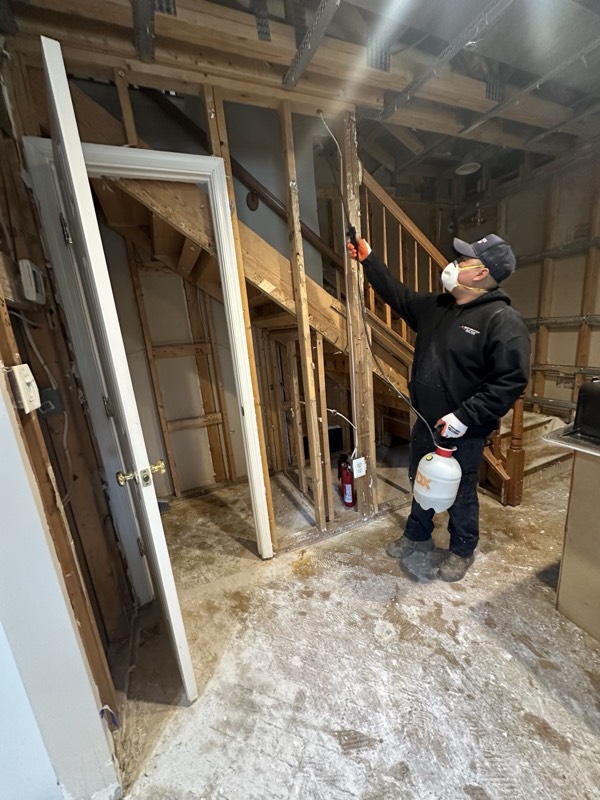
Residential water damage restoration — Reston
A documented Reston residential water loss taken from extraction through monitored in-place drying, keeping salvageable finishes and cavities dry.
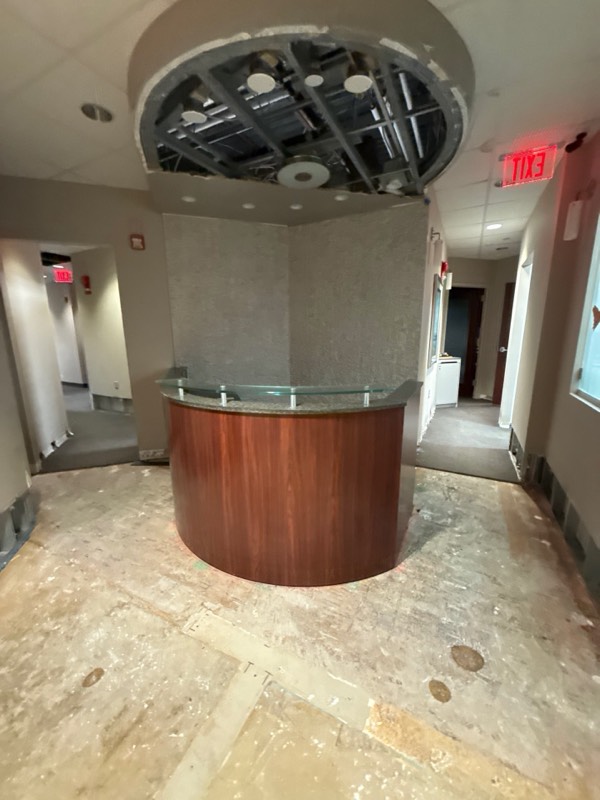
Water extraction & contents protection — Reston
Water extraction with early contents protection on a Reston loss — at-risk belongings moved to dry staging while the structure is dried.
Recent Reston water damage projects — on video
Real jobsite footage from documented restoration projects in this city — filmed by our crews, not stock.
Whole-Home Water Damage Turnaround in Reston
RESTON, VA · WHOLE-HOME WATER DAMAGE · DOCUMENTED ON SITE
Whole-Home Water Damage Turnaround in Reston
RESTON, VA · WHOLE-HOME WATER DAMAGE · DOCUMENTED ON SITE
Whole-Home Water Damage in Reston VA — Dried to the Studs, Verified, Ready to Rebuild
RESTON, VA · WHOLE-HOME WATER DAMAGE · DOCUMENTED ON SITE
Kitchen Water Damage in Reston VA — Dried to the Subfloor, Ready to Rebuild
RESTON, VA · KITCHEN WATER DAMAGE - SUPPLY/APPLIANCE LEAK WITH HIDDEN-MOISTURE MIGRATION INTO CABINETS, SUBFLOOR AND WALLS · DOCUMENTED ON SITE
Full restoration services in Reston
One operation covers every category — from emergency mitigation to full reconstruction.
Water Damage Restoration
Extraction, structural drying, and moisture verification for burst pipes, appliance leaks, and basement flooding.
Fire & Smoke Damage Restoration
Soot and smoke residue removal, odor neutralization, contents pack-out, and reconstruction after a fire.
Storm Damage Restoration
Emergency tarping, water extraction, and reconstruction after wind, hail, and heavy-rain storm events.
Mold Remediation
IICRC S520 containment, HEPA filtration, safe removal, and post-remediation clearance verification.
Sewage & Biohazard Cleanup
Category 3 black-water decontamination with full PPE, safe removal, antimicrobial treatment, and verification.
Odor Removal & Deodorization
Source-based smoke, sewage, mold, pet, and musty-odor removal using thermal fogging, hydroxyl and ozone treatment, and HVAC deodorization.
Reconstruction & Repairs
Drywall, flooring, cabinetry, trim, and paint — the same in-house crew that dried the loss rebuilds it, with no handoff between mitigation and reconstruction.
What Reston homeowners look for
Reston is a community that prides itself on how it was planned, and its residents — many of them in cluster and condo associations — vet a restoration company on whether it understands that context: shared walls, association rules, lakeside drainage, and the quirks of aging contemporary construction. The reviews that resonate here speak to exactly that kind of local fluency, and those are the experiences we want documented.
Rather than post star counts on this page, we keep our verified reviews and the true Google aggregate on a dedicated hub. Take a look at what Northern Virginia customers say on RestorationDoctorsReviews.com, then head back here to arrange service for your Reston home. Separating the ratings onto a source-linked site is a deliberate honesty choice — the numbers there are the real Google totals, never figures typed onto a landing page.
Frequently asked
Active water, mold, fire, or sewage event?
Connect directly with the Restoration Doctor team for your region. Crews are on standby 24/7 with documented response protocols.