
Water Damage Restoration in Arlington, VA
Water damage restoration in Arlington, VA runs into a problem the newer suburbs rarely face: the buildings themselves are older, and they are built from materials that soak up water and hold it. A supply line lets go in a 1940s Lyon Park brick rowhouse, a radiator or a second-floor bath leaks in an Ashton Heights Colonial Revival, or a stack backs up in a Fairlington unit, and the plaster, cellulose insulation, and solid-wood assemblies around the loss behave nothing like modern drywall and fiberglass. Restoration Doctor responds across Arlington County 24/7, and the reason speed matters so much here is simple physics: pre-1980 materials that stay wet past 48–72 hours are at real risk of mold.
Arlington is also two very different building types sharing a ZIP code. On one side are the pre-1980 single-family homes, duplexes, and brick rowhouses of Lyon Village, Cherrydale, Westover, and Arlington Forest. On the other is the dense high-rise and mid-rise condo fabric of the Rosslyn–Ballston corridor and Pentagon City, where a single failure can send water through several stacked units and into shared common areas. Those are genuinely different restoration projects — one is about drying old absorbent materials without destroying original character, the other is about containing a multi-unit loss and coordinating with condo management — and we scope each accordingly.
Whether the call is a burst pipe in a century-old Arlington home or an overflow that just soaked the three units below it, the sequence holds: stop the source, extract before it wicks deeper, dry to a verified standard, and — in Arlington's older stock — test for the asbestos and lead paint that dictate how any demolition is done. Here is how water actually behaves across Arlington.
| Metric | Value | Notes |
|---|---|---|
| Median on-site arrival time | 47 minutes | Measured median arrival across dispatched emergency projects — the middle value, not an average. Distinct from the 60-minute response SLA below. |
| Restoration projects completed to date | 10,000+ | Aggregate count of completed restoration projects to date across the VA / MD / D.C. tri-state service area. |
| Customers who file through insurance | 83% | Share of CUSTOMERS who use insurance. Restoration Doctor works for the homeowner — you pay us directly, and we build a carrier-ready claim file documented to IICRC S500 with a line-item Xactimate estimate, which you submit to your insurer when you seek reimbursement. |
| Average structural dry-out time | 4.5 days | Average time to bring a structure to documented dry standards; monitored daily with moisture readings. Individual projects vary by saturation class. |
| Emergency response SLA (NoVA core) | 60 minutes | The PROMISED response commitment across the NoVA core — a broader guarantee than the measured 47-minute median arrival. |
| Google rating (live) | 4.9★ | 4.9★ is the verified average. The review count changes nightly and is served live at /api/reviews-summary — never hardcoded. |
How water damage behaves in Arlington
Pre-1980 materials: why the 48–72-hour window is unforgiving
In Arlington's older homes, the clock is the whole game. Plaster, lath, cellulose insulation, and solid-wood subfloors absorb water deep into their structure and release it slowly, which means moisture lingers in wall and floor cavities long after the surface feels dry. Left past roughly 48–72 hours, that trapped moisture puts the assembly at high risk for mold growth — so drying an Arlington rowhouse is not about running a couple of fans, it is about mapping the real moisture footprint with meters and thermal imaging and driving low-grain dehumidification until the assembly hits a verified dry standard.
We also work to preserve what makes these homes worth living in. Original plaster, trim, and hardwood are hard or impossible to replace in kind, so we dry in place wherever the materials will respond and open only what genuinely cannot be saved. That patience is exactly what separates real restoration from a demo-everything approach that guts an irreplaceable Arlington interior unnecessarily.
Asbestos and lead paint change how we demo
When water damage in a pre-1980 Arlington home does require removal, the age of the materials brings a regulatory layer newer homes skip. Older plaster systems, floor tile and mastic, pipe insulation, and joint compound can contain asbestos, and any home built before 1978 may carry lead paint. Both require testing before disturbance and controlled, compliant handling during removal — cutting into that material blind is a health hazard and a liability.
Our crews treat older-stock demolition as an asbestos- and lead-aware operation from the first cut: we identify suspect materials, test where warranted, and contain and remove them properly rather than sawing through a plaster ceiling and hoping. It is one more reason a company that understands Arlington's specific building stock is worth more here than a general water-extraction outfit.
Cross-unit losses in the Rosslyn–Ballston condo corridor
In Arlington's condo towers, water is a shared problem the instant it starts. A failure in one unit follows the fastest path down — through the floor assembly, into the units below, and out through ceilings, light fixtures, and common corridors — so a single overflowed toilet in Ballston can involve three owners, a condo association, and building management all at once. Getting ahead of that requires fast extraction on multiple floors simultaneously and a clear map of exactly which units and shared elements the water touched.
We are set up to run those multi-party losses: we contain and dry each affected unit, document the damage unit-by-unit for the separate insurance claims involved, and coordinate with property managers and boards on access and common-area work. Duct-borne moisture and HVAC condensation problems, which are endemic to these buildings, feed directly into our mold remediation work when the wet material has been sitting inside a chase or above a dropped ceiling unseen.
Four Mile Run and storm-driven flooding
The Four Mile Run corridor and Arlington's dense, low-absorption urban landscape make storm flooding a real and recurring risk. Heavy rain overwhelms storm drains, backs water up against below-grade units and garden-level condos, and pushes runoff into basements across the older neighborhoods. Water that has moved through soil or a storm system is not clean Category 1 water, and we classify and treat it as the Category 2 or 3 event it is.
That is where our storm damage restoration and sewage cleanup work connect to everyday Arlington flooding. When a storm drives water in through a compromised roof or a backed-up sanitary line, we handle the whole loss — envelope, interior, and any biohazard from a Category 3 backup — under the proper protocols, rather than treating a contaminated flood like a clean spill.
Arlington homes and how they fail
Much of Arlington's residential fabric predates 1980, and that is the defining fact of restoration here. Lyon Park, Lyon Village, Ashton Heights, Cherrydale, and Westover are full of 1920s–50s brick rowhouses, mid-century ranches, and Colonial Revival homes built with plaster-and-lath walls, cellulose or newspaper-era insulation, and solid-wood floors and framing. Those materials hold far more water than modern drywall, dry far more slowly, and support mold readily — so a loss that a 1990s house might shrug off in three days can turn into a remediation project in an Arlington rowhouse if it is not dried aggressively and monitored. Older homes also mean older mechanicals: aging galvanized supply lines, cast-iron drains, and steam or hot-water heating systems that are themselves failure points.
The other Arlington is vertical. The Rosslyn–Ballston corridor, Clarendon, Ballston, Pentagon City, and Shirlington carry a dense stock of high-rise and mid-rise condos and apartments, where the plumbing serving one unit runs directly above the ceiling of another. A dishwasher line, a water-heater burst, or an overflowed tub on an upper floor becomes a multi-unit loss in minutes, dropping water through several homes and into corridors, elevator lobbies, and mechanical chases. Duct and HVAC systems in these buildings also spread and hide moisture, which is a common source of the hidden mold we are called to remediate in Arlington condos.
Arlington neighborhoods we serve
Real Arlington County communities — and the water losses we most often see in each.
1920s-40s brick rowhouses and Colonial Revival homes with plaster walls that hold moisture long after a loss.
Older single-family homes beside the dense Rosslyn-Ballston corridor where condo cross-unit losses are common.
Pre-1980 homes with aging galvanized plumbing and solid-wood assemblies that need aggressive, monitored drying.
Mid-century brick homes near Four Mile Run where storm runoff and basement seepage recur.
High-rise and mid-rise condos where a single upper-floor failure drops water through multiple stacked units.
Historic garden-apartment and condo communities with shared walls, dated plumbing, and duct-borne moisture risks.
Documented Arlington projects
Real CompanyCam-documented restoration work in this city — every project photographed with date and time stamps.
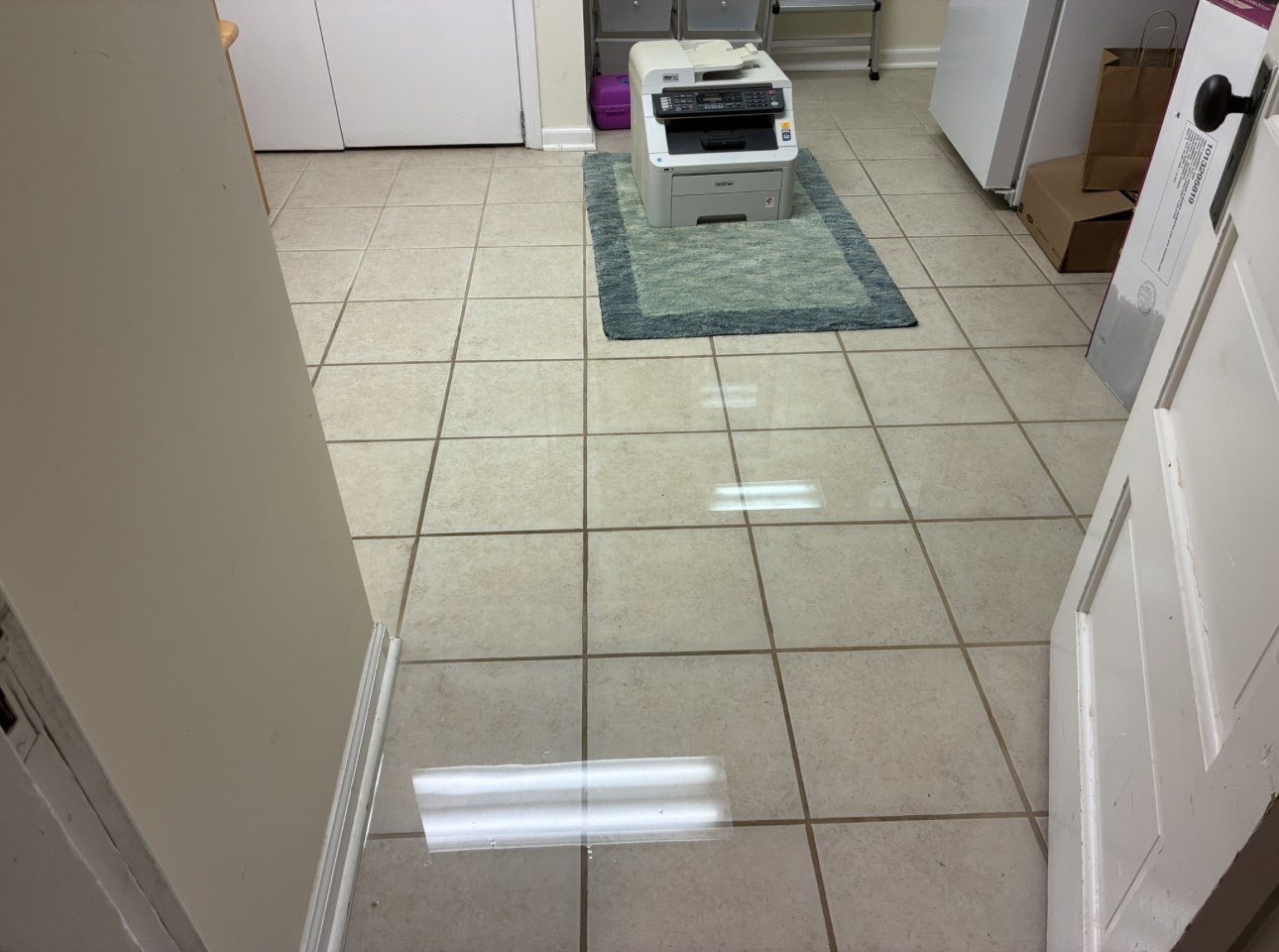
Basement dry-out — Arlington
A documented Arlington basement water loss extracted and dried with staged air movers and dehumidification set to the affected footprint.
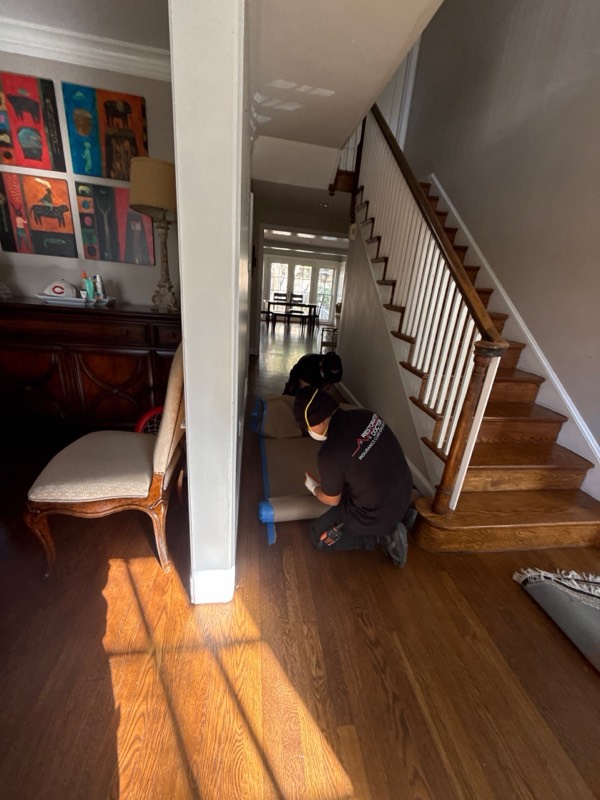
Emergency flood response & structural drying — Arlington
Emergency flood response on an Arlington loss, pairing fast extraction with a correctly sized structural drying system tracked to verified dryness.
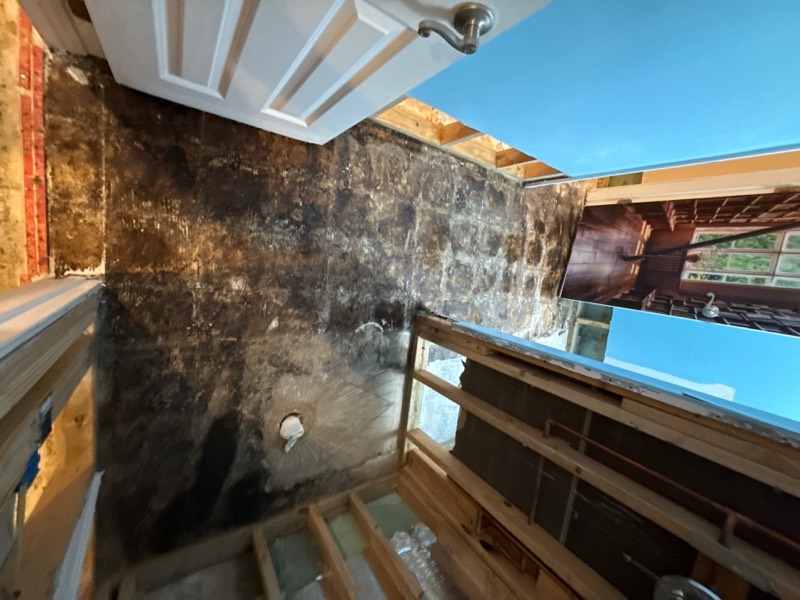
Mold remediation & selective demolition — Arlington
Selective demolition and mold remediation on an Arlington loss where saturated older-stock materials had to be removed under containment.
Recent Arlington water damage projects — on video
Real jobsite footage from documented restoration projects in this city — filmed by our crews, not stock.
Whole-Home Water Damage Turnaround in Arlington
ARLINGTON, VA · WHOLE-HOME WATER DAMAGE · DOCUMENTED ON SITE
Hidden Water Damage in Arlington, VA — Condo Dry-Out Done Right
ARLINGTON, VA · WATER DAMAGE — MULTI-ROOM CONDO WATER INTRUSION, CATEGORY WATER, STRUCTURAL DRYING & MITIGATION · DOCUMENTED ON SITE
Hidden Water Damage in Arlington VA — Water Heater Failure Dried to the Studs
ARLINGTON, VA · RESIDENTIAL WATER HEATER FAILURE WITH HIDDEN-MOISTURE MIGRATION INTO BASEMENT WALLS, SUBFLOOR AND FINISHED ROOMS · DOCUMENTED ON SITE
Multi-Floor Commercial Water Damage in Arlington VA — Dried Floor by Floor
ARLINGTON, VA · COMMERCIAL MULTI-FLOOR WATER DAMAGE · DOCUMENTED ON SITE
Full restoration services in Arlington
One operation covers every category — from emergency mitigation to full reconstruction.
Water Damage Restoration
Extraction, structural drying, and moisture verification for burst pipes, appliance leaks, and basement flooding.
Fire & Smoke Damage Restoration
Soot and smoke residue removal, odor neutralization, contents pack-out, and reconstruction after a fire.
Storm Damage Restoration
Emergency tarping, water extraction, and reconstruction after wind, hail, and heavy-rain storm events.
Mold Remediation
IICRC S520 containment, HEPA filtration, safe removal, and post-remediation clearance verification.
Sewage & Biohazard Cleanup
Category 3 black-water decontamination with full PPE, safe removal, antimicrobial treatment, and verification.
Odor Removal & Deodorization
Source-based smoke, sewage, mold, pet, and musty-odor removal using thermal fogging, hydroxyl and ozone treatment, and HVAC deodorization.
Reconstruction & Repairs
Drywall, flooring, cabinetry, trim, and paint — the same in-house crew that dried the loss rebuilds it, with no handoff between mitigation and reconstruction.
What Arlington homeowners look for
Arlington homeowners and condo owners are a research-heavy, detail-oriented group, and the reviews that carry weight here speak to the specifics of an older-stock loss: whether a crew understood plaster and hardwood instead of just tearing it out, whether they handled an asbestos-era ceiling correctly, and whether they could juggle a multi-unit condo claim without dropping a ball. Those are the experiences we want on the record in Arlington.
You will not find fabricated star counts on this page. Our verified reviews and the genuine Google aggregate are hosted on a separate reputation site — visit RestorationDoctorsReviews.com to read what Northern Virginia customers actually say, then return here to arrange service for your Arlington property. We keep the ratings on that source-linked hub on purpose, so the numbers you see are the real Google totals and not marketing figures typed onto a landing page.
Frequently asked
Active water, mold, fire, or sewage event?
Connect directly with the Restoration Doctor team for your region. Crews are on standby 24/7 with documented response protocols.