
Water Damage Restoration in Fairfax, VA
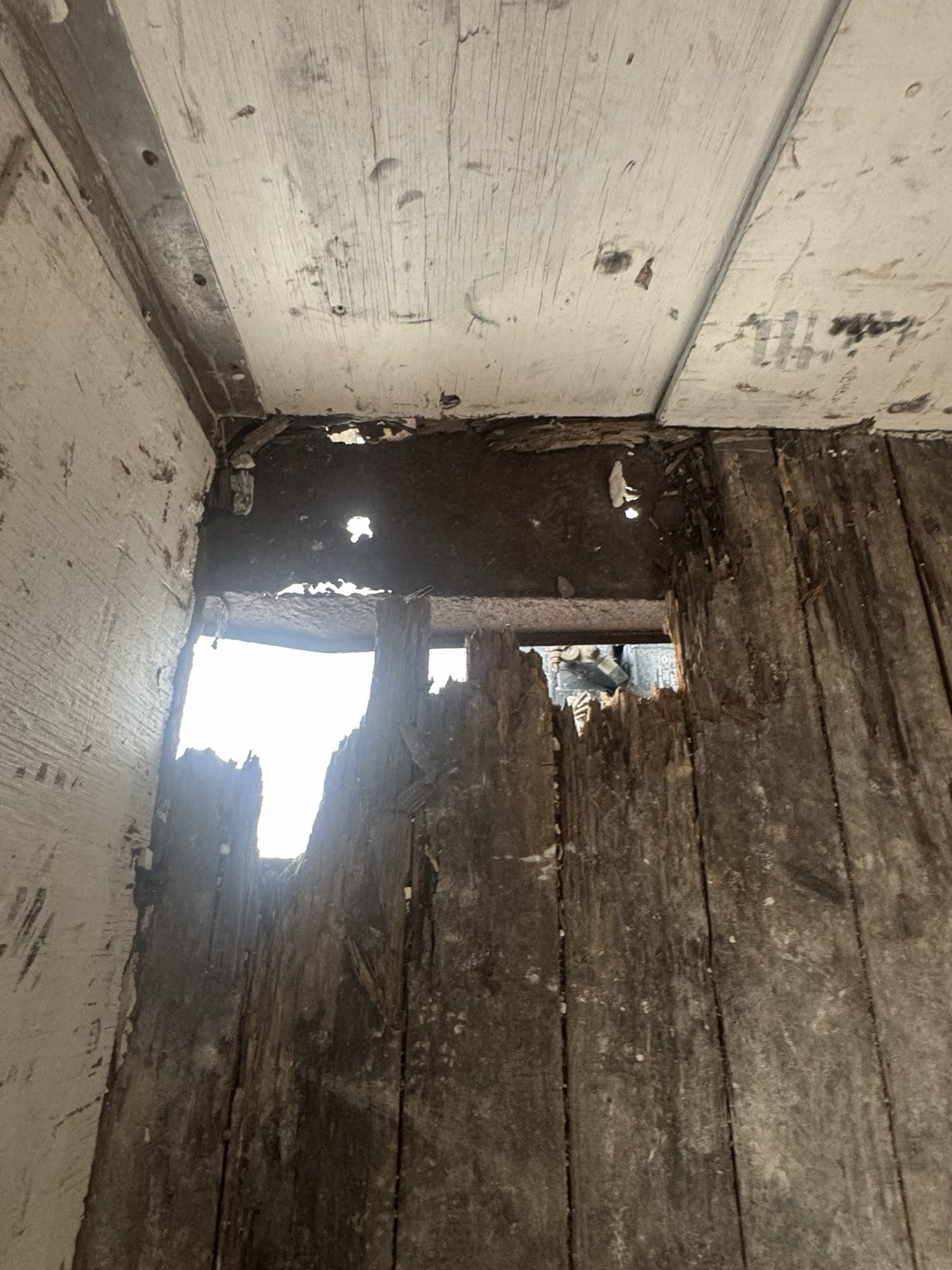
Water damage restoration in Fairfax, VA is rarely a single event — it is a chain reaction. A supply line lets go behind a Mantua kitchen, a water heater fails in a Kings Park basement, or a summer storm overwhelms a sump pump in a Fairfax City split-level, and within a couple of hours the clean water you can see has already soaked into subfloor, drywall, and framing you can't. Restoration Doctor answers those calls across Fairfax County around the clock, with crews staged out of nearby Vienna and an on-site arrival target measured in minutes, not hours.
Fairfax is one of the densest and oldest-developed parts of Northern Virginia, and that shapes every water loss here. Much of the housing stock predates 1980, plumbing and drain systems have aged accordingly, and the finished walkout basements that make these homes so livable are also the lowest point for water to collect. We built this page specifically for Fairfax homeowners and property managers because a generic 'we serve the DMV' pitch does not tell you anything about how water actually behaves in a 1960s Fairfax rambler versus a newer Fair Lakes townhouse.
Whether the loss is a slow leak you just discovered or an inch of standing water at 2 a.m., the response is the same: stop the source, extract before it soaks deeper, dry to a verified standard, and document every step for your insurance carrier. Below is how that unfolds across Fairfax's basements, townhomes, and older streets.
| Metric | Value | Notes |
|---|---|---|
| Median on-site arrival time | 47 minutes | Measured median arrival across dispatched emergency projects — the middle value, not an average. Distinct from the 60-minute response SLA below. |
| Restoration projects completed to date | 10,000+ | Aggregate count of completed restoration projects to date across the VA / MD / D.C. tri-state service area. |
| Customers who file through insurance | 83% | Share of CUSTOMERS who use insurance. Restoration Doctor works for the homeowner — you pay us directly, and we build a carrier-ready claim file documented to IICRC S500 with a line-item Xactimate estimate, which you submit to your insurer when you seek reimbursement. |
| Average structural dry-out time | 4.5 days | Average time to bring a structure to documented dry standards; monitored daily with moisture readings. Individual projects vary by saturation class. |
| Emergency response SLA (NoVA core) | 60 minutes | The PROMISED response commitment across the NoVA core — a broader guarantee than the measured 47-minute median arrival. |
| Google rating (live) | 4.9★ | 4.9★ is the verified average. The review count changes nightly and is served live at /api/reviews-summary — never hardcoded. |
How water damage behaves in Fairfax
Finished basements: Fairfax's most common — and most expensive — loss
The finished basement is the defining feature of the Fairfax single-family home and the defining challenge of Fairfax water restoration. When a supply line, water heater, or sump pump fails in a basement in Kings Park or Mantua, water pools at the lowest point in the house and immediately begins wicking up into drywall, saturating carpet pad, and soaking the bottom plates of framed walls. Because basements are cooler and less ventilated, that trapped moisture dries slowly on its own and readily supports mold — which is why in-place, monitored drying matters so much down here.
Sump-pump failures during heavy rain are a recurring Fairfax scenario. When the power blips during a summer thunderstorm and the battery backup is dead, groundwater that the pump was holding back seeps in through the foundation — and water that has moved through soil is no longer clean Category 1 water. We treat those losses accordingly, with the extraction, selective removal, and antimicrobial treatment a Category 2 seepage event calls for, not a quick mop-and-fan.
Multi-level leaks in townhomes and colonials
In Fairfax's two- and three-story colonials and in the townhouse communities of Fair Oaks, Mosby Woods, and Sully Station, the classic loss travels vertically. An angle-stop valve under a second-floor vanity, a failed toilet supply line, or a cracked tub drain lets water find the fastest path down — through the subfloor, into the joist bays, and out through the first-floor or basement ceiling, often soaking two or three levels before anyone notices.
These losses look small at the ceiling stain and turn out large inside the assembly. We use thermal imaging and moisture meters to trace the actual footprint of the water rather than guessing from the visible damage, then dry the wall and ceiling cavities in place wherever we can and open only what genuinely has to come out. That approach saves finishes and shortens the reconstruction that follows.
Fairfax's climate is part of the problem
Fairfax summers are hot and humid, and that ambient moisture works against natural drying — a basement that would air-dry in a week in a dry climate can stay damp long enough to grow mold here. That is exactly why professional drying uses low-grain refrigerant and desiccant dehumidification to actively pull moisture out of the structure and the air rather than relying on open windows and box fans.
Winter flips the risk to freeze-thaw. Cold snaps freeze water in exterior-wall and attic plumbing, and ice dams at the eaves of older Fairfax roofs push snowmelt back under the shingles and into ceilings below. A burst pipe on the coldest night of the year is one of the most common calls we get in Fairfax — and one of the reasons 24/7 response is not a marketing line but a necessity.
Fairfax homes and how they fail
Fairfax's residential fabric is dominated by mid-century single-family homes. Neighborhoods like Mantua, Kings Park, Kings Park West, and Canterbury Woods were largely built out from the late 1950s through the 1970s — brick ramblers, split-levels, and colonials on generous lots, most with full or walkout basements that were finished into rec rooms, home offices, and in-law suites over the decades. Those finished basements are the single most common site of serious water loss in Fairfax, because they combine below-grade exposure with drywall, carpet, and stored belongings that hold water and grow mold fast.
The plumbing behind those walls is a real risk factor. Homes from that era commonly ran galvanized-steel supply lines and cast-iron drain stacks that are now well past their service life, and a subset of 1970s–80s Fairfax homes were plumbed with polybutylene supply lines that are notorious for sudden failure. Newer pockets — Fair Lakes, Fair Oaks, Sully Station, and the townhouse communities off Route 50 and I-66 — bring their own pattern: attached homes where an upstairs bathroom or washing-machine failure in one unit sends water straight down through the ceiling into the living space below. Different construction, same lesson — knowing the building tells us where the water went.
Fairfax neighborhoods we serve
Real Fairfax County communities — and the water losses we most often see in each.
1960s brick ramblers and split-levels with finished basements — classic below-grade supply-line and sump losses.
Mid-century single-family homes where basement water heaters and washing machines are the usual failure points.
Established townhomes and colonials near Fairfax City where upstairs-bathroom leaks travel down through multiple levels.
Newer single-family and townhouse communities off Route 50 with attached-home ceiling-leak patterns.
Older housing near the historic core with aging galvanized and cast-iron plumbing.
Larger-lot homes and planned communities where sump-pump and storm-driven basement flooding are common.
Documented Fairfax projects
Real CompanyCam-documented restoration work in this city — every project photographed with date and time stamps.
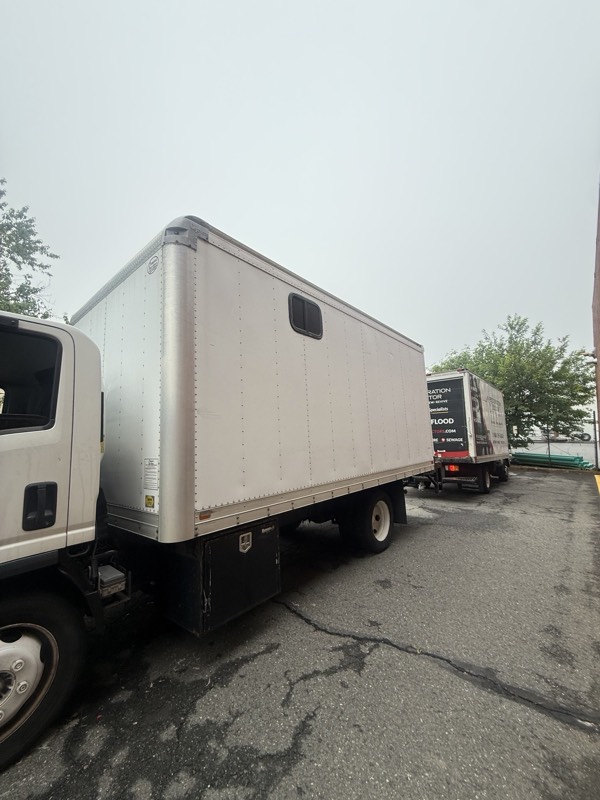
Emergency extraction & dry-out — Fairfax
Rapid truck-mount extraction and a staged drying system on a Fairfax basement loss, sizing air movers and dehumidification to the affected footprint.
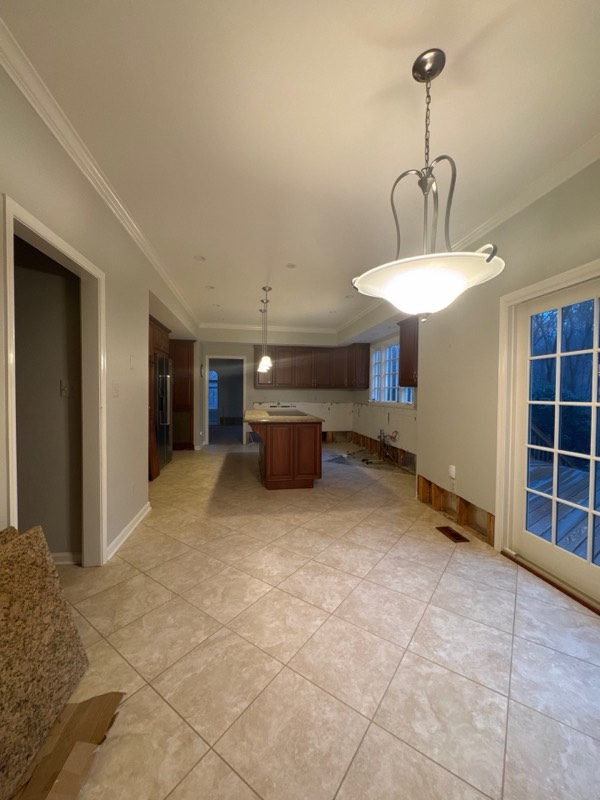
Thermal moisture inspection — Fairfax
Thermal imaging used to map hidden moisture behind Fairfax walls and under floors so drying equipment is placed where the water actually went.
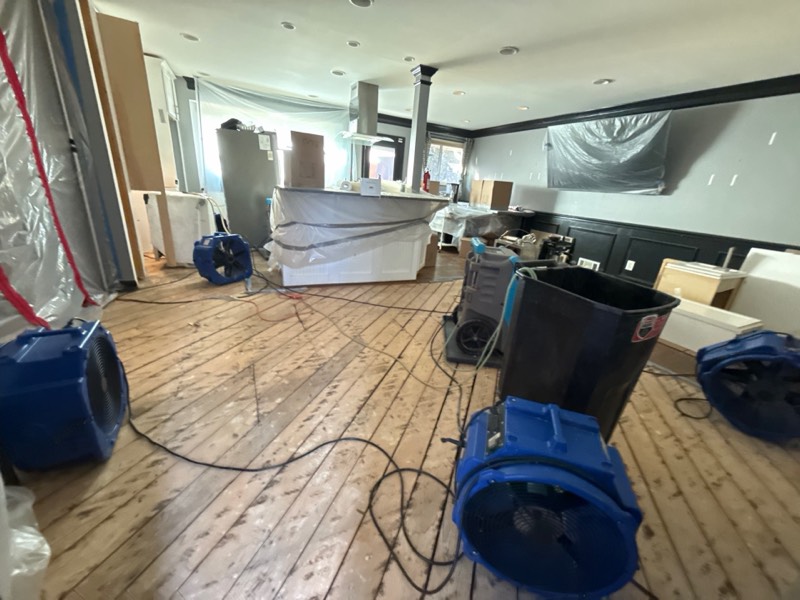
Second extraction & dry-out file — Fairfax
A second documented Fairfax dry-out showing selective removal and monitored in-place drying to a verified dry standard.
Recent Fairfax water damage projects — on video
Real jobsite footage from documented restoration projects in this city — filmed by our crews, not stock.
Basement Water Damage Turnaround in Fairfax
FAIRFAX, VA · BASEMENT WATER DAMAGE · DOCUMENTED ON SITE
Whole-Home Water Damage in Fairfax VA — Dried to Framing, Verified, Ready to Rebuild
FAIRFAX, VA · WATER DAMAGE · DOCUMENTED ON SITE
Hidden Water Damage in Fairfax VA — Structure Dried & Hardwood Floors Saved In Place
FAIRFAX, VA · WATER DAMAGE · DOCUMENTED ON SITE
Finished Basement Flood in Fairfax VA — Dried In Place, Hardwood Saved
FAIRFAX, VA · FINISHED-BASEMENT WATER DAMAGE (WATER MIGRATED FROM THE MECHANICAL/SUMP AREA THROUGH THE FINISHED LIVING SPACE) · DOCUMENTED ON SITE
Full restoration services in Fairfax
One operation covers every category — from emergency mitigation to full reconstruction.
Water Damage Restoration
Extraction, structural drying, and moisture verification for burst pipes, appliance leaks, and basement flooding.
Fire & Smoke Damage Restoration
Soot and smoke residue removal, odor neutralization, contents pack-out, and reconstruction after a fire.
Storm Damage Restoration
Emergency tarping, water extraction, and reconstruction after wind, hail, and heavy-rain storm events.
Mold Remediation
IICRC S520 containment, HEPA filtration, safe removal, and post-remediation clearance verification.
Sewage & Biohazard Cleanup
Category 3 black-water decontamination with full PPE, safe removal, antimicrobial treatment, and verification.
Odor Removal & Deodorization
Source-based smoke, sewage, mold, pet, and musty-odor removal using thermal fogging, hydroxyl and ozone treatment, and HVAC deodorization.
Reconstruction & Repairs
Drywall, flooring, cabinetry, trim, and paint — the same in-house crew that dried the loss rebuilds it, with no handoff between mitigation and reconstruction.
What Fairfax homeowners look for
Fairfax homeowners tend to do their homework before they let anyone into the house, and restoration is no exception. The reviews that matter most here are the ones describing the things a Fairfax loss actually turns on: how fast a crew arrived after a late-night basement flood, whether the drying was verified with real moisture readings instead of a guess, and whether the insurance paperwork held up without a fight. Those are the experiences we want documented.
Rather than duplicate review content here, our verified customer reviews live on our dedicated reputation hub. You can read Northern Virginia customer reviews — including Fairfax-area homeowners — and see the aggregate Google rating on RestorationDoctorsReviews.com, then come back here to arrange service. Keeping the reviews on a separate, source-linked hub is a deliberate honesty choice: the ratings you see there are the true Google aggregates, not numbers we typed onto a marketing page.
Frequently asked
Active water, mold, fire, or sewage event?
Connect directly with the Restoration Doctor team for your region. Crews are on standby 24/7 with documented response protocols.