
What does soot do to your house?
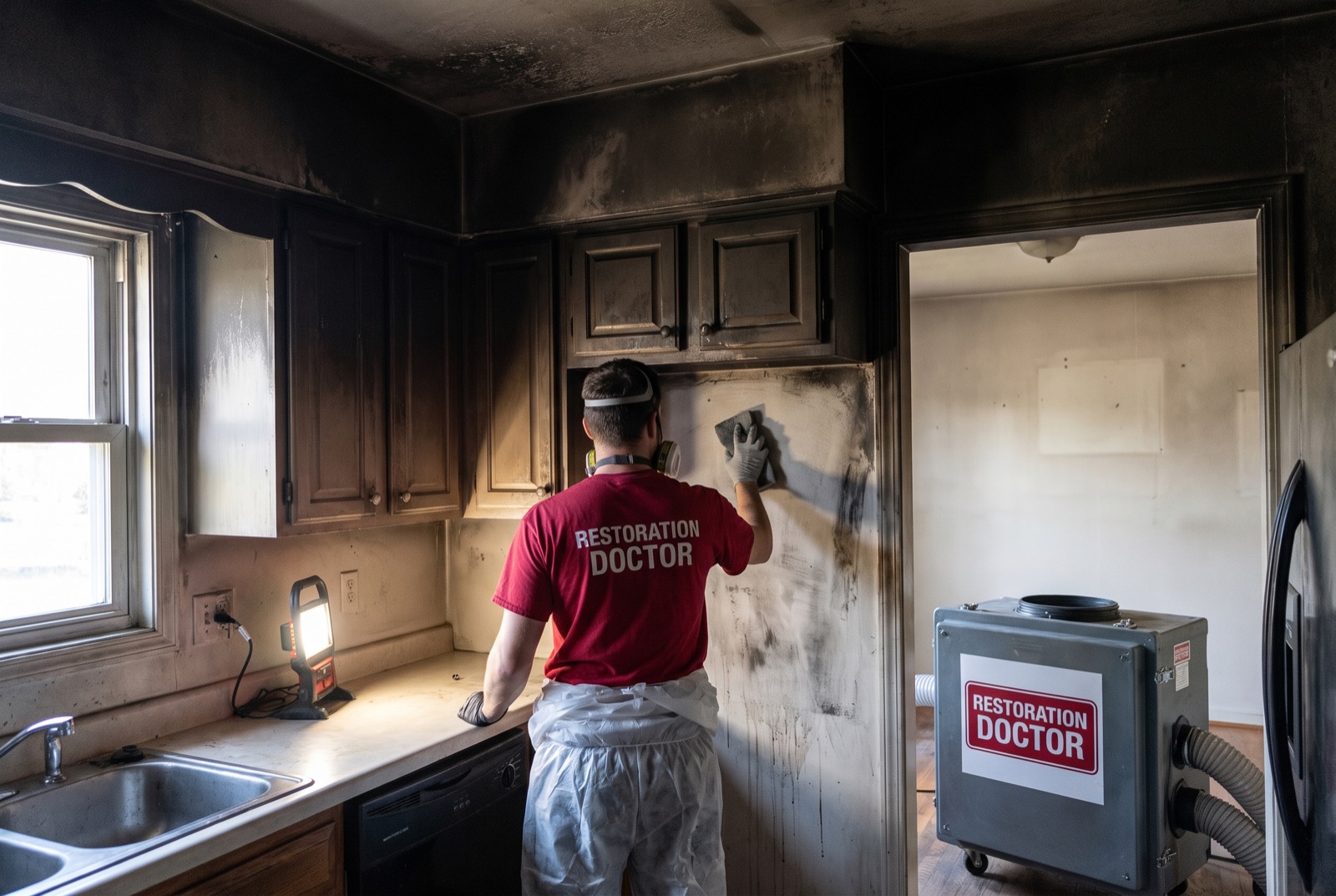
Soot actively damages your home after the fire is out. Its acidic residue discolors plastics and marble within hours, etches and corrodes metal fixtures, electronics, and glass within days, and permanently stains walls, grout, and finishes within weeks. Fast professional removal is the difference between cleaning surfaces and replacing them.
Soot is chemistry, not just dirt
Soot looks like a passive layer of black dust, but it behaves like a slow chemical attack. Combustion residue — especially from the plastics and synthetics that dominate modern homes — is acidic, and it keeps reacting with whatever it lands on for as long as it sits there. Humidity makes it worse: moisture from firefighting water activates the acids, which is one reason fire-plus-water losses deteriorate faster than either alone.
The damage timeline is well established in fire restoration practice. Within hours: plastics, porous stone like marble, and light-colored surfaces begin discoloring. Within days: metal hardware and fixtures tarnish and etch, electronics corrode internally, glass begins etching, and wood finishes yellow. Within weeks: staining sets permanently into walls, carpet fibers, grout, and textiles, metal pits and corrodes seriously, and glass etching becomes irreversible. Surfaces that would have wiped clean in the first days become refinishing or replacement items by week three.
Where soot goes — and why it's always more than you see
Soot travels with smoke, and smoke goes everywhere air goes. Driven by the fire's heat and pressure, it penetrates duct systems, wall cavities, outlet and switch openings, closets, cabinets, and the gaps behind trim. It also migrates preferentially toward cooler surfaces — exterior walls, windows, closets, and rooms far from the fire — which is why homeowners find soot webs in a bedroom two floors from a kitchen fire.
Different fires leave different residues, too: dry powdery soot from fast-burning fires, greasy smearing residue from smoldering fires, and the nearly invisible but intensely odorous film from protein (cooking) fires. Each requires different cleaning chemistry, and using the wrong method sets stains rather than lifting them. The practical consequence: the visible soot in the burned room is a fraction of the actual contamination footprint, and an assessment that doesn't map the full footprint under-scopes the loss.
Stopping the clock
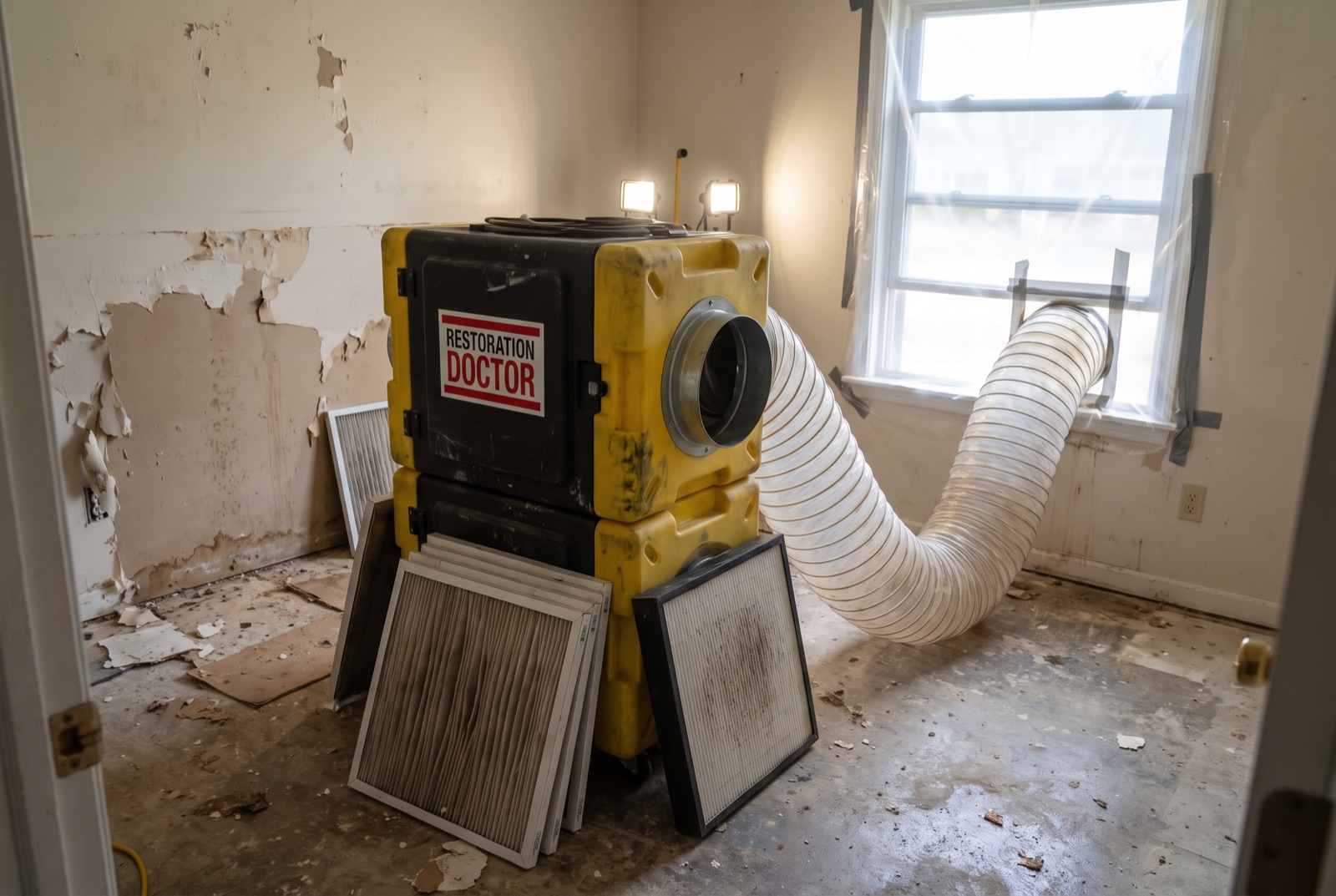
Professional fire restoration treats soot as the emergency it is. The first visit prioritizes corrosion mitigation — treating or protecting at-risk metals, stone, and electronics before the acids do irreversible work. Then comes systematic source removal: cleaning every affected surface with residue-appropriate methods under IICRC fire and smoke restoration practice, HEPA air scrubbing to capture disturbed particles, HVAC decontamination, and odor treatment once sources are gone.
What homeowners shouldn't do is scrub. Household cleaners smear wet-smoke residue deeper into surfaces, water-based products set dry soot into porous materials, and ordinary vacuums blow ultrafine particles airborne. The best DIY move with soot is documentation and a fast phone call.
Act inside the window
The gap between a cleanable home and a rebuild is measured in days when soot is involved. Restoration Doctor responds 24/7 across Northern Virginia, Maryland, and D.C. with immediate corrosion control, full soot remediation, and the documentation your insurance claim needs. Call 1-888-29-FLOOD before the residue sets.
Fire & Smoke Damage Restoration
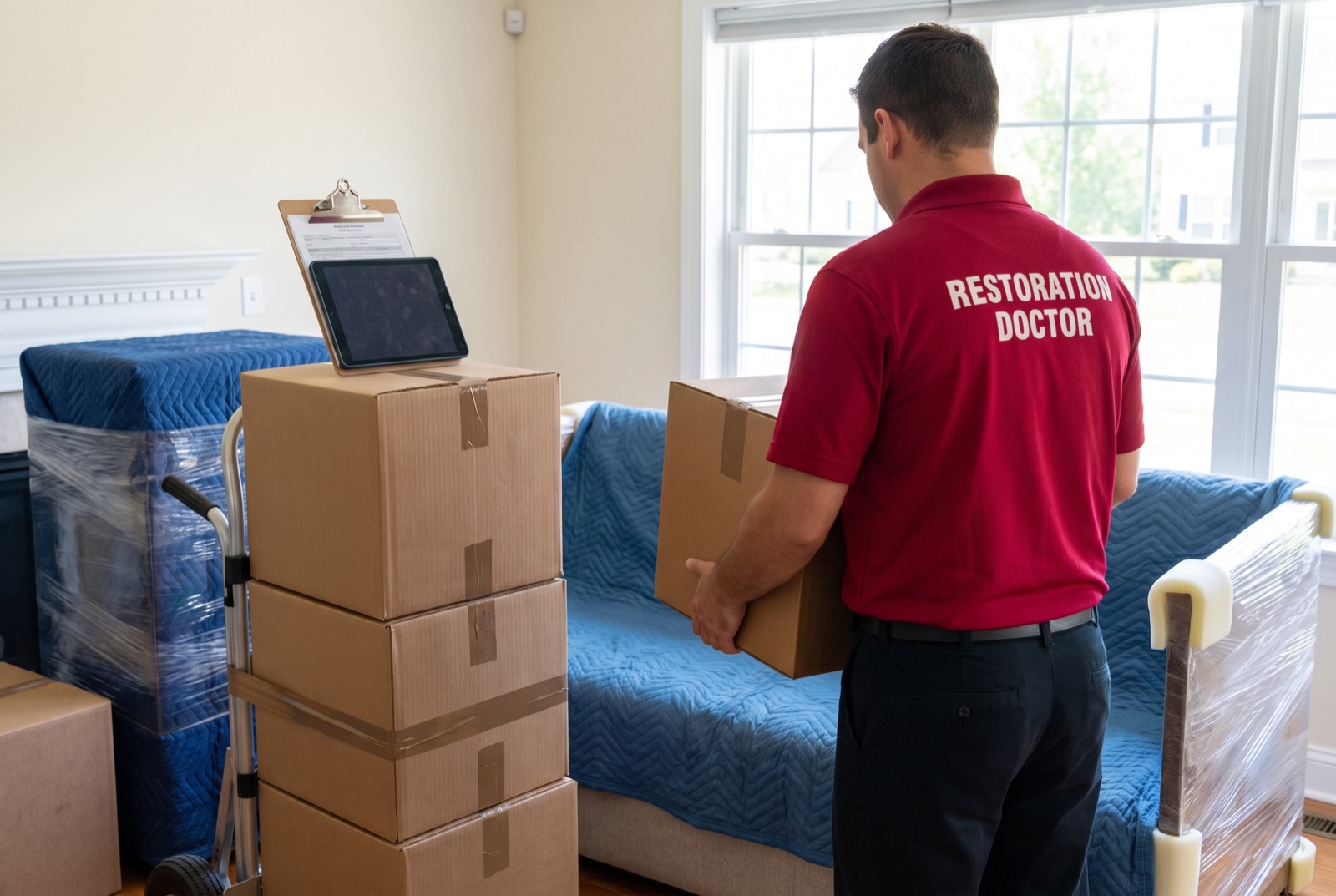
Soot and smoke residue removal, odor neutralization, contents pack-out, and reconstruction after a fire.
Frequently asked
Related questions
Can smoke damage be removed from a house?
Can electronics and belongings be saved after a fire?
What should you do immediately after a house fire?
Active water, mold, fire, or sewage event?
Connect directly with the Restoration Doctor team for your region. Crews are on standby 24/7 with documented response protocols.