
Can smoke damage be removed from a house?
Yes. Professional fire restoration removes smoke damage through residue-specific soot cleaning, HEPA air filtration, HVAC decontamination, and odor elimination with hydroxyl or ozone treatment. Success depends on speed — acidic soot permanently etches and stains surfaces within days to weeks — and on matching the cleaning method to the residue type.
Why smoke damage removal is a matching problem
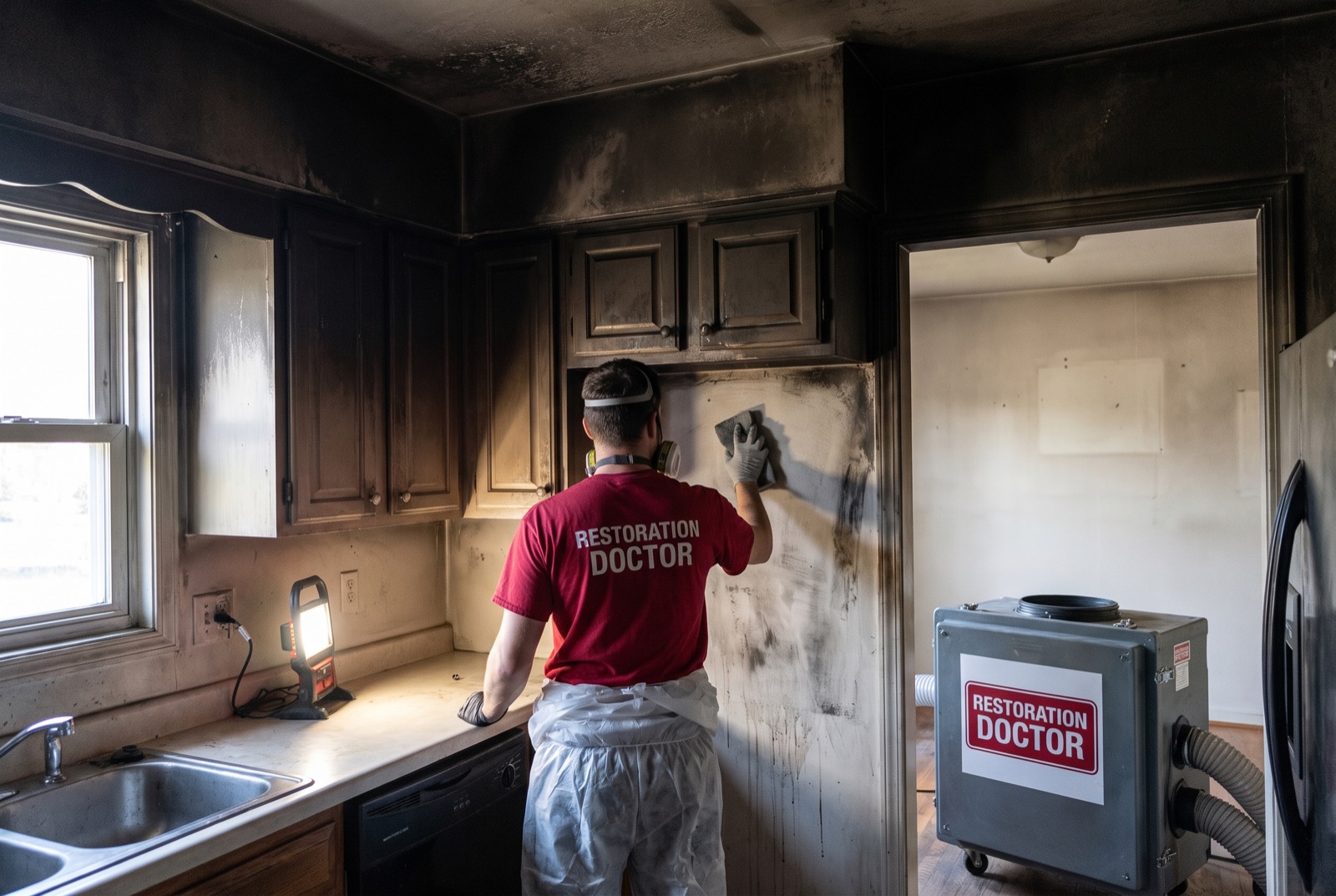
Smoke damage isn't one substance — it's several, and each demands different treatment. Fast-burning, oxygen-rich fires leave dry smoke: a powdery residue that wipes away relatively easily but penetrates deep into porous surfaces and cracks. Slow, smoldering fires leave wet smoke: a greasy, smeary residue with a pungent odor that smears badly if cleaned with the wrong method. Kitchen protein fires leave a nearly invisible film that discolors finishes and carries an intense, persistent odor despite showing little visible soot.
Professional restorers trained under IICRC fire and smoke restoration standards identify the residue type first, then select the chemistry and technique — dry cleaning sponges for dry smoke, degreasing agents for wet smoke, enzyme treatment for protein residue. Apply a wet cleaner to dry smoke, or scrub protein residue with an all-purpose spray, and you set the stain instead of lifting it. This is the single most common way well-intentioned DIY cleanup makes smoke damage permanent.
The professional removal process
A full smoke remediation runs in stages. First, corrosion mitigation: soot is acidic and actively damages metals, glass, stone, and electronics, so at-risk surfaces are treated or protected immediately. Second, source removal: soot is physically cleaned from every affected surface — walls, ceilings, trim, fixtures, and inside cabinets and closets where smoke infiltrated. Charred materials that can't be cleaned are removed.
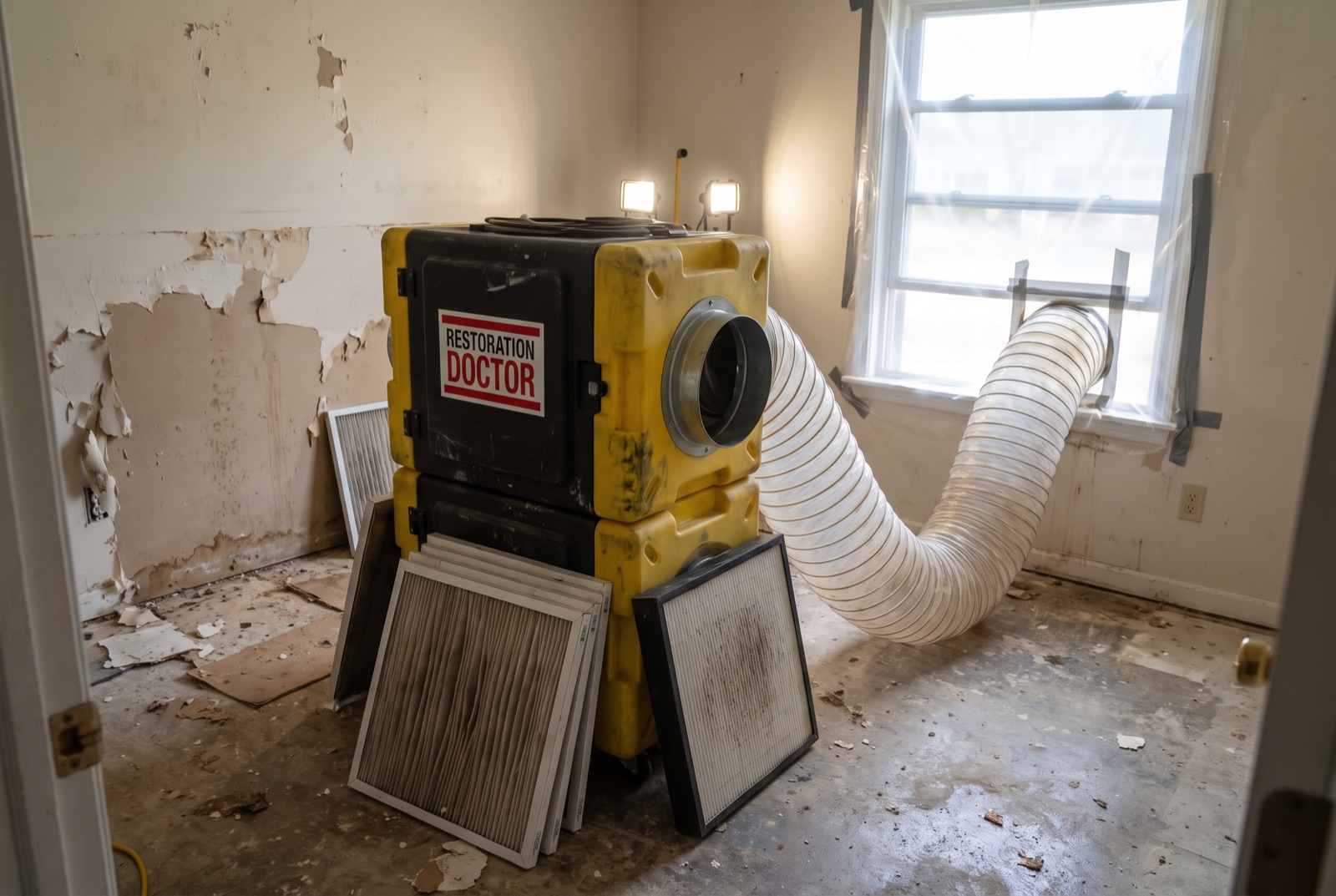
Third, air management: HEPA air scrubbers run throughout the project to capture the fine particles that cleaning disturbs. Fourth, HVAC decontamination — ductwork holds soot and will re-contaminate cleaned rooms if skipped. Finally, odor elimination at the source, followed by sealing of any surfaces (like framing with smoke penetration) that need encapsulation before repainting or rebuilding.
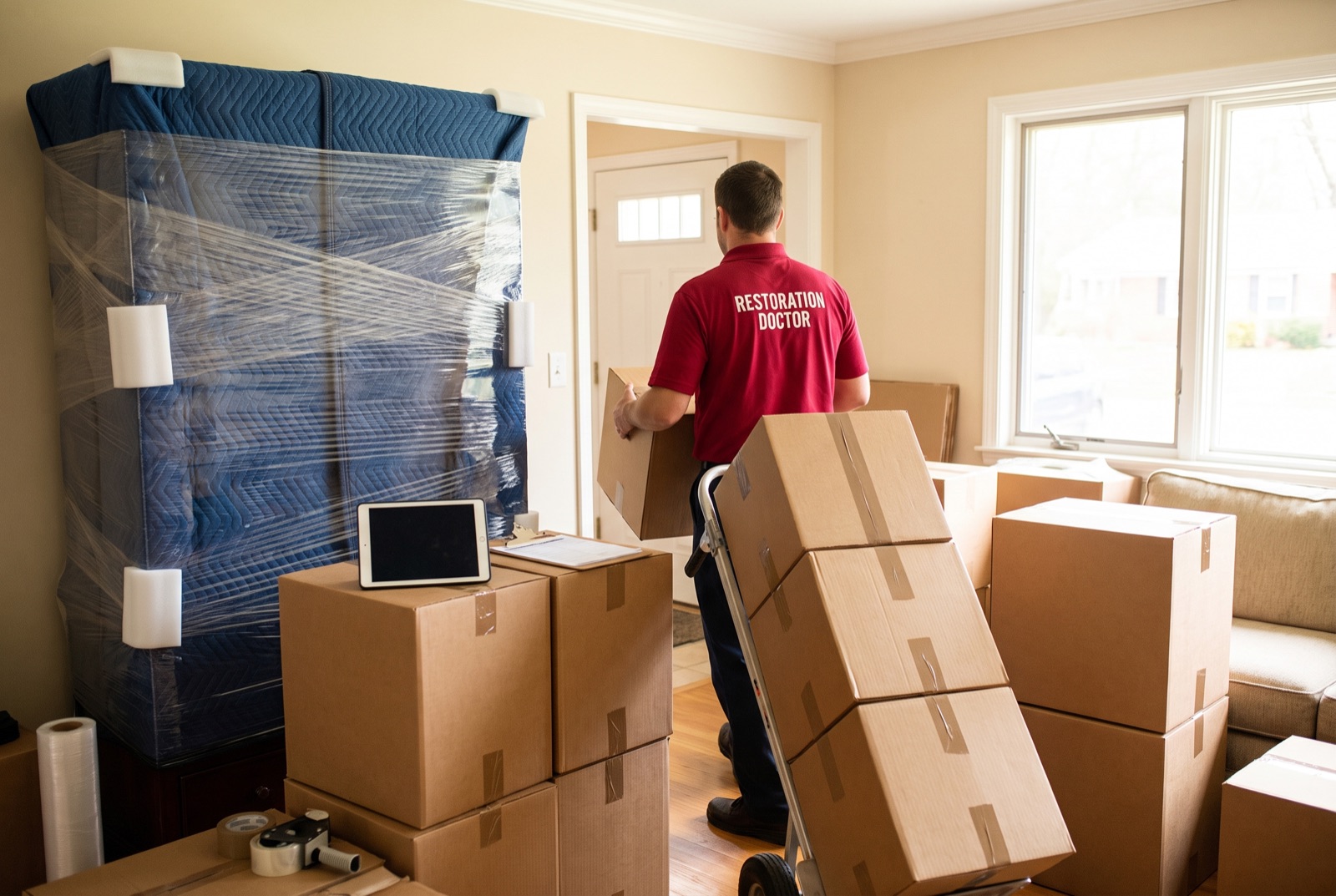
Contents get their own track: textiles, furniture, documents, and electronics are inventoried, packed out, and cleaned with methods suited to each material, then stored until the structure is ready.
What determines whether everything can be saved
Two factors dominate: time and porosity. Soot that sits for weeks etches glass, pits chrome, and permanently stains grout and finishes — the same residue that would have wiped off in the first days. And porous materials absorb smoke deeper than cleaning can reach: heavily saturated unsealed drywall, exposed insulation, and some soft goods reach a point where replacement is more economical than restoration.
That's the honest boundary of "removal": most smoke damage in most homes is fully removable with fast professional response, and the fraction that isn't gets replaced as part of the restoration scope — the end result is still a home restored to pre-loss condition.
Start with an assessment
If your home has smoke damage — from a fire in your home or even a neighboring unit — the most valuable step is a fast professional assessment that identifies the residue types and maps how far smoke traveled. Restoration Doctor handles complete smoke damage removal across Northern Virginia, Maryland, and D.C., from emergency soot stabilization through final odor clearance. Call 1-888-29-FLOOD, 24/7.
Fire & Smoke Damage Restoration
Soot and smoke residue removal, odor neutralization, contents pack-out, and reconstruction after a fire.
Frequently asked
Related questions
How do you get smoke smell out of a house after a fire?
What does soot do to your house?
What should you throw away after smoke damage?
Active water, mold, fire, or sewage event?
Connect directly with the Restoration Doctor team for your region. Crews are on standby 24/7 with documented response protocols.