
How do you get smoke smell out of a house after a fire?
Remove the source first — soot and charred materials must be physically cleaned or removed, including inside HVAC ducts. Then professionals neutralize remaining odor with hydroxyl generators, ozone treatment in unoccupied spaces, or thermal fogging, and seal smoke-penetrated surfaces. Air fresheners and household cleaning only mask the smell temporarily.
Why smoke smell is so hard to eliminate
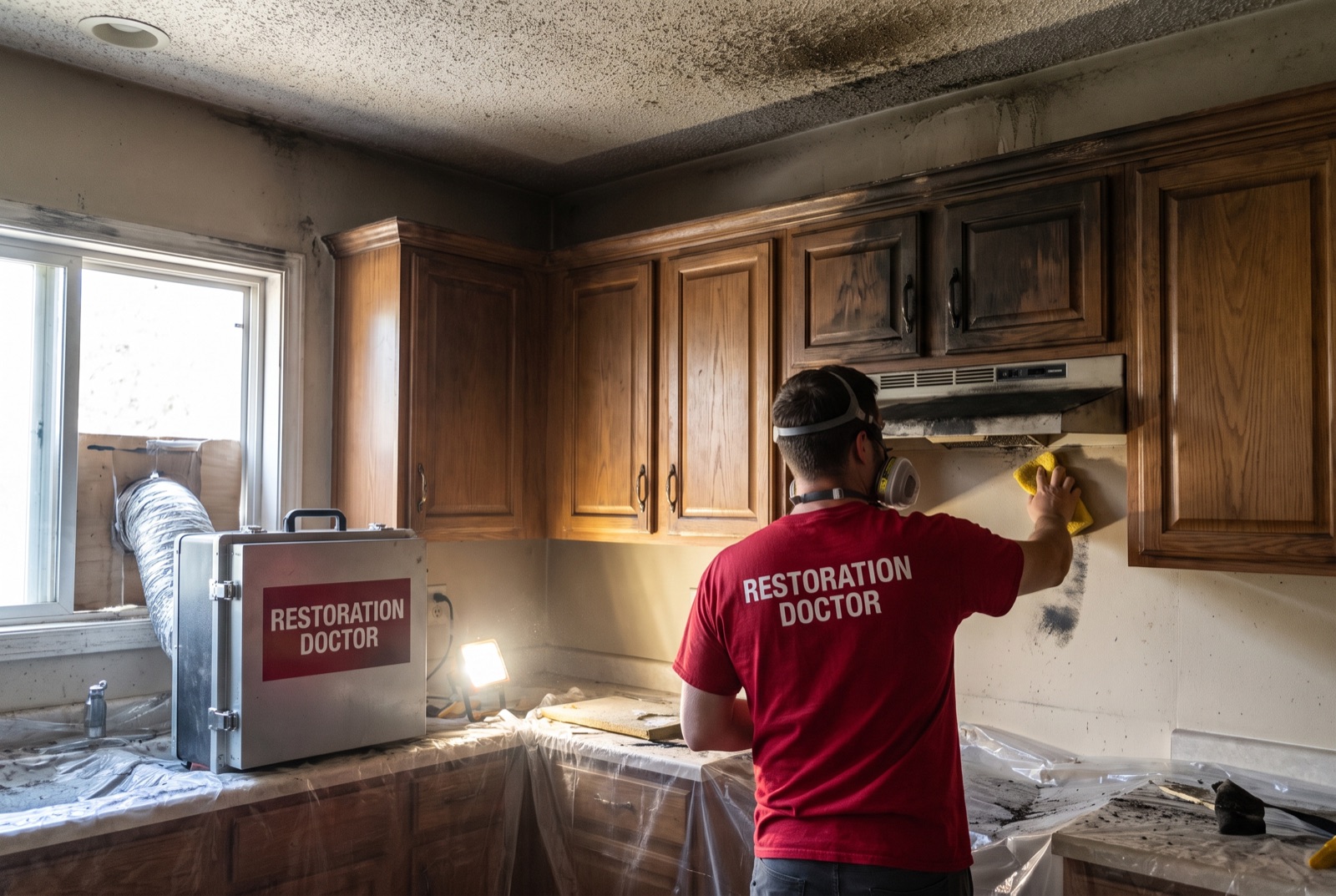
Smoke odor isn't a smell floating in the air — it's billions of microscopic odor-bearing particles bonded to surfaces throughout the home. Smoke is driven by heat and pressure into places ordinary cleaning never touches: inside wall cavities, through outlet openings, into duct systems, under carpet, into the pores of unsealed wood and drywall, and deep into fabrics and foam. As long as those particles remain, they keep releasing odor, which is why a house can smell fine for a few days after surface cleaning and then smell like smoke again on the first humid afternoon.
This is also why the consumer arsenal — candles, sprays, plug-ins, vinegar bowls, coffee grounds — disappoints. Those approaches add a competing scent or absorb a small amount of airborne odor, but they do nothing about the reservoir of residue generating it.
Step one is always source removal
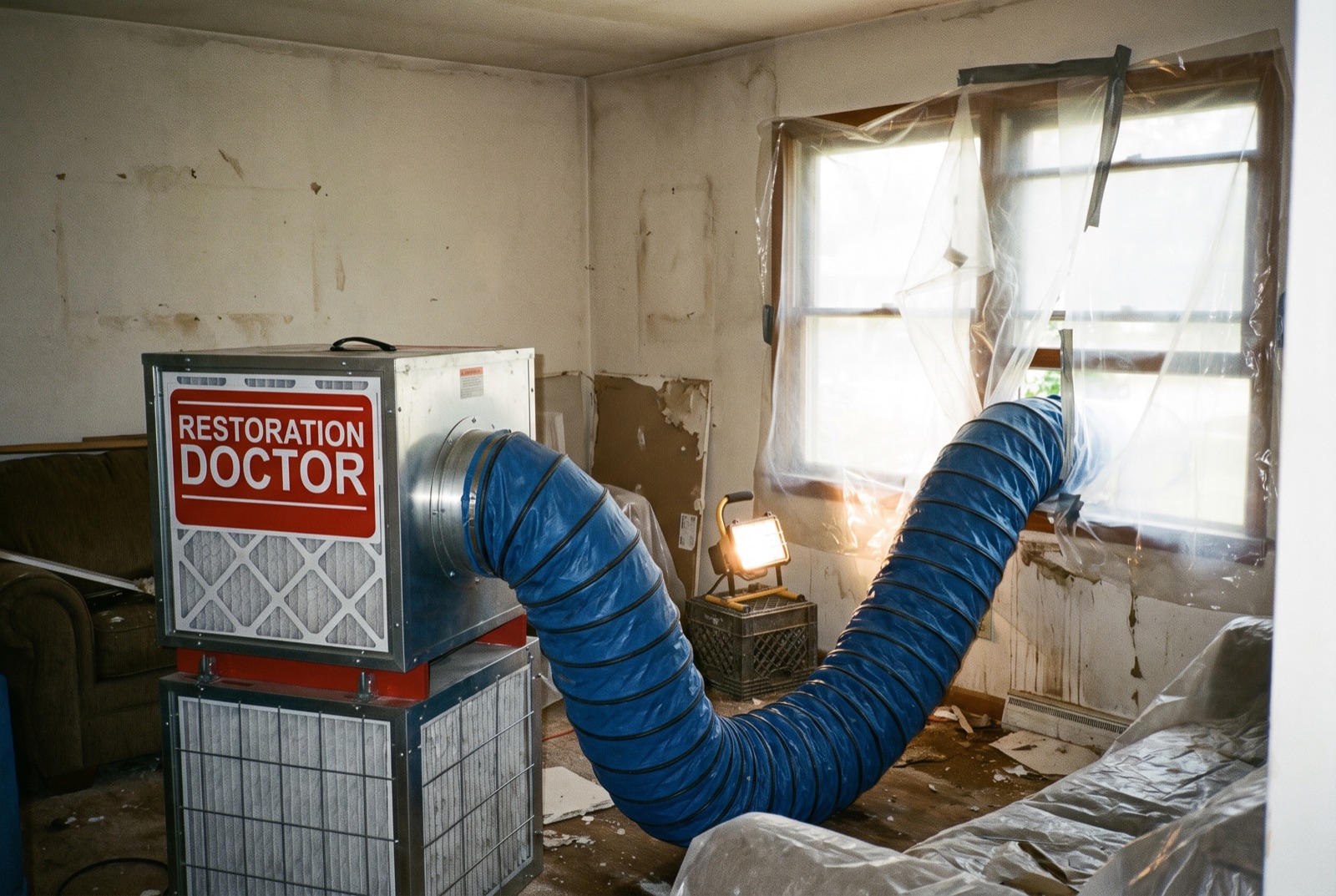
Professional odor work under IICRC fire and smoke restoration practice follows a strict order, and the first rule is that no deodorization succeeds while the source remains. That means soot residue is cleaned from every affected surface with residue-appropriate methods, charred material is removed, smoke-saturated soft goods are either professionally cleaned or discarded, and the HVAC system — a major hidden odor reservoir — is cleaned so it stops re-injecting smoke particles into every room.
Only after source removal do air-treatment technologies earn their keep. HEPA air scrubbers with activated carbon filtration run throughout the project, capturing fine particles and adsorbing odor molecules from the air as cleaning disturbs them.
Professional odor neutralization methods
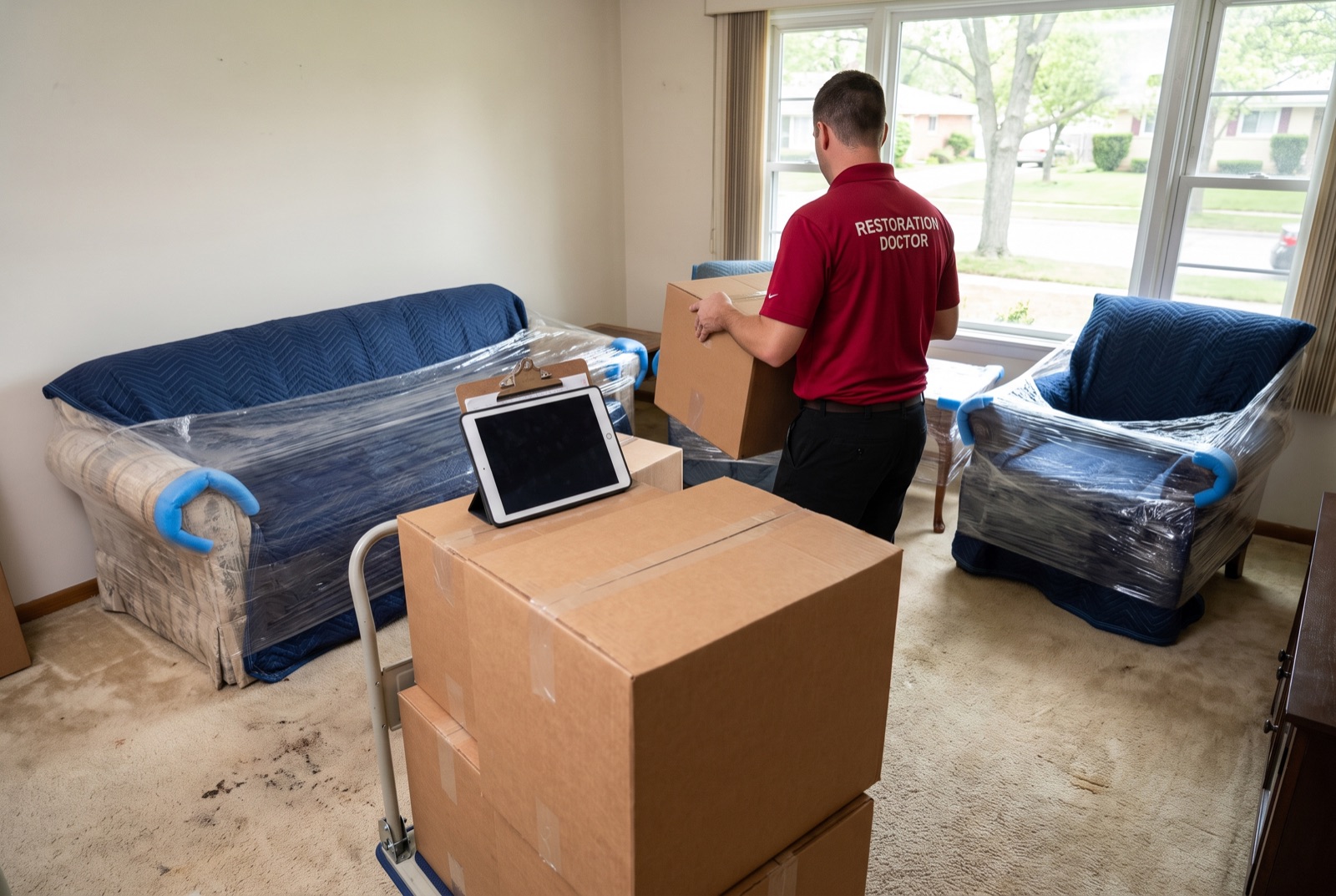
For odor that persists after cleaning, restorers deploy oxidizing and penetrating treatments. Hydroxyl generators produce radicals that break down odor molecules on contact; they work in occupied spaces and run continuously over several days. Ozone treatment is faster and more aggressive but requires the space to be completely unoccupied — no people, pets, or plants — during treatment and airing-out, because ozone at treatment concentrations is a respiratory hazard. Thermal fogging disperses a deodorizing fog that penetrates the same pathways smoke traveled, reaching cavities and pores that surface cleaning can't.
The final layer is encapsulation: structural surfaces with deep smoke penetration — commonly framing and subfloor after a significant fire — are coated with an odor-blocking sealer before insulation, drywall, and finishes go back in. This locks residual odor permanently out of the living space.
Getting to a genuinely odor-free home
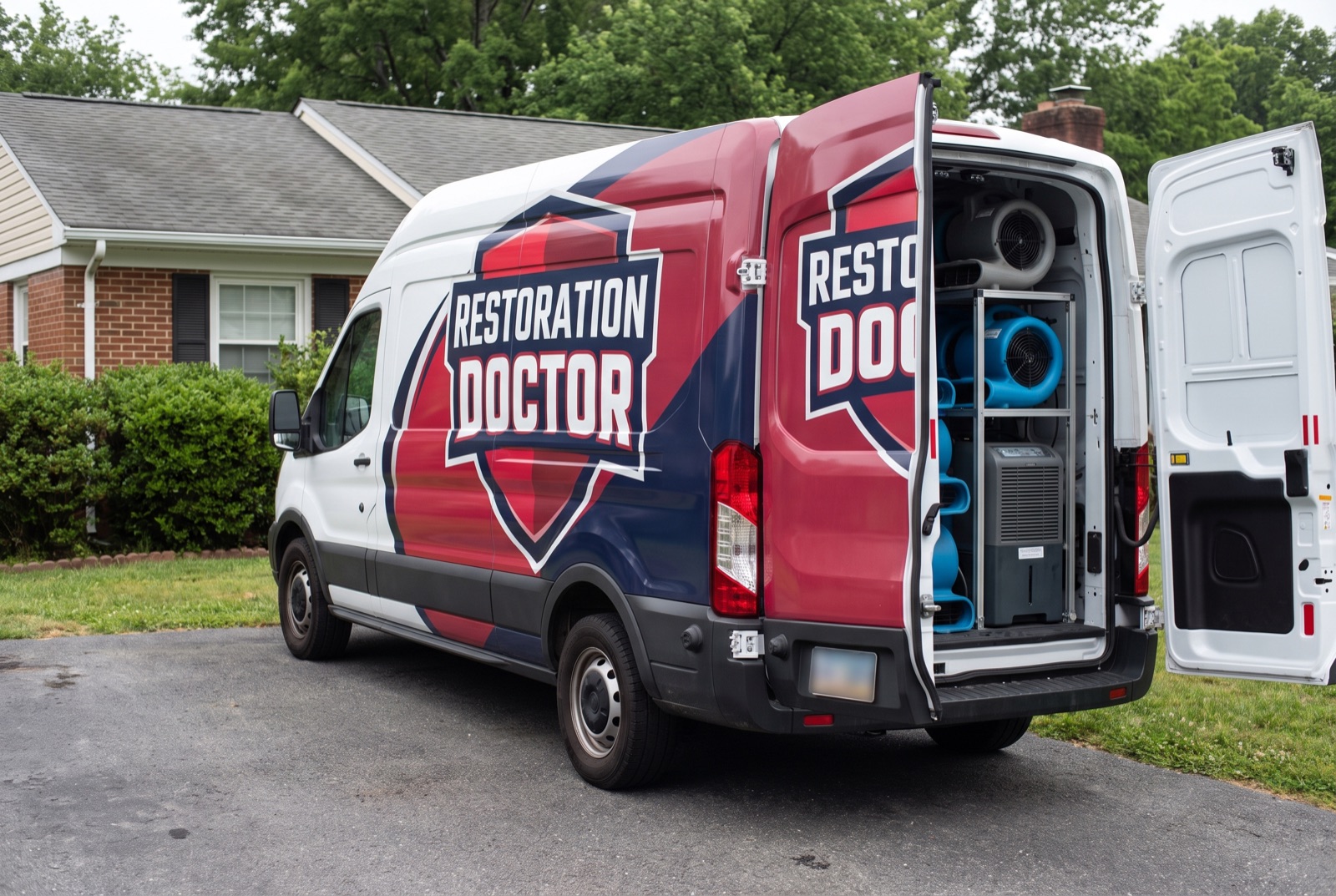
The measure of success is simple: the house smells like nothing, in every season, with the windows closed. That standard is reachable for nearly every fire when source removal, air treatment, and sealing are done in the right order. Restoration Doctor performs complete smoke odor elimination across Northern Virginia, Maryland, and D.C. — soot removal, HVAC cleaning, hydroxyl and ozone treatment, and sealing — as part of full fire restoration. Call 1-888-29-FLOOD for an assessment.
Fire & Smoke Damage Restoration
Soot and smoke residue removal, odor neutralization, contents pack-out, and reconstruction after a fire.
Frequently asked
Active water, mold, fire, or sewage event?
Connect directly with the Restoration Doctor team for your region. Crews are on standby 24/7 with documented response protocols.