
Is smoke damage dangerous to breathe?
Yes. Soot particles are ultrafine — small enough to bypass the body's natural filtering and lodge deep in the lungs — and they carry chemicals produced by burning plastics and synthetics. Children, older adults, and people with respiratory conditions are most at risk. Limit time in sooted spaces until professionally cleaned, and consult medical professionals about symptoms.
What makes soot different from ordinary dust
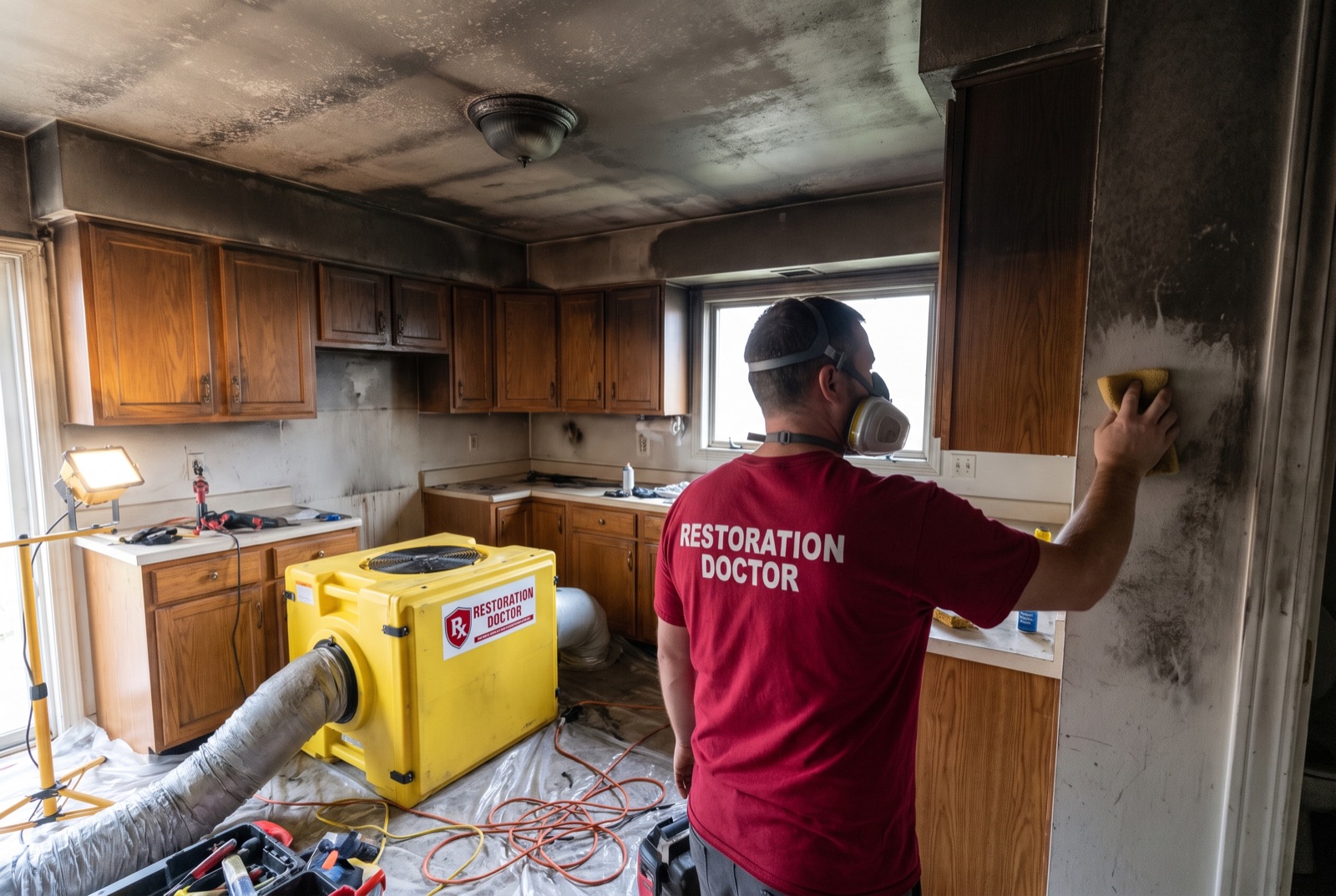
Household dust is mostly large particles your nose and upper airways filter out. Soot is different in two ways that matter. First, size: combustion particles are ultrafine — a fraction of the width of a human hair — small enough to travel past the airway's defenses into the deepest parts of the lungs, and in the smallest fractions, potentially into the bloodstream.
Second, chemistry: a modern house fire burns plastics, foams, synthetic fabrics, adhesives, and treated materials, and the resulting residue carries the byproducts of that combustion, including compounds recognized as harmful. Soot isn't inert ash; it's chemically active residue, which is also why it corrodes metal and etches glass while it sits.
The particles don't stay put, either. Every footstep on sooty carpet, every brush against a contaminated wall, every HVAC cycle through dirty ducts re-suspends particles into the breathing zone. A smoke-damaged home generates ongoing exposure until the residue is physically removed.
Who is most at risk, and what to watch for
Exposure risk isn't uniform. Children breathe more air per pound of body weight and play close to contaminated floors. Older adults and anyone with asthma, COPD, cardiovascular disease, or other chronic conditions have less tolerance for particulate irritation. Pregnant women and pets are also generally advised to stay out of sooted spaces.
Common signs of irritation from smoke residue include coughing, wheezing, shortness of breath, headaches, and eye, nose, and throat irritation — often improving when away from the home. Take symptoms seriously: consult medical professionals about any health concerns after smoke exposure rather than waiting them out, and treat symptoms in the household as a clear signal to relocate until cleanup is verified. Health outcomes are for doctors to assess — the restoration side of the equation is removing the exposure source.
Making the air safe again
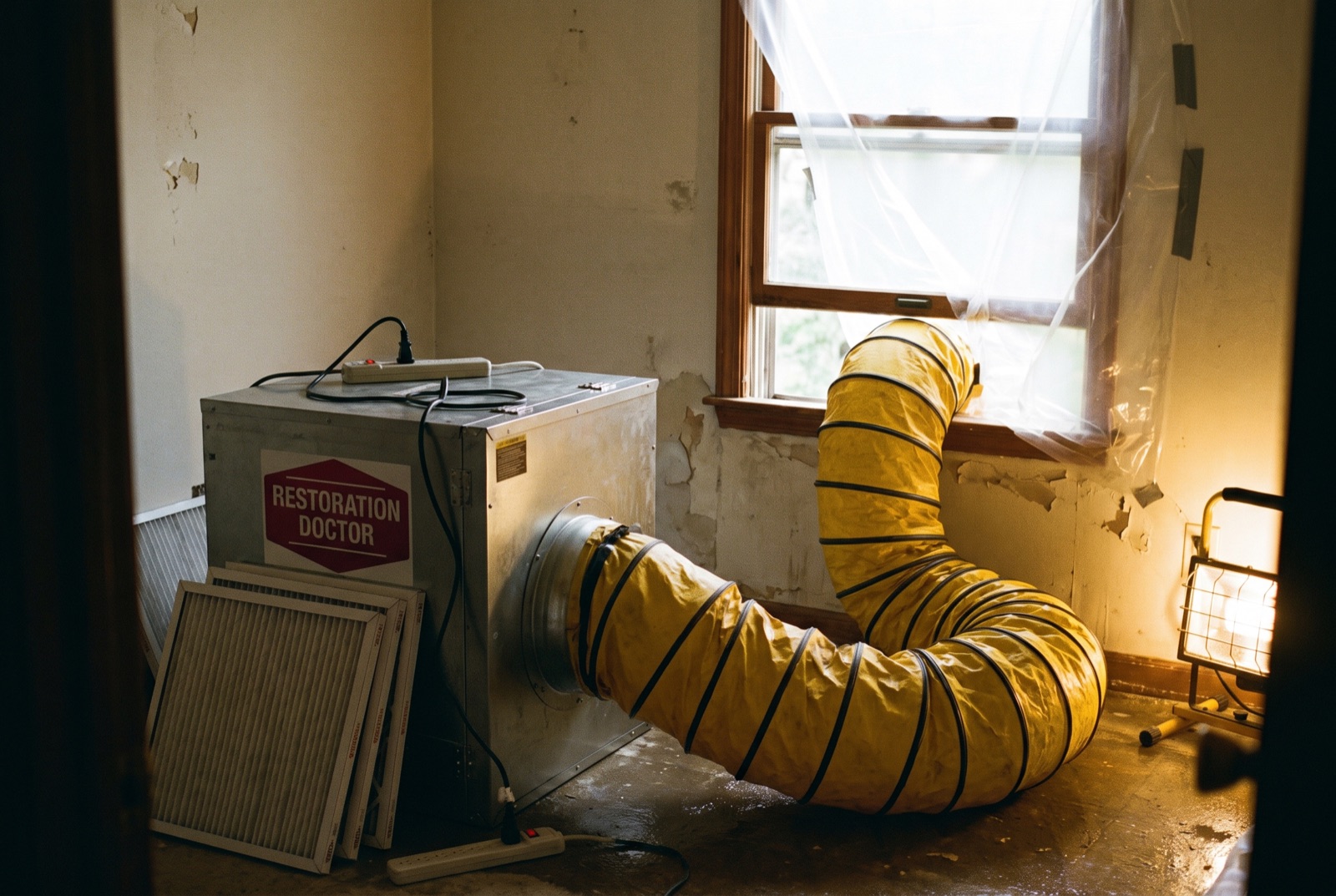
The path back to healthy indoor air is removal, not masking. Under IICRC fire and smoke restoration practice, that means physically cleaning soot from all affected surfaces with residue-appropriate methods, removing materials too saturated to clean, decontaminating the HVAC system so it stops redistributing particles, and running HEPA air scrubbers throughout the work to capture what cleaning disturbs.
In the meantime, practical steps reduce exposure: keep sensitive household members out of affected areas, keep the HVAC system off until it's been inspected, avoid dry-sweeping or vacuuming soot with household equipment (which blows fine particles airborne), and ventilate when outdoor conditions allow. But understand these are stopgaps — the air stays compromised until the residue generating the particles is gone.
Get the exposure assessed and removed
If your home carries smoke residue — whether from a fire in your home or smoke infiltration from nearby — a professional assessment will map the contamination and define what's needed to clear it. Restoration Doctor performs full smoke remediation with HEPA air filtration and HVAC decontamination across Northern Virginia, Maryland, and D.C. Call 1-888-29-FLOOD, 24/7.
Fire & Smoke Damage Restoration
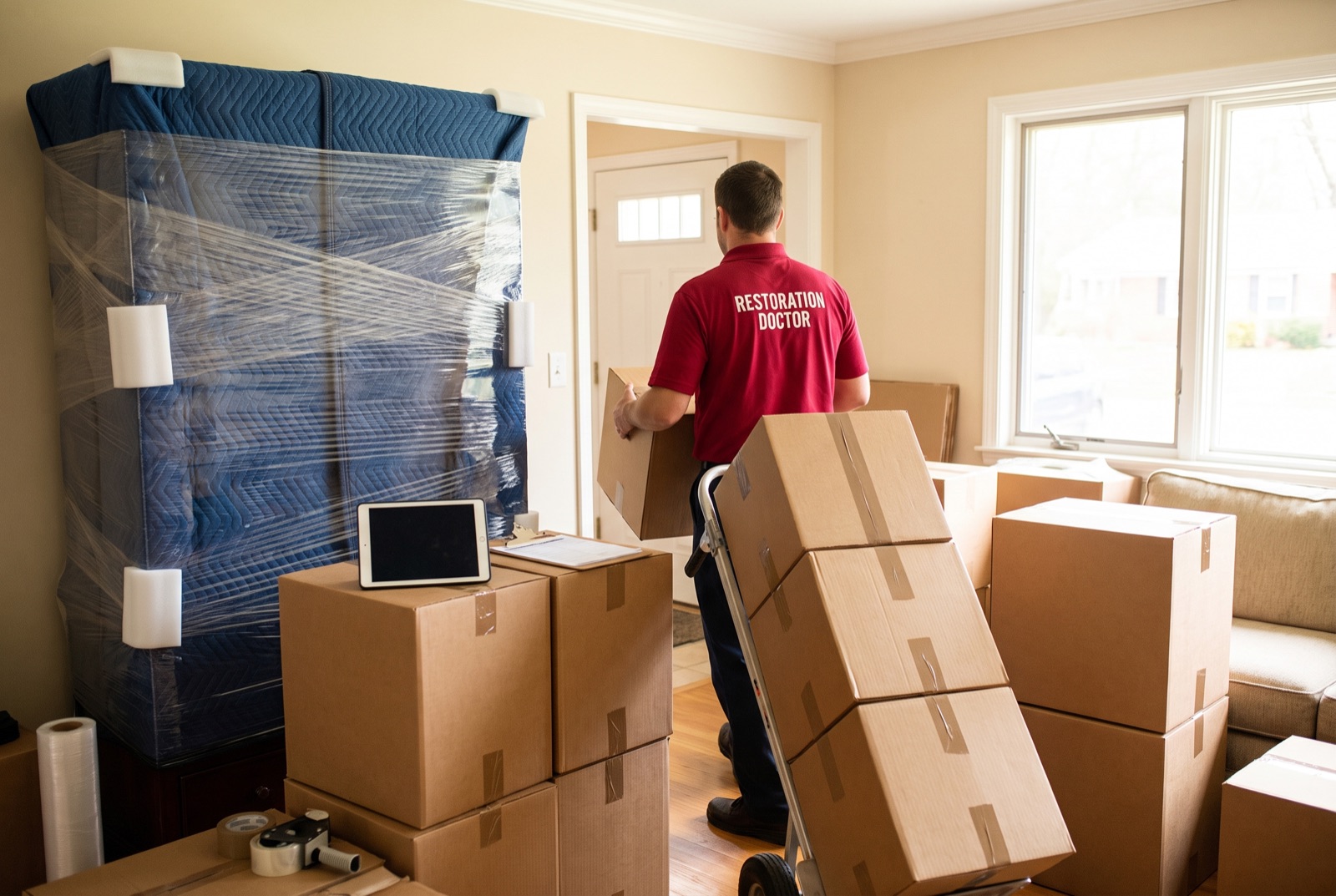
Soot and smoke residue removal, odor neutralization, contents pack-out, and reconstruction after a fire.
Frequently asked
Related questions
Is it safe to stay in a house with smoke damage?
How do you get smoke smell out of a house after a fire?
What does soot do to your house?
Active water, mold, fire, or sewage event?
Connect directly with the Restoration Doctor team for your region. Crews are on standby 24/7 with documented response protocols.