
Is it safe to stay in a house with smoke damage?
Generally no, not until the home has been professionally assessed. Soot particles are ultrafine and easily inhaled, smoke residues off-gas chemicals for weeks, and contamination spreads far beyond the visibly burned area. Children, older adults, and anyone with respiratory conditions should stay elsewhere until cleanup is verified.
Why a smoke-damaged home isn't just a smelly home
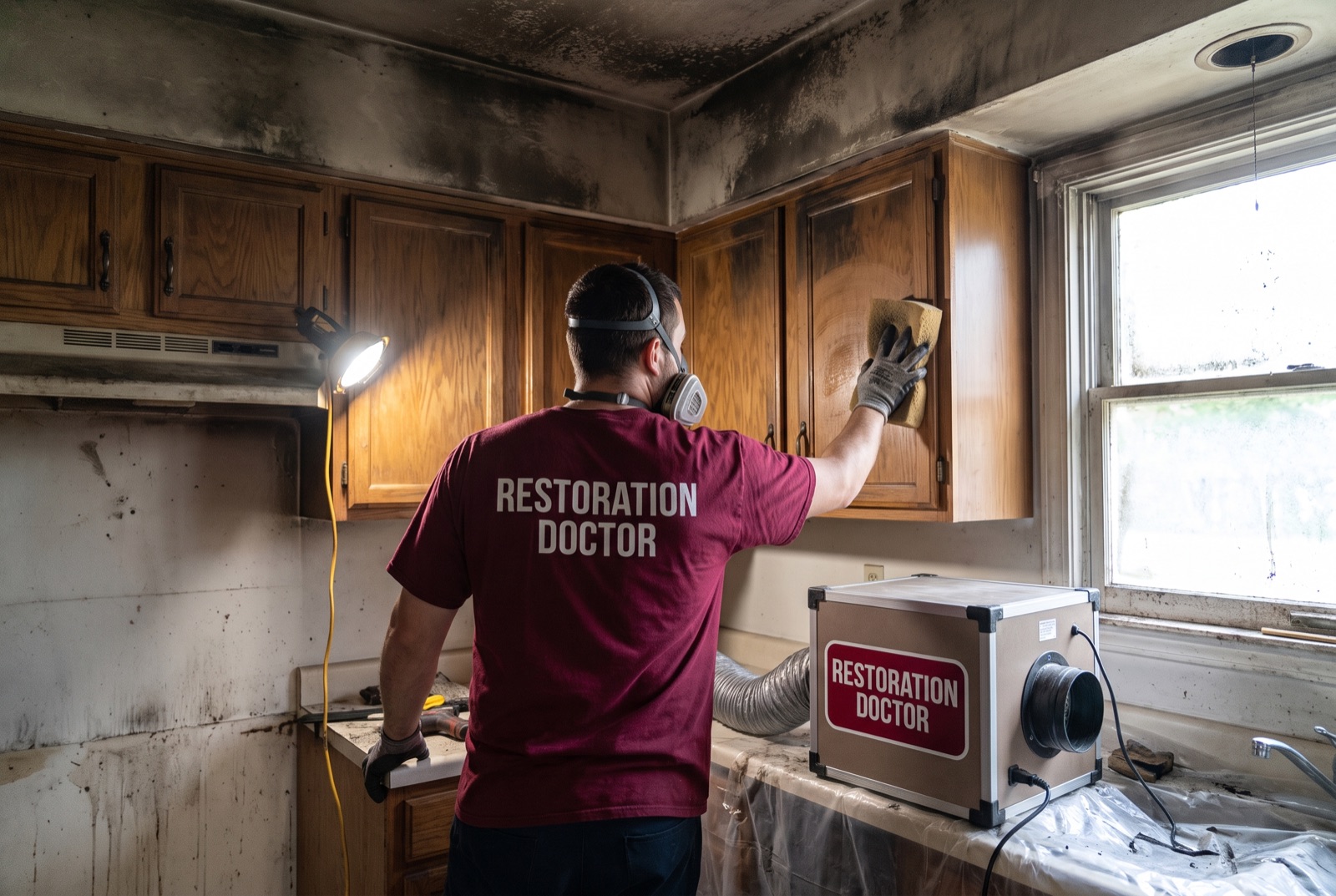
After a fire, the hazard isn't limited to the burned room. Smoke behaves like a gas — it travels through the entire structure, riding air currents into HVAC ducts, closets, cabinets, and rooms far from the fire, depositing residue as it cools. A kitchen fire routinely contaminates upstairs bedrooms that never saw a flame.
That residue is not simply carbon. Modern homes burn plastics, synthetic fabrics, foams, adhesives, and treated wood, and the combustion byproducts include an aggressive mix of chemicals that continue to off-gas from surfaces for days to weeks. The particles themselves are ultrafine — small enough to bypass the nose's filtering and reach deep into the lungs.
None of this is a reason for panic, but it is a reason for assessment. What looks like light haze on the walls can represent meaningful airborne exposure, especially while residues are fresh and being disturbed by cleanup activity.
Who is most at risk
Sensitivity to smoke residue varies widely. Children breathe faster and closer to floor-level dust; older adults and anyone with asthma, COPD, or cardiovascular conditions have less reserve to tolerate irritant exposure. Pregnant women and pets are also commonly advised to stay out of smoke-affected spaces until cleanup is complete.
If anyone in the household is experiencing coughing, headaches, eye or throat irritation, or shortness of breath after time in the home, take that seriously and consult medical professionals. Symptoms are a signal to relocate until the home is verified clean — not something to push through.
Displacement is usually covered: most homeowner's policies include additional living expense coverage that pays for temporary lodging when the home isn't safely habitable. Ask your adjuster early and keep receipts.
What has to happen before the home is safe again
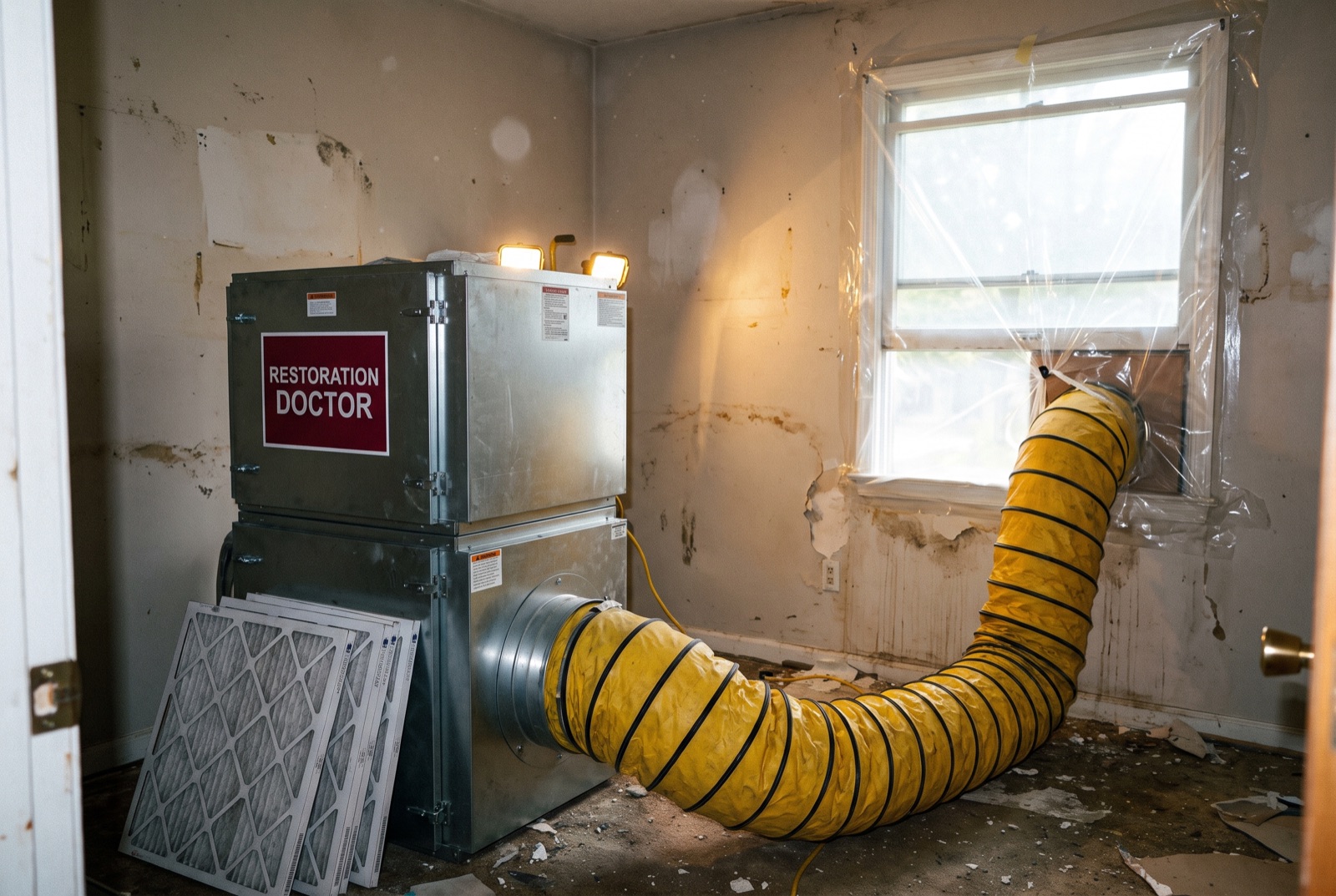
Making a smoke-damaged home safely occupiable follows a sequence under IICRC fire and smoke restoration practice: identify the residue types present (wet smoke, dry smoke, protein residue — each behaves and cleans differently), physically remove soot from every affected surface, clean or seal the HVAC system so it stops redistributing contamination, run HEPA air scrubbing to capture airborne particles, and then treat remaining odor at its source.
The order matters. Air scrubbers and odor treatments applied before source removal only mask the problem — the residue keeps off-gassing and the odor returns. When cleanup is done correctly and verified, the home is genuinely restored, not just deodorized.
Get an assessment before moving back in
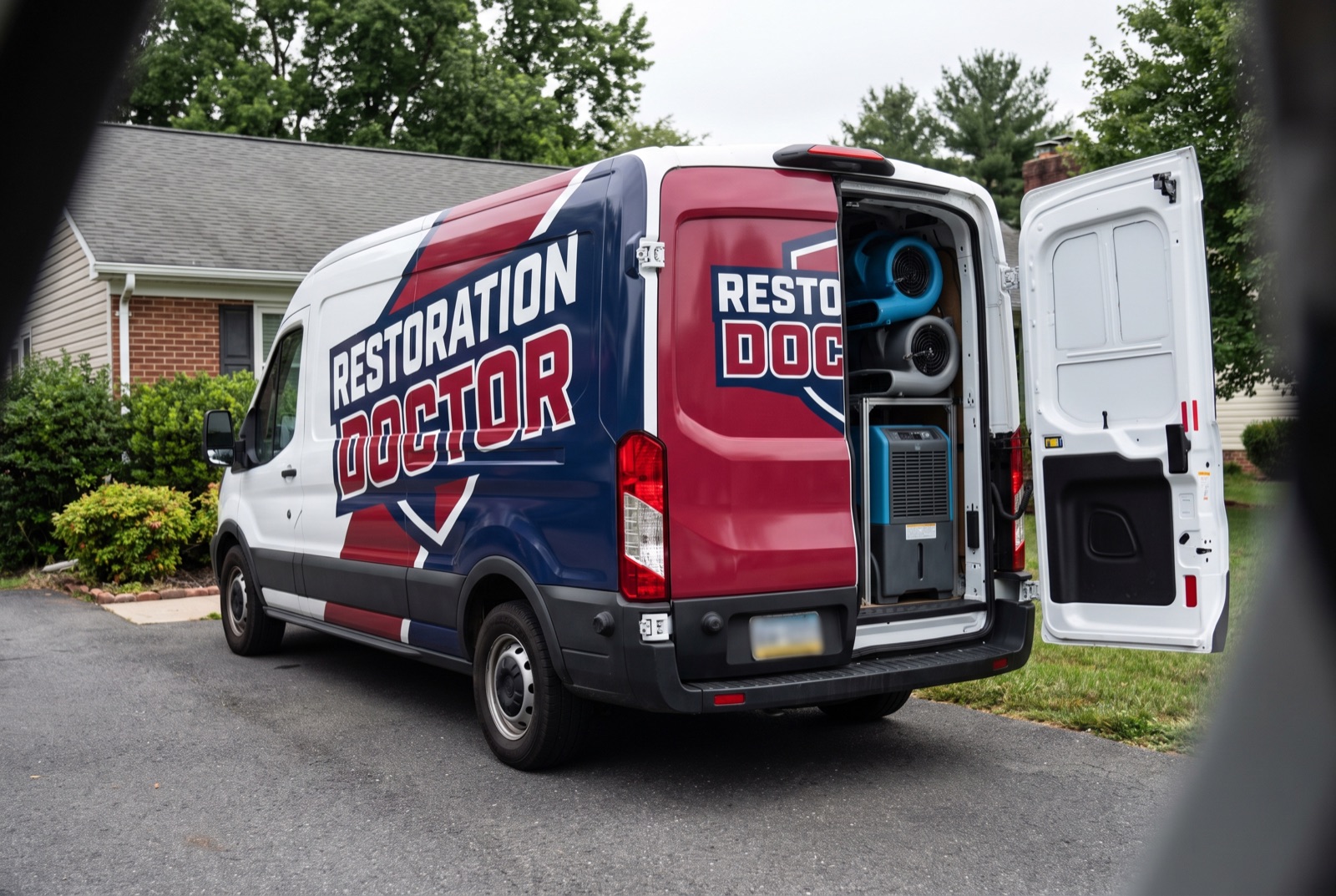
The honest answer to "can we stay?" depends on the size of the fire, what burned, and how far smoke traveled — which is exactly what a professional assessment determines. Restoration Doctor evaluates smoke-affected homes across Northern Virginia, Maryland, and D.C., maps the contamination, and provides a clear scope of what's needed before the home is comfortably occupiable. Call 1-888-29-FLOOD, 24/7, for an inspection.
Fire & Smoke Damage Restoration
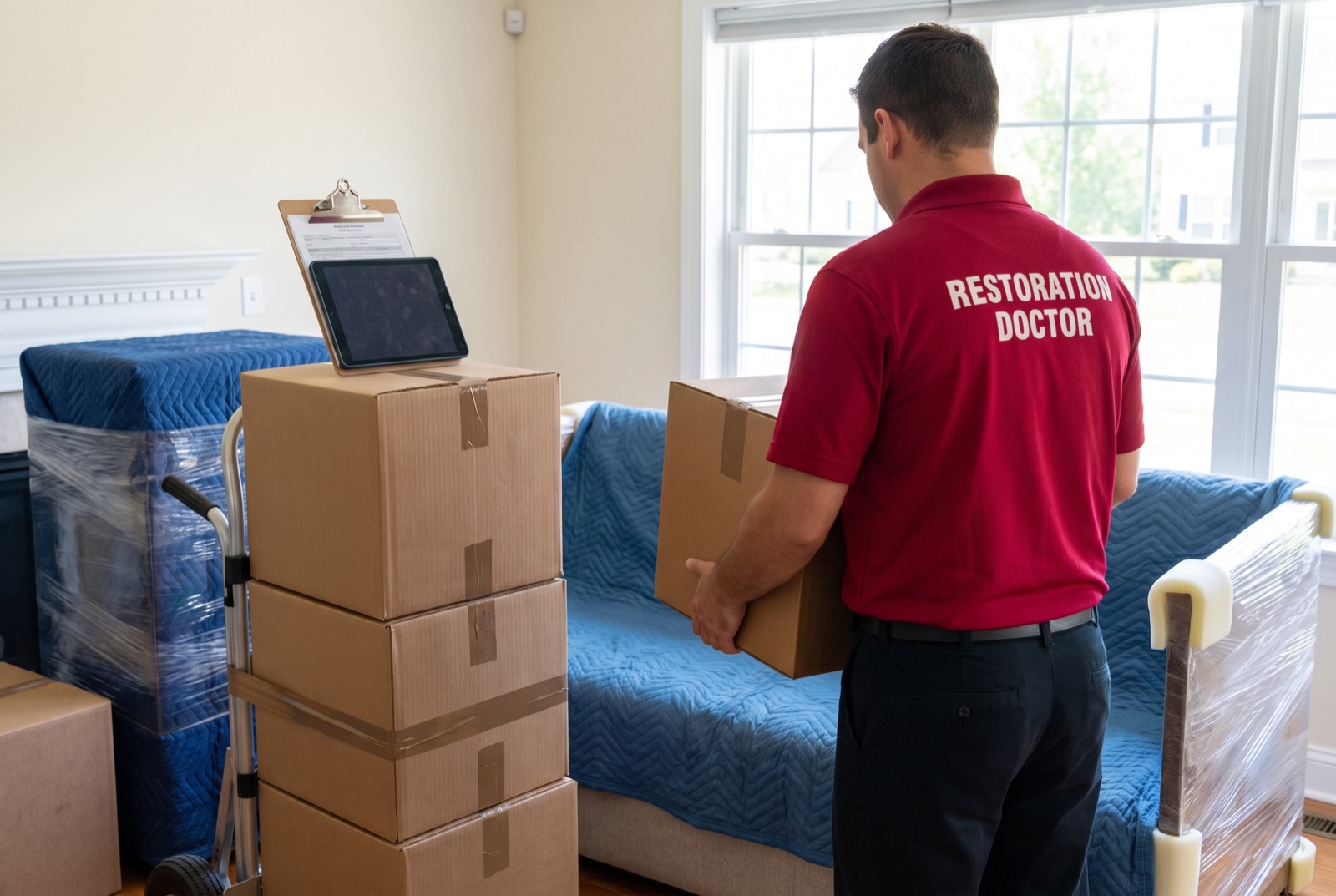
Soot and smoke residue removal, odor neutralization, contents pack-out, and reconstruction after a fire.
Frequently asked
Related questions
Is smoke damage dangerous to breathe?
Can smoke damage be removed from a house?
What should you do immediately after a house fire?
Active water, mold, fire, or sewage event?
Connect directly with the Restoration Doctor team for your region. Crews are on standby 24/7 with documented response protocols.