
What should you do immediately after a house fire?
Do not re-enter until the fire marshal or fire department clears the structure. Then secure the property with board-up, notify your insurance carrier, and get professional smoke and water mitigation started within 24 to 48 hours — acidic soot begins permanently etching finishes and metals within days.
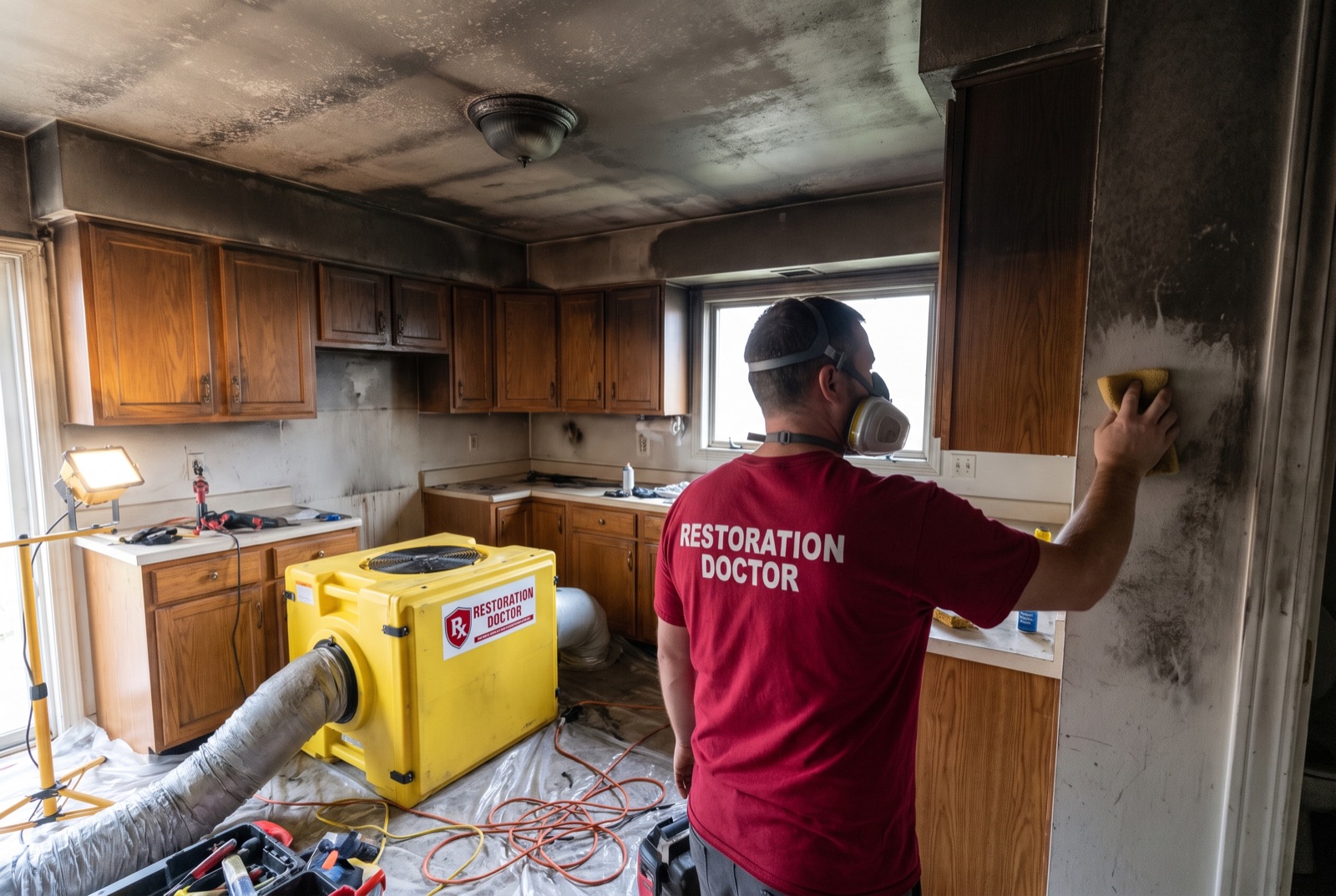
Wait for official clearance before entering
The most important rule after a fire is also the simplest: do not go back inside until fire officials tell you it is safe. A structure that looks stable from the street can hide compromised framing, weakened floors, damaged electrical systems, and lingering hot spots that can reignite hours later. The fire marshal or responding fire department determines when re-entry is safe — not the homeowner, and not the restoration contractor.
Even after clearance, treat the first walkthrough carefully. Wear closed shoes and avoid disturbing heavy soot deposits, which are easily inhaled and easily ground into surfaces. If anyone in the household experienced smoke exposure during the fire, consult medical professionals rather than assuming symptoms will pass on their own.
If the home is not safe to occupy, your homeowner's policy typically includes additional living expense (ALE) coverage for temporary housing. Keep every receipt from the first night onward.
Secure the property and notify your insurer
A fire-damaged home is exposed in every sense — broken windows, breached doors, holes cut by firefighters for ventilation, and often a compromised roof. Emergency board-up and roof tarping close those openings against weather, animals, and intruders. This is not optional: most policies require you to take reasonable steps to protect the property from further damage, and carriers routinely reimburse board-up as part of the claim.
Call your insurance carrier as soon as the immediate emergency is handled and start the claim. Ask about ALE coverage, get your claim number, and begin a simple log of every conversation. Photograph the exterior and, once cleared, each affected room before anything is moved or cleaned.
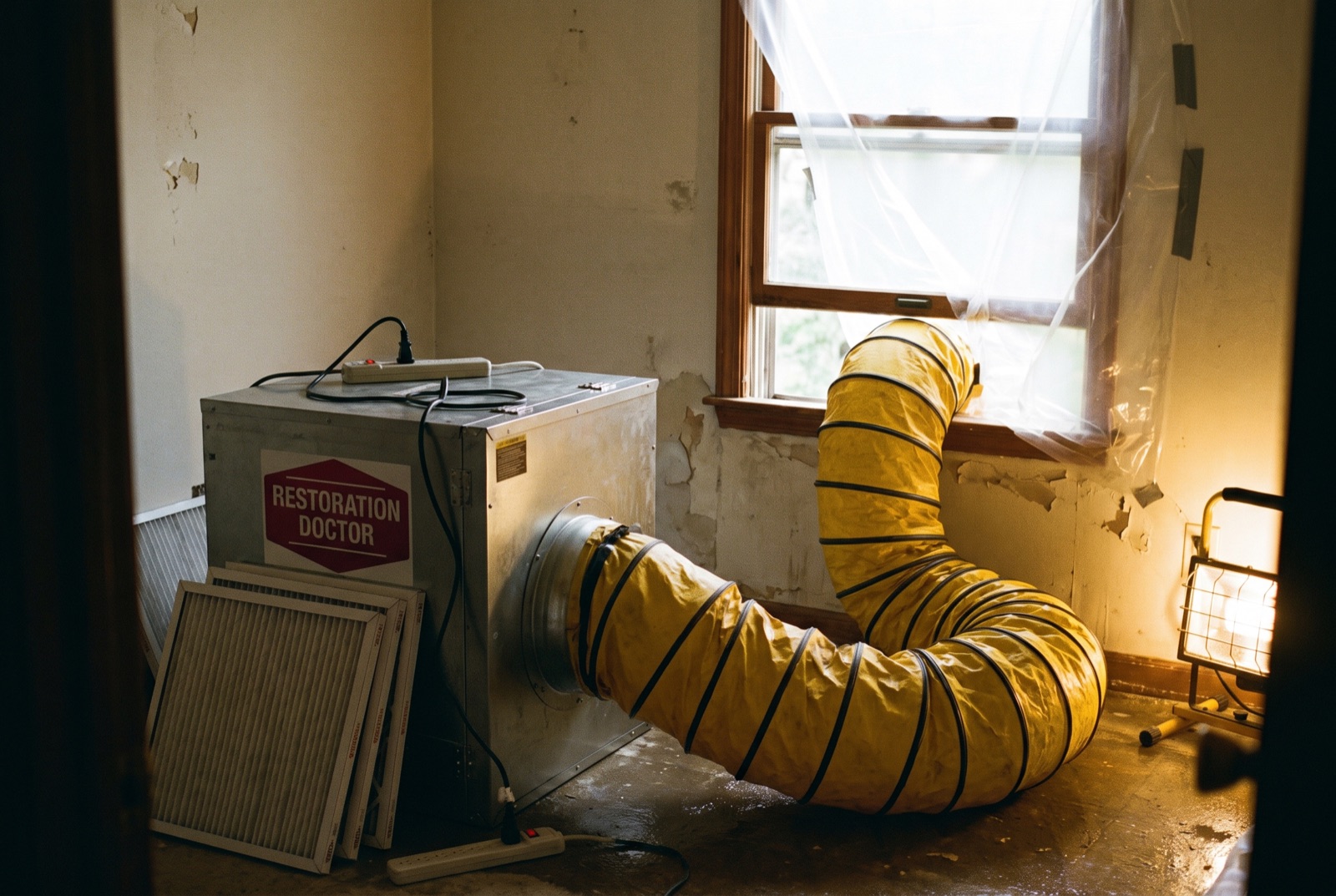
Why mitigation can't wait: the soot clock
Fire damage keeps getting worse after the flames are out. Soot residue is acidic, and under IICRC fire and smoke restoration practice the first days are triage: within hours it discolors plastics and porous stone; within days it etches metal fixtures, tarnishes hardware, and corrodes electronics; within weeks it permanently yellows walls, stains grout, and pits glass and chrome. What could have been cleaned in week one becomes replacement by week three.
Most fires are also water losses. Firefighting water and burst supply lines soak the structure, which means the standard water-damage clock — dry within roughly 24 to 48 hours to prevent mold growth — runs at the same time as the soot clock. Professional fire mitigation addresses both at once: extraction and structural drying alongside corrosion control, soot stabilization, and air filtration.
Get professional fire restoration moving
Once the property is secured and the claim is opened, bring in a restoration company experienced in fire and smoke work — the cleaning chemistry, residue identification, and odor-removal methods are a distinct discipline from general cleaning. Restoration Doctor responds 24/7 across Northern Virginia, Maryland, and D.C. with emergency board-up, water extraction, soot mitigation, and contents pack-out, with documentation your carrier can verify at every step. Call 1-888-29-FLOOD to get a crew dispatched.
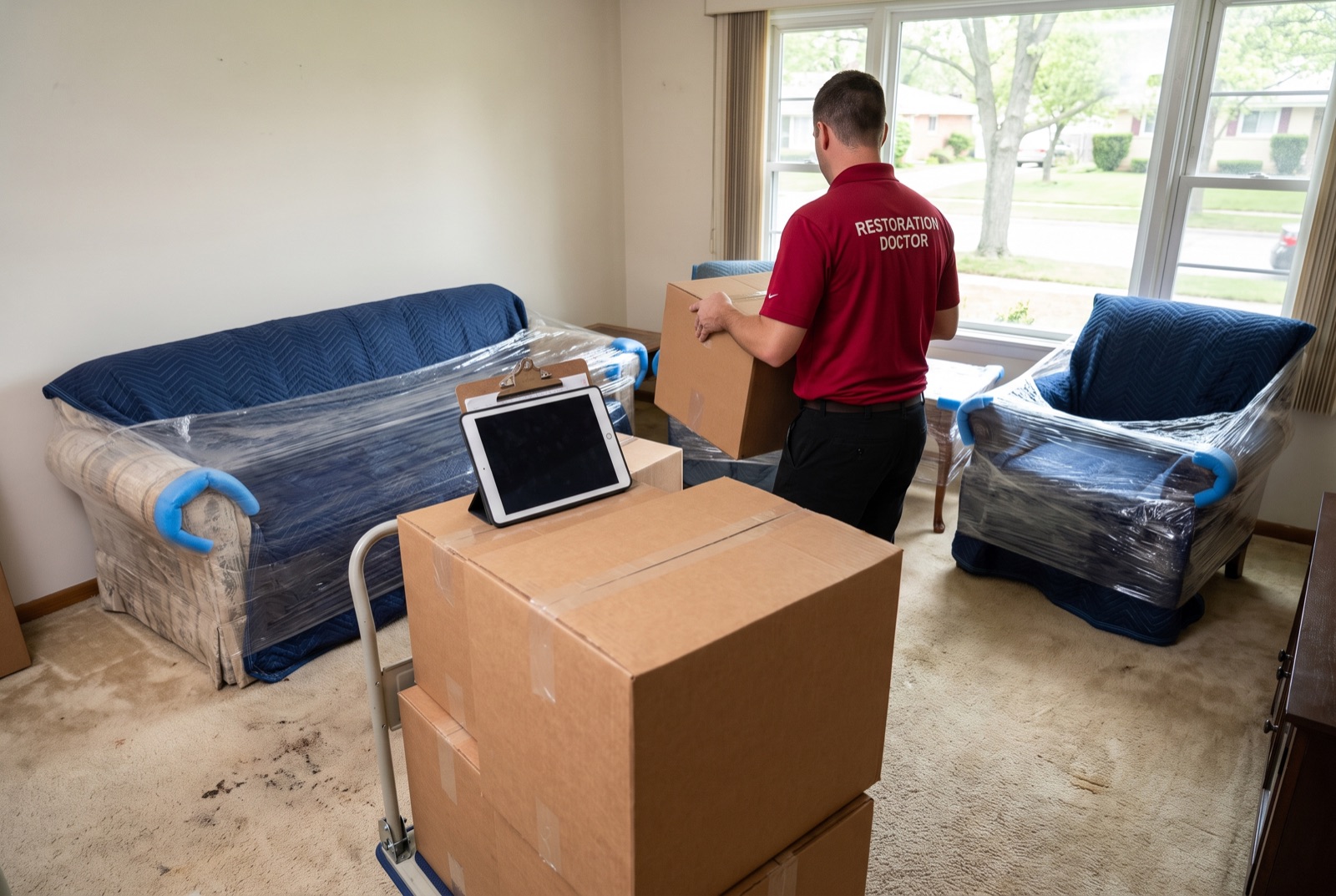
Fire & Smoke Damage Restoration
Soot and smoke residue removal, odor neutralization, contents pack-out, and reconstruction after a fire.
Frequently asked
Related questions
Is it safe to stay in a house with smoke damage?
Why is there water damage after a fire?
What does soot do to your house?
How long does fire damage restoration take?
Active water, mold, fire, or sewage event?
Connect directly with the Restoration Doctor team for your region. Crews are on standby 24/7 with documented response protocols.