
Why is there water damage after a fire?
Extinguishing a fire puts enormous amounts of water into the structure — fire hoses, activated sprinklers, and supply lines burst by heat all soak floors, walls, and ceilings. Most fire losses are therefore dual losses: soot damage and water damage running simultaneously, each on its own clock, requiring mitigation at the same time.
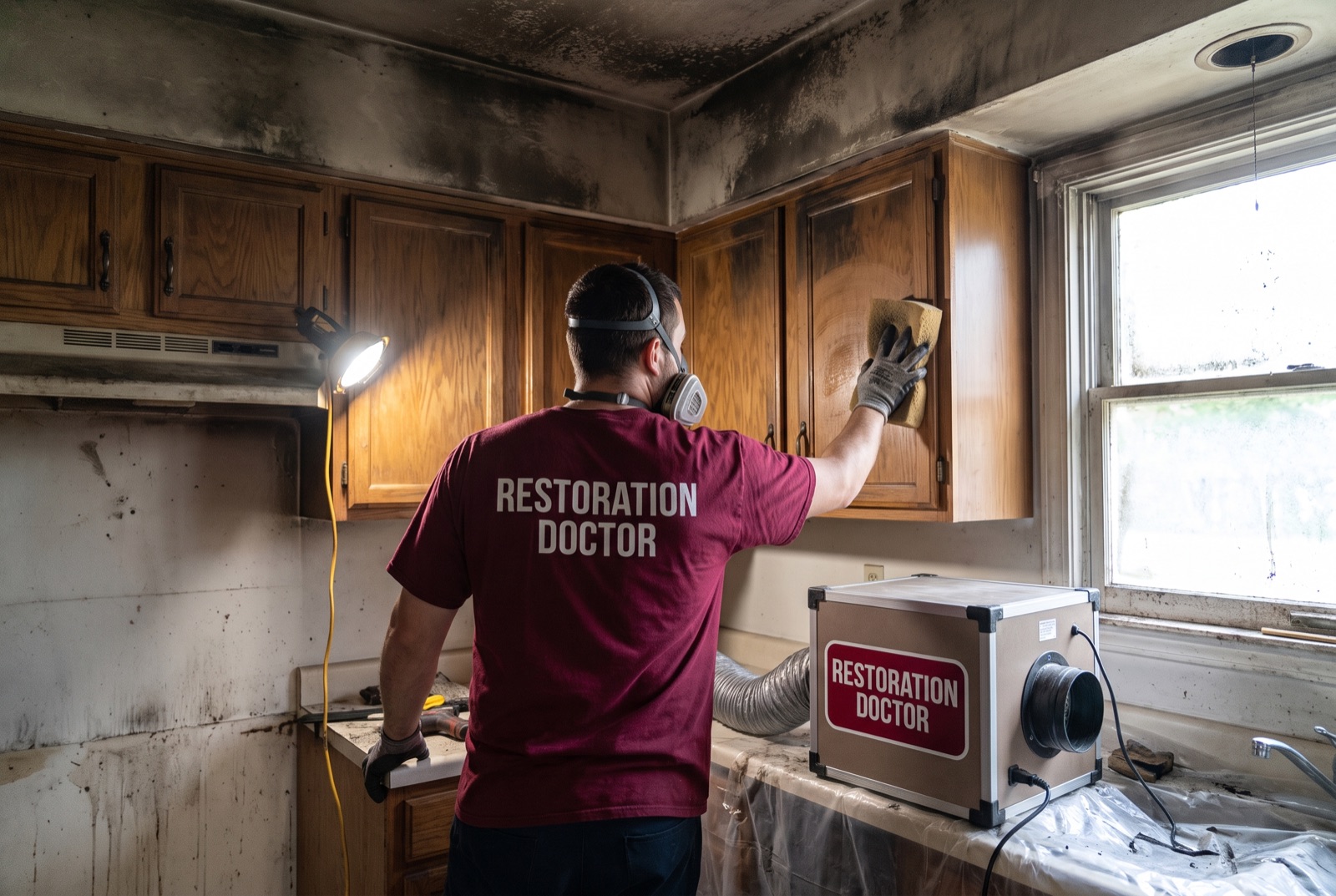
Where all the water comes from
Homeowners walking through a fire-damaged home are often more shocked by the water than the burn. The sources add up fast. Fire attack lines flow water by the hundreds of gallons per minute, and suppressing even a single-room fire can put thousands of gallons into the structure. Water follows gravity, so rooms below the fire floor — which never saw flame or smoke — frequently take the worst soaking as water drains through ceilings, light fixtures, and wall cavities.
Sprinkler systems, where present, activate head-by-head over the heat source and flow continuously until shut down. And the fire itself creates plumbing failures: heat melts PEX and plastic supply lines, solder joints let go, and appliance connections fail, adding uncontrolled clean-water flow to the firefighting water. By the time the scene is quiet, the home has typically experienced the equivalent of a major flood layered underneath the smoke damage.
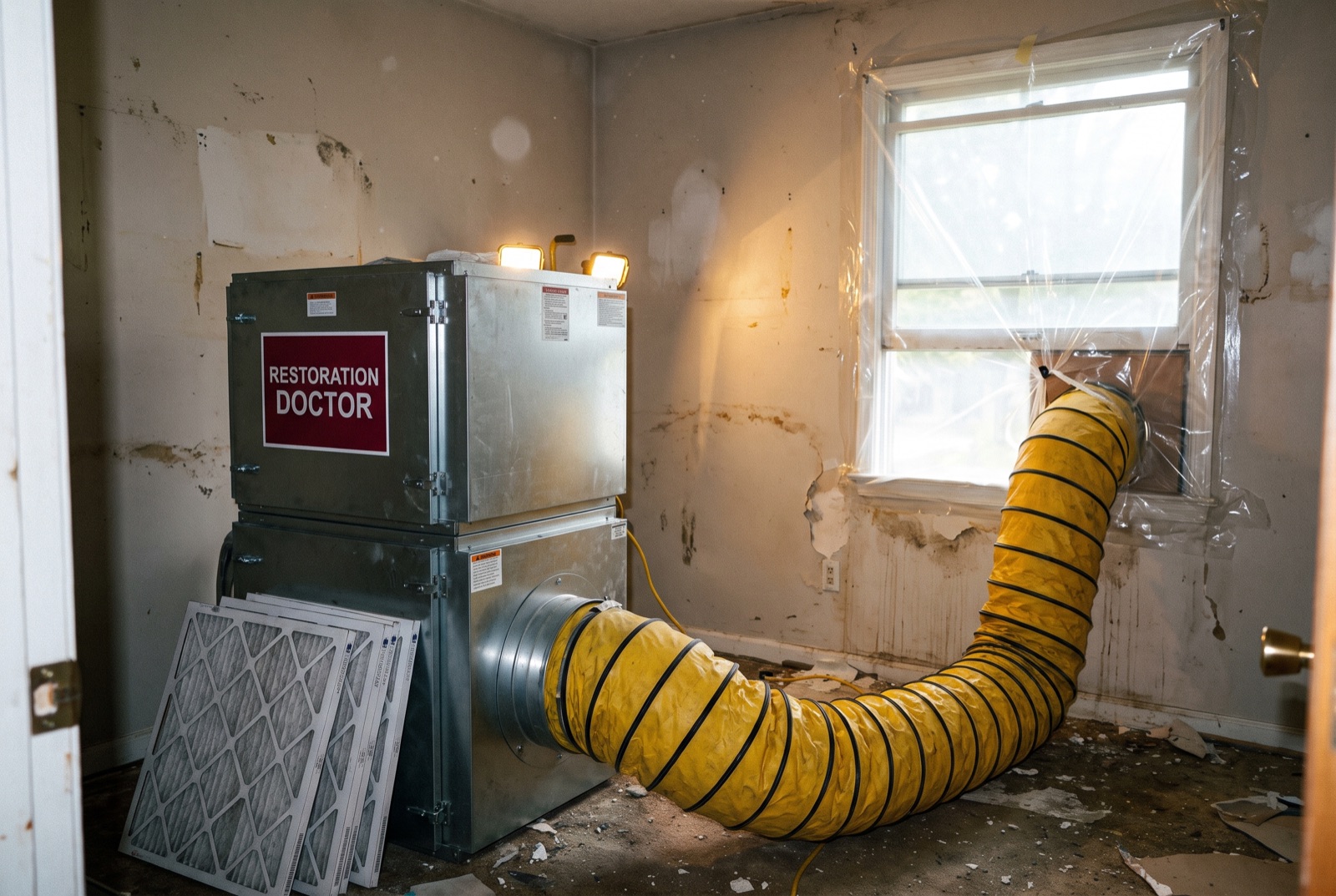
Two damage clocks running at once
The dual nature of a fire loss creates a genuinely urgent situation, because the two damage mechanisms compound each other on independent timelines. The water clock is the familiar one: saturated drywall, insulation, and flooring need to be dry within roughly 24 to 48 hours to prevent mold growth, and materials keep degrading as long as they stay wet.
The soot clock runs alongside it: acidic smoke residue etches metals, corrodes electronics, and progressively sets stains over days to weeks. Worse, the two interact — humidity from all that evaporating water accelerates soot's corrosive chemistry and drives smoke odor deeper into damp porous materials. A wet, sooty house deteriorates faster than either problem would alone.
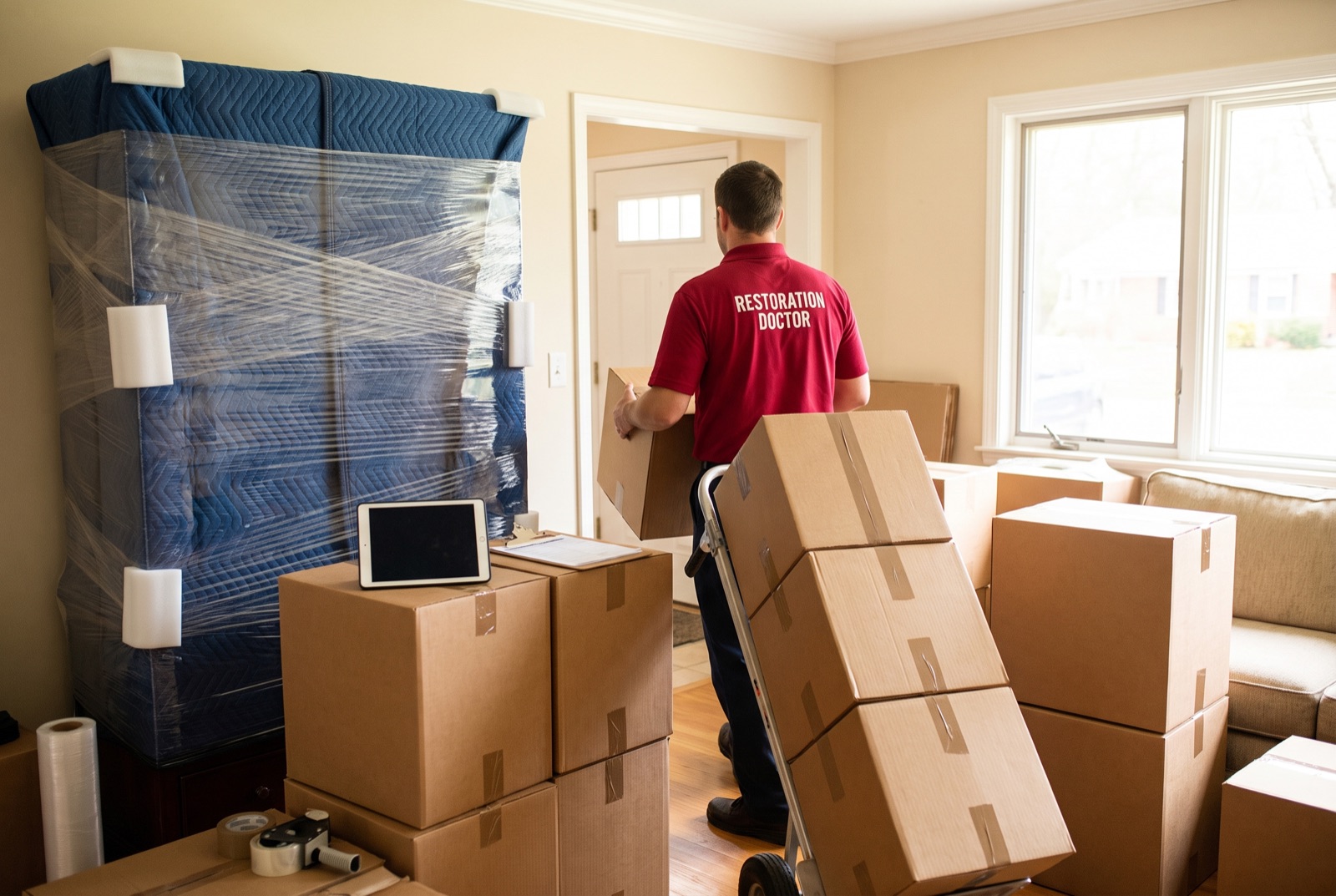
How dual-loss mitigation works
Proper fire mitigation attacks both problems in a coordinated sequence. Standing water is extracted first, and saturated materials that can't be saved — wet carpet pad, soaked insulation, crumbling drywall — are removed. Structural drying equipment (air movers and commercial dehumidifiers) runs per IICRC S500 water-restoration practice, with the added benefit that controlling humidity also slows soot corrosion.
Simultaneously, the fire side proceeds under IICRC fire and smoke restoration practice: corrosion mitigation on at-risk surfaces, soot removal with residue-appropriate methods, HEPA air filtration, and contents pack-out. A restoration contractor experienced in fire work manages both scopes as one project with one documentation trail — which also keeps the insurance claim clean, since carriers cover firefighting water damage as part of the fire loss.
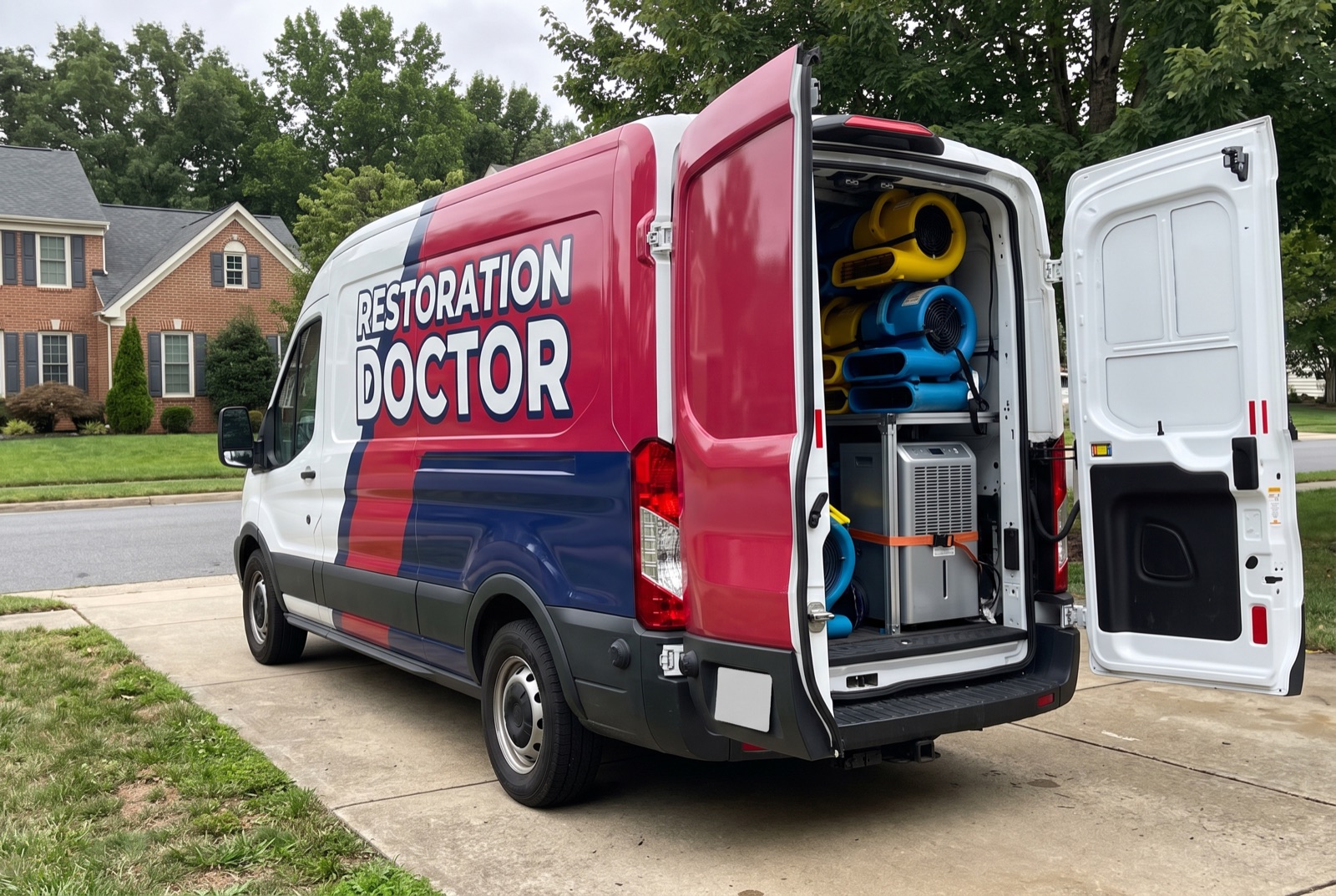
One call covers both problems
If your home has been through a fire, assume it's a water loss too — even if the floors look merely damp. Restoration Doctor mitigates fire and water damage together across Northern Virginia, Maryland, and D.C.: extraction, structural drying with documented moisture readings, soot stabilization, and smoke odor removal in a single coordinated response. Call 1-888-29-FLOOD, 24/7.
Fire & Smoke Damage Restoration
Soot and smoke residue removal, odor neutralization, contents pack-out, and reconstruction after a fire.
Frequently asked
Related questions
What should you do immediately after a house fire?
How long does fire damage restoration take?
Does homeowners insurance cover fire and smoke damage?
Active water, mold, fire, or sewage event?
Connect directly with the Restoration Doctor team for your region. Crews are on standby 24/7 with documented response protocols.