
How long does fire damage restoration take?
Smoke-only cleanups typically take several days to a few weeks. Single-room fires with limited structural damage generally run one to three months including repairs. Major structural fires requiring demolition and rebuild commonly take two to six months or longer. The first-week damage assessment sets the realistic schedule for your specific loss.
The three timeline tiers
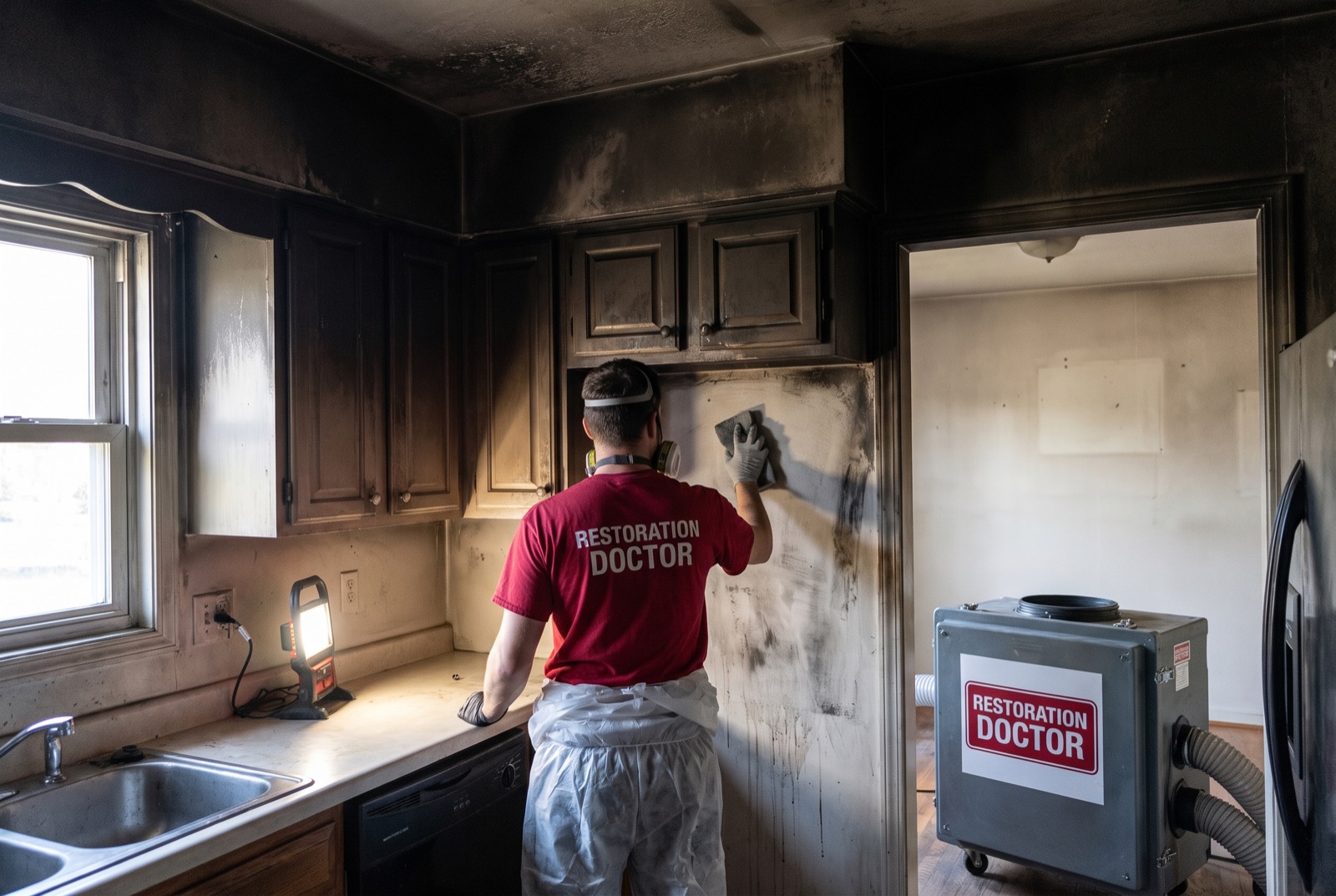
Fire restoration timelines cluster into three broad tiers. Light smoke damage — a contained kitchen flare-up or a fire in an adjacent unit that sent smoke your way — involves cleaning, deodorization, and possibly repainting, and typically wraps in days to a few weeks depending on how far smoke traveled and how much contents cleaning is involved.
Moderate fires — one room burned, with smoke and firefighting water affecting a wider area — add demolition of damaged materials, structural drying, odor sealing, and rebuild of the burned space. These commonly run one to three months from mitigation through final paint.
Major structural fires — multiple rooms, roof involvement, or compromised framing — are reconstruction projects. Between engineering assessment, permits, demolition, structural repair, and full interior rebuild, two to six months is typical, and large or complicated losses can run longer. These are real construction timelines, not cleanup timelines.
What happens in each phase
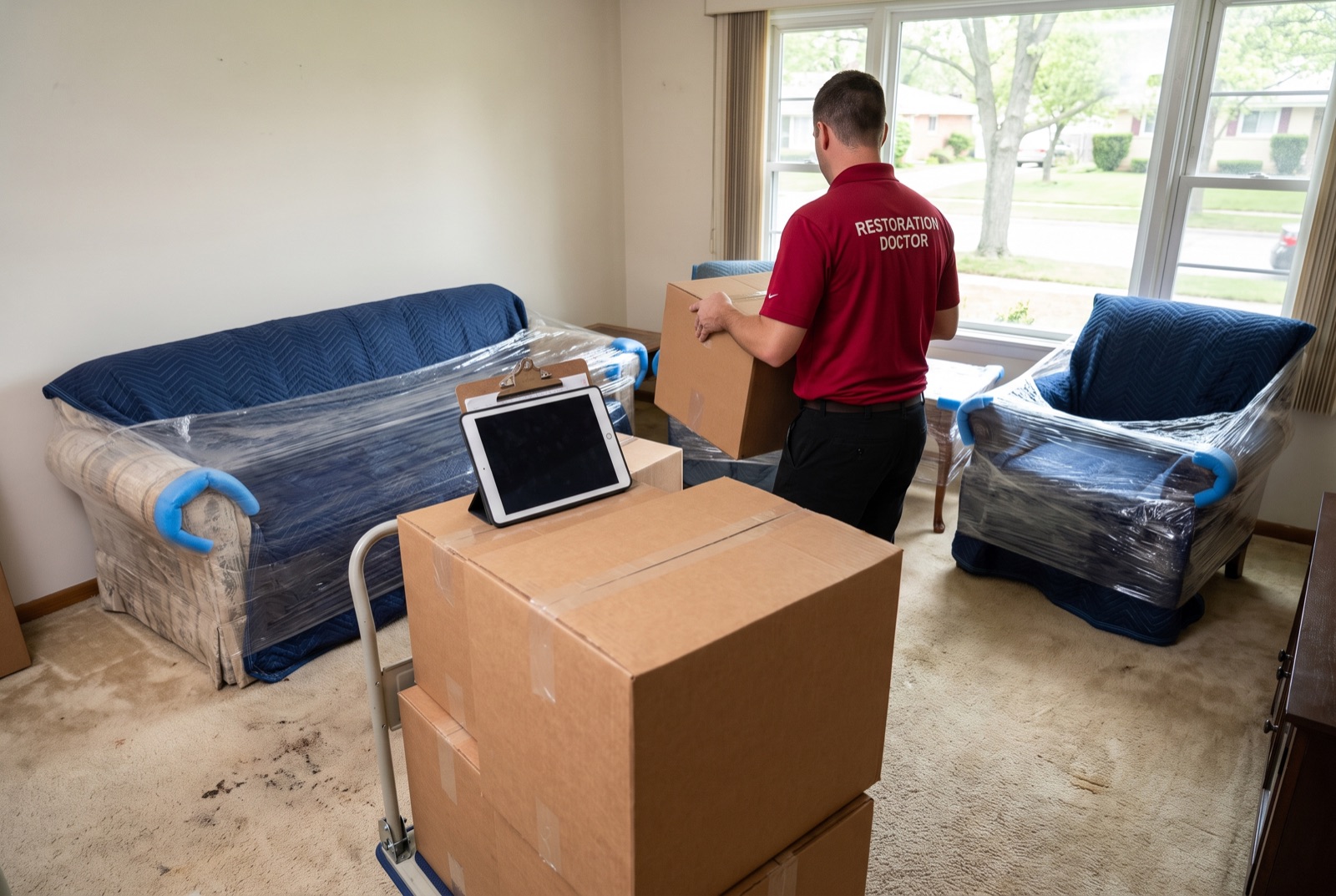
Week one is assessment and emergency mitigation: board-up and tarping, water extraction and drying startup, corrosion control on soot-exposed surfaces, contents inventory and pack-out, and a documented scope of loss. This week matters more than any other — it stops ongoing damage and produces the assessment that sets the schedule and the insurance scope.
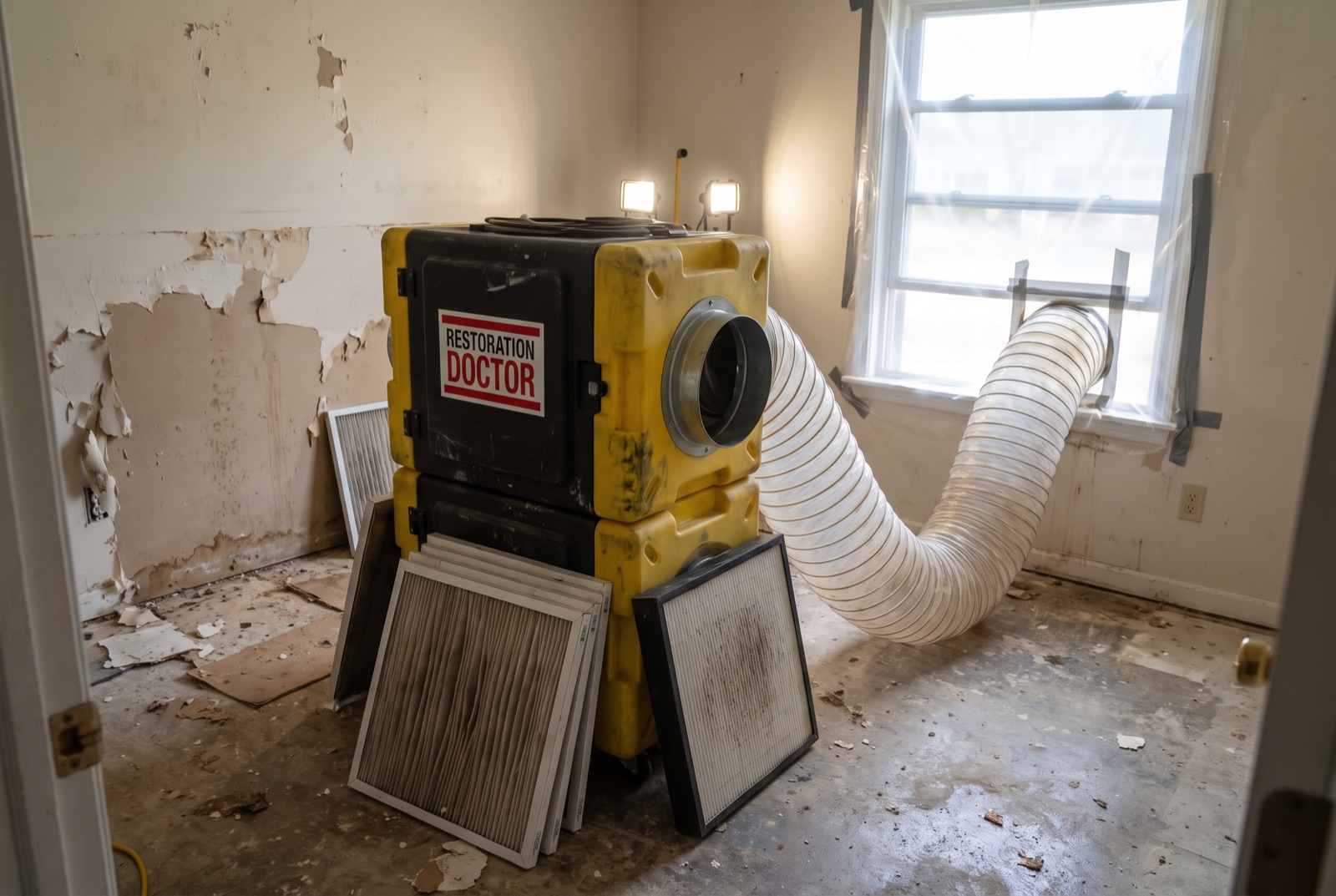
The mitigation and cleaning phase follows: structural drying to verified dry standard, demolition of unsalvageable materials, soot removal throughout the smoke-affected footprint, HVAC decontamination, and odor treatment. Depending on the loss, this runs from a few days to several weeks.
Reconstruction is the long tail: framing repairs, insulation, drywall, flooring, cabinetry, paint, and trim. Its duration follows normal construction logic — scope, permitting, and material lead times — which is why structural fires take months while smoke-only losses don't.
What stretches timelines — and what compresses them
The common schedule-killers: delayed mitigation start (soot sets, mold risk climbs, scope expands), slow insurance scope agreement, permit review for structural work, and long-lead materials like custom cabinets or specialty flooring. Losses where the homeowner waits weeks to engage a restoration contractor reliably end up with larger scopes and longer schedules than the same fire mitigated immediately.
What compresses timelines: same-week mitigation, a contractor who documents thoroughly enough that the adjuster can approve scope without rounds of back-and-forth, and a single firm handling mitigation through rebuild so there's no hand-off gap between the cleanup contractor finishing and a general contractor starting.
Get a realistic schedule for your loss
The honest answer for your home comes from an on-site assessment, not a chart. Restoration Doctor handles fire losses across Northern Virginia, Maryland, and D.C. from emergency response through reconstruction, and provides a phased schedule with the initial scope so you can plan housing and life around real dates. Call 1-888-29-FLOOD to get the assessment scheduled.
Fire & Smoke Damage Restoration
Soot and smoke residue removal, odor neutralization, contents pack-out, and reconstruction after a fire.
Frequently asked
Related questions
What should you do immediately after a house fire?
Can smoke damage be removed from a house?
Does homeowners insurance cover fire and smoke damage?
Active water, mold, fire, or sewage event?
Connect directly with the Restoration Doctor team for your region. Crews are on standby 24/7 with documented response protocols.