Can I clean up sewage myself?
Only in one narrow case: a small toilet overflow of a few square feet on sealed hard flooring, cleaned immediately with gloves, disinfectant, and proper disposal. Anything larger — or anything reaching carpet, drywall, baseboards, or floor drains backing up — is Category 3 contamination that requires professional containment, protective equipment, removal, and disinfection.
The one scenario where DIY is reasonable
A minor toilet overflow — a gallon or two of water on sealed tile or vinyl, caught immediately, confined to a few square feet — is at the edge of what a careful homeowner can handle. Wear rubber gloves and waterproof footwear, soak up the water with disposable towels bagged directly into trash, clean the area with detergent, then disinfect with an appropriate disinfectant used per its label instructions and contact time. Bag and discard anything absorbent the water touched, including the cleaning materials, and wash up thoroughly afterward.
Even in this small scenario, the boundaries matter: the water must not have reached carpet, baseboards, cabinet toe-kicks, or any seam where it can wick under flooring. Water that disappears under a vanity or into a floor transition hasn't gone away — it's soaking into materials you can't clean from the surface.
Why everything bigger is a professional job
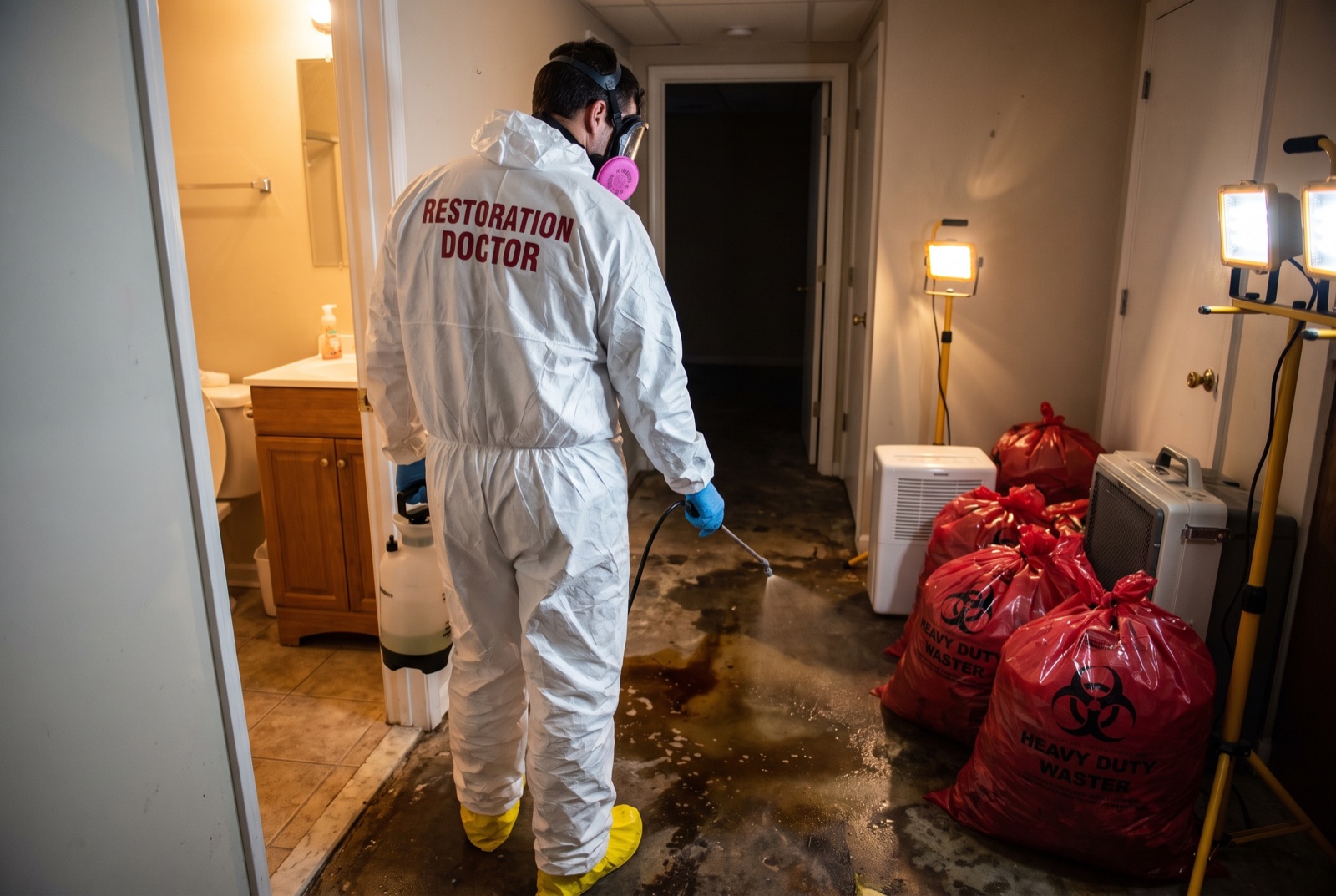
Sewage is Category 3 water under the IICRC S500 standard — the same classification as rising floodwater — and the standard's answer to Category 3 in porous materials is removal, not cleaning. Carpet, pad, upholstered furniture, and drywall and insulation that absorbed sewage cannot be reliably sanitized; professionals remove and lawfully dispose of them, then disinfect the structural surfaces that remain. A homeowner with a shop vac and a jug of bleach can't replicate that sequence, and the attempt creates new problems.
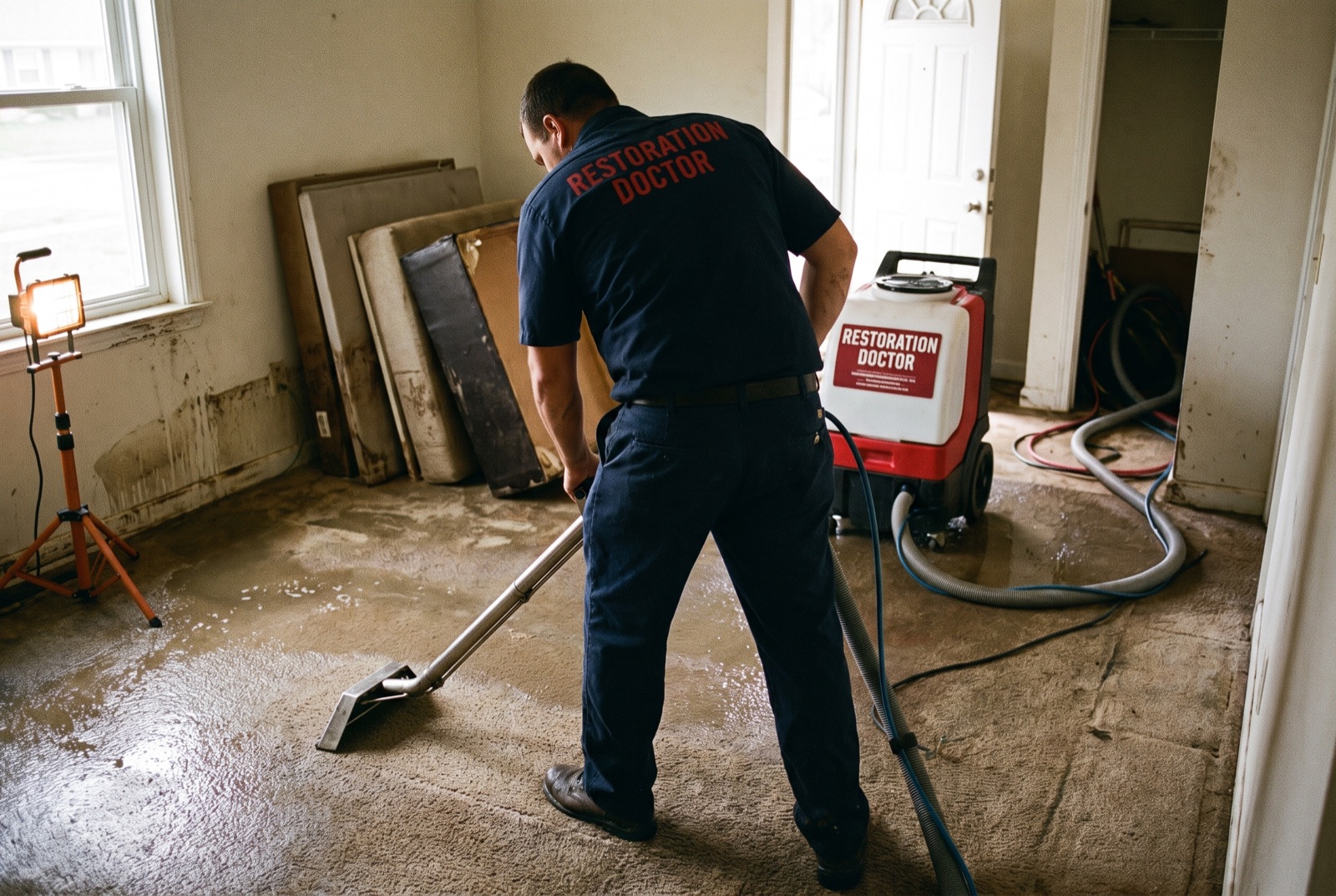
The equipment gap is real, too. Household vacuums exhaust contaminated aerosol into your air. Fans pointed at sewage spread droplets through the house. Consumer disinfectants applied to dirty, wet, porous surfaces largely fail — disinfection chemistry assumes a cleaned surface and a maintained contact time. Professional crews work in proper protective equipment inside containment, with extraction equipment designed for contaminated water and legal means of disposing of it. Dumping extracted sewage down a storm drain or into the yard, incidentally, can violate local environmental rules.
The hidden cost of getting it wrong
Failed DIY sewage cleanup usually surfaces weeks later: persistent odor, mold blooming in wall cavities that stayed wet, and contamination residues in materials that should have been removed. At that point the job has grown — what would have been a defined cleanup is now cleanup plus mold remediation plus more demolition, at a higher total cost than doing it right the first time.
There's also an insurance angle. If you carry a water backup endorsement, the loss may be covered — and carriers expect mitigation to follow industry standards. Professional documentation of what was removed, cleaned, and dried supports the claim; an undocumented DIY attempt does not, and can complicate coverage for the damage that follows.
What to do instead
Stop using water anywhere in the house, keep people and pets out of the affected area, and photograph the scene from safe vantage points. Then bring in a certified crew: professional Category 3 cleanup means containment, extraction and disposal, removal of contaminated porous materials, hospital-grade disinfection of what remains, and structural drying verified with moisture readings. Restoration Doctor provides certified sewage cleanup 24/7 across Northern Virginia, Maryland, and D.C. — call 1-888-29-FLOOD.
Sewage & Biohazard Cleanup
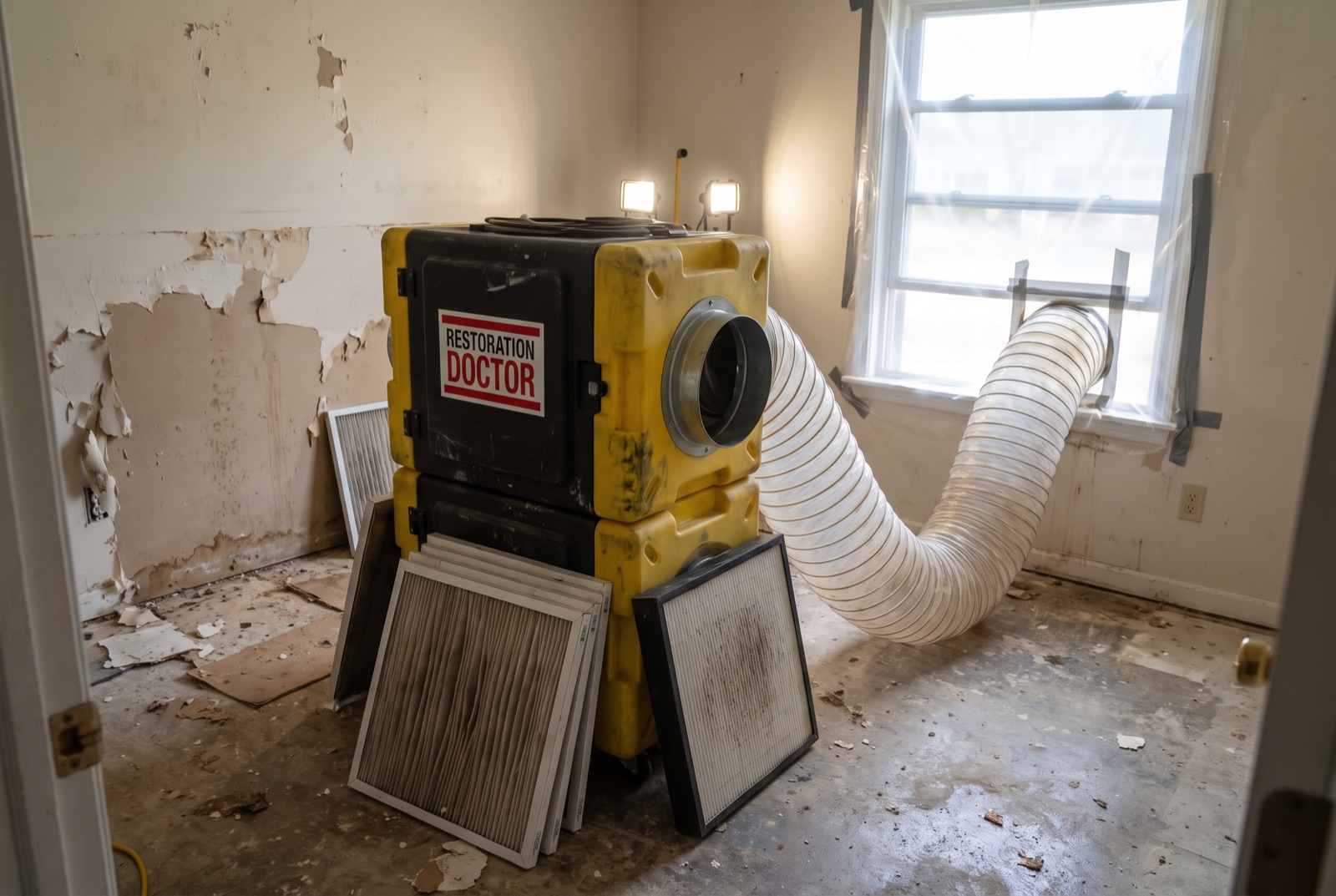
Category 3 black-water decontamination with full PPE, safe removal, antimicrobial treatment, and verification.
Frequently asked
Related questions
How do professionals clean up sewage?
Is sewage backup dangerous to your health?
What has to be thrown away after a sewage backup?
How much does sewage cleanup cost?
Active water, mold, fire, or sewage event?
Connect directly with the Restoration Doctor team for your region. Crews are on standby 24/7 with documented response protocols.