How do professionals clean up sewage?
In a defined sequence under the IICRC S500 Category 3 protocol: assess and contain the affected area, extract the sewage with protected equipment, remove contaminated porous materials like carpet and soaked drywall, clean and apply hospital-grade disinfectants to salvageable surfaces, dry the structure with verified moisture readings, and document every step for reoccupancy and insurance.
Assessment and containment come first
Before any cleanup starts, the crew maps the loss: where the sewage entered, how far it traveled (including migration under flooring and into wall cavities, traced with moisture meters), and what it touched. Sewage is Category 3 water under the IICRC S500 standard, so the plan is built around contamination control, not just water removal.
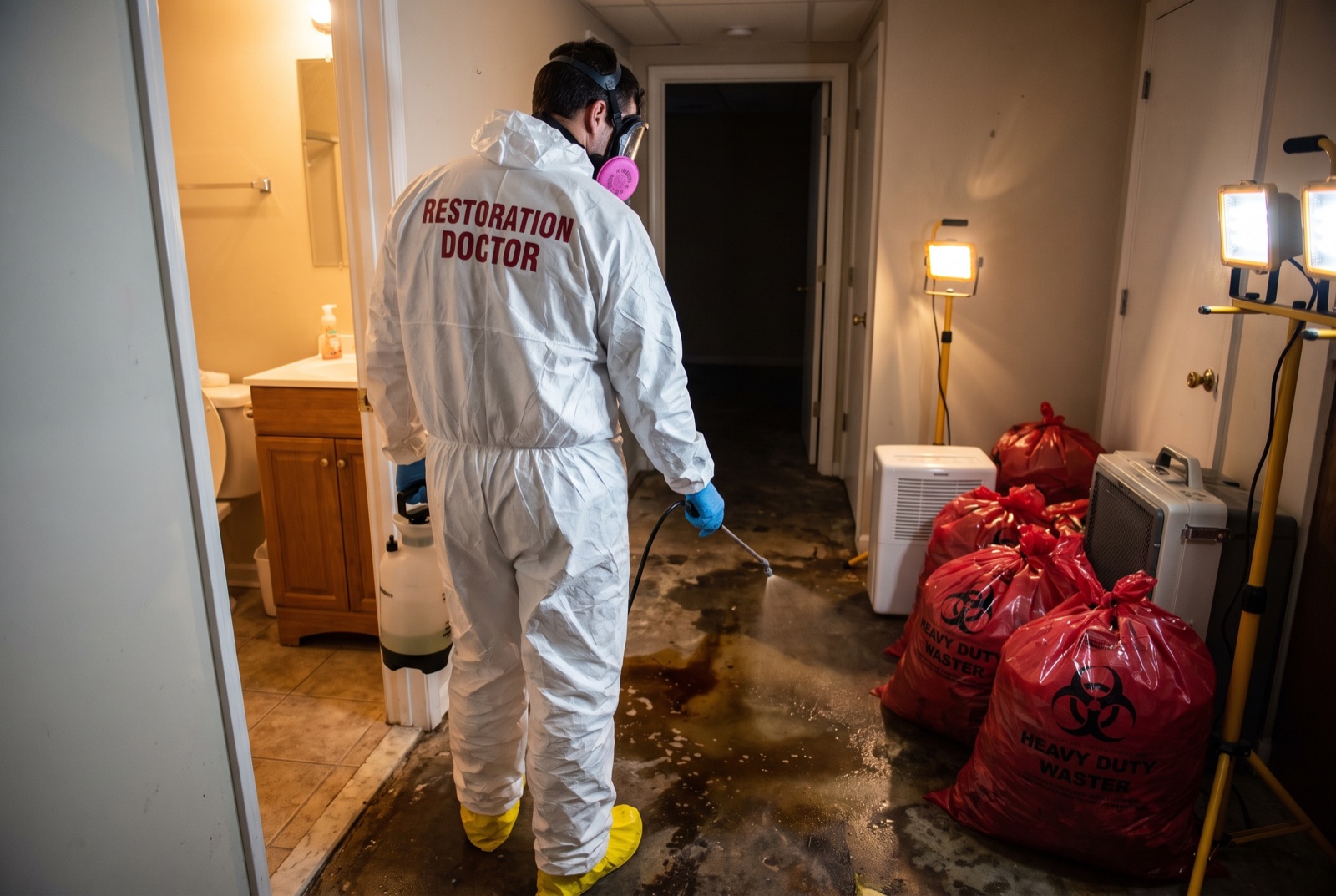
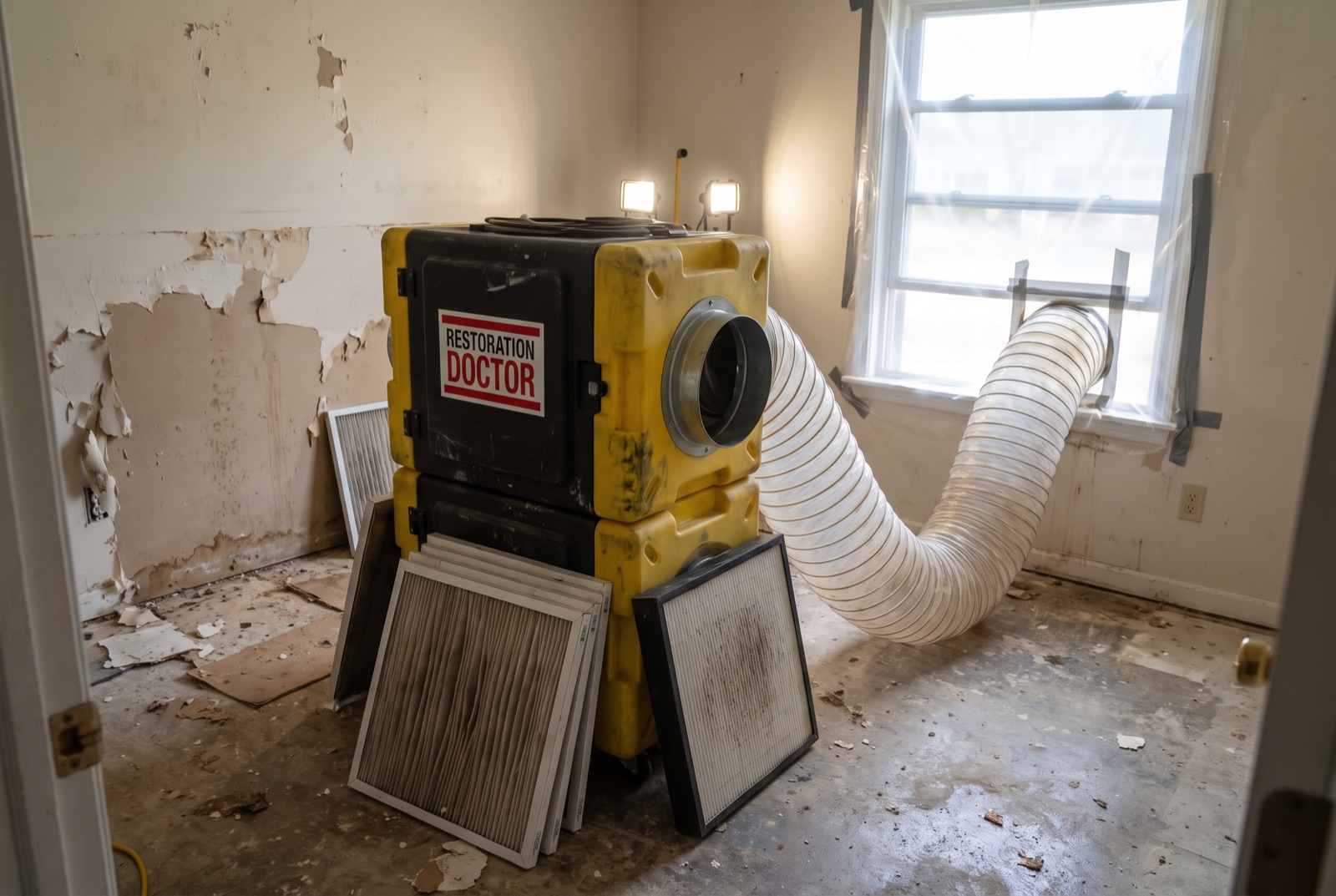
Containment is what separates professional work from mopping. Crews isolate the affected area with barriers, control foot traffic in and out, and manage airflow so aerosolized contamination doesn't migrate to clean parts of the home — often running HEPA-filtered air scrubbers in the work zone. Technicians work in appropriate protective equipment: gloves, boots, protective suits, and respiratory protection suited to the exposure. Occupants, and especially children, pets, and anyone immunocompromised, stay out of the containment for the duration.
Extraction, removal, and disposal
The bulk sewage and solids are extracted with equipment rated for contaminated water and disposed of lawfully — not sent to a storm drain or the backyard. Then comes the step that surprises homeowners: strategic demolition. Under Category 3 protocol, porous materials the sewage touched are removed rather than cleaned, because contamination absorbed into carpet pad, gypsum, and insulation can't be reliably sanitized. Crews pull carpet and pad, make flood cuts in drywall above the contamination line, remove wet insulation and affected trim, and bag debris inside the containment for controlled disposal.
Contents get triaged the same way: non-porous and semi-porous items are cleaned and disinfected; porous items that contacted sewage — upholstery, mattresses, particleboard — are documented for the insurance inventory and discarded.
Cleaning, disinfection, and verified drying
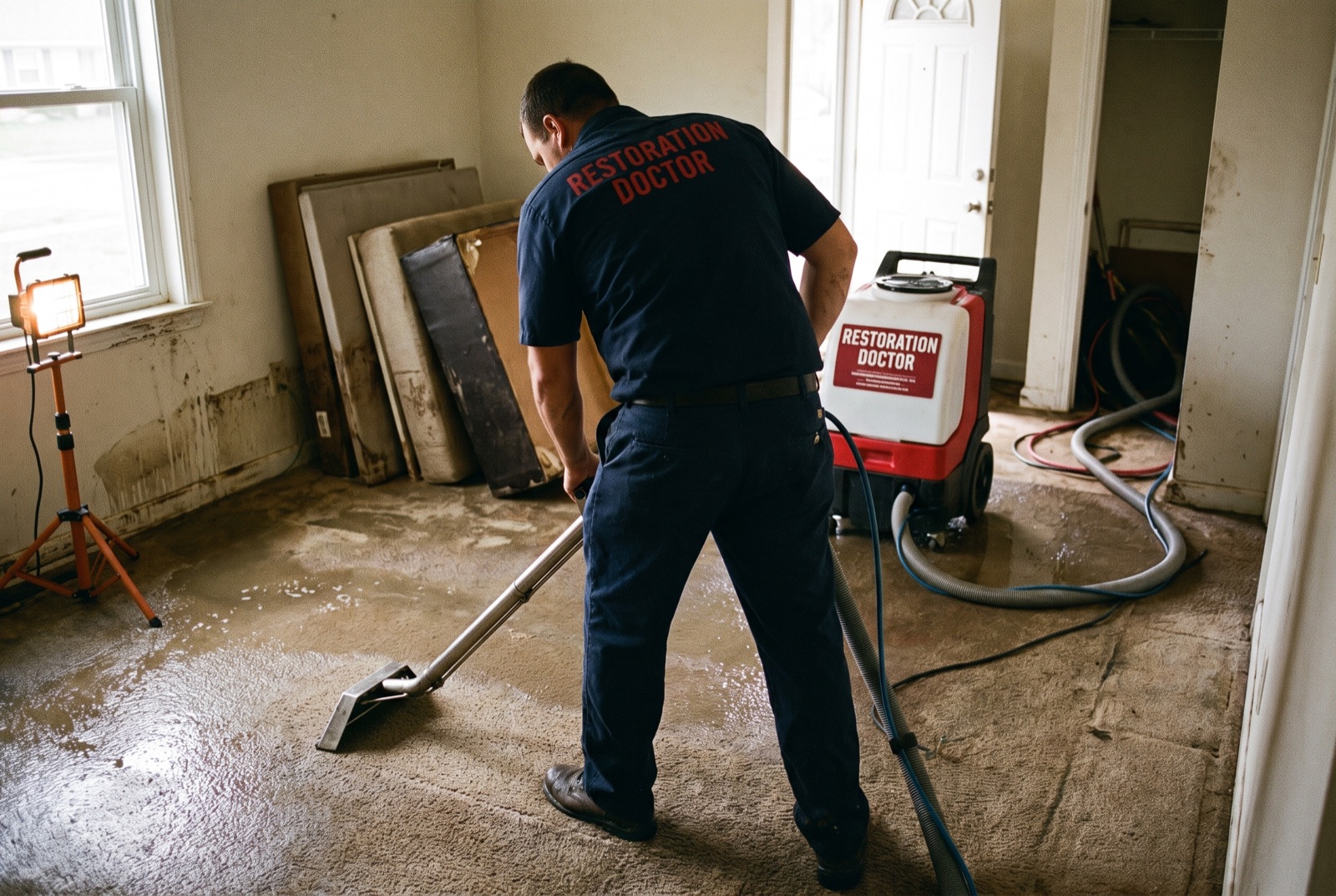
With contaminated materials out, remaining surfaces — framing, subfloor, concrete, tile — are physically cleaned first, because disinfectants only work on clean surfaces. Then EPA-registered, hospital-grade disinfectants are applied with the dwell times their labels require. This two-step order (clean, then disinfect) is fundamental; skipping the cleaning step is one of the main reasons DIY attempts fail.
Then the structure is dried like any serious water loss: air movers and commercial dehumidifiers positioned per S500 practice, with daily moisture-meter readings against dry standards for each material. Drying matters even after disinfection — residual moisture in framing and subfloor invites mold within days. The area is only ready for reconstruction when readings verify materials are back to dry, and many jobs add a final post-cleanup evaluation before rebuild begins.
Documentation, rebuild, and choosing a qualified crew
Throughout, a professional outfit documents everything: photos, moisture maps, daily drying logs, disposal inventories, and the products and procedures used. That record is what supports your insurance claim (sewer backups are typically covered only via a water backup endorsement — check your policy) and what demonstrates the space was actually made safe rather than just made to look clean. After clearance, reconstruction — new drywall, insulation, flooring, trim, paint — returns the space to pre-loss condition.
When hiring, ask about IICRC certification, Category 3 protocol specifically, containment practices, and documentation. Restoration Doctor performs certified sewage cleanup and full rebuild 24/7 across Northern Virginia, Maryland, and D.C. — call 1-888-29-FLOOD.
Sewage & Biohazard Cleanup
Category 3 black-water decontamination with full PPE, safe removal, antimicrobial treatment, and verification.
Frequently asked
Related questions
What has to be thrown away after a sewage backup?
Can I clean up sewage myself?
How long does sewage contamination last?
What should you do after a sewage backup?
Active water, mold, fire, or sewage event?
Connect directly with the Restoration Doctor team for your region. Crews are on standby 24/7 with documented response protocols.