How long does sewage contamination last?
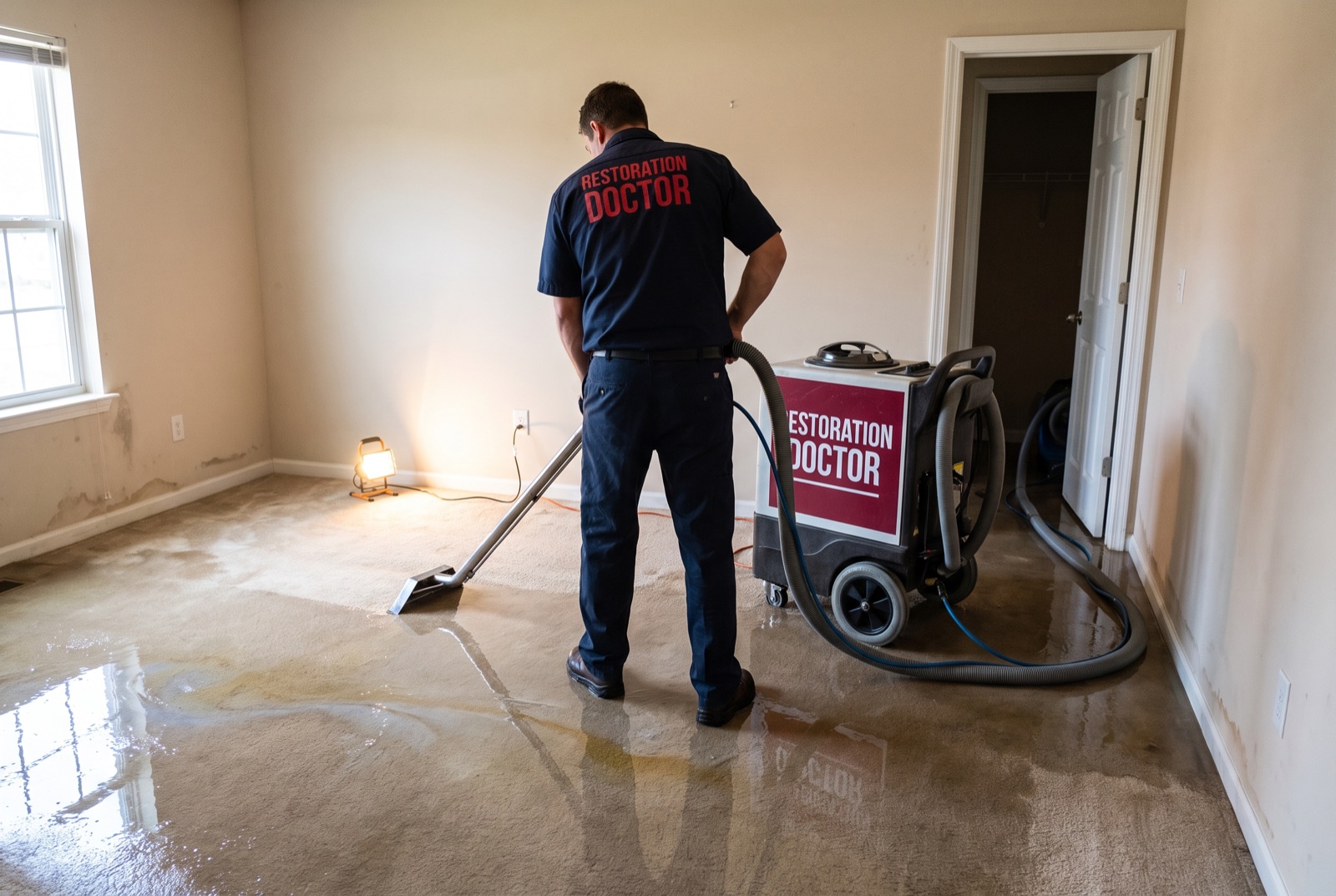
Until it's professionally removed and disinfected — not until it dries. Pathogens in sewage can survive on surfaces and inside porous materials for days to weeks, some longer in cool, damp conditions. A backup area that dried on its own is still a contaminated space; disinfection of cleaned surfaces and removal of soaked porous materials is what ends the hazard.
Why drying doesn't equal decontamination
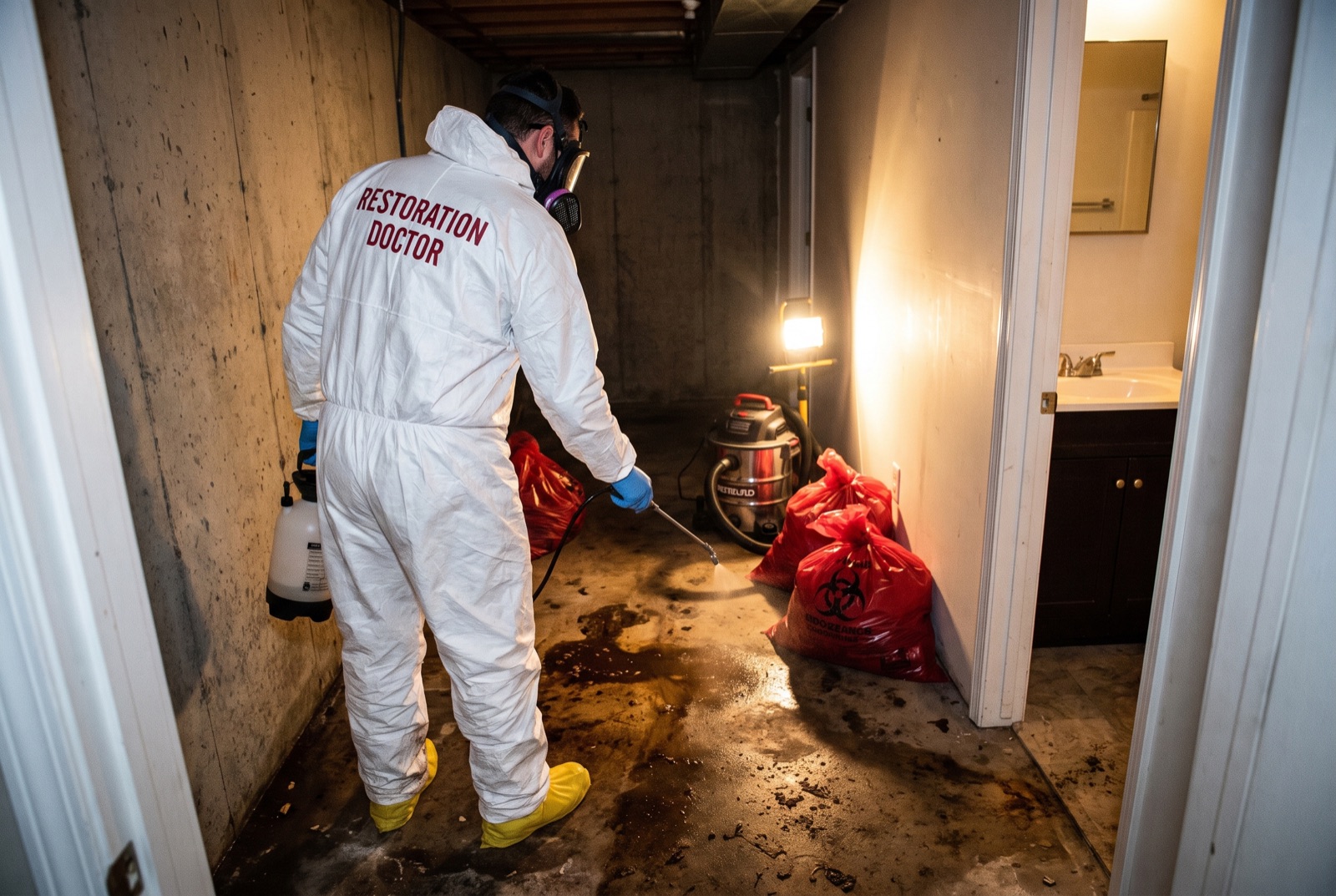
The most common misconception after a sewage backup is that once the water is gone and the floor is dry, the danger has passed. Drying removes the moisture; it does not remove the biological contamination the water deposited. Bacteria, viruses, and parasite cysts remain on every surface the sewage touched and inside every material that absorbed it, and many of them are built to persist.
Survival times vary by organism and conditions, but public-health literature consistently shows sewage-associated pathogens surviving on surfaces and in materials for days to weeks — and some hardy organisms, like parasite cysts and certain viruses, longer in cool, damp, dark environments. A basement that took a backup offers close to ideal persistence conditions. This is why the IICRC S500 standard treats sewage as Category 3 regardless of whether the water is still present: the classification follows the contamination, not the moisture.
Where contamination hides after the water is gone
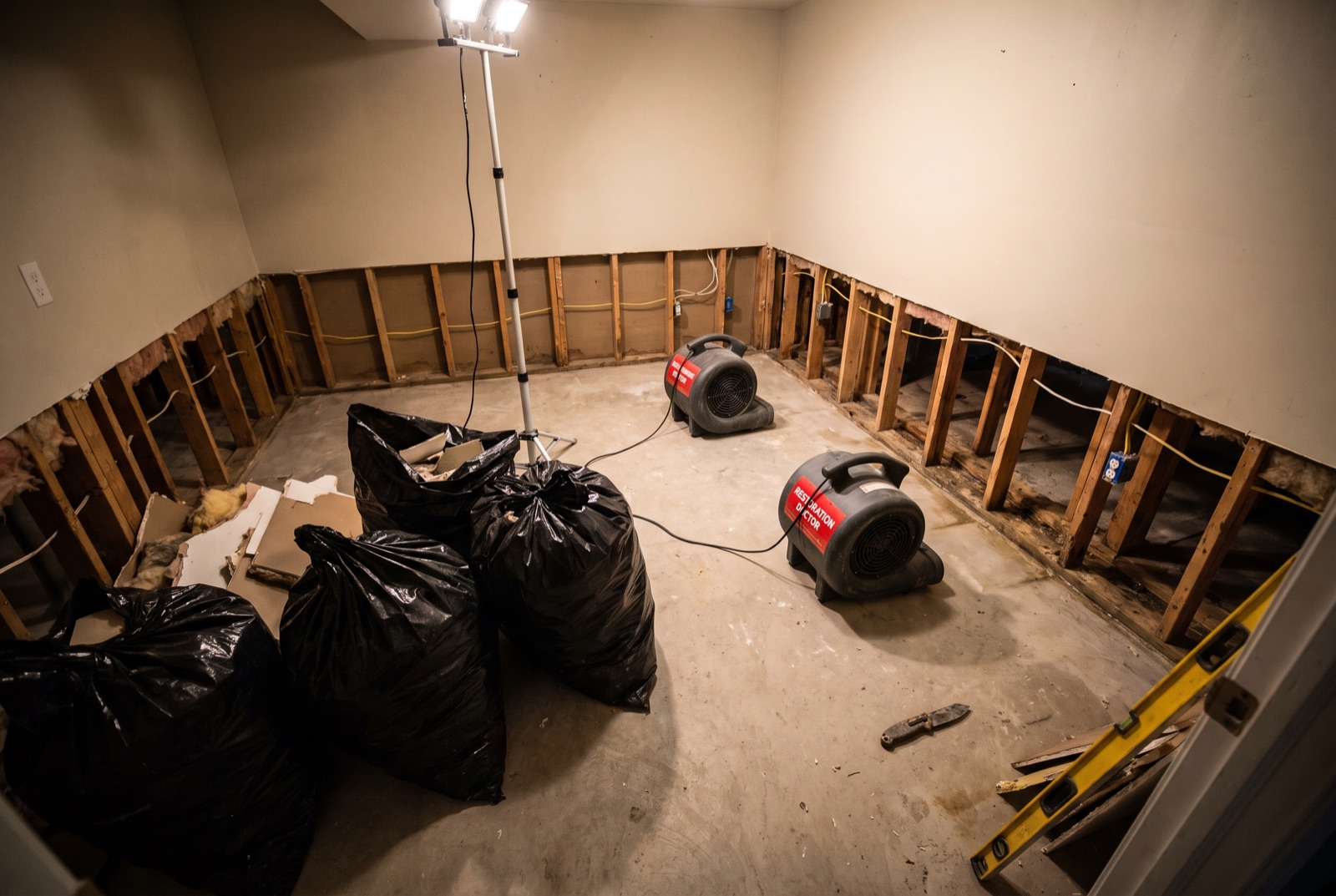
Visible surfaces are the easy part. The persistent problem lives where cleaning can't reach: inside carpet backing and pad, within the gypsum core of drywall that wicked sewage, in insulation behind walls, under flooring where water migrated, in cracks and joints of unsealed concrete, and in the film of residue left along everything the receding water touched. Porous materials essentially archive the contamination — which is exactly why Category 3 protocol calls for removing them rather than attempting to sanitize them.
Odor is a useful, if imperfect, indicator. A persistent sewage smell weeks after a backup means contaminated material or residue is still present somewhere — often in a wall cavity, under flooring, or in a material someone hoped to save. The absence of odor, however, is not proof of safety; plenty of surviving contamination doesn't announce itself.
What actually ends the contamination
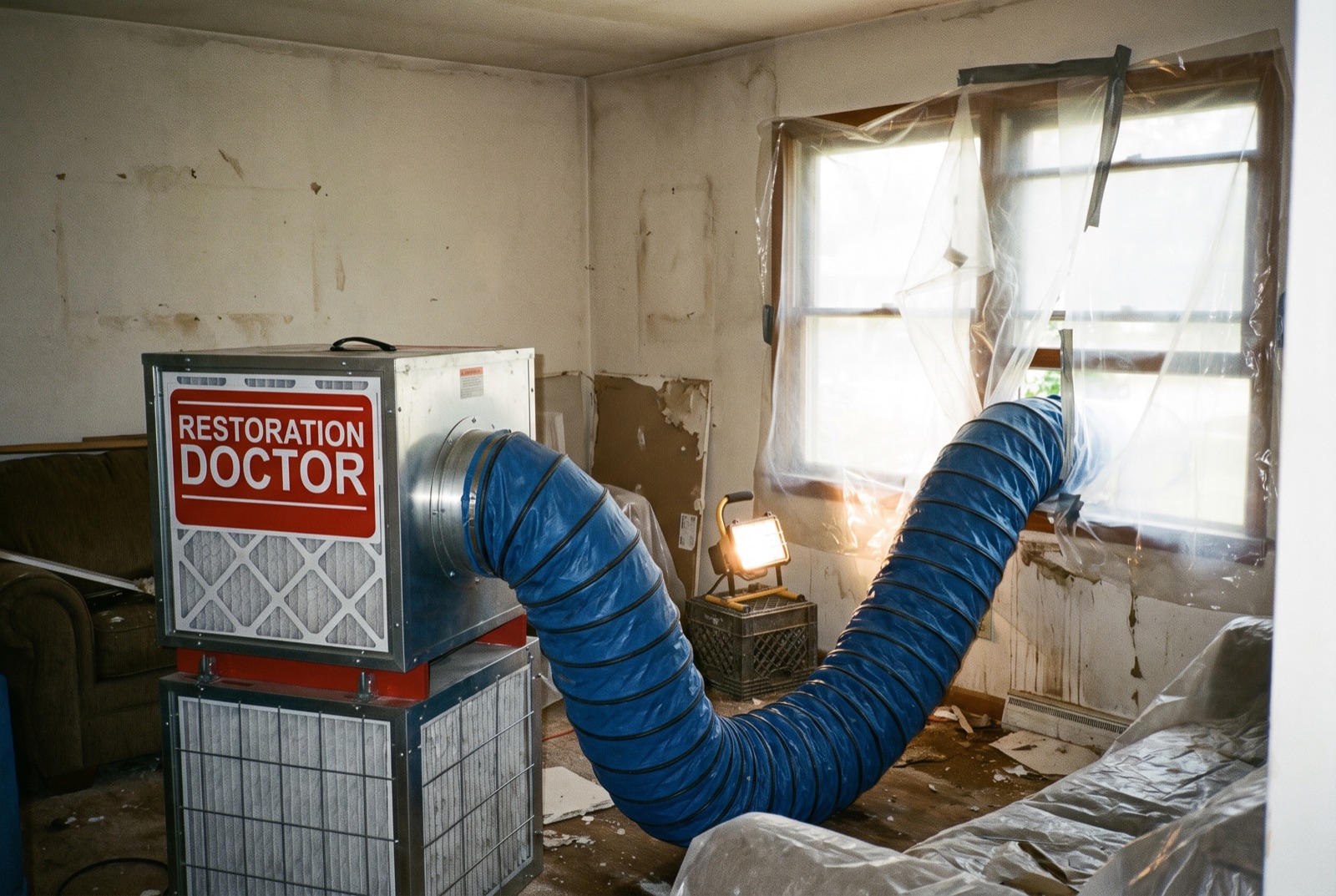
The hazard ends through a specific sequence, not the passage of time: extraction and disposal of the sewage, removal of the porous materials that absorbed it, physical cleaning of remaining surfaces, application of EPA-registered disinfectants with proper contact times, and verified structural drying so surviving microenvironments don't get the moisture they need. Each step matters — disinfectant sprayed on an uncleaned surface largely fails, and skipping removal leaves reservoirs no chemical will reach.
Time does eventually reduce pathogen loads — most organisms die off over weeks to months on dry surfaces — but "eventually, mostly" is a poor standard for a home, especially with children, pets, or vulnerable household members, and it does nothing for the odor, residue, and mold risk that untreated backups leave behind.
If your backup was never professionally cleaned
It's common for us to see spaces weeks or months after a backup that was mopped up and forgotten — usually because odor returned, mold appeared, or a renovation opened a wall. The right response is the same protocol applied late: assess what absorbed contamination, remove it, clean and disinfect what remains, and verify dryness. Restoration Doctor evaluates and remediates past and fresh sewage losses across Northern Virginia, Maryland, and D.C., 24/7 — call 1-888-29-FLOOD if a backup at your home never got a proper cleanup.
Sewage & Biohazard Cleanup
Category 3 black-water decontamination with full PPE, safe removal, antimicrobial treatment, and verification.
Frequently asked
Related questions
Can sewage backup make you sick even after cleanup?
Is sewage backup dangerous to your health?
How do professionals clean up sewage?
What has to be thrown away after a sewage backup?
Active water, mold, fire, or sewage event?
Connect directly with the Restoration Doctor team for your region. Crews are on standby 24/7 with documented response protocols.