
Can lightning damage cause water damage?
Yes. A lightning strike can blow out roof sections that then admit rain, rupture or perforate plumbing lines, destroy water heaters and appliance connections, and trigger sprinkler systems — turning an electrical event into a water loss within minutes. Lightning and the resulting water damage are typically covered together under homeowner's insurance.
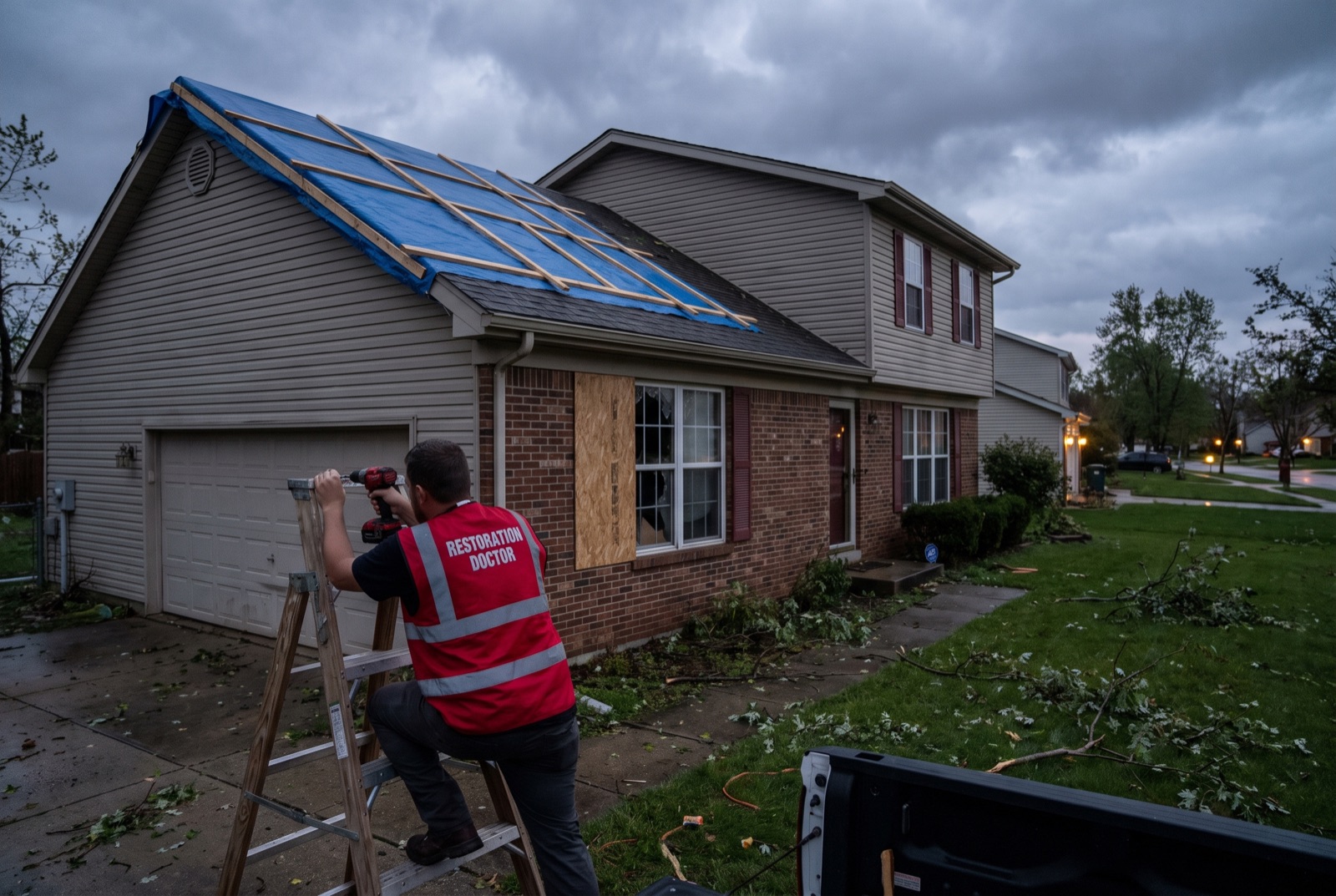
How an electrical event becomes a water loss
Lightning delivers an enormous burst of energy into whatever path it finds through a house, and several of those paths end in water. A direct strike to the roof can blow out shingles, decking, and even framing — creating an instant opening for the rain that usually accompanies the storm. Chimneys are frequent strike points, and the masonry damage often opens water paths into the structure that show up as mysterious leaks later.
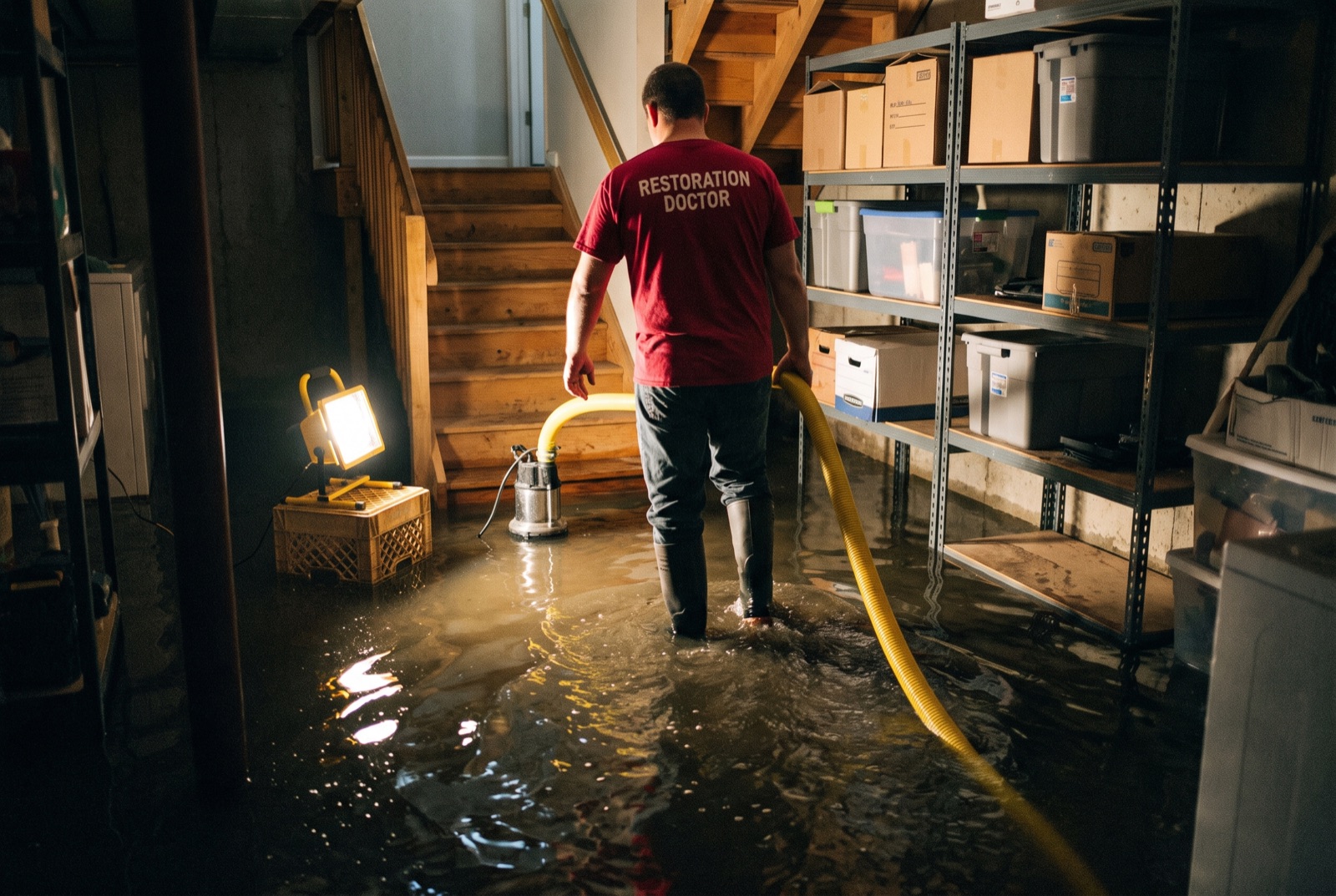
Plumbing is a conductor. Metal supply lines can carry strike current through the house, and the energy can perforate pipe, blow out fittings, and fail solder joints — sometimes immediately, sometimes as pinhole leaks that surface days later. Water heaters, with their tank, electrical elements, and pipe connections, are a classic lightning casualty; so are washing machine valves, dishwasher connections, and well pumps. In sprinklered buildings, a strike can activate heads or damage the system into discharging — putting significant water into the structure even when the fire risk never materialized.
The aftermath checklist for a suspected strike
After a known or suspected strike, check for fire first — lightning fires can smolder in attics and wall cavities for hours, and the fire department will scan with thermal imaging if called. Once fire is ruled out, walk the water systems: look and listen for leaks at fixtures and the water heater, check the meter for movement with all water off, and inspect ceilings below the roof and around the chimney after the next rain.
Be alert over the following days too. Lightning damage has a delayed-onset pattern: weakened pipe walls that pinhole a week later, a compromised water heater that fails the next month, roof damage that only leaks in wind-driven rain. Documenting the strike date — even a neighbor's account or a news report of the storm — helps connect later-appearing damage to the event for the claim.
Electronics and electrical systems deserve their own assessment, and any suggestion of wiring damage warrants an electrician before you trust the system fully.
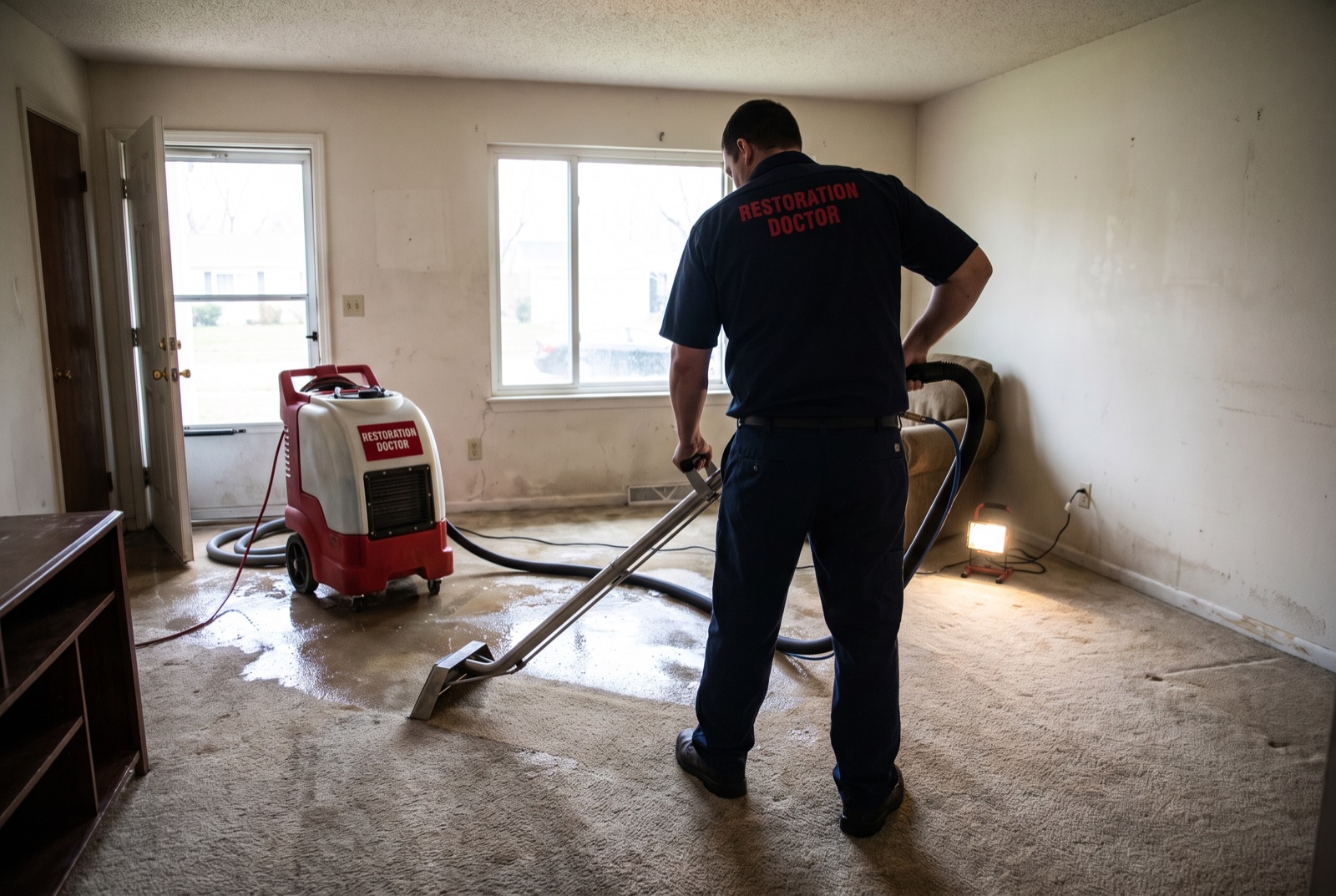
Coverage and cleanup: one event, unified claim
Lightning is one of the named perils at the core of every standard homeowner's policy, and the coverage follows the causal chain: the strike damage itself, the fire if one started, the roof breach and the rain that entered it, the burst plumbing and the water it released, and sprinkler discharge are all typically part of the same covered loss. That makes lightning claims comparatively clean — the coverage question is rarely contested, and the work is mostly in documenting everything the strike touched.
The mitigation side is standard water-loss urgency: extraction and structural drying within the 24-48 hour window wherever water traveled, tarping over any roof breach, and moisture mapping to catch the paths that don't show — strike-driven water frequently ends up inside walls and above ceilings, exactly where meters find it and eyes don't.
One response for both sides of the loss
If lightning put water in your home — through the roof, the plumbing, or the sprinklers — the response is the same emergency as any major leak, plus documentation tying it to the strike. Restoration Doctor handles the full sequence across Northern Virginia, Maryland, and D.C.: tarping, extraction, documented drying, and claim-ready scoping. Call 1-888-29-FLOOD, 24/7.
Storm Damage Restoration
Emergency tarping, water extraction, and reconstruction after wind, hail, and heavy-rain storm events.
Frequently asked
Related questions
Does homeowners insurance cover storm damage?
How quickly should rain water intrusion be dried out?
What should you do after storm damage to your house?
Active water, mold, fire, or sewage event?
Connect directly with the Restoration Doctor team for your region. Crews are on standby 24/7 with documented response protocols.