
Does homeowners insurance cover storm damage?
Generally yes for wind, hail, lightning, and falling trees — these are standard covered perils, including interior water damage that enters through a storm-created opening. The critical exception is flooding: rising water from any source requires separate flood insurance, typically through NFIP or a private flood policy. Policies vary, so check your declarations.
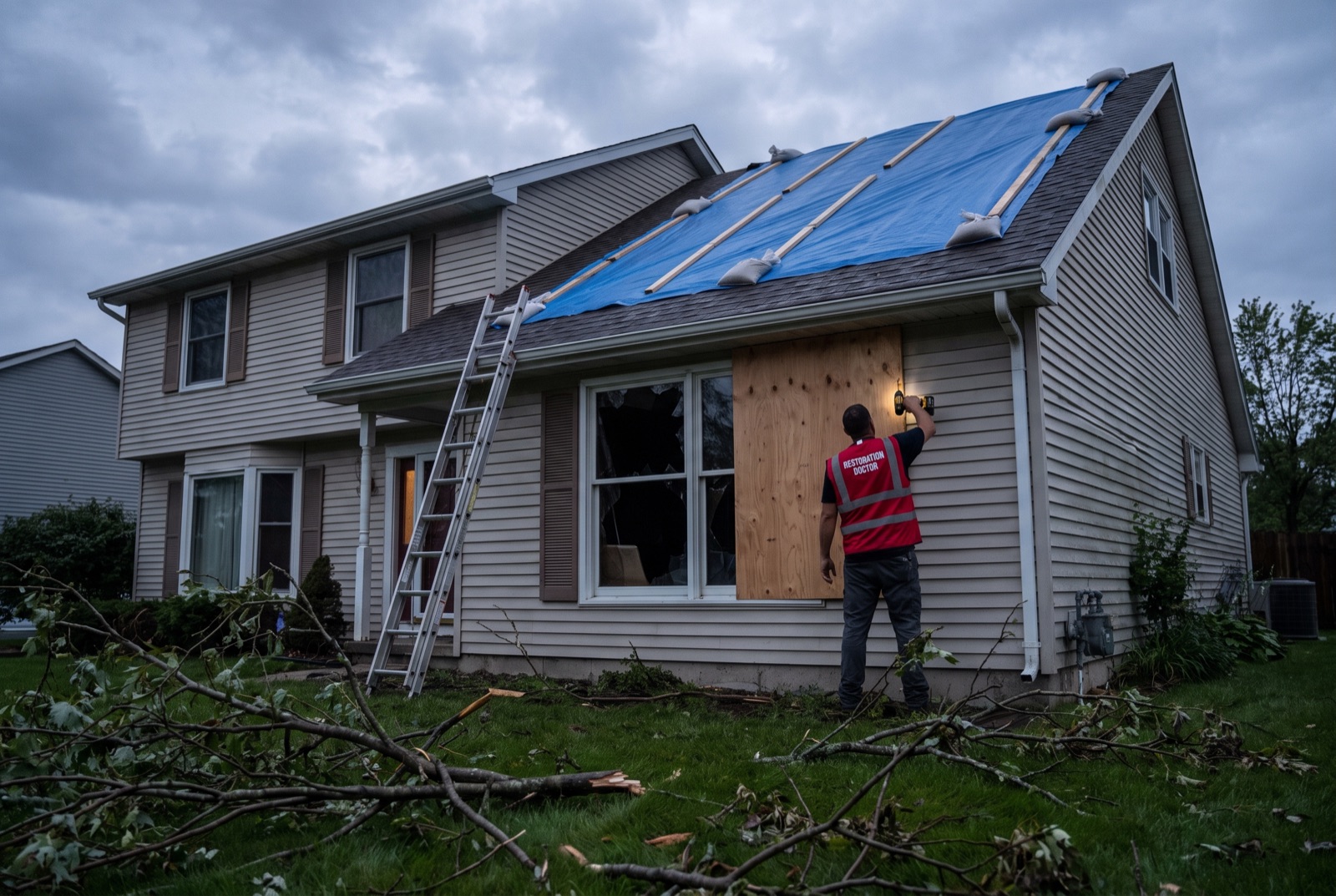
What standard policies cover after a storm
The core storm perils — windstorm, hail, and lightning — are covered on virtually all standard homeowner's policies. That includes roof and siding damage from wind, hail impact damage, structures breached by wind-borne debris, and damage from trees or limbs brought down onto the house. When wind or hail creates an opening — torn shingles, a punctured roof deck, a shattered window — the rain that enters through that opening and damages the interior is typically covered too, along with the resulting drying and repairs.
Adjacent costs are generally included as well: emergency tarping and board-up to protect the property, debris removal of a tree that struck a covered structure, and additional living expenses if the home is temporarily uninhabitable. As always, limits, deductibles, and terms live in your specific policy — the declarations page and your adjuster are the final word.
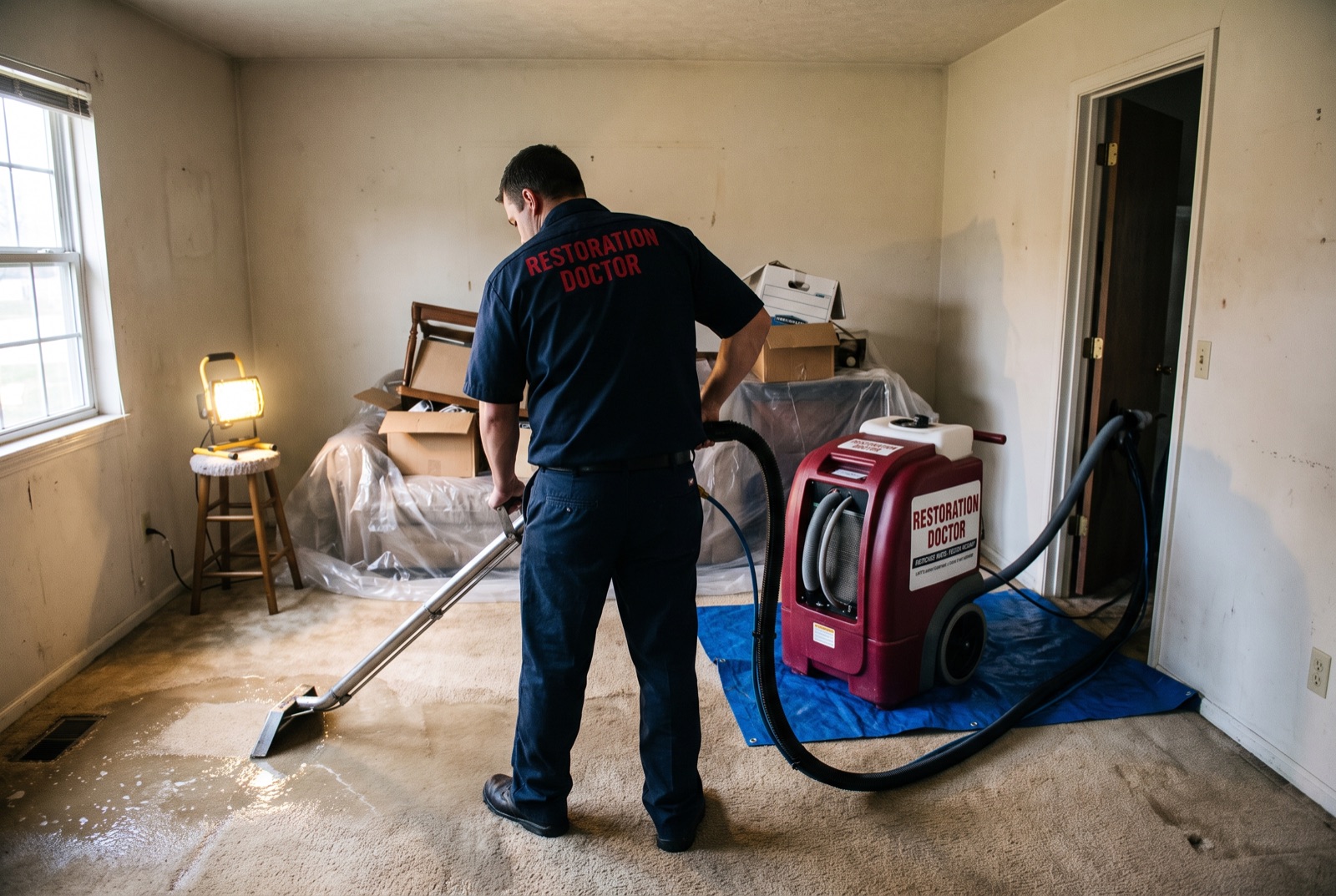
The flood exclusion: the biggest coverage gotcha in storm claims
Here's the distinction every homeowner should know before the storm, not after: homeowner's insurance covers water that comes from above; it excludes water that rises from below. Rain through a wind-damaged roof is a covered storm loss. But storm surge, an overflowing creek, sheet flow across saturated ground, and water rising into a basement during a downpour are all flood damage — and flood is excluded from standard homeowner's policies essentially without exception.
Flood coverage exists only as a separate policy, most commonly through the National Flood Insurance Program (NFIP) or a private flood insurer. Two details catch people every year: you don't have to be in a designated flood zone to flood (a large share of flood claims come from lower-risk zones), and new flood policies typically carry a waiting period before coverage takes effect — so the week a storm is forecast is too late to buy it. Policies vary; if you're unsure where your risk lies, this is a conversation worth having with your agent on a sunny day.
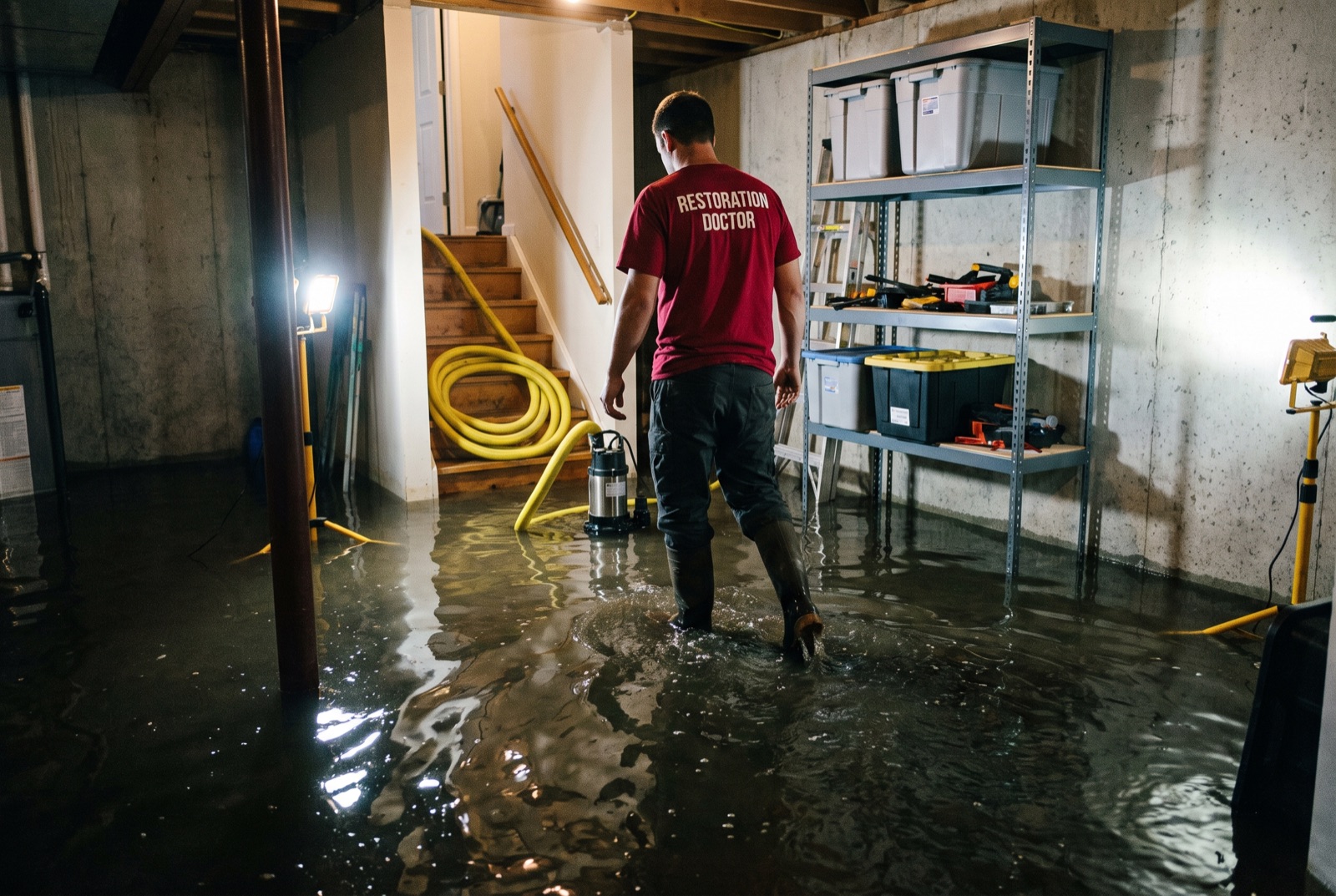
Deductibles and what determines the payout
Storm claims sometimes carry different deductibles than other losses. Some Mid-Atlantic policies apply a separate wind/hail deductible — often a percentage of the dwelling coverage rather than a flat dollar amount — and named-storm or hurricane deductibles can apply when a storm is declared. Check your declarations so the first surprise isn't at claim time.
Beyond the deductible, payouts turn on documentation and causation: carriers distinguish storm-created damage from wear, age, and pre-existing conditions, particularly on roofs. Time-stamped photos, a professional inspection documenting storm-specific indicators (creased shingles, impact marks, wind-lifted tabs), and prompt reporting all strengthen the file. Interior losses are strengthened by moisture documentation showing where storm water traveled.
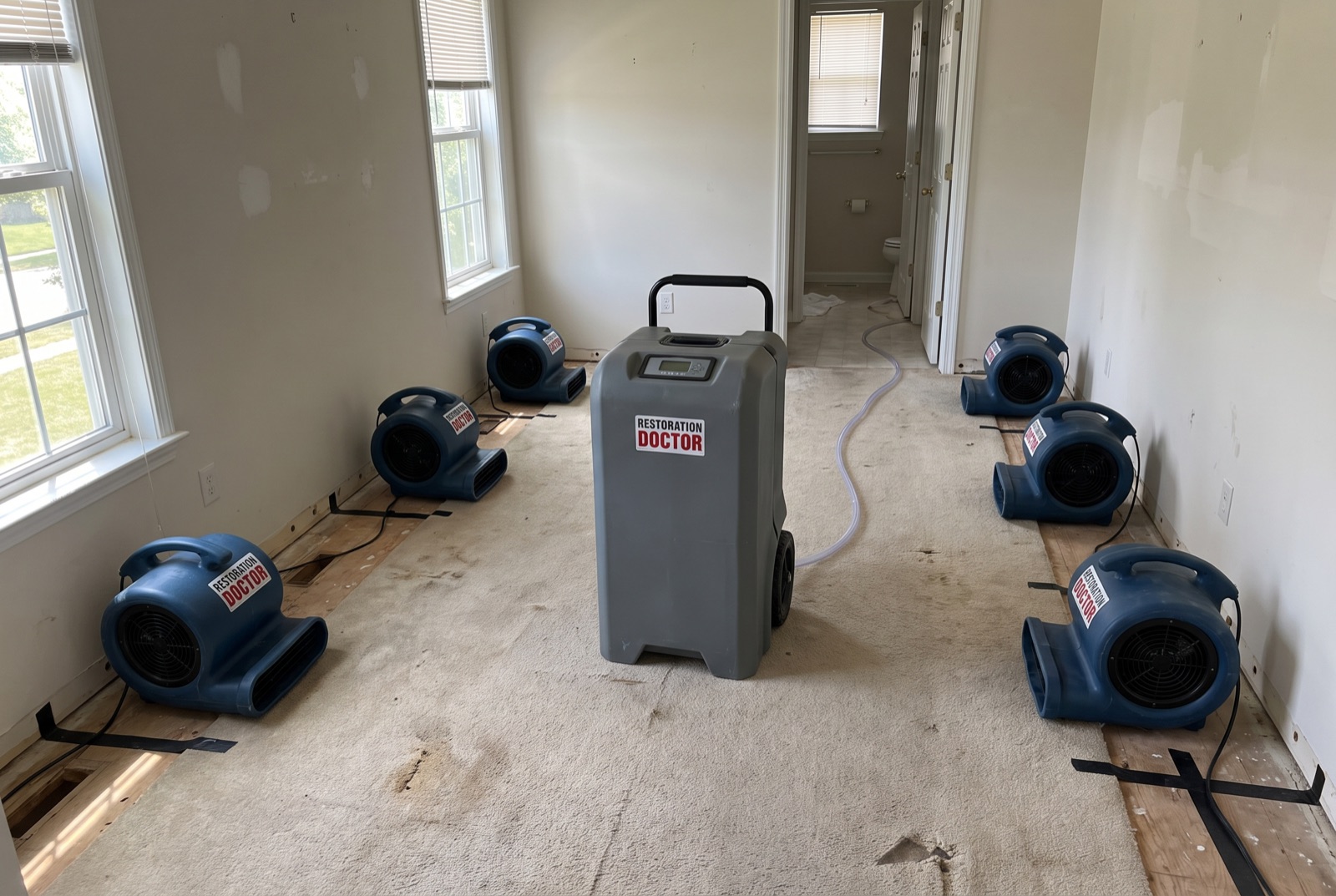
Documentation-first storm restoration
The difference between a smooth storm claim and a contested one is usually the quality of the file. Restoration Doctor documents storm losses across Northern Virginia, Maryland, and D.C. the way carriers evaluate them — photo logs, moisture maps, and itemized line-item scopes — while handling emergency weatherproofing and drying in the same response. Call 1-888-29-FLOOD, 24/7.
Storm Damage Restoration
Emergency tarping, water extraction, and reconstruction after wind, hail, and heavy-rain storm events.
Frequently asked
Related questions
What is the difference between flood damage and storm damage?
Does insurance cover water damage from a leaking roof?
Who is responsible if a neighbor's tree falls on my house?
Active water, mold, fire, or sewage event?
Connect directly with the Restoration Doctor team for your region. Crews are on standby 24/7 with documented response protocols.