
What is the difference between flood damage and storm damage?
The line is direction of entry. Water that enters from above — through a wind-damaged roof, broken window, or breached siding — is storm damage, typically covered by homeowner's insurance. Water that rises from ground level — surface runoff, overflowing streams, storm surge — is flood damage, excluded from home policies and covered only by separate flood insurance.
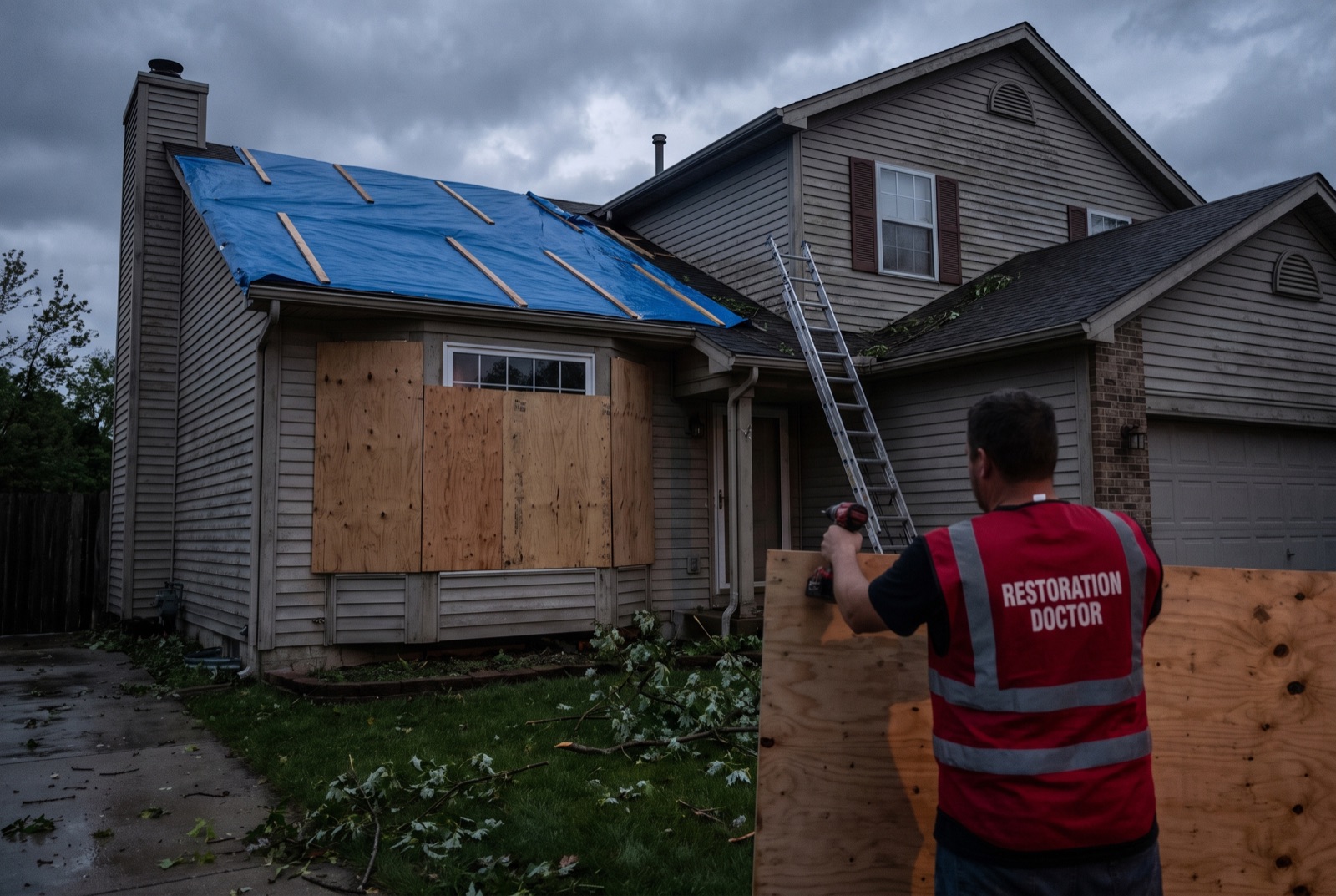
Same storm, two different insurance worlds
A single severe storm can produce both kinds of water damage in the same house, and insurance treats them as completely different events. Wind tears shingles off and rain pours into the attic: storm damage, handled by your homeowner's policy. The same storm drops four inches of rain, the yard sheets water toward the foundation, and the basement takes six inches of rising water: flood damage — excluded from the homeowner's policy, covered only if you carry separate flood insurance.
The definitions don't care how dramatic the weather was; they care about the water's path. "From above, through a storm-created opening" points to the homeowner's policy. "Rising or flowing at or below ground level" points to flood coverage — and that includes storm surge, overflowing creeks and rivers, mudflow, and ordinary surface runoff that never touched a body of water. Policies vary in their exact language, but this above/below architecture is nearly universal.
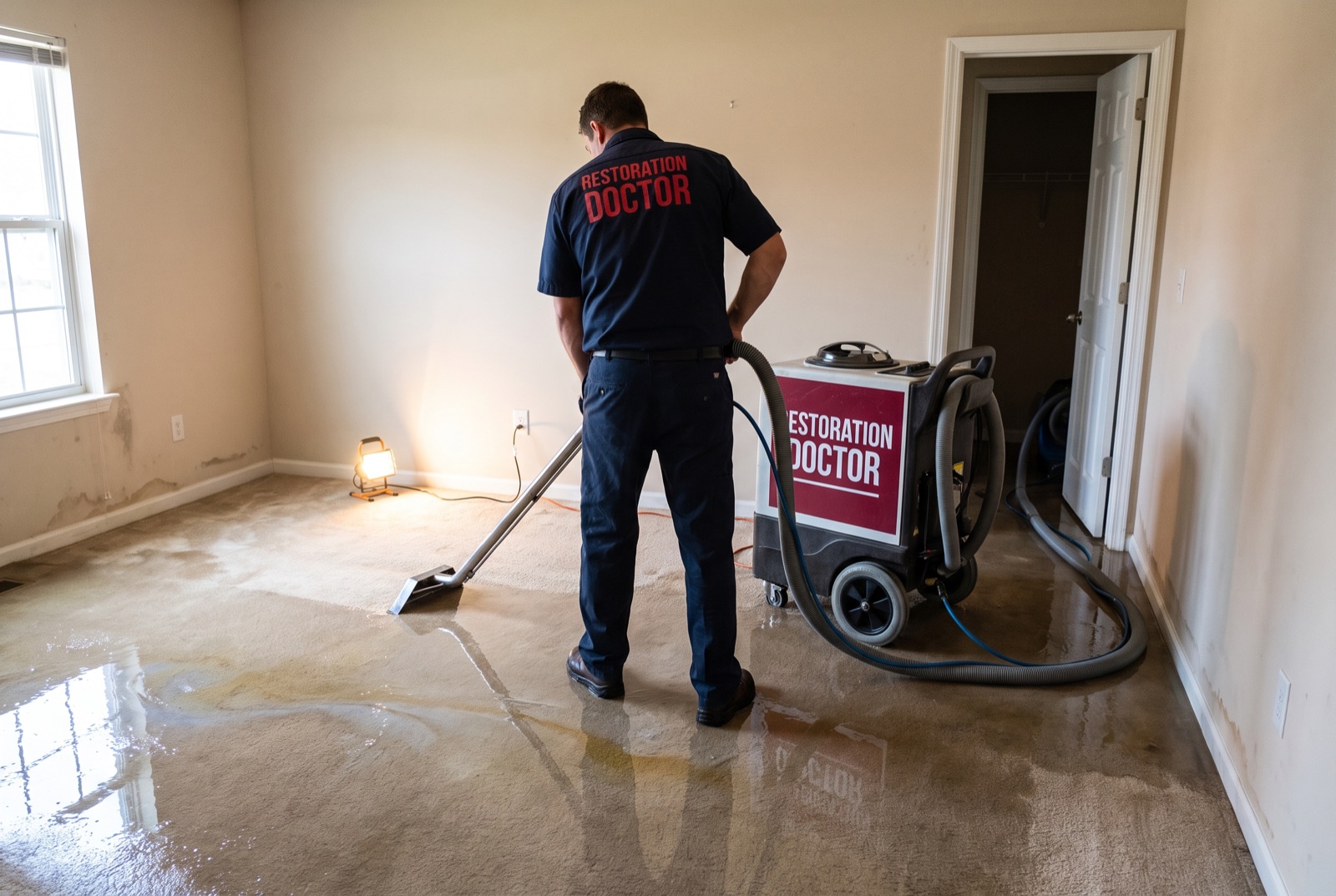
The gap that catches homeowners: flood is a separate policy
The hard part isn't the definition — it's that many homeowners don't discover the flood exclusion until they're standing in a flooded basement. Standard homeowner's policies exclude flood essentially without exception. Coverage exists only as a separate flood policy, most commonly through the National Flood Insurance Program (NFIP) and increasingly through private flood insurers.
Three facts worth knowing before the next storm season. First, you don't need to live near water to flood — a meaningful share of flood claims come from properties outside designated high-risk zones, because intense rainfall over saturated or paved ground floods neighborhoods with no creek in sight. Second, new flood policies typically carry a waiting period before they take effect, so coverage can't be bought when a storm is already on the forecast. Third, flood policies have their own terms and limits — basement coverage in particular is narrower under NFIP than people expect. An hour with your agent sorting this out is one of the cheaper forms of storm preparation available.
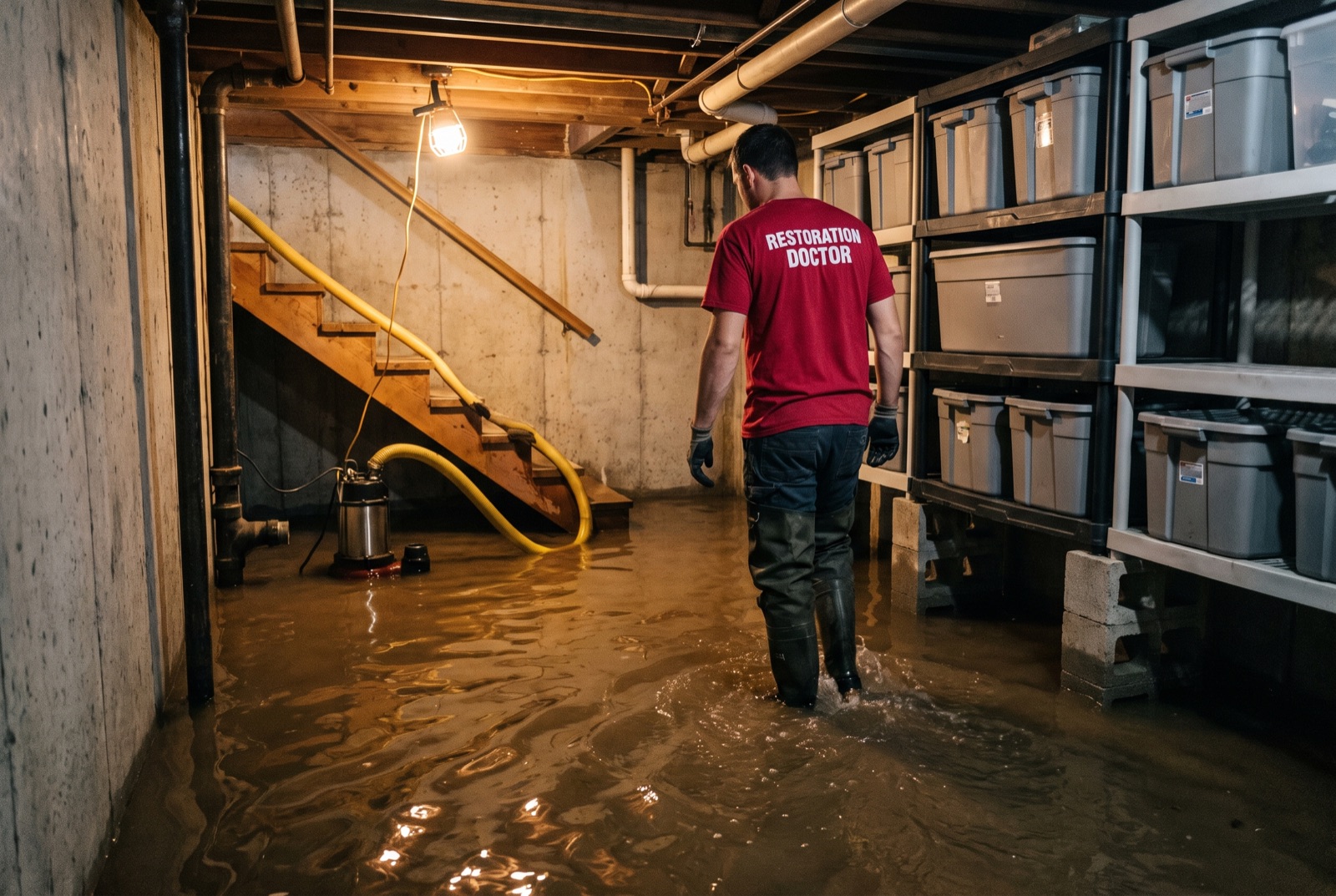
Why the distinction shapes the claim — and the cleanup
When both kinds of water hit at once, documentation determines how the claims sort out. Adjusters (sometimes two of them, one per policy) need evidence of each water path: photos of the roof breach and the water staining descending from it, versus the high-water line and entry points of the rising water. A professional moisture map tracing each intrusion separately is exactly the kind of evidence that keeps a dual-path loss from collapsing into a disputed one.
The cleanup differs too. Storm water from above is relatively clean at entry, though it picks up contamination en route. Rising floodwater is Category 3 — it's crossed ground, pavement, and often sewer infrastructure, carrying contamination that changes the protocol: porous materials it touched are generally removed rather than dried, and affected areas are cleaned and disinfected under IICRC S500 practice before drying completes. Treating floodwater like rainwater is a hygiene mistake, not just a paperwork one.
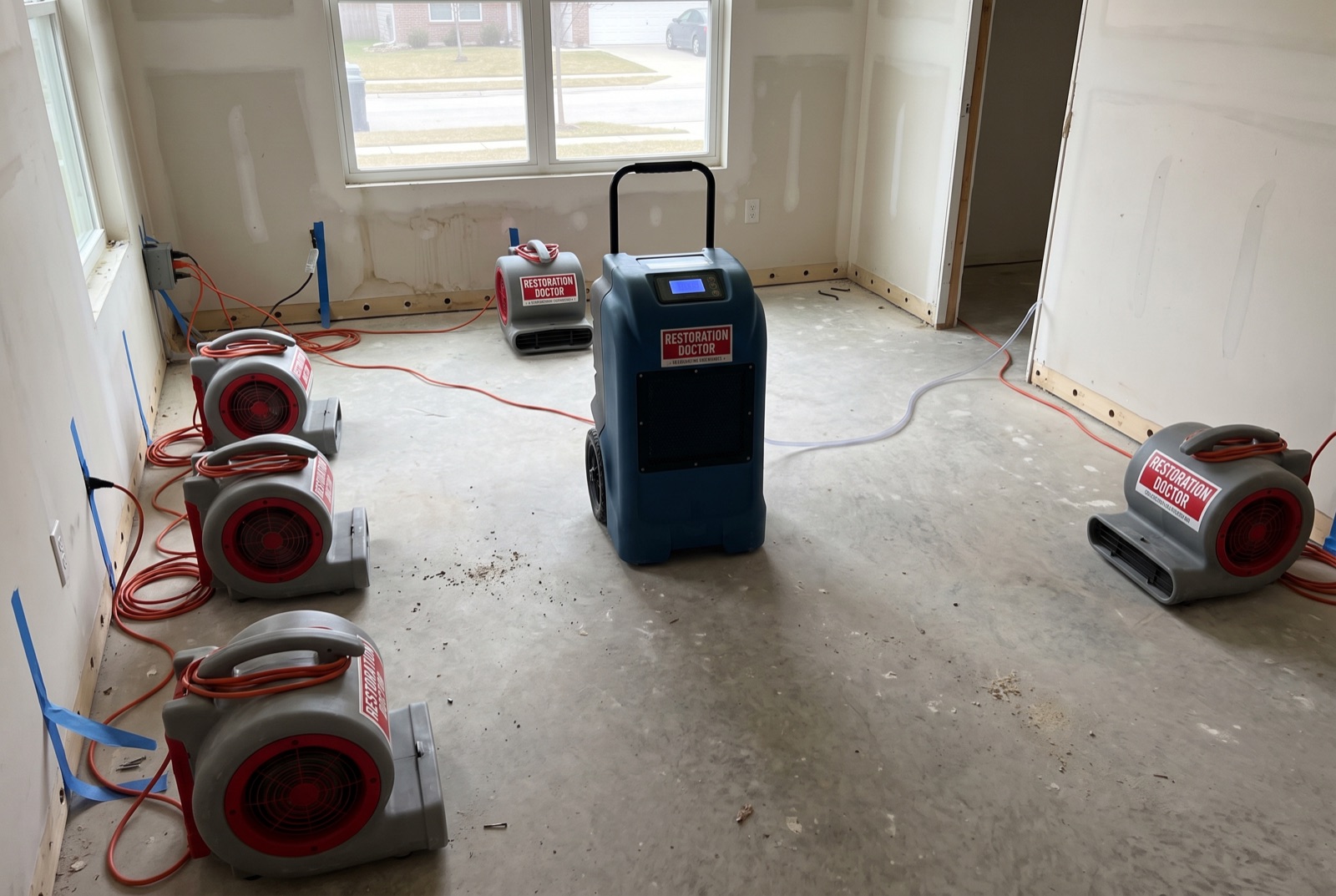
Mitigation that respects both claims
Whichever path the water took — or both — the mitigation clock runs the same: drying within 24 to 48 hours, contamination protocol where rising water was involved, and documentation that keeps each claim clean. Restoration Doctor handles storm and flood losses across Northern Virginia, Maryland, and D.C. with moisture mapping and photo documentation built for exactly these distinctions. Call 1-888-29-FLOOD, 24/7.
Storm Damage Restoration
Emergency tarping, water extraction, and reconstruction after wind, hail, and heavy-rain storm events.
Frequently asked
Related questions
Does homeowners insurance cover storm damage?
Does homeowners insurance cover basement flooding?
How quickly should rain water intrusion be dried out?
Active water, mold, fire, or sewage event?
Connect directly with the Restoration Doctor team for your region. Crews are on standby 24/7 with documented response protocols.