
How quickly should rain water intrusion be dried out?
Within 24 to 48 hours. Per EPA guidance, water-damaged materials should be dried within 24 to 48 hours to prevent mold growth, and rainwater that reaches attic insulation, wall cavities, ceilings, or flooring hides in places that never look wet from the living space. Drying starts immediately — it's a policy duty, and it never waits for claim approval.
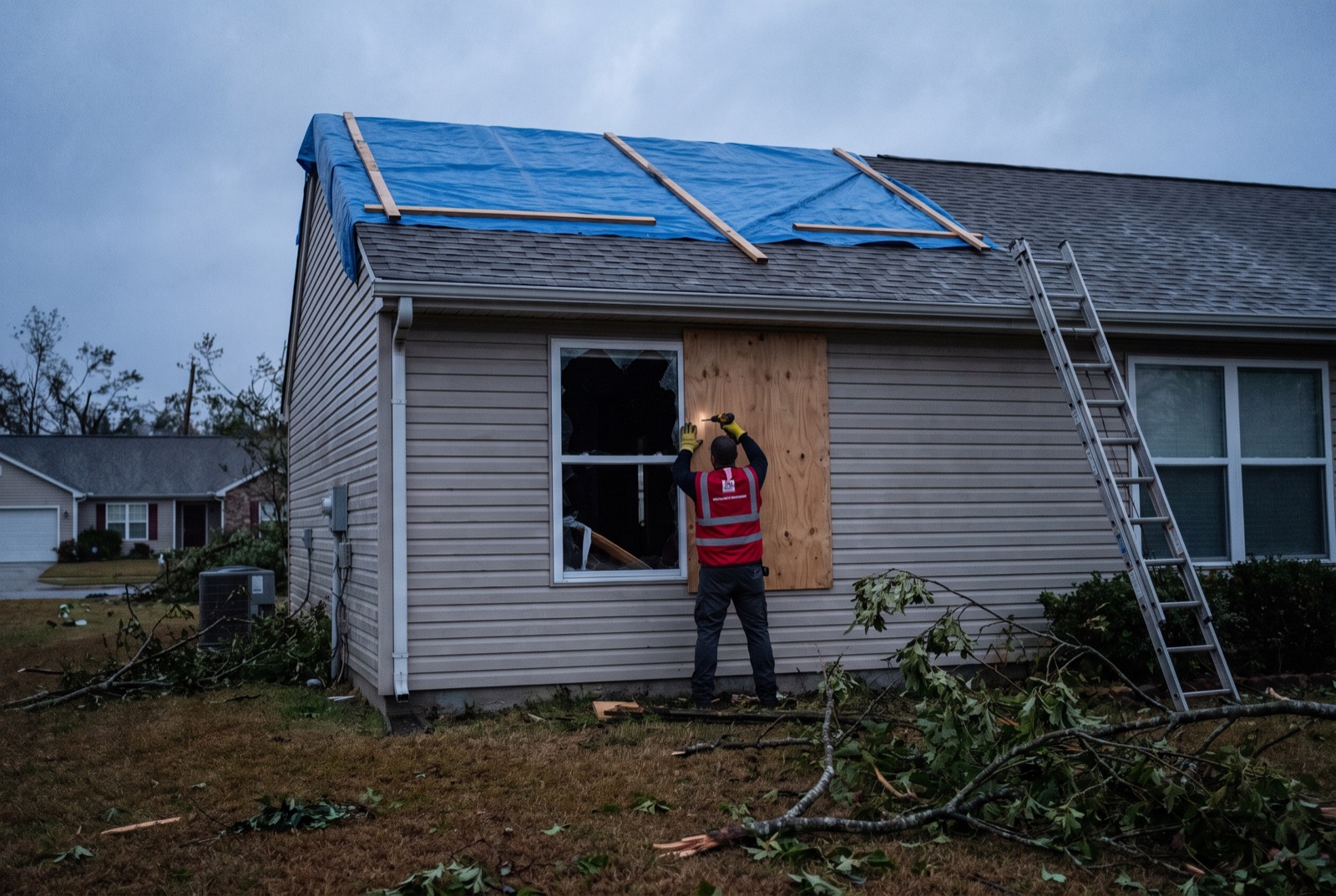
Storm water runs the same clock as a burst pipe
There's a tendency to treat rain intrusion as a lesser event than a plumbing flood — it's "just rain," it came in gradually, and the puddles look manageable. The building doesn't experience it that way. Water is water: once it's in the insulation, drywall, and framing, anything still wet past roughly 24 to 48 hours is at risk for mold, and materials degrade continuously as long as they stay wet. A soaked attic from a two-hour storm is the same drying emergency as a soaked ceiling from a failed supply line.
Storm water has an added complication: contamination potential. Rain that traveled across a roof, through debris, or over the ground before entering picks up organic material along the way — it isn't the clean Category 1 water of a fresh supply line, and it feeds microbial growth accordingly.
Why storm intrusion hides better than plumbing losses
The paths storm water takes are the ones you can't see. It enters high — through a lifted shingle, a wind-driven gap at flashing, a breached ridge — and descends through the structure by gravity: into attic insulation, along rafters and top plates, down inside wall cavities, across ceilings to light fixtures. By the time a stain appears on a ceiling, the materials above and behind it have often been wet for the entire journey.
Wind-driven rain is its own category of sneaky: a strong storm forces water through window and siding joints that shed ordinary rain perfectly well, wetting sheathing and cavity insulation with no interior symptom at all. This is why professional storm response includes moisture mapping — meters and thermal imaging tracing everywhere the water actually went, not just where it shows. Drying what you can see while cavities stay saturated is how storm losses turn into mold remediations a month later.
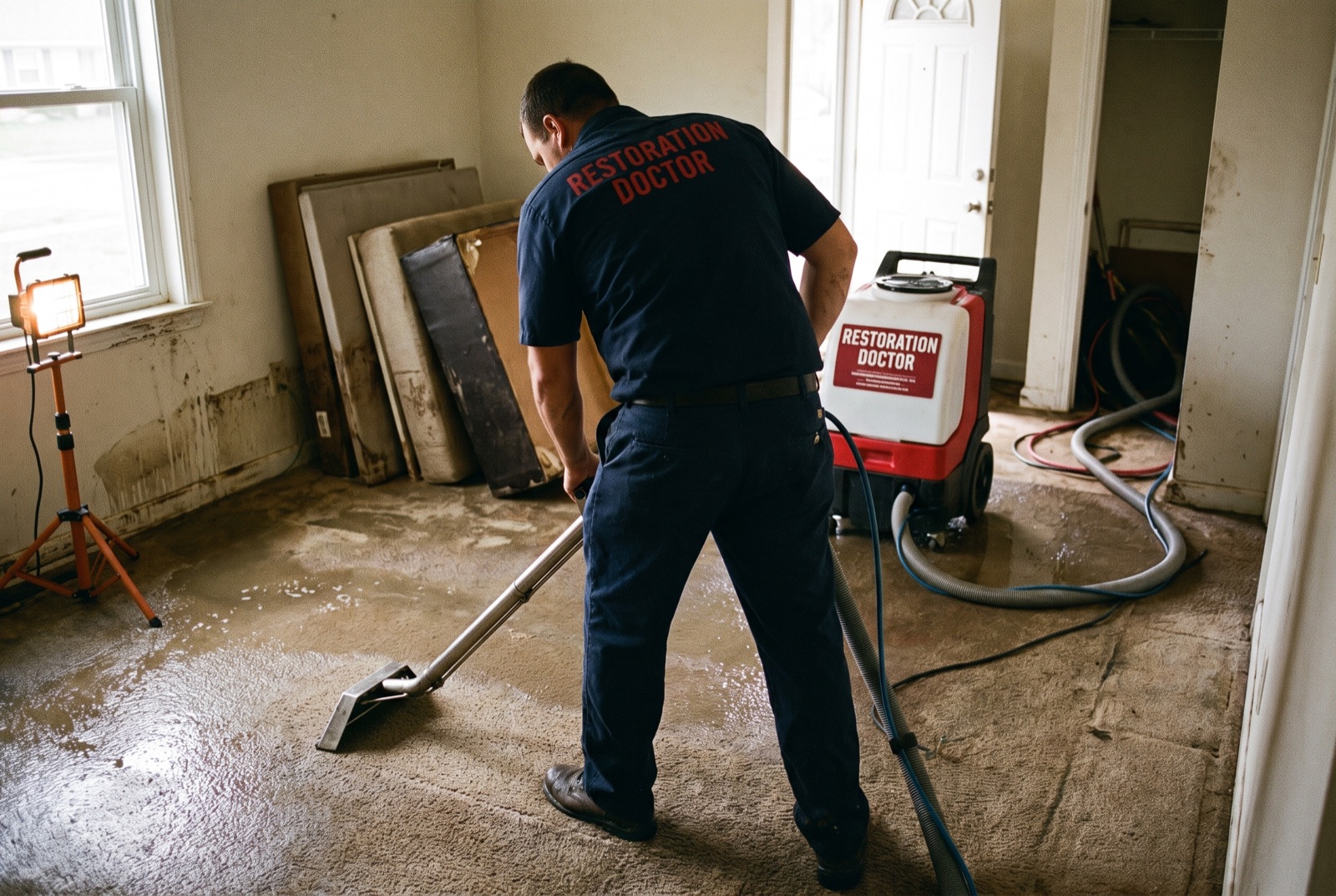
What proper storm drying looks like
The response sequence: stop ongoing intrusion first (emergency tarping over the breach — otherwise you're drying against the next rain), then extract standing water, remove what can't be saved (saturated attic insulation is a common removal, having lost its R-value and become a mold reservoir), and set structural drying equipment. Air movers and commercial dehumidifiers run per IICRC S500 practice, with drying access created where water reached closed cavities, and progress verified with daily moisture readings until materials hit dry standard.
Don't wait for the adjuster to start any of this. Policies generally require prompt mitigation, carriers pay for reasonable drying on covered losses, and the drying documentation — moisture maps and daily logs — strengthens the claim rather than undermining it. The inspection evaluates a documented, professionally mitigated loss just fine; what it can't fix is a moldy attic that sat wet for three weeks waiting for permission.
Fast response across the DMV
If a storm put water in your home — visible or suspected — the window for a clean outcome is measured in hours. Restoration Doctor responds 24/7 across Northern Virginia, Maryland, and D.C. with tarping, extraction, moisture mapping, and documented structural drying. Call 1-888-29-FLOOD and get equipment running today.
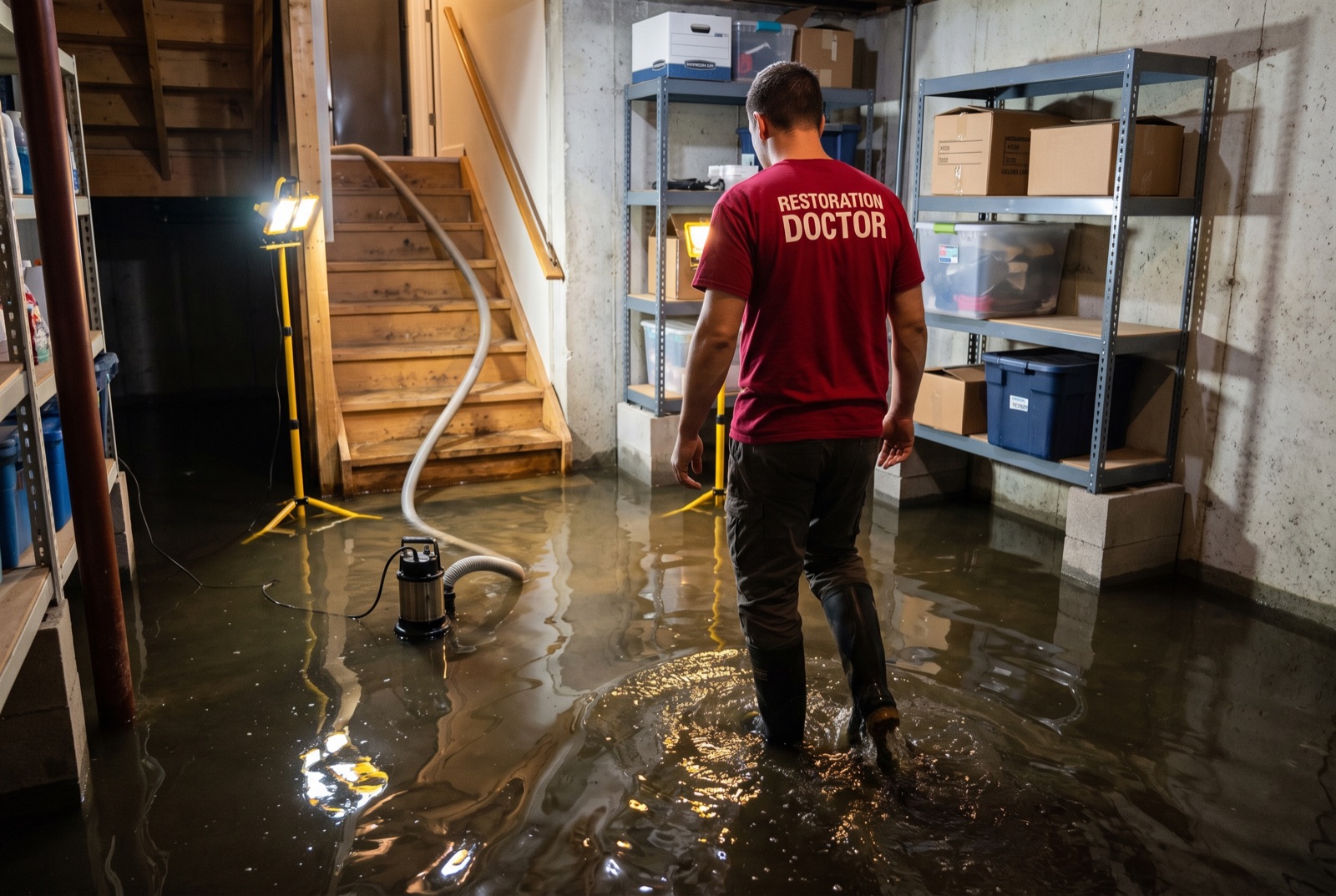
Storm Damage Restoration
Emergency tarping, water extraction, and reconstruction after wind, hail, and heavy-rain storm events.
Frequently asked
Active water, mold, fire, or sewage event?
Connect directly with the Restoration Doctor team for your region. Crews are on standby 24/7 with documented response protocols.