
What should you do after storm damage to your house?
Stay clear of downed lines and unstable structures, document the damage with photos from the ground, and get emergency tarping and board-up in place to stop further water intrusion — a policy duty most insurers reimburse. Notify your carrier promptly, dry interior water fast, and avoid door-knocking storm chasers.
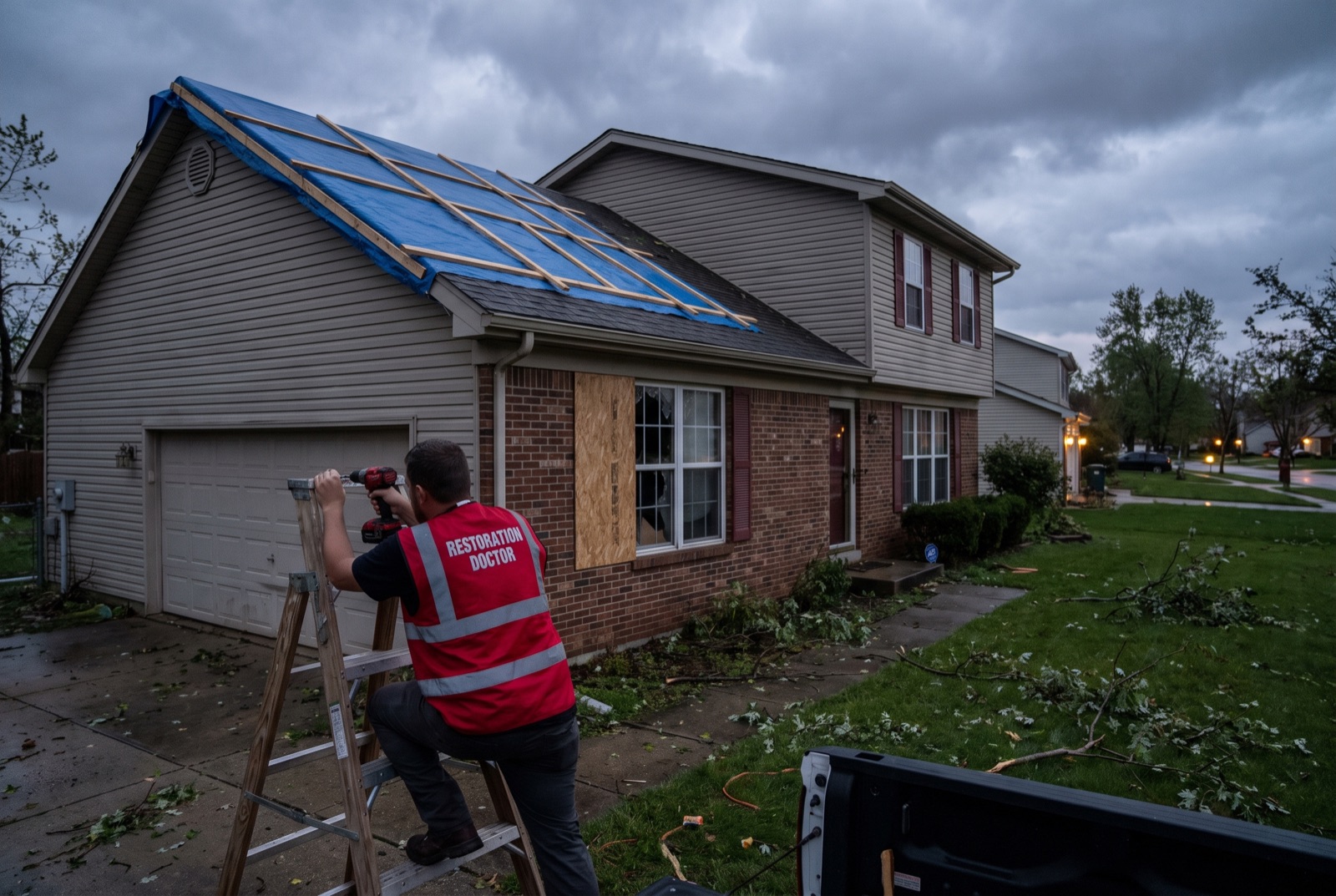
Safety and documentation come first
The first minutes after a storm are about hazards, not repairs. Treat every downed power line as live and stay well away. Don't climb on a storm-damaged roof — wind-loosened shingles and hidden structural damage make post-storm roofs genuinely dangerous, and everything you need to document is visible from the ground or a window. If a tree is resting on the house or the structure has visibly shifted, keep everyone out until it's professionally assessed.
Then document. Photograph and video all damage before anything is moved or covered: roof damage from the ground, broken windows, siding, fencing, fallen limbs, and every interior room with water intrusion. Wide shots establish scope, closeups establish severity, and time-stamped photos tie the damage to the storm date — which matters when carriers evaluate whether damage is storm-related or pre-existing.
Stop the ongoing damage: tarp, board, and dry
Storm damage compounds while openings stay open. Rain follows the storm through a breached roof, broken windows admit weather and intruders, and every additional soaking expands the interior loss. That's why emergency board-up and roof tarping is the first real action item — and it's more than good sense: homeowner's policies generally require you to take reasonable steps to prevent further damage, and carriers routinely reimburse emergency weatherproofing as part of the claim. Keep the invoice and photos of the openings that were covered.
Interior water gets the same urgency as any water loss. Rain that reached attic insulation, wall cavities, or flooring starts the familiar clock — materials that stay wet past 24 to 48 hours are at risk for mold — so extraction and structural drying should start immediately, not after the adjuster visits. Document first, then mitigate; the two are sequential, not in conflict.
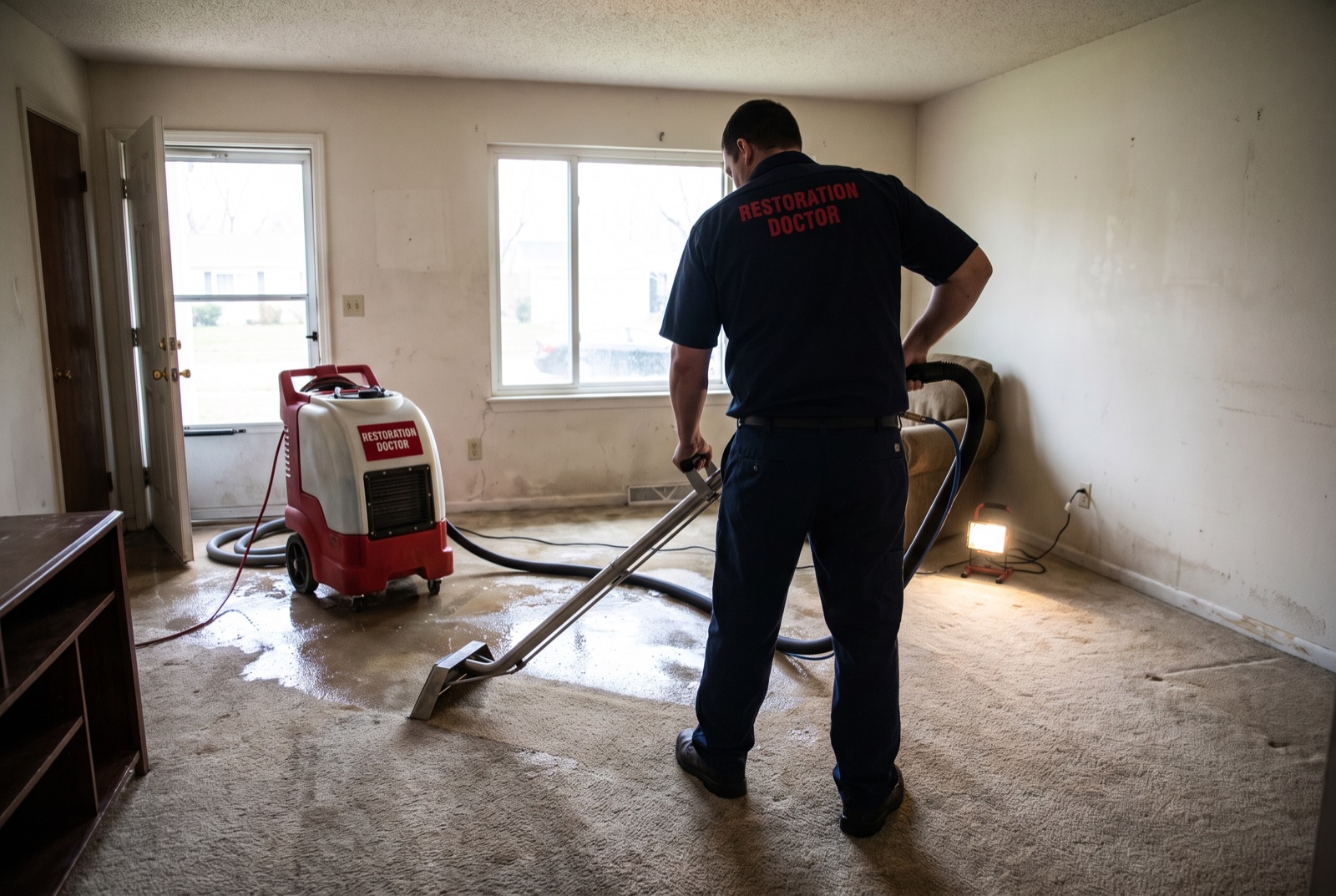
Start the claim and choose contractors carefully
Report the claim to your carrier promptly and ask about the process: adjuster inspection scheduling, what documentation they want, and how emergency mitigation invoices get submitted. Storm events generate high claim volume, so early filing helps your place in the queue.
Then guard against the second wave of storm damage: storm-chasing contractors. After any widely publicized storm, door-knockers canvass affected neighborhoods offering fast roof deals, pressuring homeowners to sign assignment-of-benefits agreements, or demanding large deposits. Decline pressure at the door. Choose contractors with verifiable local presence, licensing, insurance, and reviews — and never sign over your claim rights on a clipboard in your driveway.
Get professional storm response moving
The complete storm response — emergency tarping and board-up, water extraction, structural drying with documented moisture readings, and repair scoping your carrier can verify — is one coordinated effort when a full-service restoration firm handles it. Restoration Doctor responds 24/7 across Northern Virginia, Maryland, and D.C. Call 1-888-29-FLOOD to get the property secured and drying.
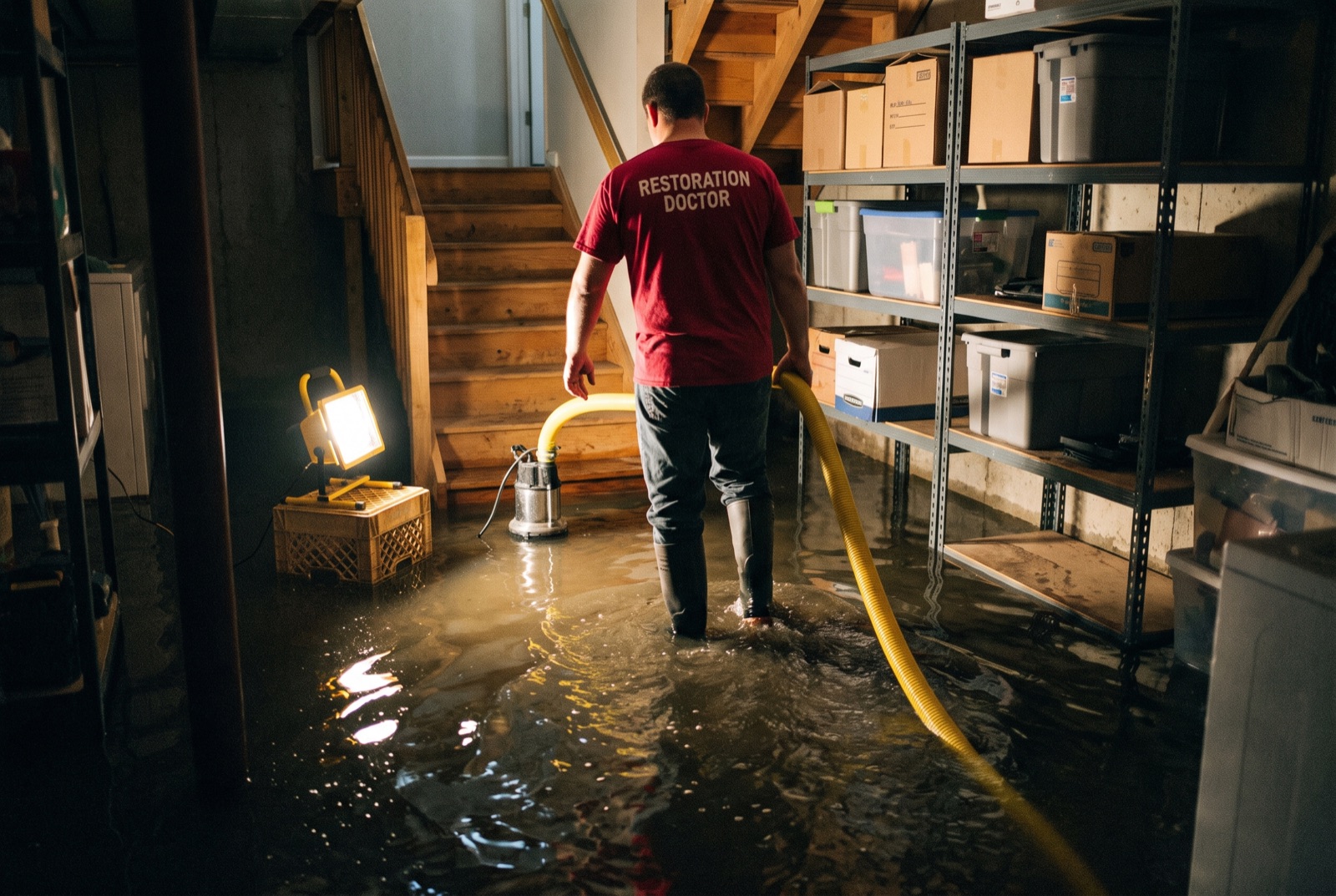
Storm Damage Restoration
Emergency tarping, water extraction, and reconstruction after wind, hail, and heavy-rain storm events.
Frequently asked
Related questions
What is emergency board-up and tarping?
How do I know if my roof has storm damage?
How do I avoid storm chaser contractor scams?
How quickly should rain water intrusion be dried out?
Active water, mold, fire, or sewage event?
Connect directly with the Restoration Doctor team for your region. Crews are on standby 24/7 with documented response protocols.