What is emergency board-up and tarping?
Emergency board-up and tarping is the temporary weatherproofing of a damaged building — plywood over broken windows and doors, heavy-duty tarps over roof openings — installed within hours of a loss. It's a mitigation step most policies require to prevent further damage, and insurers typically reimburse it as part of the claim.
What the service actually involves
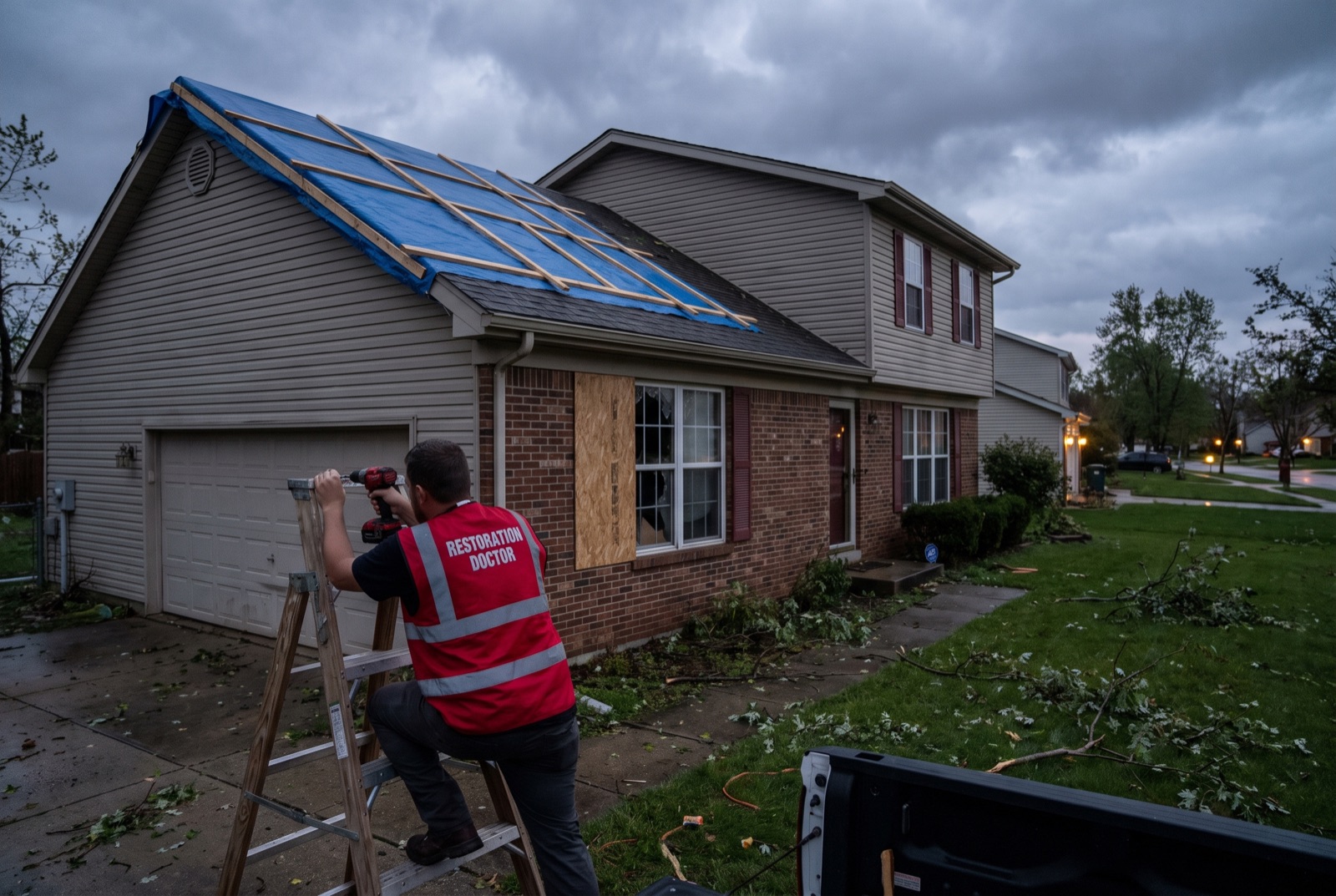
When a storm, fire, or vehicle impact breaches a building, emergency crews close the openings before weather does more damage. Board-up means securing broken windows, failed doors, and wall breaches with plywood sheeting, properly fastened to hold in wind. Tarping means covering roof damage — torn shingles, punctured decking, tree-strike holes — with heavy-duty reinforced tarps, anchored with furring strips so they survive the next storm rather than flapping loose in it.
Done professionally, this is more methodical than it sounds: crews assess structural safety first, size and anchor coverings to shed water correctly, and document the openings with photos before covering them — preserving evidence of the damage for the insurance claim while protecting the property. The service typically deploys within hours, day or night, because the next rain doesn't schedule around business hours.
Why it's a policy duty, not just a good idea
Homeowner's policies generally include a duty to protect the property from further damage after a loss — often phrased as making reasonable temporary repairs. A homeowner who leaves a breached roof open for two weeks, and takes three more soakings through it, can find the carrier distinguishing the original covered storm damage from the preventable damage that followed. Prompt weatherproofing removes that argument entirely.
The flip side is that carriers pay for it: reasonable emergency board-up and tarping costs are normally reimbursed as part of a covered claim. Keep the invoice, and keep the photos showing what was open and what was covered — that pairing is exactly what adjusters want to see. Policies vary in terms and limits, so confirm specifics with your carrier, but mitigation costs on covered losses are among the least contested line items in the claims world.
What happens if you skip it
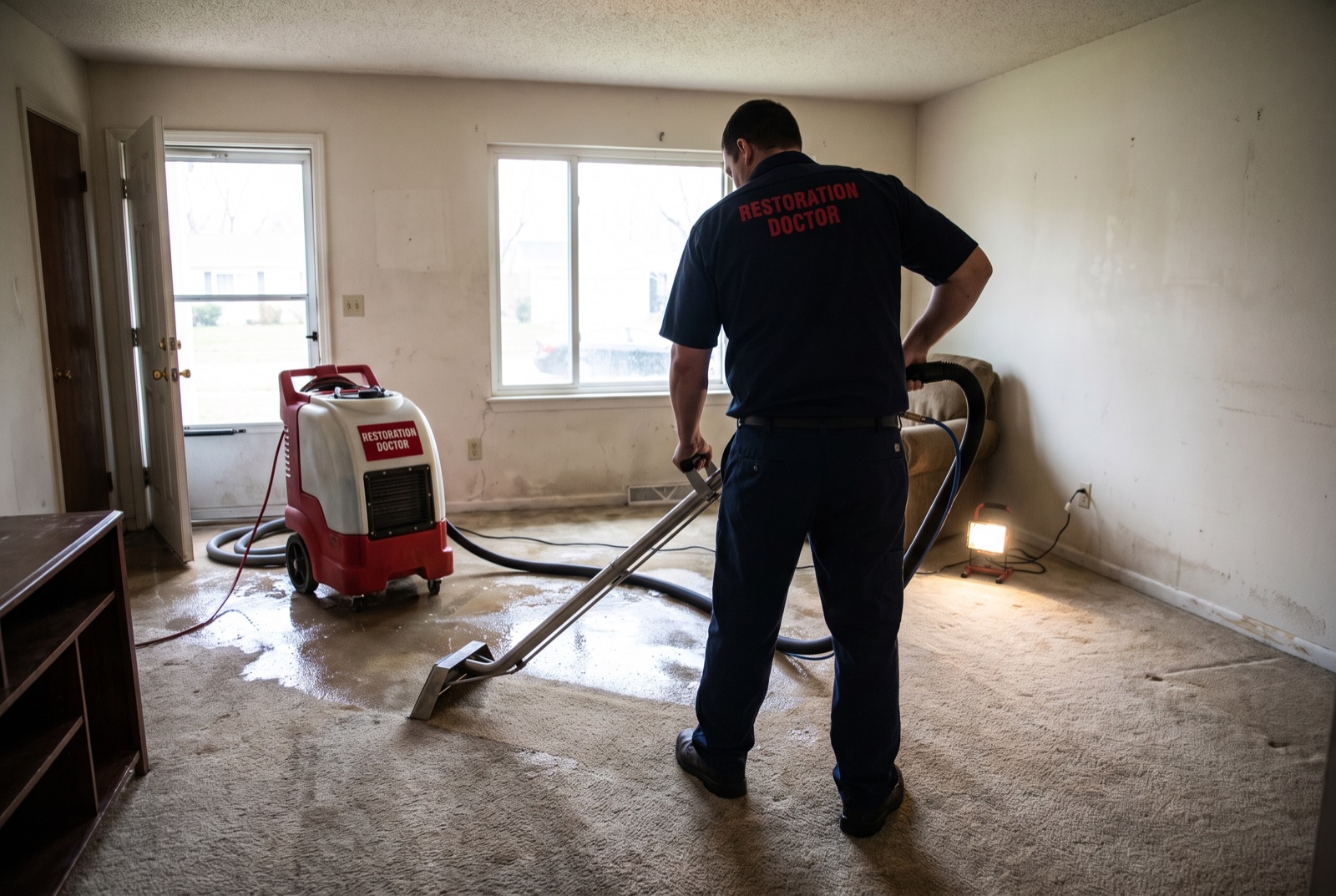
An open building envelope deteriorates on multiple fronts at once. Every rain adds interior water damage — soaked insulation, ceilings, walls, and flooring, each starting the 24-48 hour clock to get dry before mold becomes a risk. Wind works existing damage wider. Animals and pests move in quickly, and an obviously breached, possibly unoccupied home invites theft and vandalism, which can raise separate coverage questions.
The economics are lopsided: emergency weatherproofing costs a few hundred to a few thousand dollars depending on scope, while a month of weather through an open roof can add tens of thousands in interior damage and remediation. There is no scenario where waiting is the cheaper option.
Getting it done fast
Board-up and tarping is the front end of a complete storm response — usually followed immediately by interior water extraction and structural drying, then repair scoping. Restoration Doctor provides 24/7 emergency board-up and tarping across Northern Virginia, Maryland, and D.C., photographs everything for your claim, and carries the loss straight through drying and repairs. Call 1-888-29-FLOOD any hour.
Storm Damage Restoration
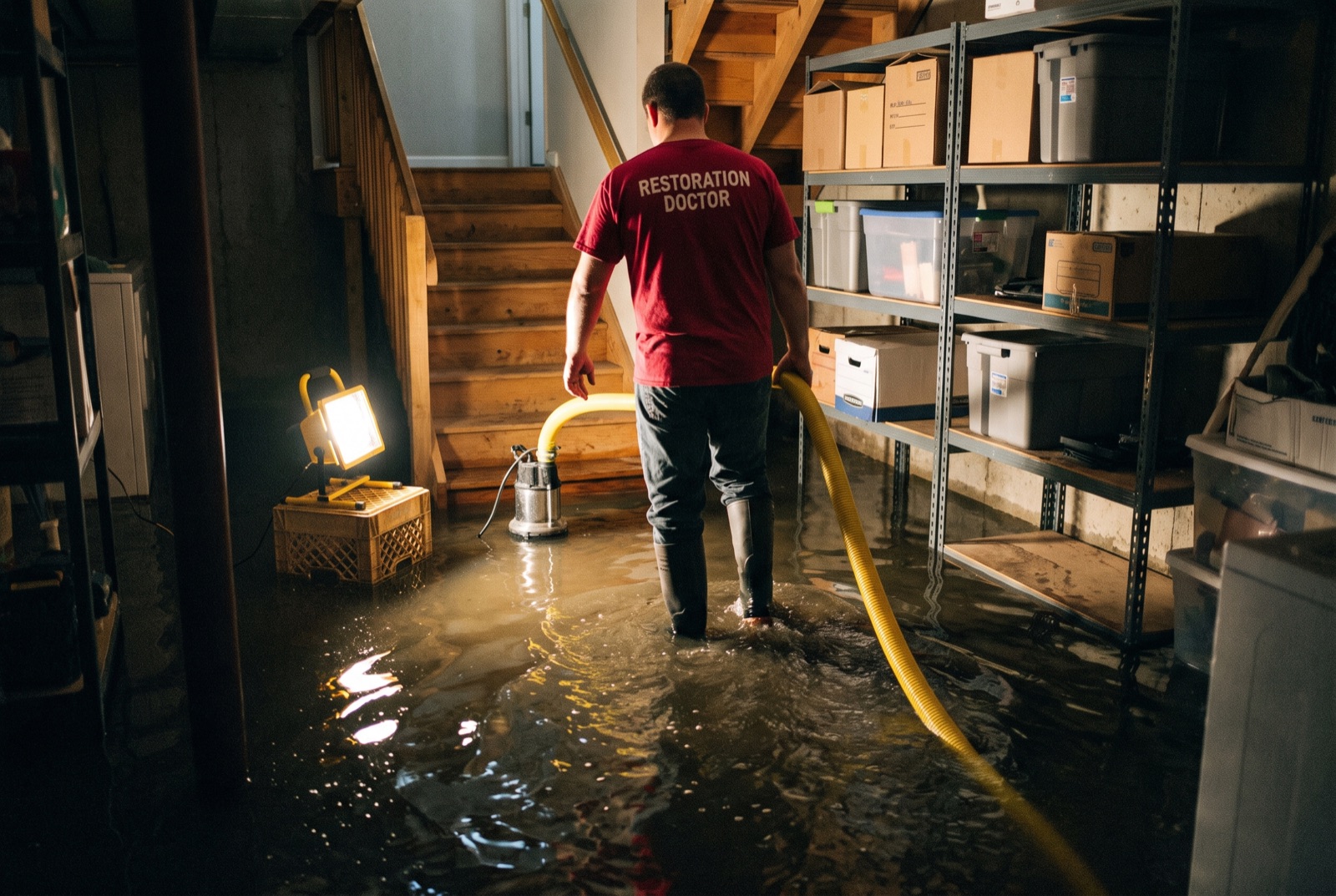
Emergency tarping, water extraction, and reconstruction after wind, hail, and heavy-rain storm events.
Frequently asked
Related questions
What should you do after storm damage to your house?
Who is responsible if a neighbor's tree falls on my house?
How quickly should rain water intrusion be dried out?
Active water, mold, fire, or sewage event?
Connect directly with the Restoration Doctor team for your region. Crews are on standby 24/7 with documented response protocols.