
Who is responsible if a neighbor's tree falls on my house?
In most cases, your own homeowner's insurance pays for the damage — regardless of whose tree it was. Storms are considered acts of nature, so the tree's owner generally isn't liable. The exception: if the neighbor knew the tree was hazardous and ignored it, their liability coverage may respond. Document any prior warnings.
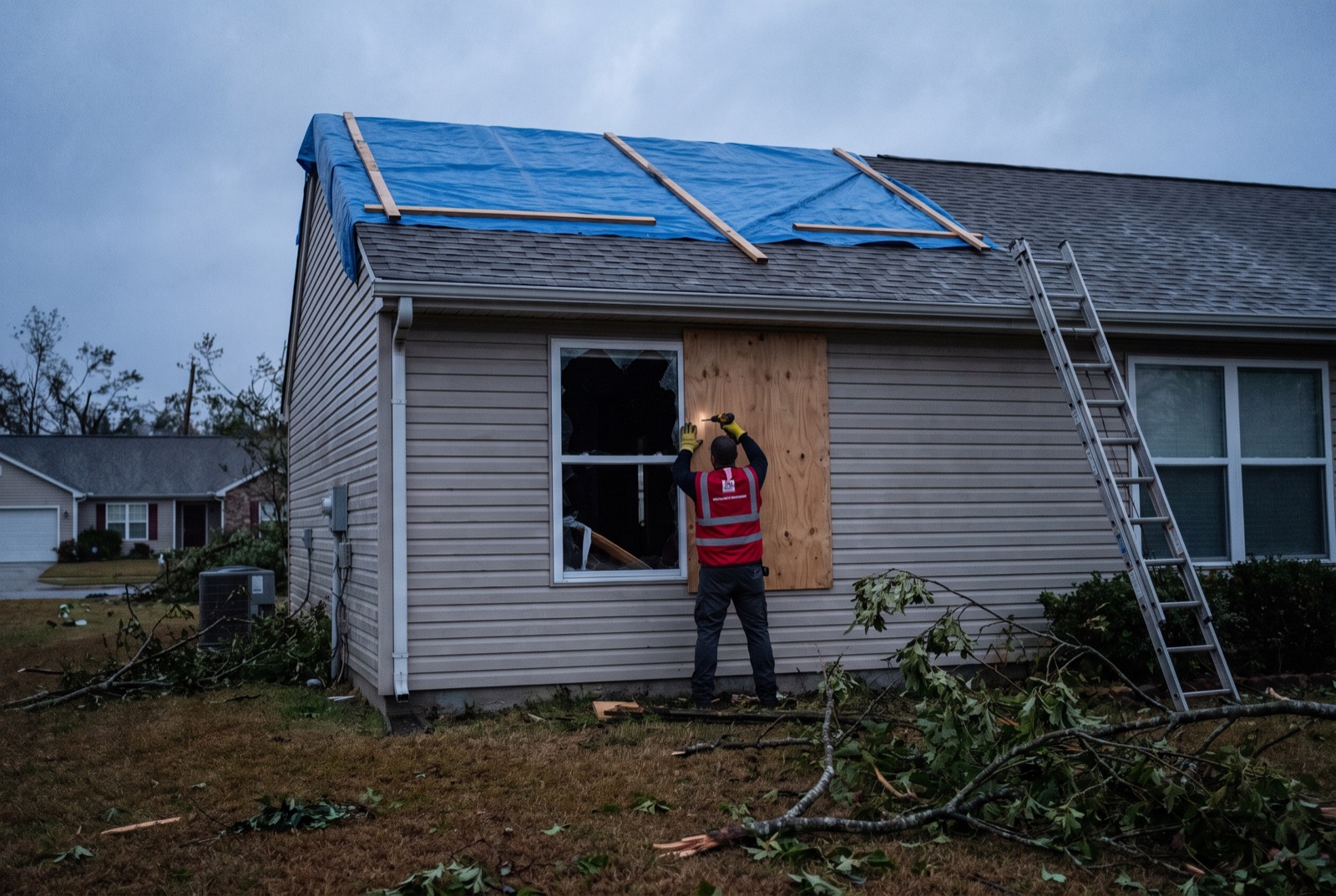
The rule that surprises everyone: your policy, your claim
The near-universal reaction when a neighbor's tree lands on your roof is "their tree, their insurance." The law generally works the other way. When a healthy tree comes down in a storm, it's treated as an act of nature — nobody's fault — and each property owner's insurance covers the damage on their own property. Their tree on your roof is your claim; your tree on their shed is their claim.
In practice this is usually good news. You deal with your own carrier rather than trying to pursue a neighbor's insurer, your policy's dwelling coverage applies with its familiar terms, and the claim proceeds like any other storm loss: emergency mitigation, adjuster inspection, scope, and repair. Your deductible applies, which is the part that feels unfair — but the alternative, litigating fault over wind, would be worse for everyone.
The negligence exception — and why documentation matters
Responsibility can shift when the tree's owner knew — or reasonably should have known — the tree was a hazard and did nothing. A visibly dead tree, large dead limbs overhanging your roof, fungal shelves on the trunk, a documented arborist warning, or your own written requests to address the tree can all support a negligence claim against the neighbor's liability coverage.
The operative word is documented. If you're worried about a neighbor's tree today, put the concern in writing (a dated letter or email), photograph the visible condition, and consider a professional arborist evaluation. If the tree later fails, that record transforms the conversation — your carrier may pay your claim and then pursue the neighbor's insurer for reimbursement (subrogation), which can also get your deductible refunded. Without documentation, proving prior knowledge after the fact is difficult.
The same logic runs in reverse: if your own trees show dead limbs or decline, addressing them now is what protects you from liability when the next storm comes through.
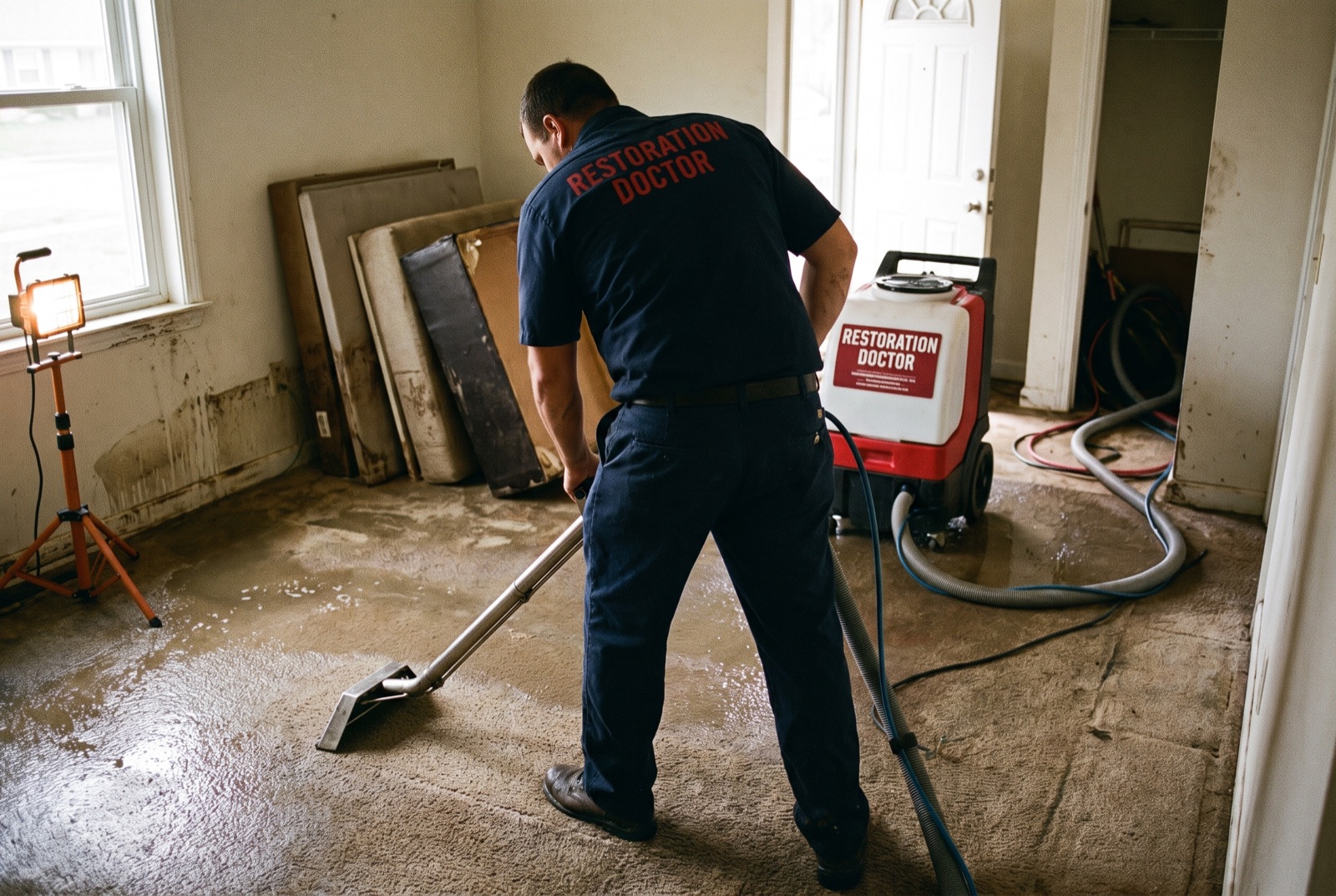
What the claim covers when a tree strikes the house
A tree strike is typically a compound loss: structural damage to the roof and framing at the impact point, a breached building envelope, and rain intrusion through the opening — often continuing until the tree is removed and the roof is tarped. Covered scope generally includes removing the tree from the structure, emergency tarping, structural repairs, and the interior water damage and drying that resulted from the breach. Debris removal for trees that struck a covered structure is typically included; a tree that simply fell in the yard without hitting anything is handled differently and more narrowly.
Speed matters for the same reason as any storm breach: every rain event between impact and tarp expands the interior loss, and insulation and framing left wet are what put the structure at risk for mold. Crane-assisted tree removal, tarping, and structural drying should be sequenced within days, not weeks.
One call after a tree strike
Restoration Doctor coordinates the full tree-strike response across Northern Virginia, Maryland, and D.C. — emergency tarping, interior water mitigation with documented drying, and repair scoping built for your insurance claim. Call 1-888-29-FLOOD, 24/7, and get the structure protected before the next rain.
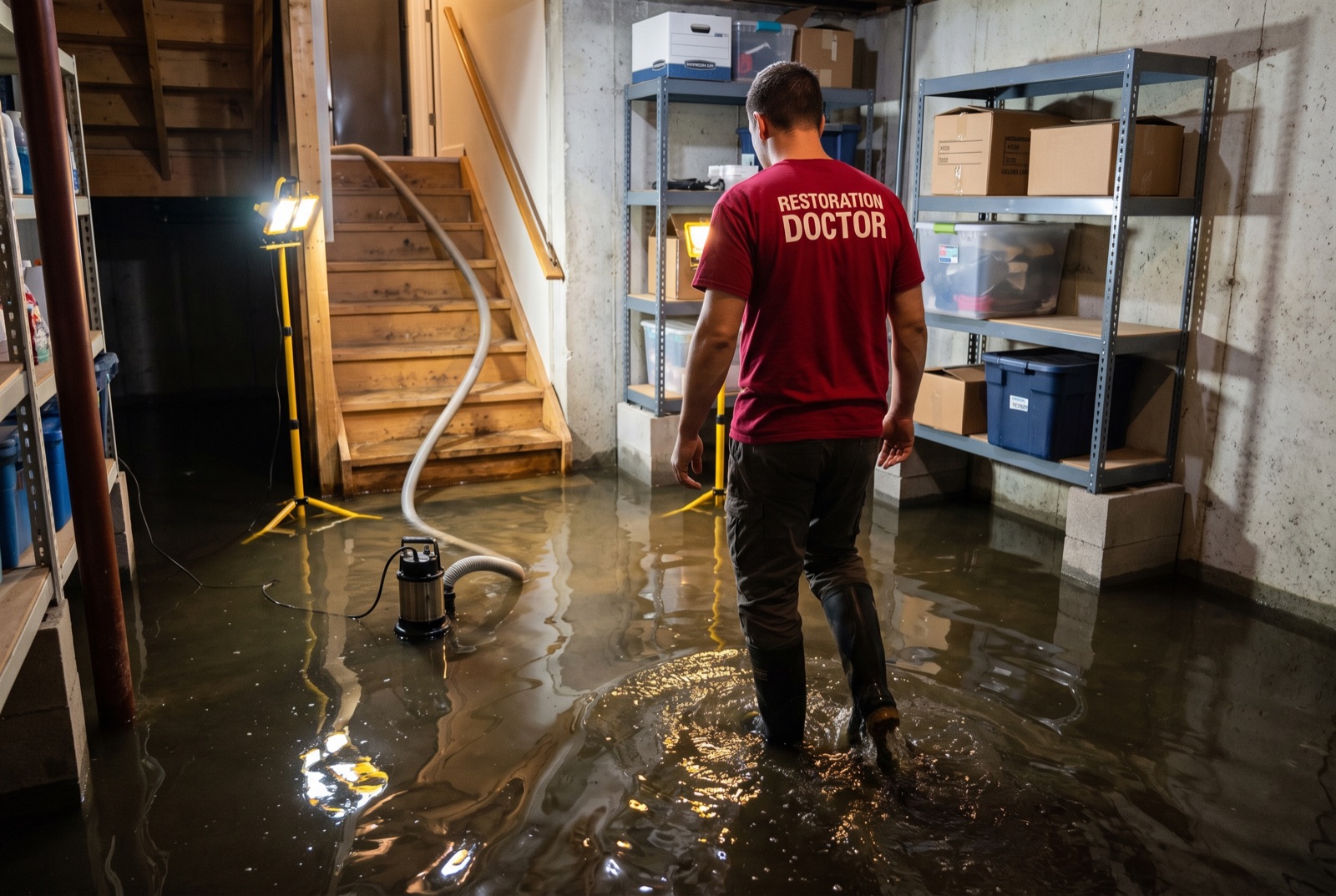
Storm Damage Restoration
Emergency tarping, water extraction, and reconstruction after wind, hail, and heavy-rain storm events.
Frequently asked
Active water, mold, fire, or sewage event?
Connect directly with the Restoration Doctor team for your region. Crews are on standby 24/7 with documented response protocols.