
Roof leaks and interior water damage: what questions should I ask my insurer?
Whether your policy responds to interior water damage from a roof leak is a question for your insurer. Coverage depends on your policy and your insurer's decision. Questions about coverage belong with your insurer, your agent, or a licensed public adjuster or attorney. What we do is dry and document the interior.
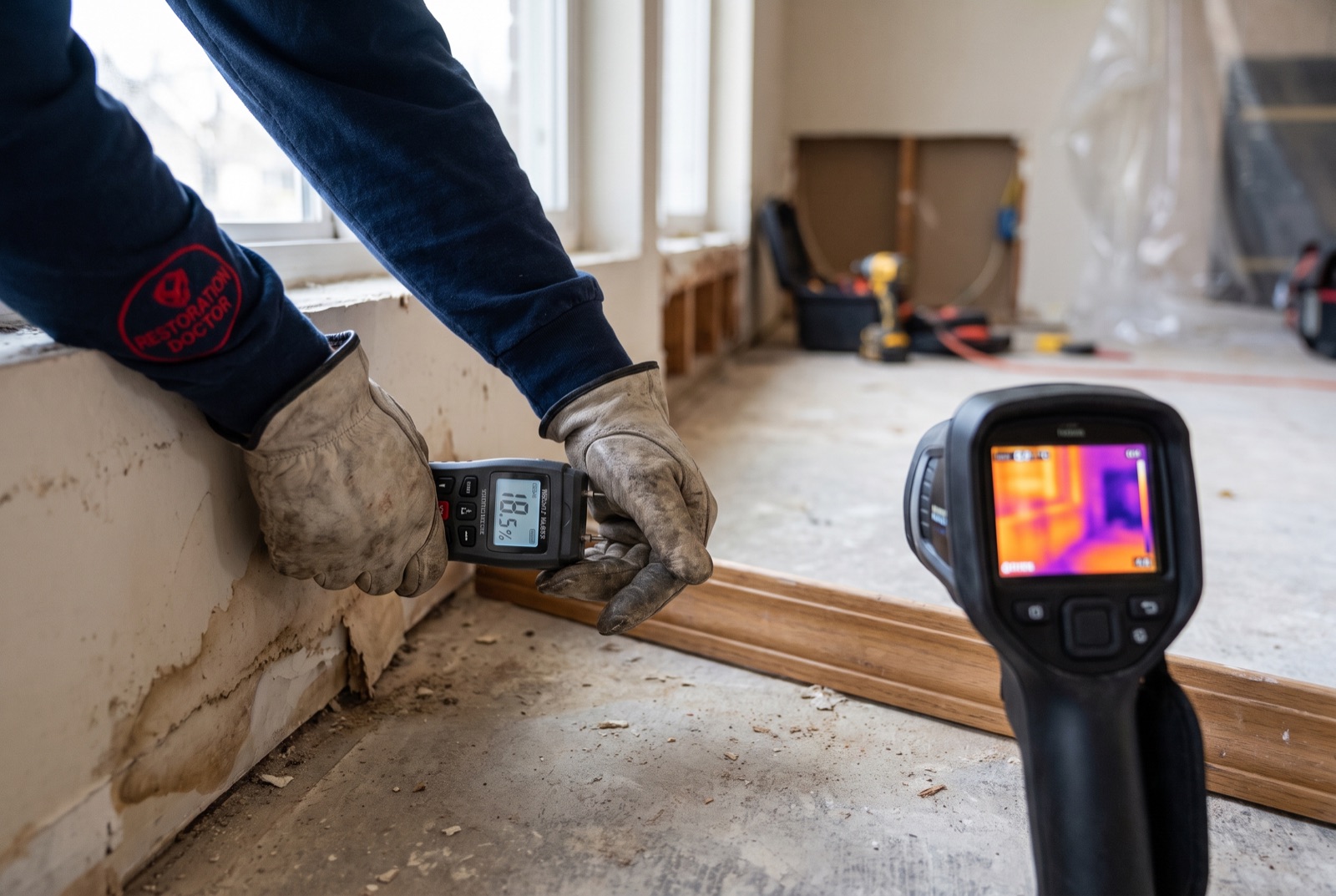
Interior water from a roof leak
Roof-leak water usually runs through concealed spaces such as attic insulation, ceiling cavities and wall interiors before it shows as a stain. Attic and cavity moisture is easy to underestimate because it is out of sight.
Photograph the interior damage and the ceiling as soon as it is safe, and never climb a damaged roof. Note the date of the storm and the date you discovered the leak.
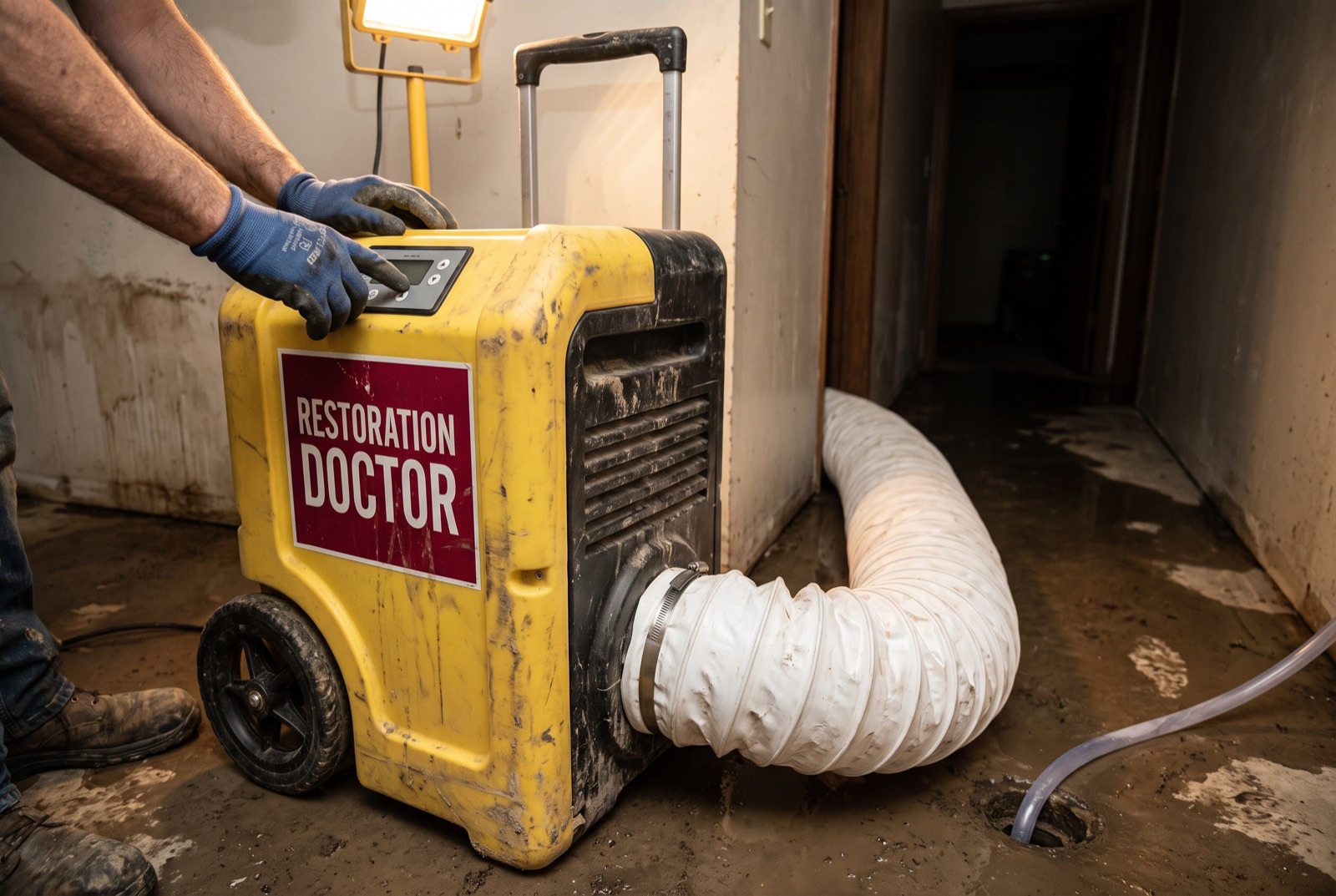
Drying and documenting the interior
Wet ceiling insulation, drywall and framing are on the same 24 to 48 hour drying clock as any other water intrusion. Restoration Doctor maps the moisture footprint with meters and thermal imaging, dries or removes affected materials per IICRC S500 practice, and documents the scope and drying progress. Storm-related water losses across Northern Virginia, Maryland, and D.C. get 24/7 response. Call 1-888-29-FLOOD.
Coverage depends on your policy and your insurer's decision. Questions about coverage belong with your insurer, your agent, or a licensed public adjuster or attorney.
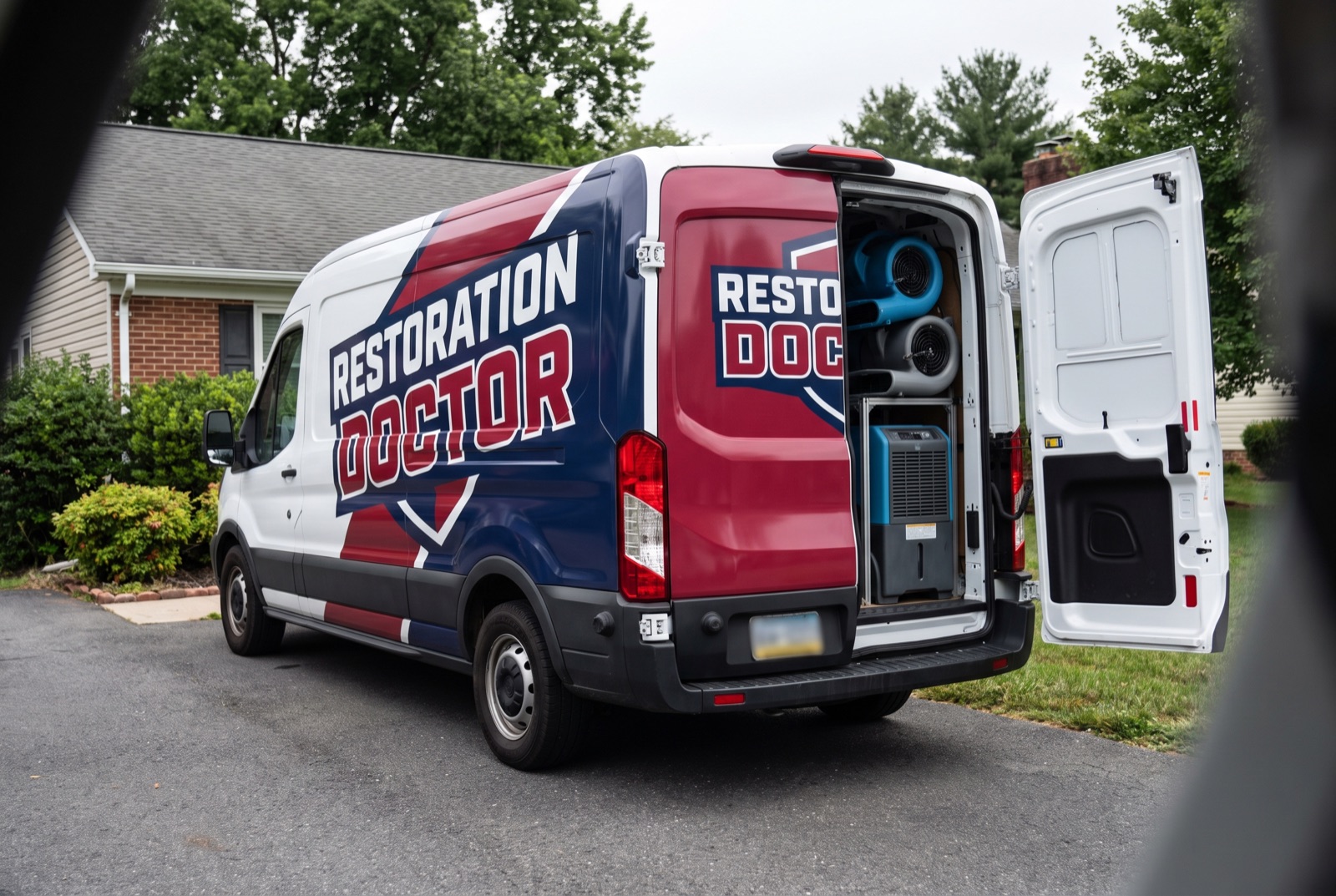
Storm Damage Restoration
Emergency tarping, water extraction, and reconstruction after wind, hail, and heavy-rain storm events.
Frequently asked
Related questions
How do I know if my roof has storm damage?
Storm damage and your homeowners policy: what should you ask your insurer?
Water damage and your homeowners policy: what questions should I ask my insurer?
What is the difference between temporary and permanent storm repairs?
Active water, mold, fire, or sewage event?
Connect directly with the Restoration Doctor team for your region. Crews are on standby 24/7 with documented response protocols.