
Should I repair storm damage before the insurance adjuster comes?
Make temporary emergency repairs only — tarping, board-up, and water mitigation are required by most policies to prevent further damage. Photograph and video everything before any work, keep receipts and removed materials, and hold permanent repairs until the adjuster documents the loss. Repairing permanently first can erase the evidence your claim depends on.
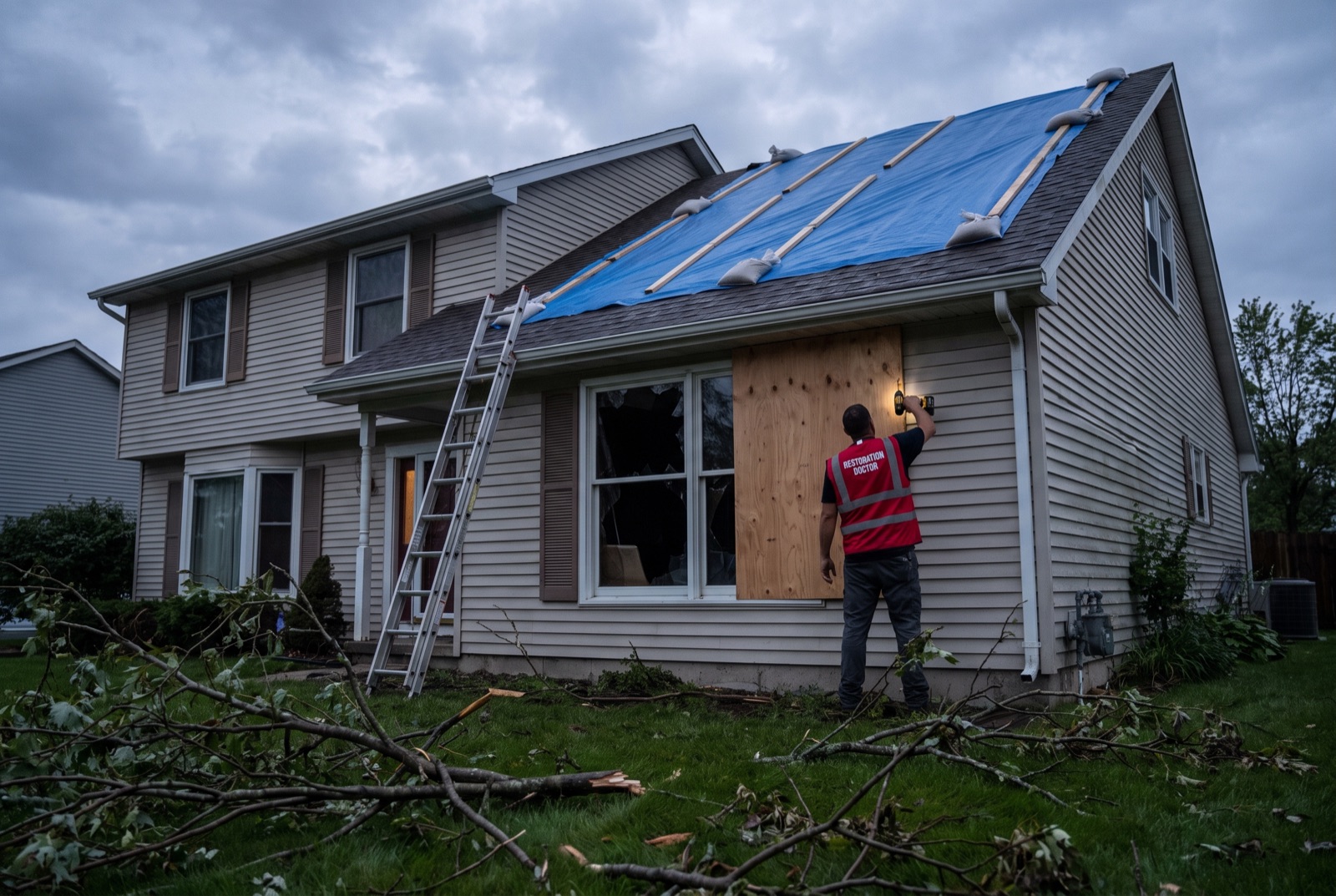
The distinction that governs everything: temporary vs. permanent
Insurance claims run on a simple sequencing rule that trips up many homeowners. Temporary repairs — the ones that stop damage from getting worse — should happen immediately, before the adjuster, and usually before you've even reached the carrier. Permanent repairs — the ones that restore the home — should wait until the adjuster has documented the loss and the scope is agreed.
Temporary means: tarping the roof breach, boarding broken windows, extracting standing water, drying wet materials, and moving contents out of harm's way. These aren't just permitted — your policy's duty to mitigate generally requires them, and carriers typically reimburse the reasonable cost. Permanent means: reshingling the roof, replacing drywall and flooring, rebuilding the fence. Doing those before inspection means the adjuster evaluates a repaired house instead of a damaged one, and pays accordingly.
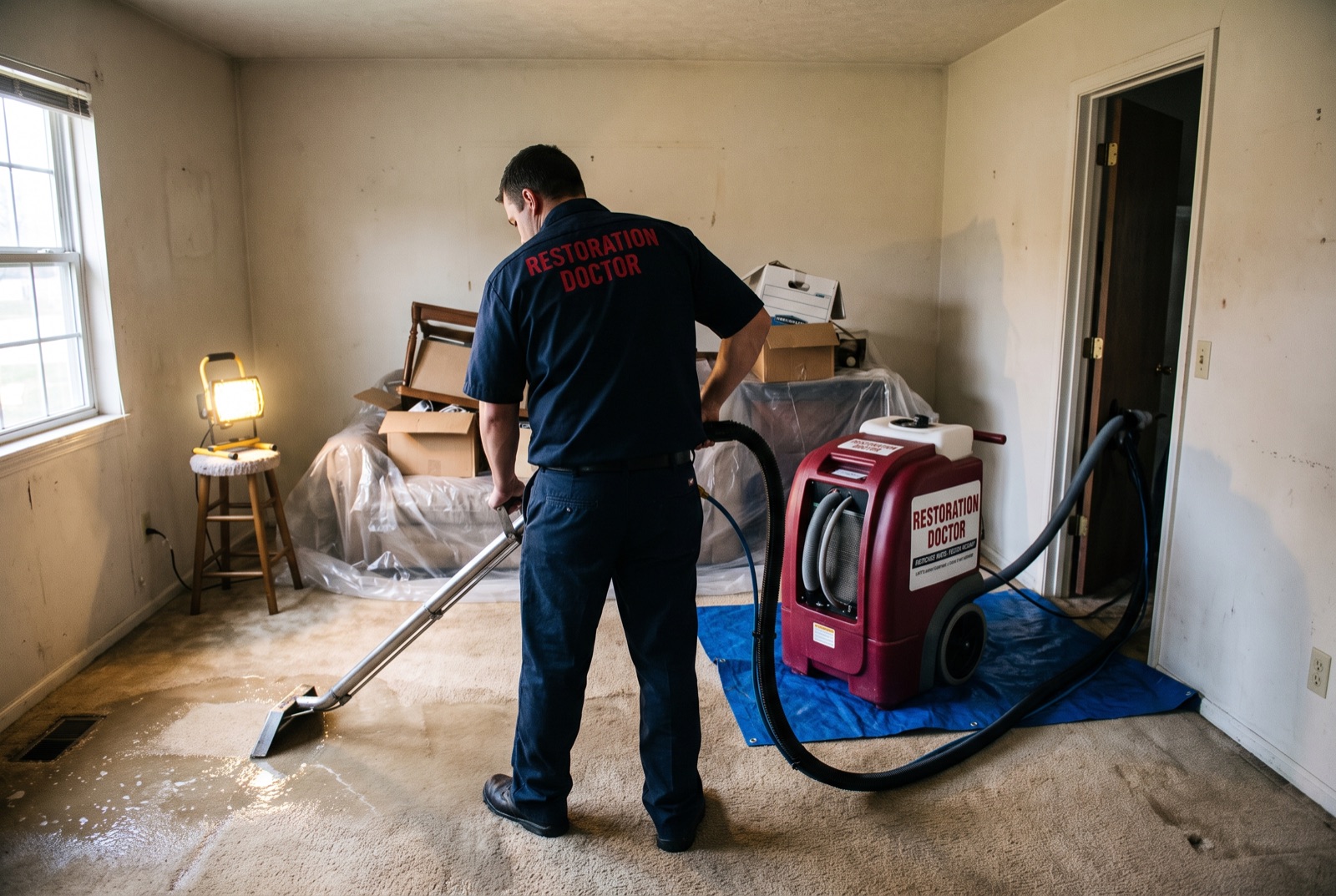
Preserve the evidence before you touch anything
Before even temporary repairs, spend fifteen minutes documenting. Photograph and video every area of damage — exterior from multiple angles, each affected interior room, closeups of the actual damage, and the storm debris that tells the story. Time-stamped photos taken the day of the storm are the strongest possible tie between the damage and the event.
Then preserve as you mitigate. If wet drywall or flooring has to come out immediately for drying, photograph it in place first and keep samples or set removed materials aside for inspection. Keep every receipt — tarps, plywood, fans, professional mitigation invoices. Log what was done and when. When the adjuster arrives, this file does the talking: here's what the storm did, here's what we did to stop it worsening, here's what it cost.
What you should never do is dispose of damaged materials, or let a contractor haul them away, before the adjuster has seen them or cleared it. Missing evidence is the easiest gap for a claim to fall into.
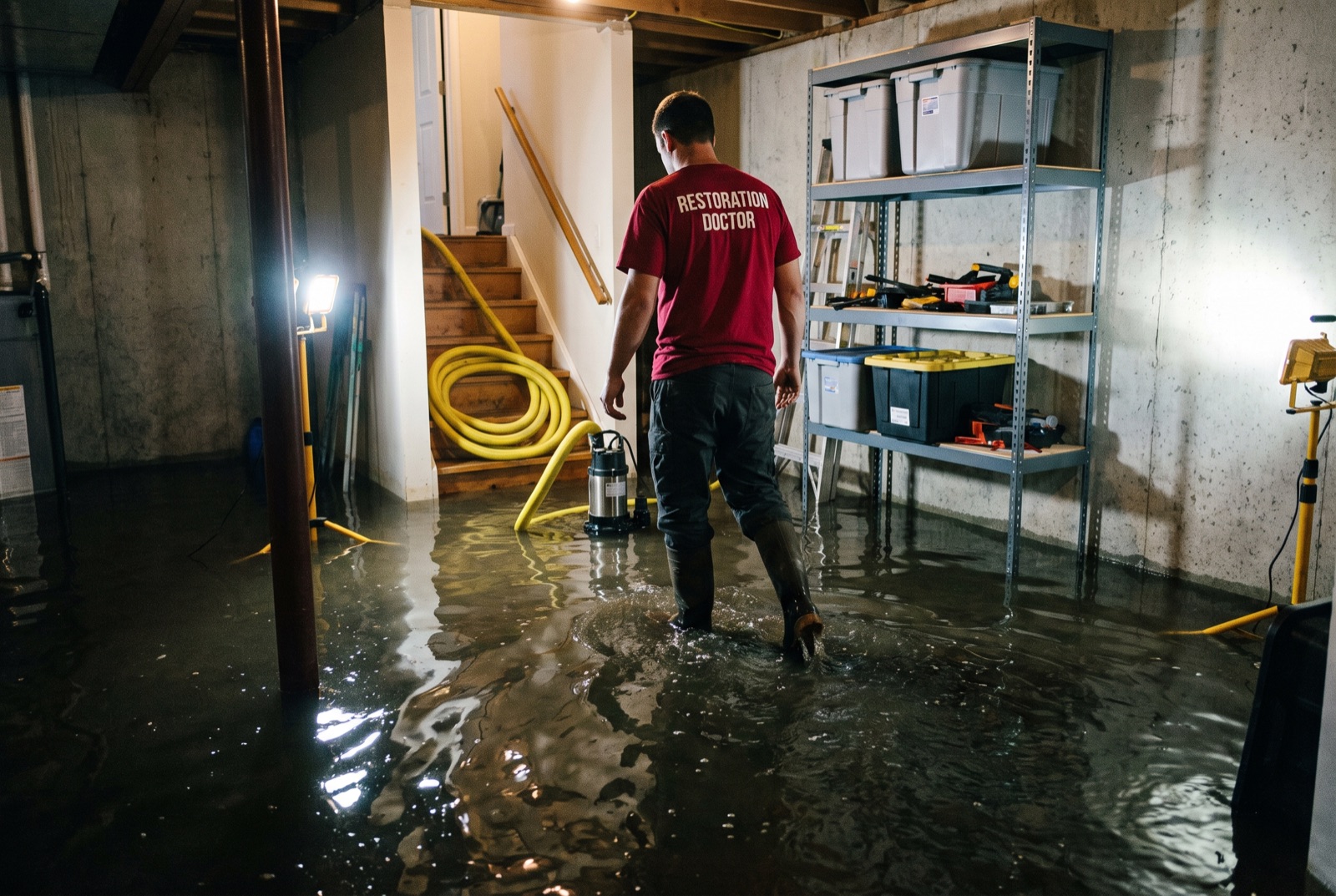
How mitigation and the inspection work together
There's no conflict between drying your house today and an inspection next week — professional mitigation is built for exactly this. Restoration crews document as they work: photo logs of every affected area before and during mitigation, moisture maps showing how far storm water traveled, daily drying records, and itemized scopes in the estimating format adjusters use. That documentation often captures the loss more thoroughly than a one-visit inspection could, because moisture meters find wet cavities a visual walkthrough misses.
This is also the answer to the worry "if I dry it out, will the carrier believe it was wet?" A drying log with daily meter readings is stronger evidence of water damage than the water itself. Mitigate immediately, document relentlessly, and the claim gets stronger, not weaker.
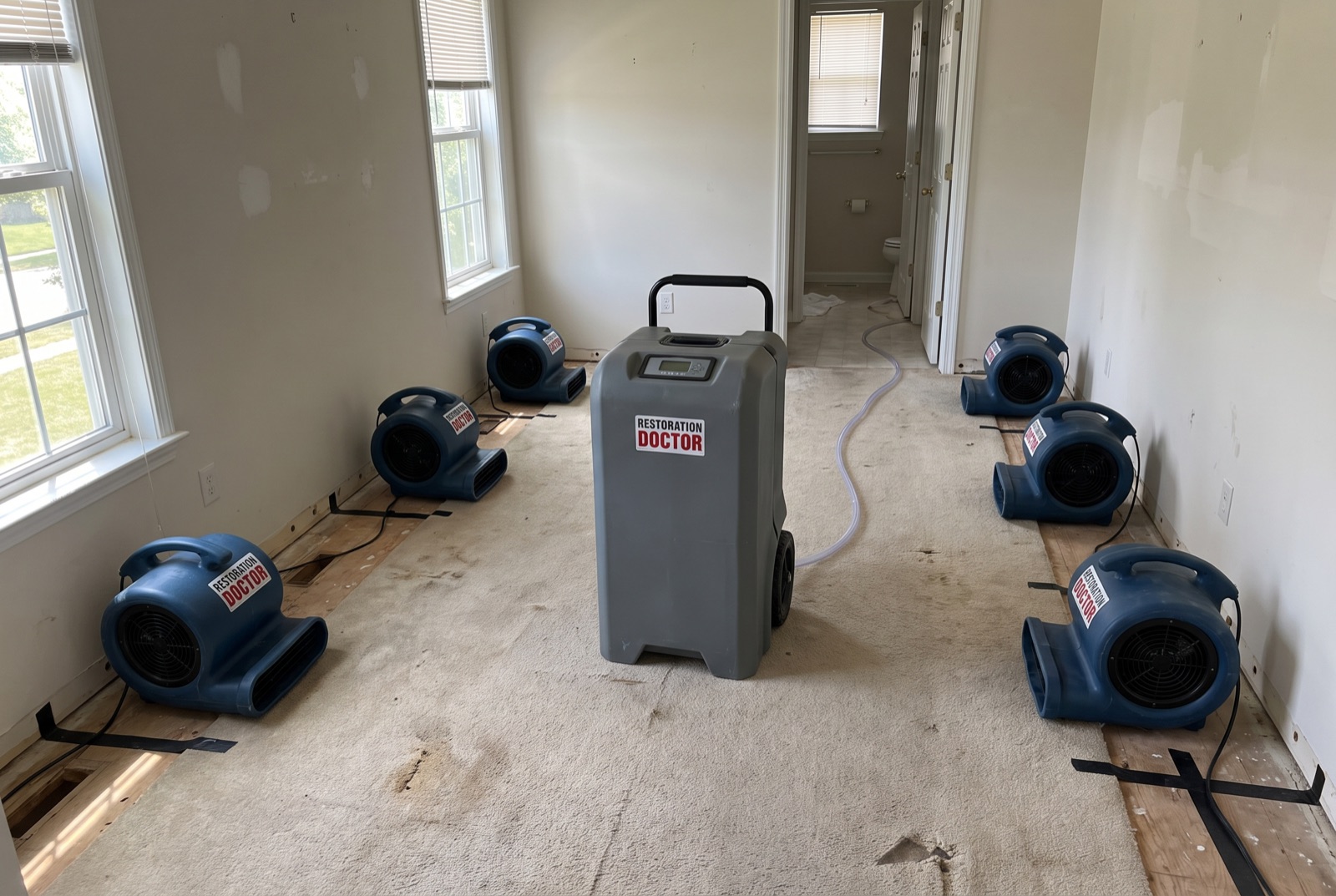
Mitigation with the claim in mind
The clean path: document, stabilize with temporary repairs, mitigate water fast, and hold permanent restoration until scope is agreed — then repair once, correctly, with the claim funding it. Restoration Doctor handles storm mitigation across Northern Virginia, Maryland, and D.C. with insurance-grade documentation at every step, and carries losses through repairs once scope is set. Call 1-888-29-FLOOD, 24/7.
Water Damage Restoration
Extraction, structural drying, and moisture verification for burst pipes, appliance leaks, and basement flooding.
Frequently asked
Active water, mold, fire, or sewage event?
Connect directly with the Restoration Doctor team for your region. Crews are on standby 24/7 with documented response protocols.