Can water damage be reversed?
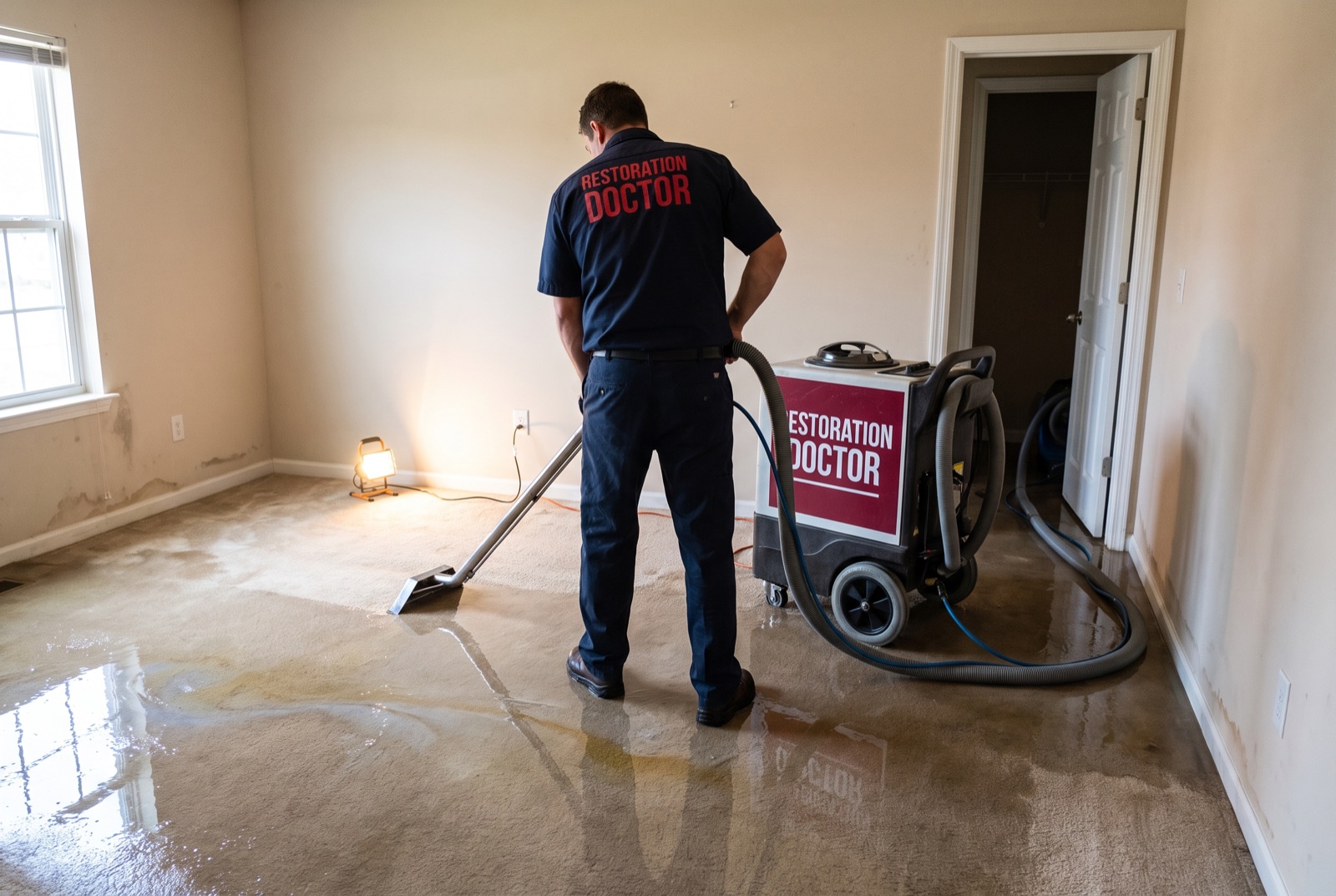
Often, yes — if drying starts fast. Professional extraction and structural drying within 24 to 48 hours can fully restore framing, drywall, hardwood, and most structural materials. Damage becomes irreversible when materials physically break down or mold establishes; those areas are removed and rebuilt, which still returns the home to pre-loss condition.
What "reversing" water damage really means
Water damage restoration works on a simple principle: return the home to its pre-loss condition. For most losses, that happens through two complementary paths. The first is true reversal — drying wet materials in place until they return to their normal moisture content and performance. The second is targeted replacement — removing the specific materials water has permanently altered and rebuilding them.
A typical successful project uses both. The framing, most of the drywall, and the hardwood might be dried and saved, while the carpet pad, a run of swollen MDF baseboard, and two feet of saturated drywall come out and get replaced. From the homeowner's perspective the damage has been reversed either way — the meaningful question is how much of your home lands in each column, and that is overwhelmingly a function of response speed.
The science of structural drying
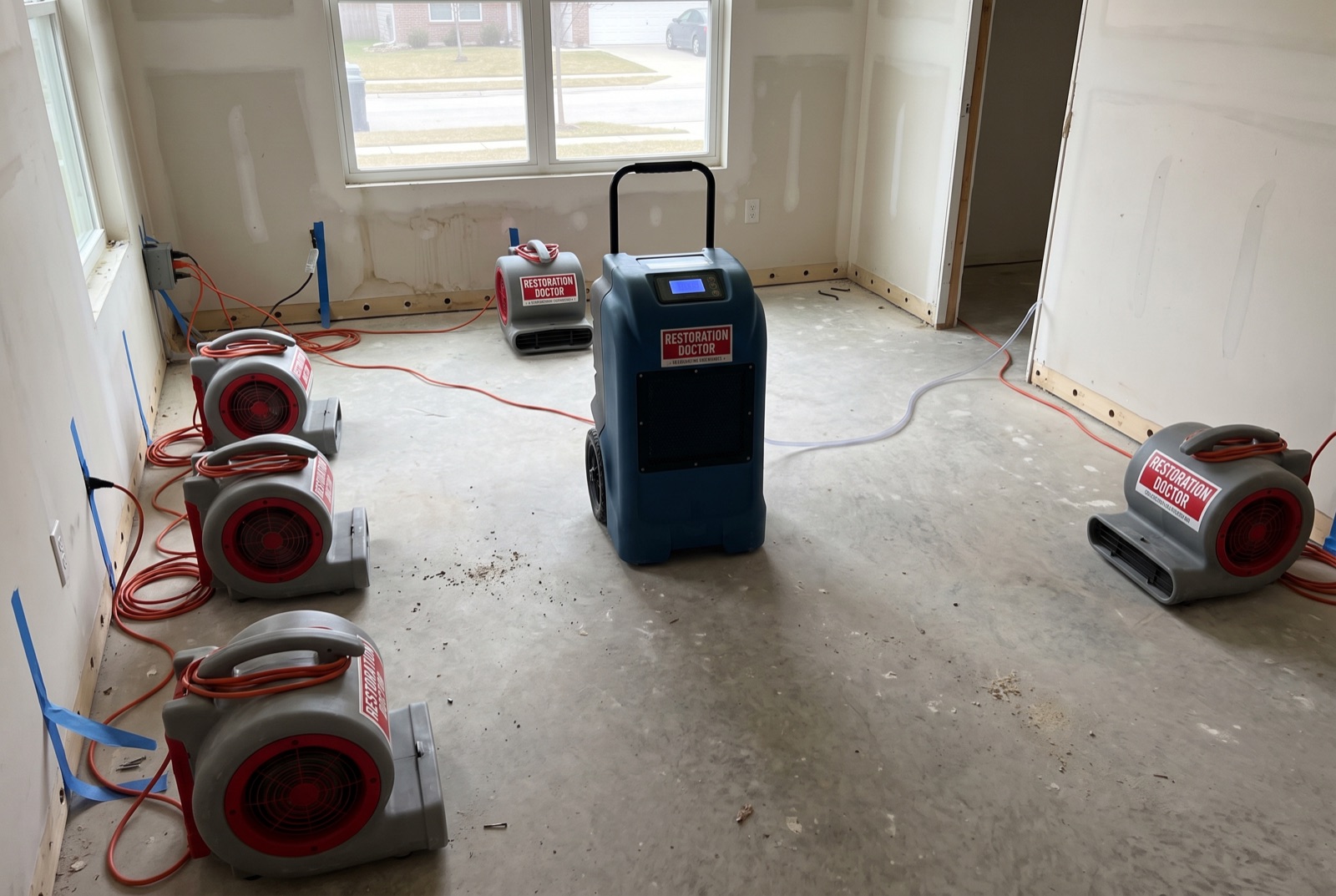
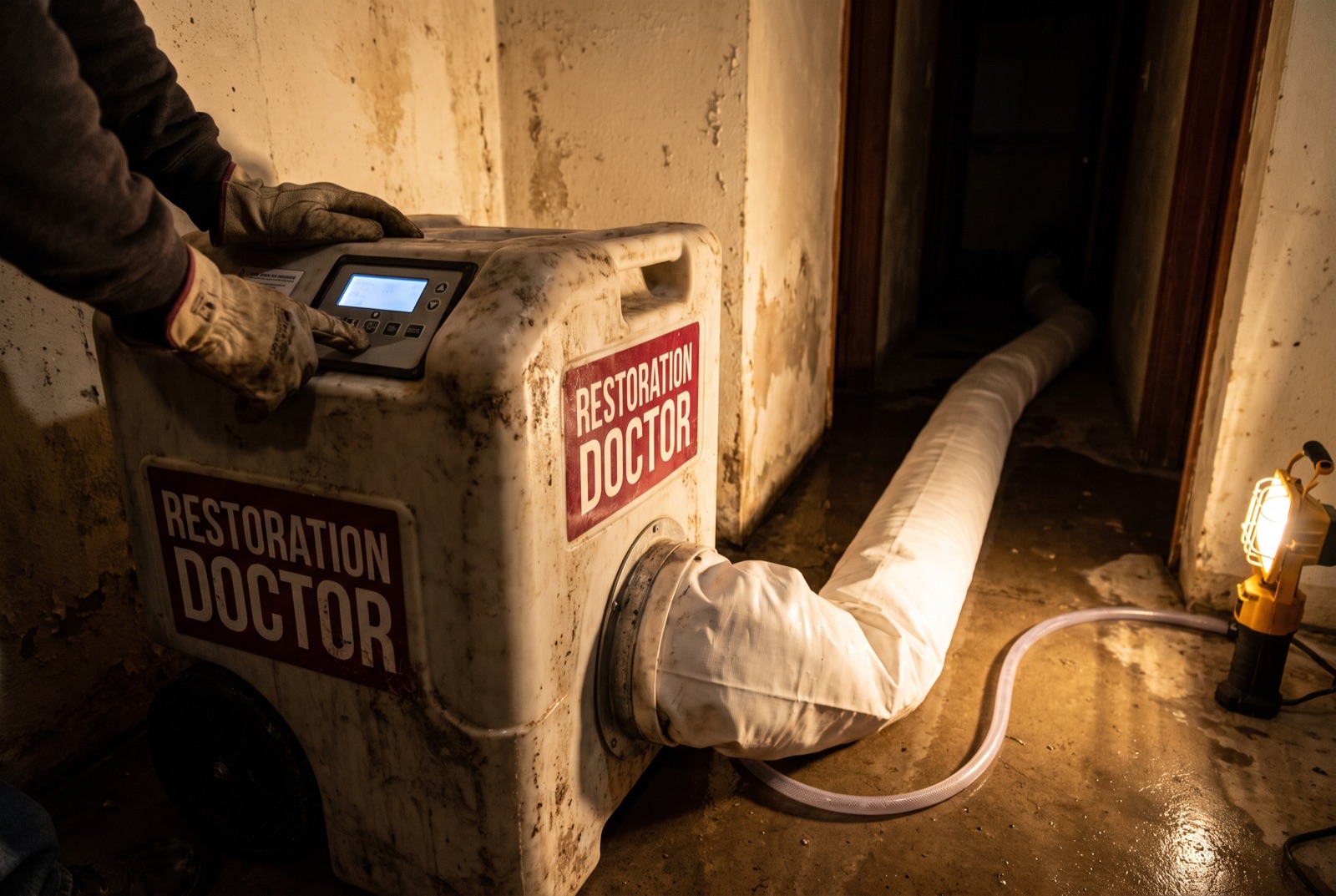
Professional drying isn't fans pointed at a wet floor. Under the IICRC S500 standard, restorers first extract as much liquid water as possible — extraction removes water hundreds of times faster than evaporation. Then they engineer an environment that pulls the remaining bound moisture out of materials: air movers create rapid airflow across wet surfaces to accelerate evaporation, while commercial dehumidifiers strip that moisture from the air so it doesn't re-absorb elsewhere.
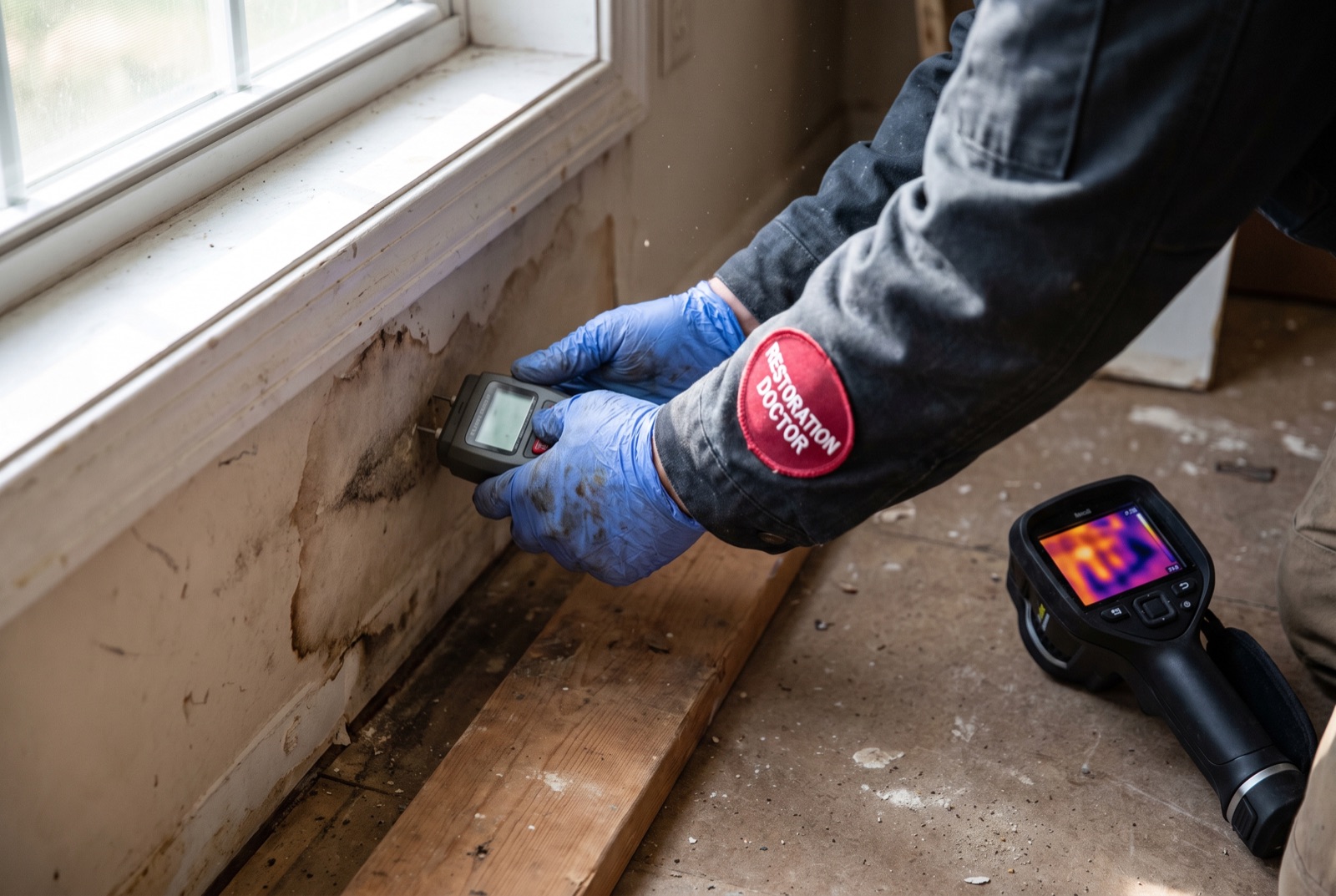
Where water has reached wall cavities or under flooring, crews create drying access — removing baseboard and drilling ventilation holes, floating carpet, or using specialty systems that push air into enclosed spaces. Progress is measured daily with moisture meters against a documented dry standard for each material, and equipment is repositioned as the moisture map shrinks. A typical structural dry-down runs about three to five days; heavier saturation takes longer.
This is why professional drying reverses damage that DIY methods can't: household fans and dehumidifiers can't move enough air or remove enough moisture to dry the inside of a wall before mold takes hold.
What can usually be saved — and what can't
Highly recoverable with fast response: structural framing, plywood subfloor that hasn't delaminated, drywall that's damp but intact, hardwood flooring with minor cupping, solid wood trim and furniture, tile and concrete, and carpet after Category 1 (clean water) losses.
Usually not recoverable: carpet pad, MDF and particleboard that has swollen, laminate flooring with a saturated core, wet insulation that has compacted, delaminated subfloor, and any porous material with established mold growth. Contamination also changes the math — after a Category 3 loss (sewage or outdoor floodwater), porous materials the water touched are generally removed for hygiene reasons under IICRC S500 practice, regardless of how well they might dry.
Time is the variable you control. The same drywall that dries in place on day one is a demolition item by week two. Every hour of delay quietly moves materials from the save column to the replace column.
When reversal requires reconstruction
When materials do have to come out, reversal continues as reconstruction: removed drywall is rehung and finished, flooring replaced, trim and paint matched, and the affected rooms returned to pre-loss condition. Because Restoration Doctor performs both mitigation and reconstruction, the same documentation trail — moisture maps, photo logs, and drying records — carries through from the first extraction to the final coat of paint, which keeps insurance scopes clean and avoids gaps between a mitigation contractor and a rebuild contractor.
The bottom line: most water damage is reversible in outcome, and the fastest responders save the most material. If your home has taken on water, call 1-888-29-FLOOD — Restoration Doctor responds 24/7 across Northern Virginia, Maryland, and D.C., and getting equipment running today is the difference between drying your home and rebuilding it.
Water Damage Restoration
Extraction, structural drying, and moisture verification for burst pipes, appliance leaks, and basement flooding.
Frequently asked
Related questions
How to tell if water damage is permanent?
Will water damage go away on its own?
What should I do immediately after water damage?
Active water, mold, fire, or sewage event?
Connect directly with the Restoration Doctor team for your region. Crews are on standby 24/7 with documented response protocols.