
Will water damage go away on its own?
No. Surface water may evaporate, but moisture trapped inside walls, subfloors, insulation, and cabinetry does not leave on its own. It continues degrading materials, and anything still wet past 24 to 48 hours is at risk for mold growth. Untreated water damage almost always gets worse — and more expensive — over time, not better.
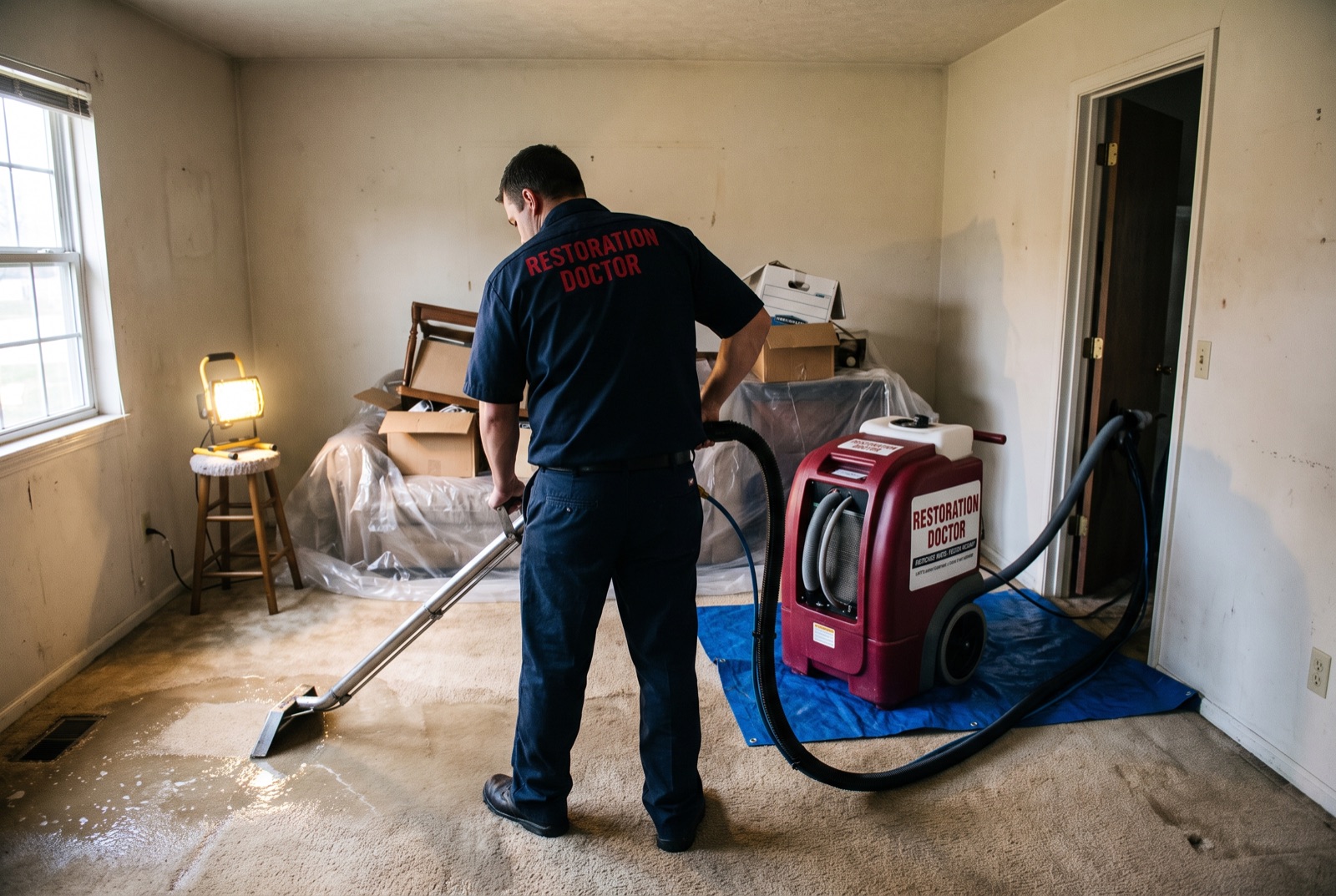
Why "it looks dry" doesn't mean it is dry
After a leak or flood, the visible water disappears fairly quickly — it soaks in, drains away, or evaporates off hard surfaces. That's the point where many homeowners decide the problem solved itself. It almost never has.
Building materials are absorbent. Drywall wicks water upward far above the visible tide line. Carpet pad holds water like a sponge under carpet that feels merely damp. Plywood and OSB subfloor absorb moisture and hold it against the finished flooring above. Wall cavities, insulation, and the framing inside them dry far slower than the room air around them, because there's almost no airflow inside a closed wall.
Professional restorers don't judge dryness by look or touch — they use penetrating and non-penetrating moisture meters against known dry standards for each material. It is completely routine to find walls reading saturated a week after the surface felt dry to the hand. That hidden moisture is what "going away on its own" actually looks like: it isn't gone, it's just out of sight.
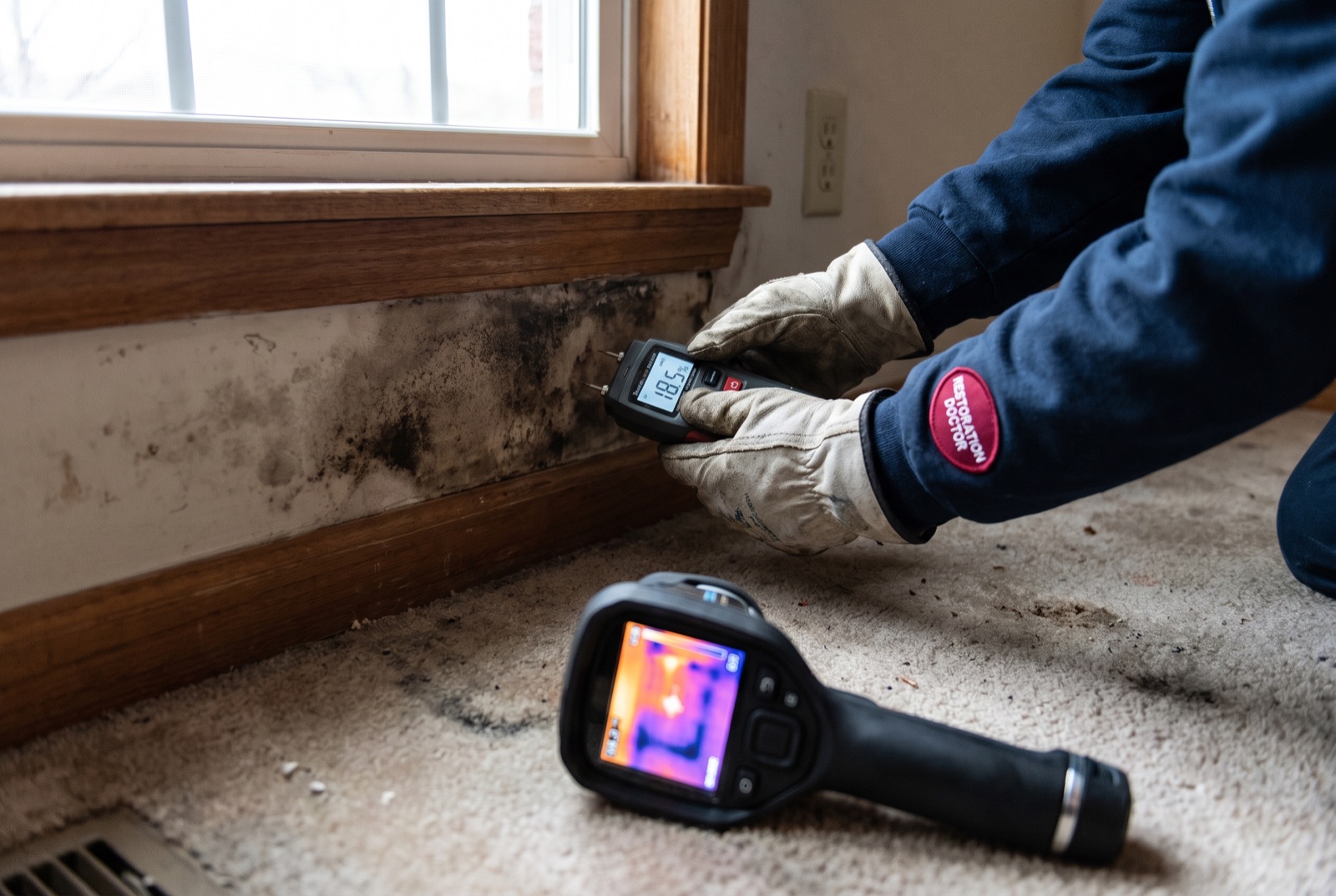
What untreated moisture does over days and weeks
Mold is the primary risk if materials are still wet past the first 24 to 48 hours. Mold spores are always present in indoor air; sustained moisture is the only missing ingredient. Once colonies establish inside a wall cavity or under flooring, you no longer have a drying project — you have a remediation project governed by the IICRC S520 standard, with containment, HEPA filtration, and removal of colonized materials.
Over the following weeks, moisture keeps working on the structure. Drywall softens, swells, and loses its paper facing. Wood flooring cups and crowns as boards absorb water unevenly. Subfloor delaminates and loses fastener grip, producing soft or spongy spots. MDF baseboards and cabinet boxes swell and never return to shape. Metal fasteners and corner bead begin corroding inside walls.
There's also the category problem: under the IICRC S500 standard, clean Category 1 water that sits untreated degrades toward Category 2 as it picks up contamination from the materials it sits in. The longer water sits, the dirtier it becomes, and the more aggressive the required response gets.
The small-leak trap
Ironically, small and slow losses are often more destructive than dramatic ones. A burst pipe gets immediate attention; a pinhole supply-line leak inside a wall, a slowly failing wax ring under a toilet, or a window that seeps during wind-driven rain can run for months unnoticed. By the time staining, odor, or swollen trim reveals the problem, the affected framing and drywall have been wet through many mold growth cycles.
This is why any sign of ongoing moisture — musty odor, recurring stains, paint bubbling, warping trim, or a floor that feels different underfoot — deserves a professional moisture inspection rather than a wait-and-see approach. Finding a hidden leak early is dramatically cheaper than rebuilding around one found late.
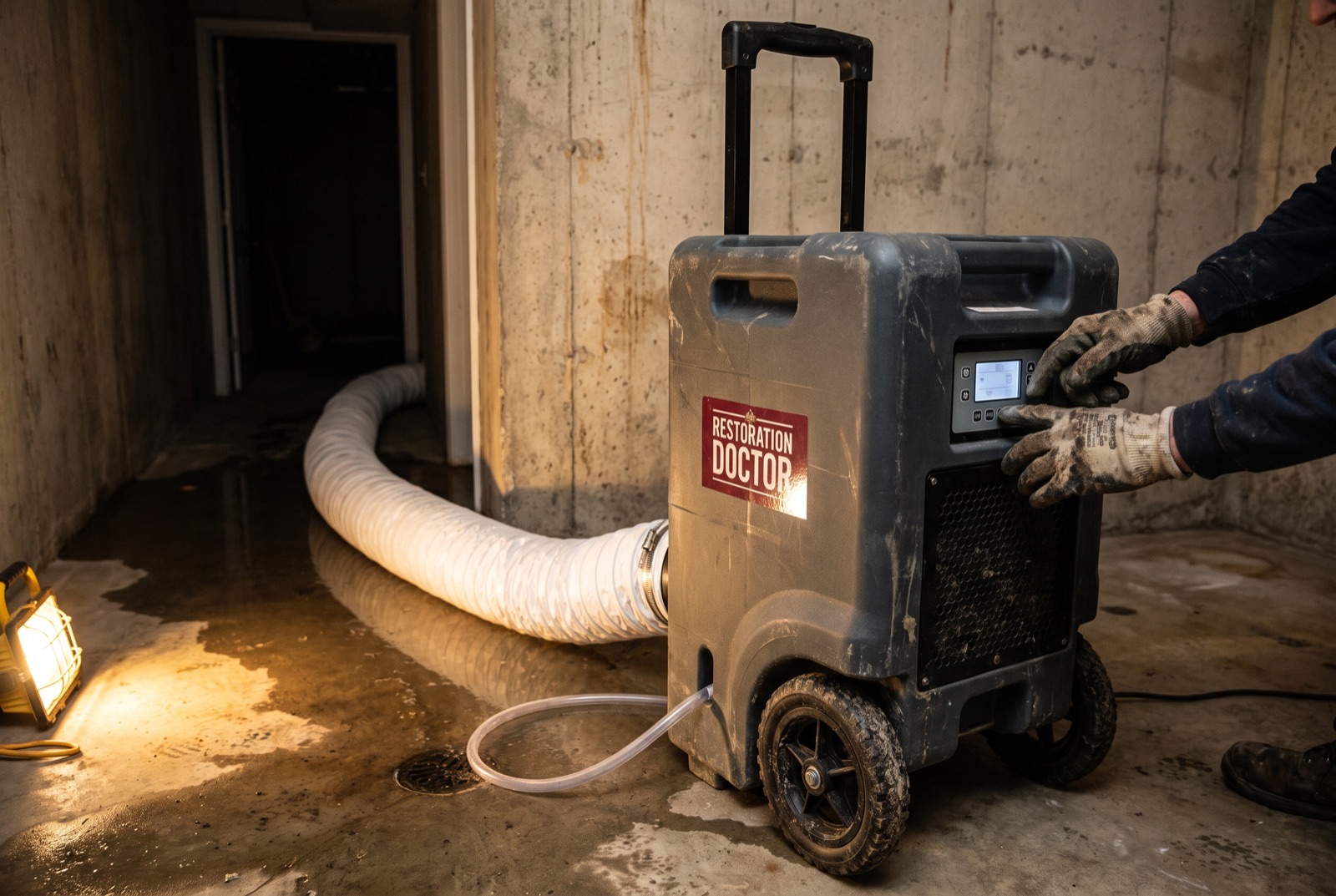
What actually makes water damage go away
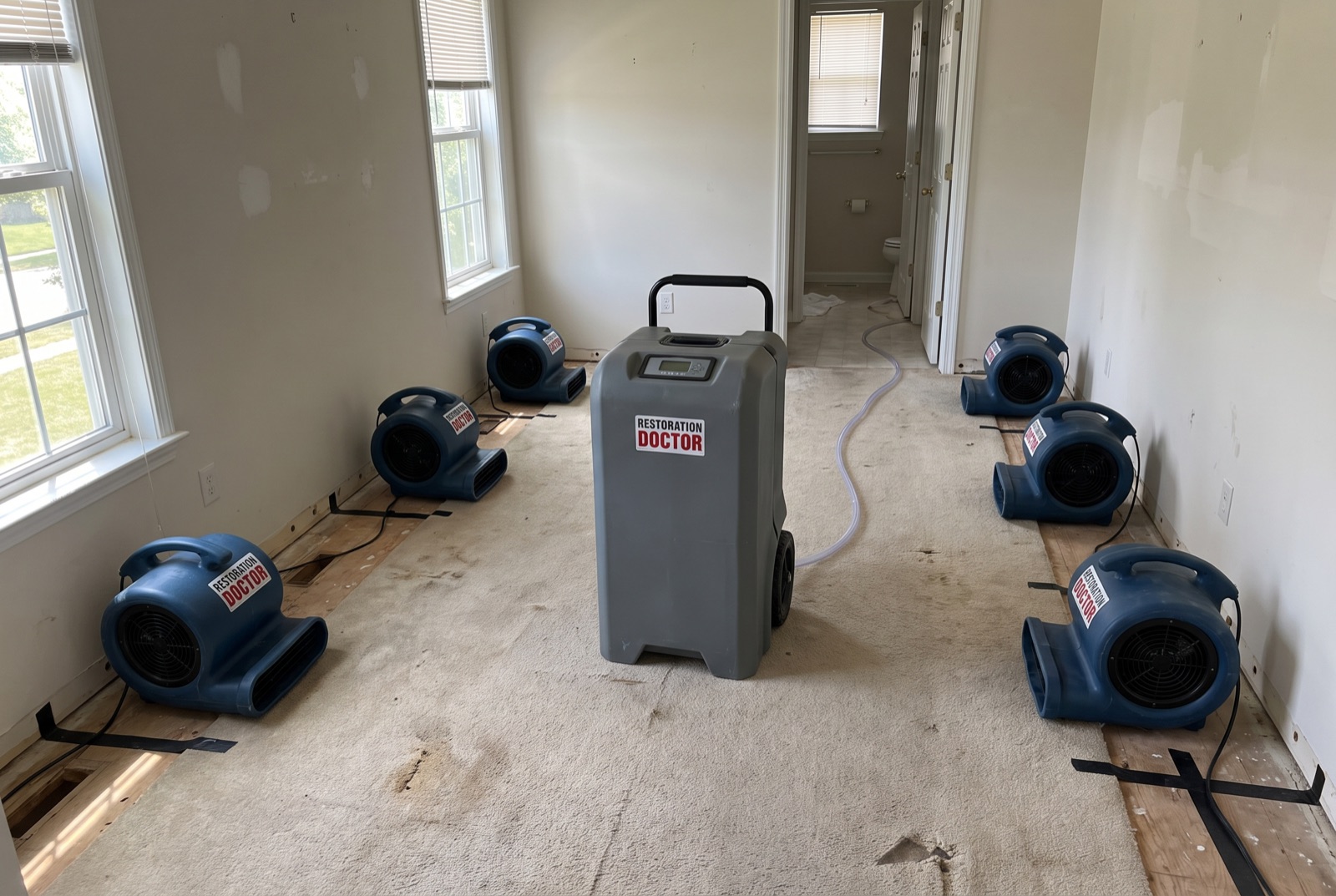
Real resolution is a controlled drying process: extract standing water, remove materials that can't be economically saved (wet carpet pad is the classic example), then dry the remaining structure with air movers and commercial dehumidifiers until every material reaches its documented dry standard. Drying progress is verified with daily moisture readings, not guesswork, per IICRC S500 practice.
Restoration Doctor crews map moisture with meters and thermal imaging, set engineered drying systems, and document readings daily so both you and your insurance carrier can see the structure return to dry. If you suspect water damage is lingering in your home — even from an event weeks ago — call 1-888-29-FLOOD for an assessment before it compounds.
Water Damage Restoration
Extraction, structural drying, and moisture verification for burst pipes, appliance leaks, and basement flooding.
Frequently asked
Active water, mold, fire, or sewage event?
Connect directly with the Restoration Doctor team for your region. Crews are on standby 24/7 with documented response protocols.