
What should I do immediately after water damage?
Stop the water at its source, shut off electricity to affected areas, and move valuables out of standing water. Photograph everything before cleanup, then call a professional restoration company immediately — drying must begin within 24 to 48 hours to prevent mold growth and secondary structural damage.
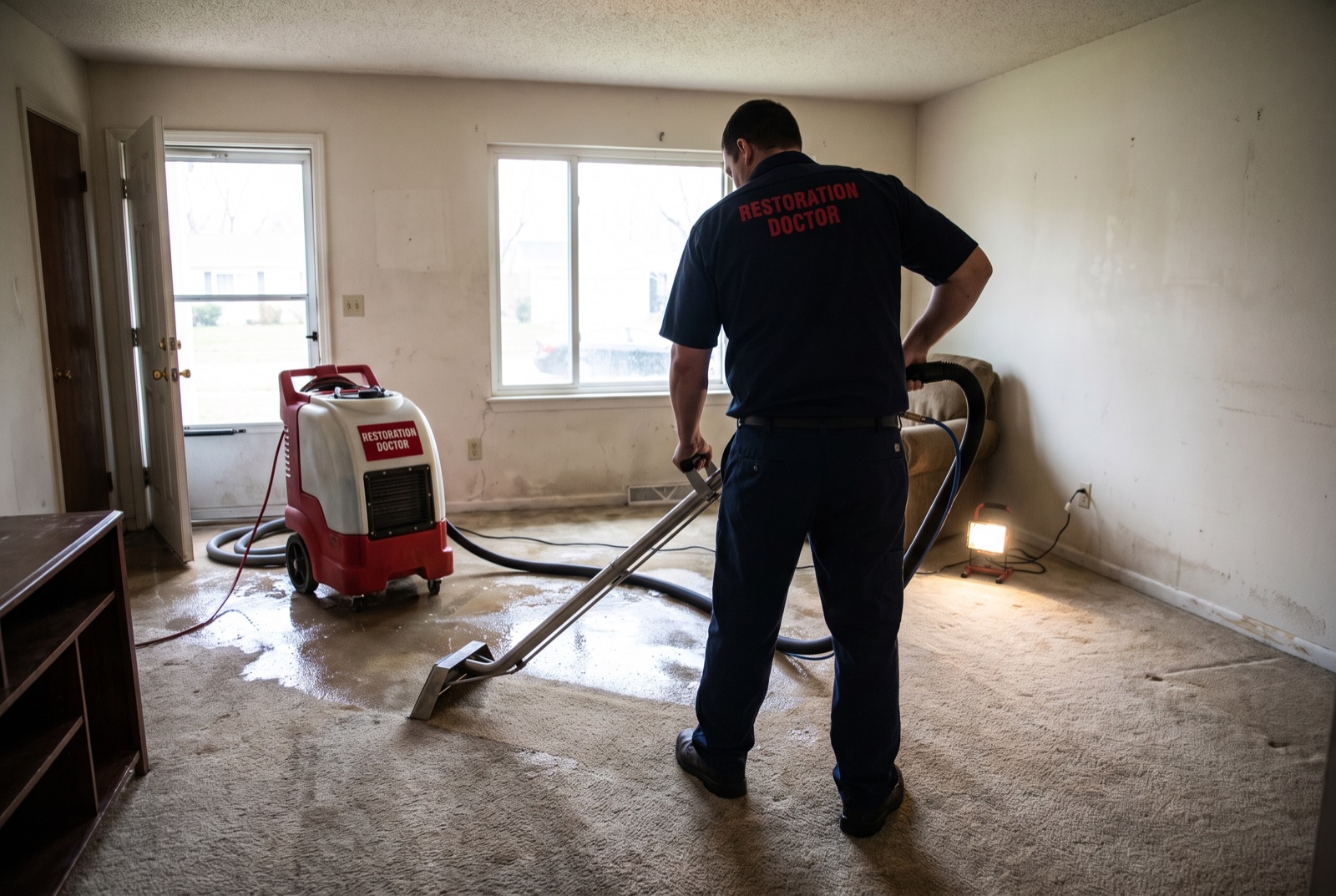
First 30 minutes: stop the water and make the area safe
The single most important action after discovering water damage is stopping the source. For a burst pipe, failed supply line, or water heater rupture, close the main water shut-off valve — in most Northern Virginia homes it sits where the service line enters the house, often in the basement, a utility closet, or near the water meter. If you don't know where yours is, find it now, before you ever need it. For appliance failures (washing machine, dishwasher, refrigerator line), the local shut-off behind the appliance may be enough.
Next, address electricity. Water and live circuits are a lethal combination. If water is pooling near outlets, appliances, or your electrical panel — or if it came through a ceiling where wiring runs — switch off the breakers feeding those areas. If you would have to stand in water to reach the panel, stay out and call an electrician or your utility. No piece of flooring is worth an electrocution risk.
Finally, take stock of what kind of water you're dealing with. Clean supply-line water (Category 1 under the IICRC S500 standard) is a very different situation than water from a dishwasher or washing machine discharge (Category 2) or a sewage backup or outdoor flooding (Category 3). If the water is gray, foul-smelling, or came from a drain, toilet, or outside, keep children and pets away and don't handle it without protection.
Document the loss before you clean anything up
Before you mop, move furniture, or pull carpet, photograph and video everything: the source of the water, the standing water itself, each affected room, and every damaged item. Capture serial numbers on damaged appliances and electronics. Wide shots establish the scope; close-ups establish the severity.
This documentation matters enormously if you file an insurance claim. Adjusters evaluate what they can verify, and the condition of your home in the first hour is evidence you can never recreate once cleanup begins. A thorough photo record protects you from disputes about how far the water actually traveled and what it touched.
Keep damaged materials until your insurer says otherwise. If carpet, pad, or drywall has to come out quickly for safety or drying reasons, photograph it in place first and keep a sample or set the removed material aside where it can be inspected.
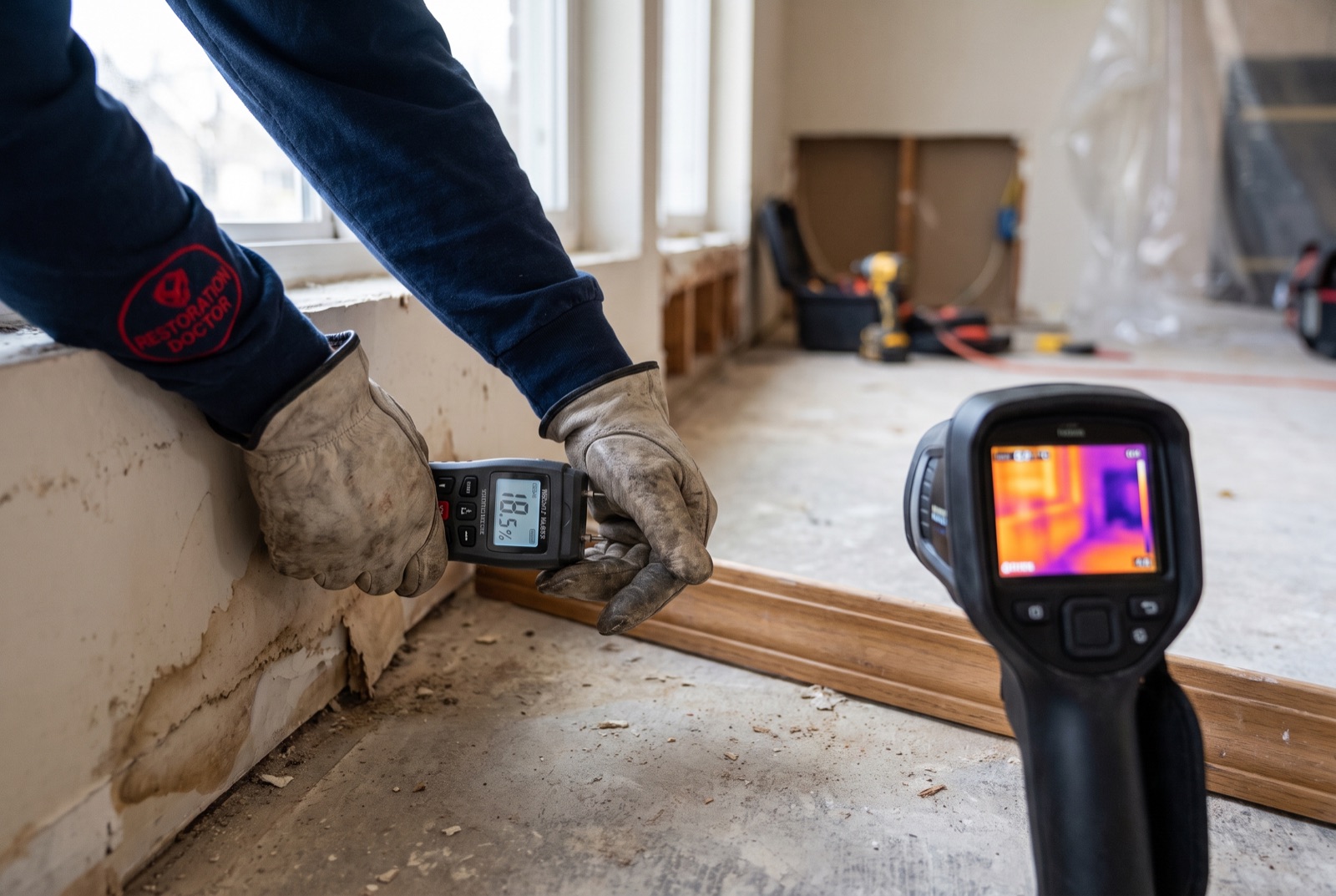
Why the 24-48 hour window matters
Mold does not wait for your adjuster's schedule. EPA guidance is to dry water-damaged areas and items within 24 to 48 hours to prevent mold growth — materials left wet past that window, with a food source (drywall paper, wood, dust) and normal indoor temperatures, are the ones at risk. That window is the reason professional restoration is an emergency service and not a next-week appointment.
Water also keeps moving after the visible flooding stops. It wicks up drywall, migrates under baseboards and flooring, and soaks into wall cavities and subfloor where you can't see it. A floor that looks dry on Saturday can hide saturated pad, subfloor, and sill plates that stay wet for weeks. Professional crews use moisture meters and thermal imaging to map exactly where the water went, then set drying equipment — air movers and dehumidifiers positioned per the IICRC S500 standard — and verify progress with daily moisture readings until materials are actually back to their dry standard.
Household fans and open windows can't replicate that. In a humid Virginia summer, opening windows often adds moisture to the structure rather than removing it.
What to avoid doing
Don't use a household vacuum on standing water — only wet-rated extraction equipment. Don't run ceiling fixtures or fans if the ceiling above them is wet or sagging. Don't turn up the heat dramatically to "cook" the moisture out; without dehumidification, heat just accelerates mold. And don't assume a small event is a small problem: a slow supply-line leak inside a wall regularly causes more hidden damage than a dramatic one-time spill that got cleaned up fast.
Most importantly, don't wait to see whether it dries on its own. Delay is the most expensive decision in water damage — it converts a straightforward extraction-and-dry project into demolition, mold remediation, and reconstruction.
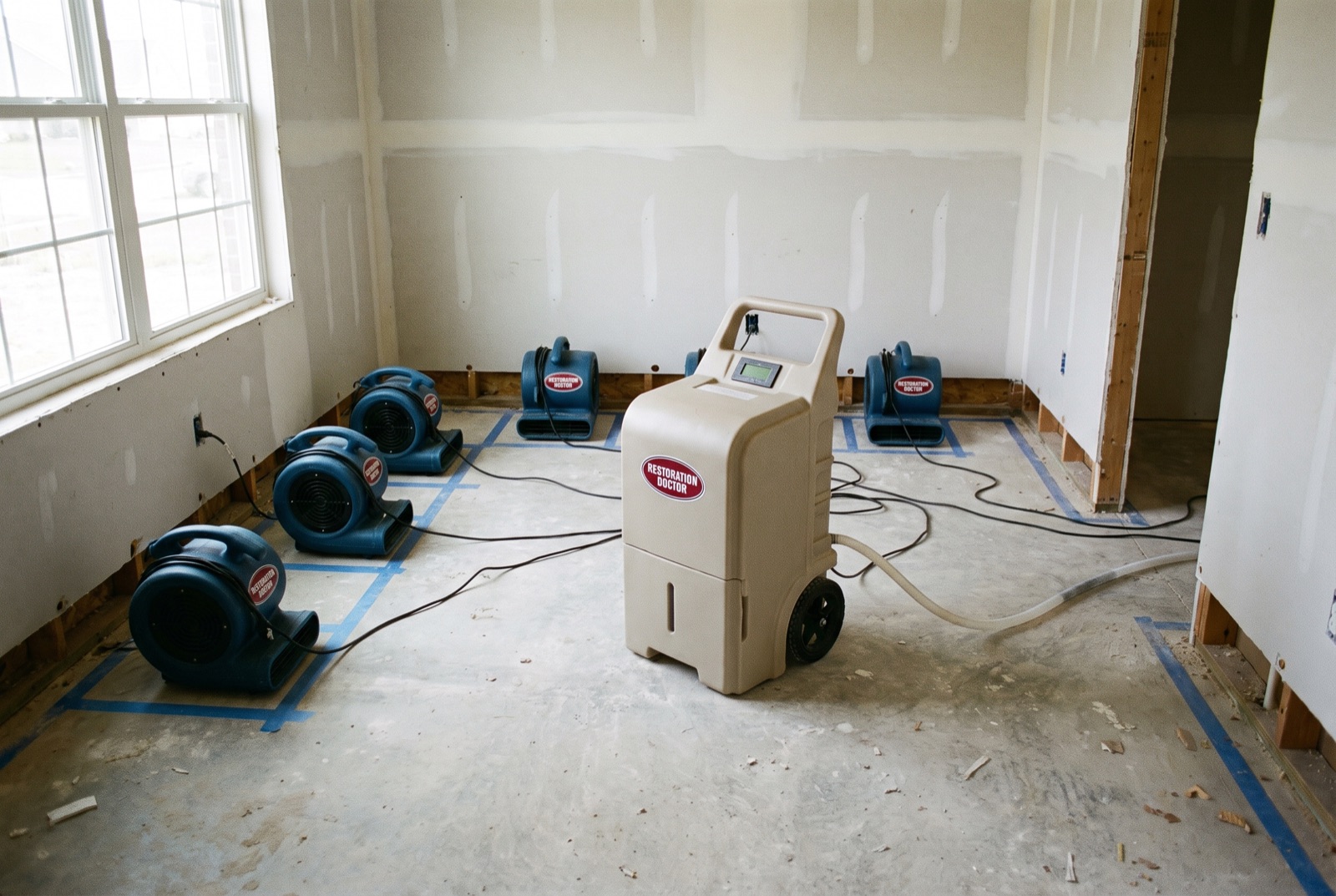
Call for professional mitigation
Once the water is stopped, people are safe, and you've documented the scene, get a professional mitigation crew moving. Restoration Doctor responds 24/7 across Northern Virginia, Maryland, and D.C. with truck-mounted extraction, commercial dehumidification, and IICRC S500-aligned drying documentation — moisture maps, psychrometric readings, and photo logs your insurance carrier can verify. Call 1-888-29-FLOOD and a crew can typically be on site within hours, not days.
Water Damage Restoration
Extraction, structural drying, and moisture verification for burst pipes, appliance leaks, and basement flooding.
Frequently asked
Active water, mold, fire, or sewage event?
Connect directly with the Restoration Doctor team for your region. Crews are on standby 24/7 with documented response protocols.