
Does insurance pay for drying equipment and restoration services?
Yes — on a covered claim, carriers pay for water extraction, drying equipment rental billed per unit per day, dehumidification, demolition of unsalvageable materials, antimicrobial treatment, and repairs, all at documented line-item rates. Daily drying logs and moisture readings are what justify each machine-day, so documentation quality directly affects what gets paid.
What a covered water claim typically pays for
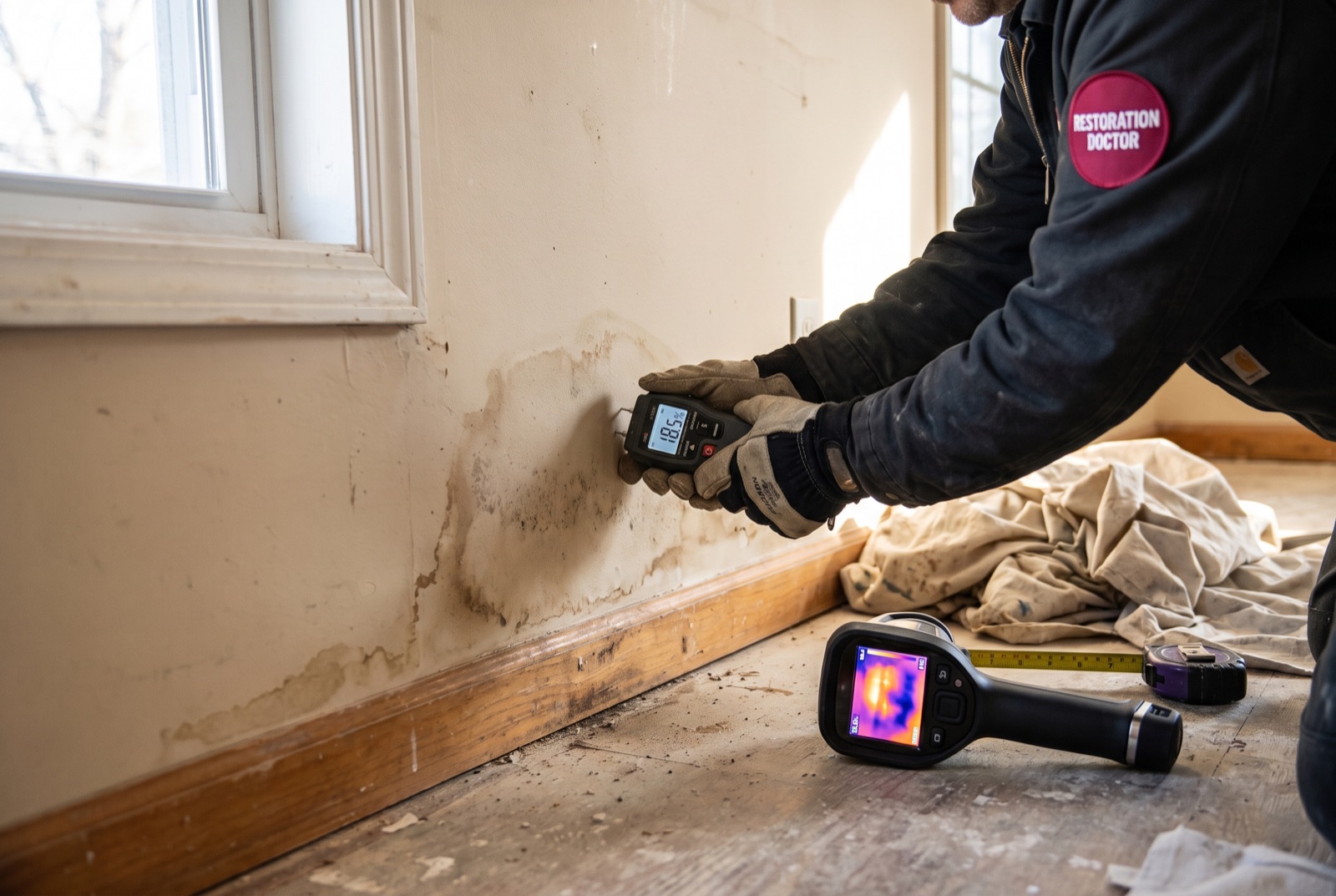
A covered water loss generates a scope that runs from emergency response through final repairs, and carriers are accustomed to paying every phase when it's documented: emergency water extraction; equipment — air movers, dehumidifiers, air scrubbers — billed per unit, per day; moisture detection and monitoring; removal and disposal of unsalvageable materials like carpet pad, saturated drywall, and wet insulation; antimicrobial application; and then reconstruction — new drywall, flooring, trim, and paint — to return the home to pre-loss condition.
Contents handling can also be covered: moving and protecting furniture, cleaning salvageable items, and inventorying losses. And when a home is uninhabitable during work, loss-of-use coverage may pay additional living expenses. Each of these is a standard line-item category in the estimating platforms carriers use.
How equipment billing actually works
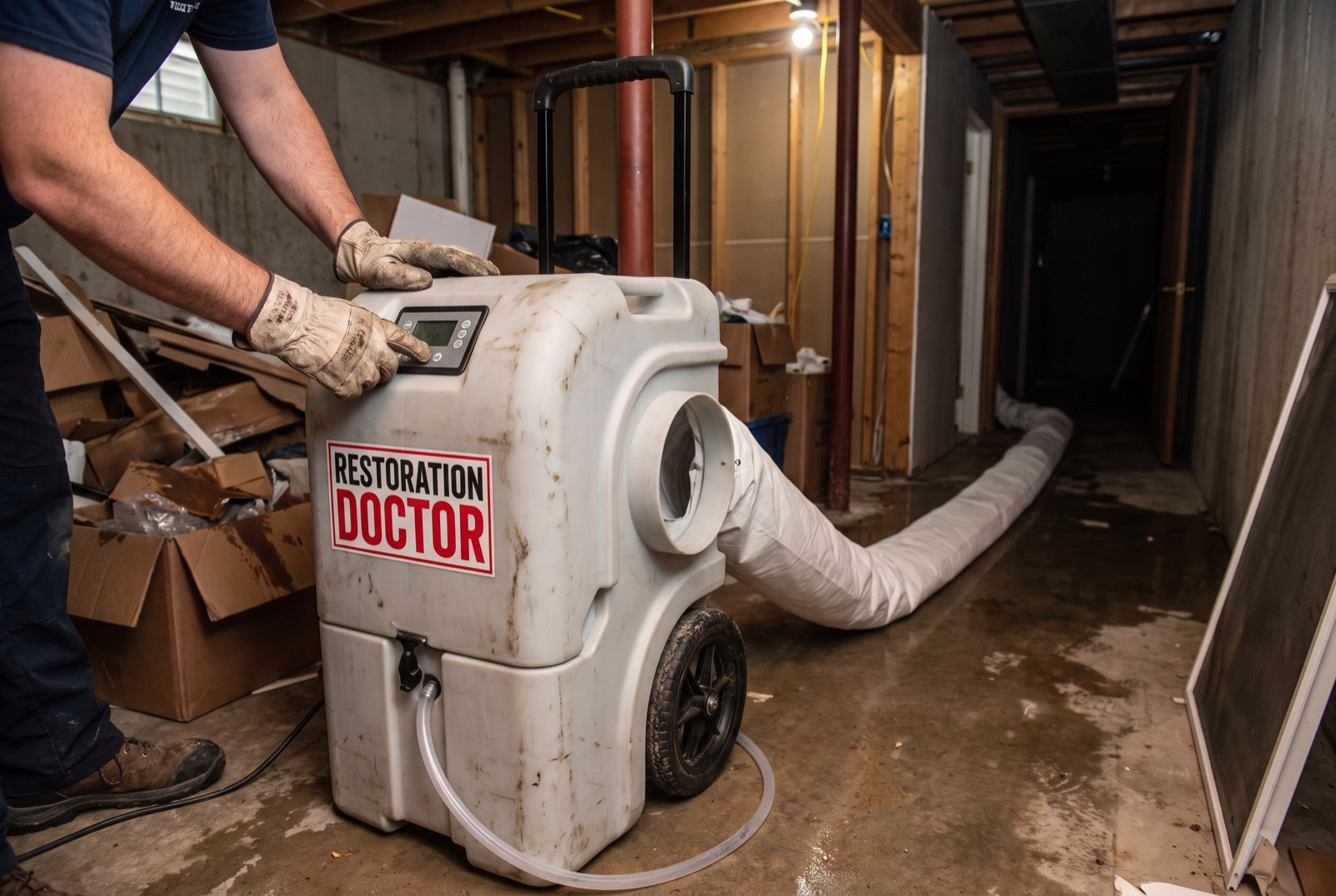
Drying equipment is billed by unit-days: each air mover, dehumidifier, and air scrubber, multiplied by the number of days deployed, at rates published in industry pricing databases. Carriers don't take equipment counts on faith — the justification comes from the drying documentation. IICRC S500 practice calls for equipment quantities matched to the size and saturation of the affected area, and daily moisture readings showing materials progressing toward their dry standard.
This is where drying logs earn their importance. A log showing psychrometric readings and material moisture content day by day demonstrates both that the equipment was needed and that it was removed when drying was verified complete. Claims friction around equipment almost always traces to missing logs — days of machine rental with no readings to show why. Thorough daily documentation is what makes every machine-day defensible.
Where disputes come from — and how documentation prevents them
The common friction points are predictable: equipment counts that look high for the affected square footage, drying that ran longer than typical without readings explaining why, demolition of materials a reviewer thinks could have been dried, and mold-related items where the timeline is unclear. In each case, the answer is the same: contemporaneous documentation. Moisture maps justify the equipment count. Daily readings justify the duration — including when saturated materials legitimately needed extra days. Photos and readings justify each removal decision.
For homeowners, the practical lesson is to hire a contractor who documents to this standard from the first hour, because records can't be reconstructed after the fact. Ask any prospective company whether you'll receive moisture logs, photos, and an itemized scope — and be wary if the answer is vague.
Documentation is the product
Restoration Doctor treats documentation as inseparable from the drying itself: every loss gets moisture mapping on arrival, daily psychrometric and material readings, photo logs, and an itemized Xactimate scope in which every machine-day and every removed square foot is tied to a recorded justification. Coverage decisions always rest with your carrier and your policy — what we control is a file where nothing is unexplained. For fully documented emergency drying across Northern Virginia, Maryland, and D.C., call 1-888-29-FLOOD.
Water Damage Restoration
Extraction, structural drying, and moisture verification for burst pipes, appliance leaks, and basement flooding.
Frequently asked
Related questions
Do restoration companies bill insurance directly?
What does an insurance adjuster look for in water damage?
How much does water damage restoration cost?
Why is water damage restoration so expensive?
Active water, mold, fire, or sewage event?
Connect directly with the Restoration Doctor team for your region. Crews are on standby 24/7 with documented response protocols.