
How much does it cost to fix a water damaged ceiling?
Industry cost guides put cosmetic ceiling repair — patching or replacing drywall and repainting — in the hundreds to low thousands of dollars depending on the affected area. The real total depends on what comes first: finding and fixing the leak source and drying the cavity above, without which any ceiling repair is temporary.
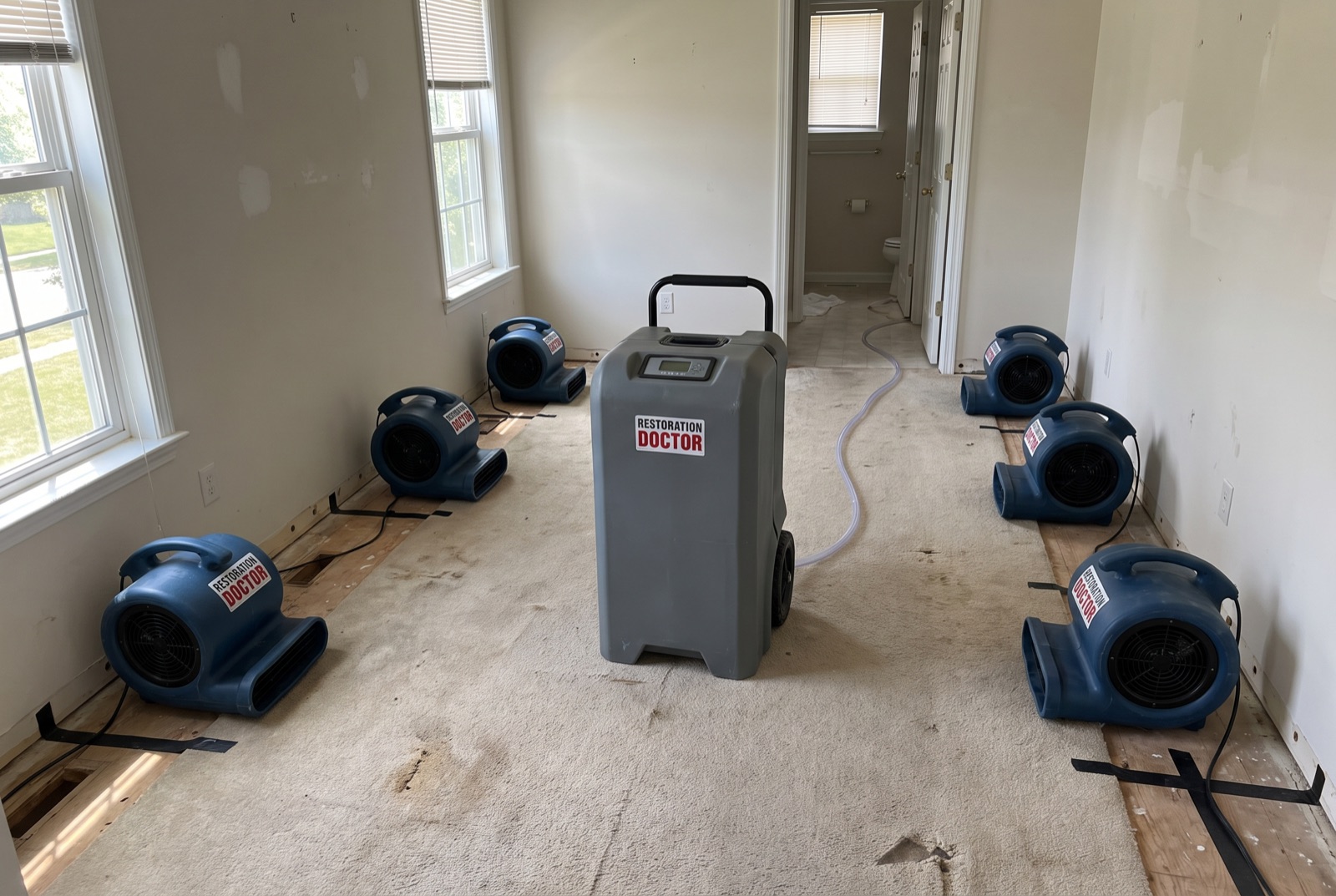
Why the ceiling is the last thing you fix
A stained or sagging ceiling is a symptom. Above it sits the actual problem — a plumbing leak, a bathroom overflow, a roof intrusion, or condensation — plus a cavity that may hold wet insulation, wet framing, and sometimes trapped standing water. Repairing the drywall before addressing the cavity guarantees a repeat: the stain returns, the new drywall gets wet, and mold gets a sealed, dark, damp space to work with.
The correct sequence is: stop the source, open or access the cavity as needed, dry the framing and remove wet insulation, verify dryness with moisture readings, and only then repair the ceiling surface. The visible repair is genuinely the cheapest and most predictable part of that sequence.
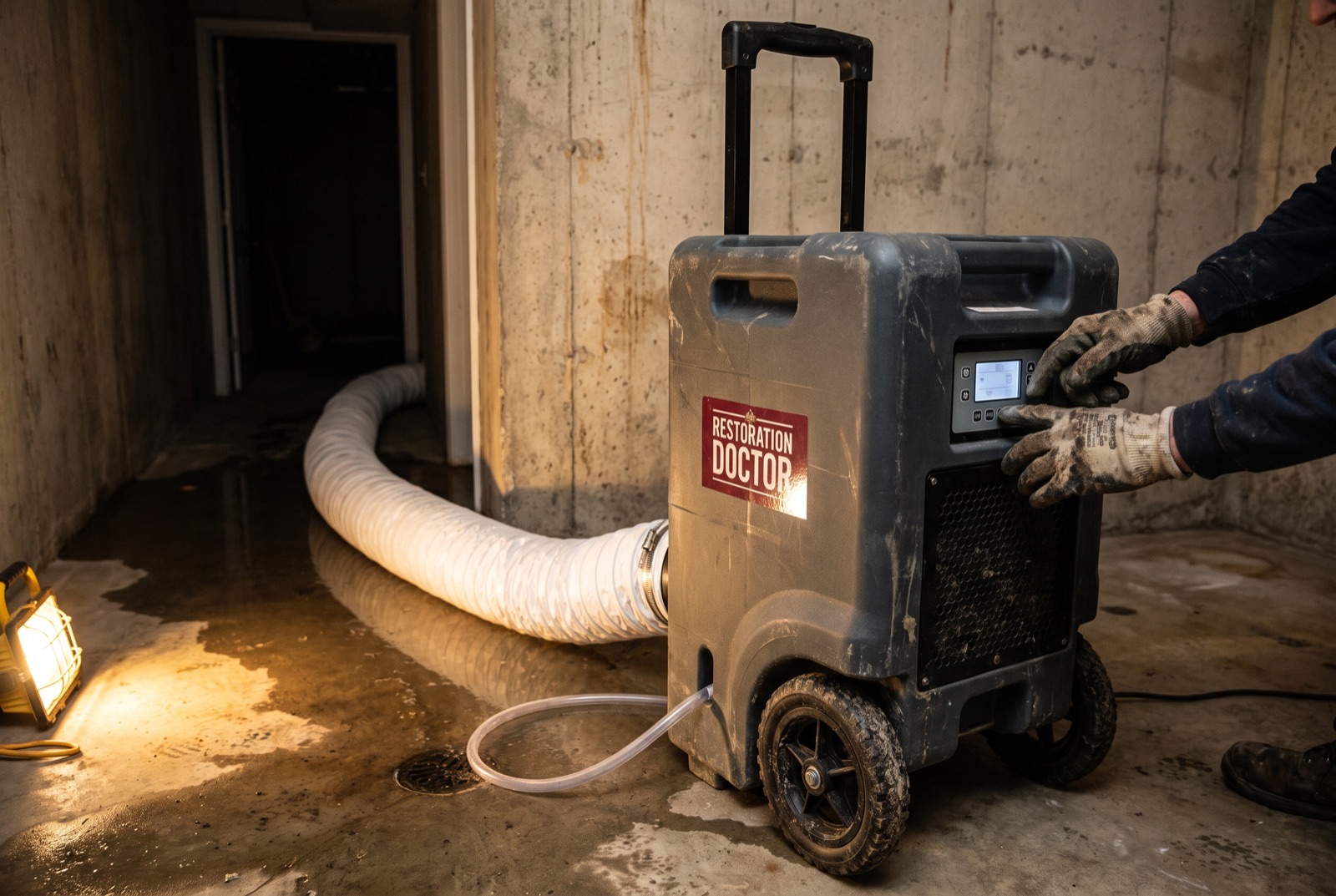
What each phase typically involves
Source repair varies most — a plumbing fix might be a simple fitting replacement or a significant repipe; a roof repair ranges from a boot seal to structural work. This phase is priced by the underlying trade, not by the restoration industry.
Cavity drying and demolition: saturated ceiling drywall usually comes down — wet drywall overhead is heavy, structurally unreliable, and dries poorly in place. Wet insulation is removed and replaced. Framing is dried with directed airflow and dehumidification, verified with meters. Industry guides generally place this mitigation work in the hundreds to low thousands for a single-room ceiling, scaling with area and saturation.
Surface repair: hanging new drywall, taping, mudding, texture-matching, priming with a stain-blocking primer, and painting. Cost guides put small patches at the low end of the hundreds and full-ceiling replacements in the high hundreds to low thousands, with texture matching and ceiling height adding labor.
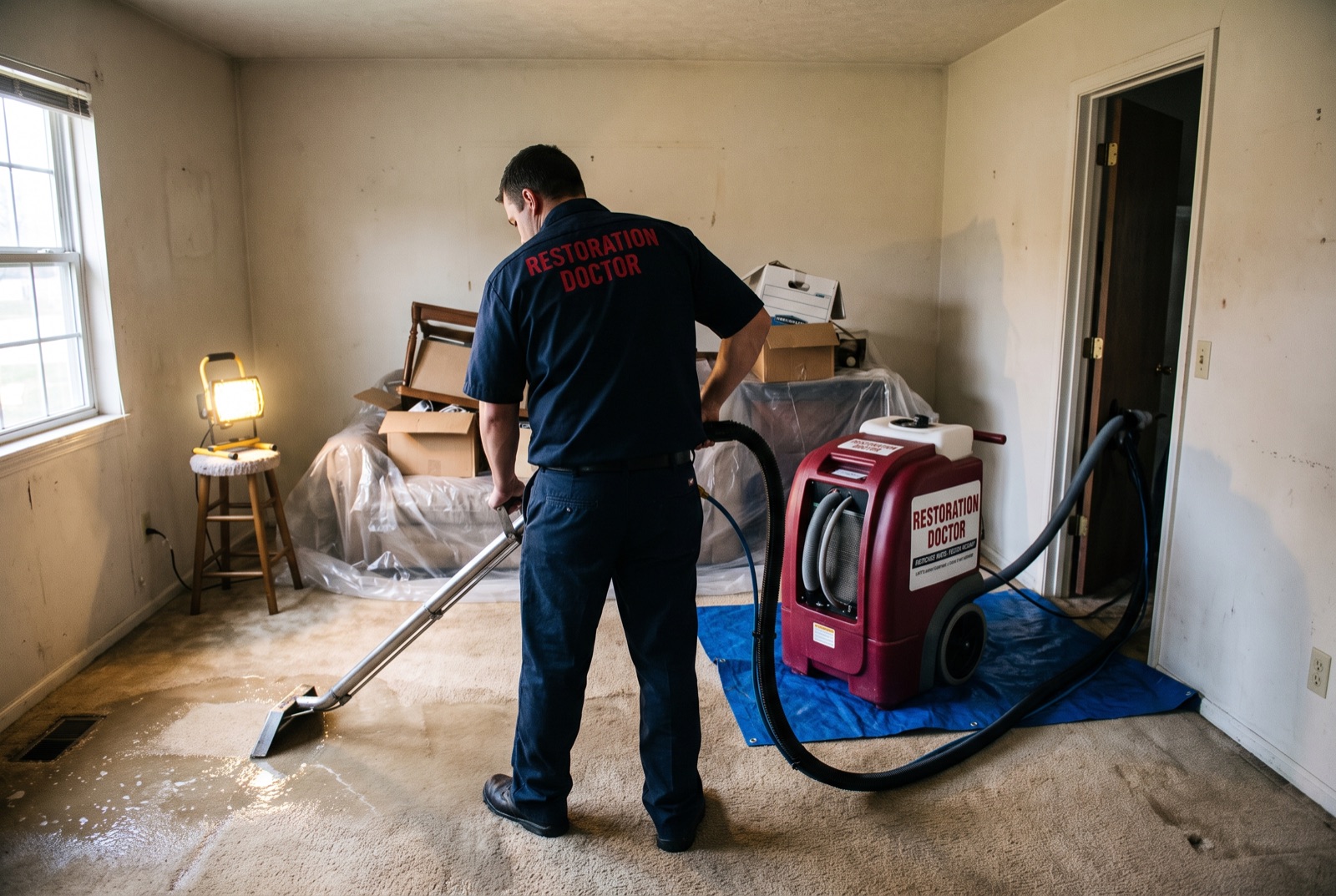
Warning signs that change the math
A sagging or bulging ceiling means trapped water and a collapse risk — keep people out of the room and get it addressed immediately; a controlled relief hole into a bucket beats an uncontrolled collapse. Brown rings that keep growing mean an active leak, not an old one. And any ceiling stain below a bathroom deserves investigation of the traps, seals, and supply lines above before cosmetic repair.
Mold discovered in the cavity moves the project from repair to remediation, with containment and removal protocols — and it's the predictable outcome when a wet ceiling waits weeks for attention. Speed keeps a ceiling job small.
Insurance, and getting it done right
If the underlying cause was sudden and accidental — a burst supply line, an overflow — the resulting ceiling damage is typically covered by homeowners insurance minus your deductible; gradual leaks usually aren't. Policies vary, so confirm with your carrier, and document the stain, the cavity, and the source before repairs erase the evidence.
Restoration Doctor handles ceiling losses end to end: locating the moisture source, controlled demolition, cavity drying verified by meter readings, and full reconstruction with texture and paint matching — one contractor and one documented scope from leak to final coat. Call 1-888-29-FLOOD, especially if the ceiling is sagging.
Reconstruction & Repairs
Drywall, flooring, cabinetry, trim, and paint — the same in-house crew that dried the loss rebuilds it, with no handoff between mitigation and reconstruction.
Frequently asked
Related questions
How can you tell if a ceiling has water damage?
Is a water damaged ceiling dangerous?
Can you just paint over water damage?
How much does water damage restoration cost?
Active water, mold, fire, or sewage event?
Connect directly with the Restoration Doctor team for your region. Crews are on standby 24/7 with documented response protocols.