
Is a water damaged ceiling dangerous?
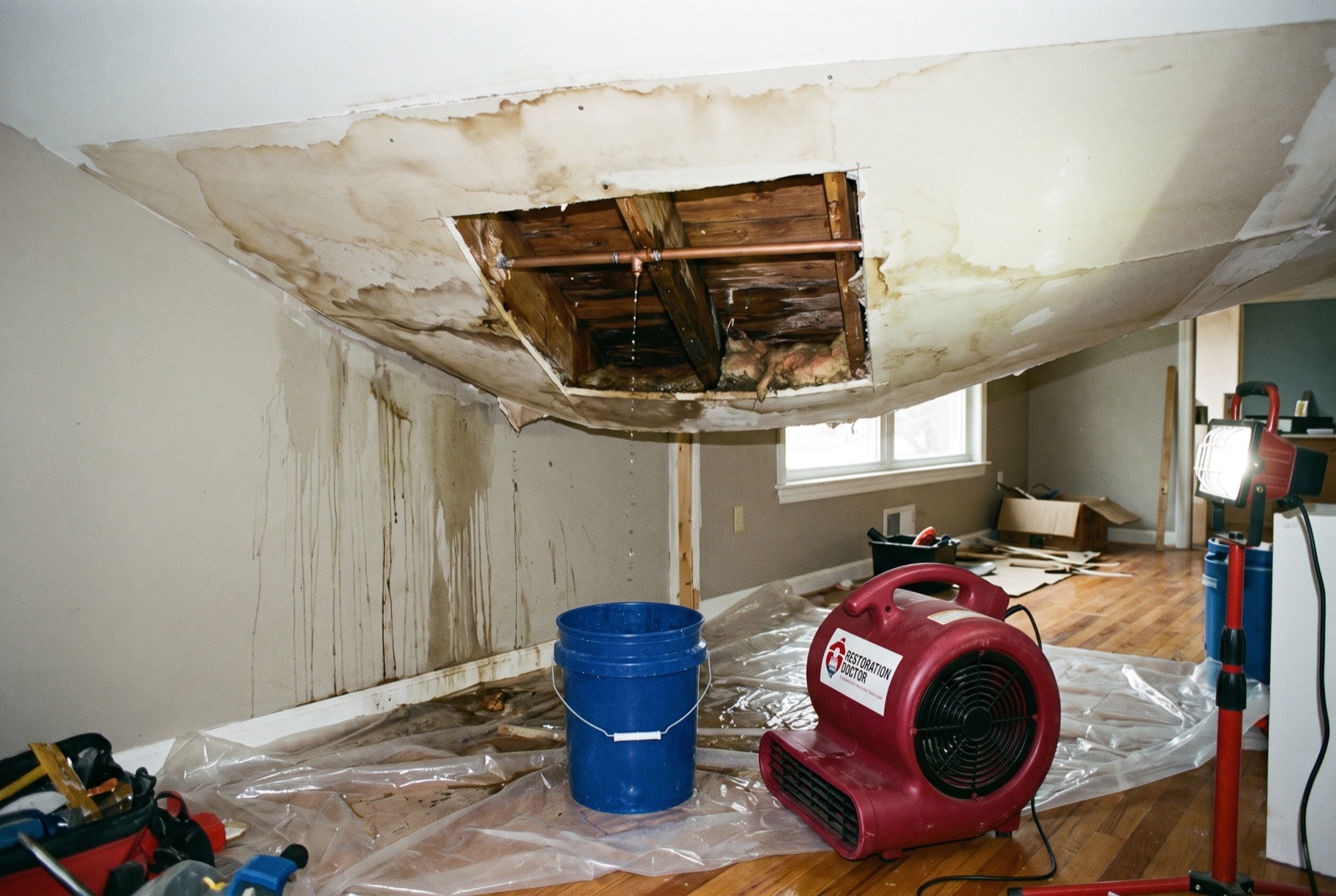
Yes, potentially. A sagging or bulging ceiling means water is pooling on top of the drywall, and saturated ceiling board can collapse suddenly under that weight. Keep everyone out from under it, place a bucket and carefully open a small relief hole at the bulge's low point to drain it, and call for professional help.
Why wet ceilings fail suddenly
Ceiling drywall hangs from the framing above it, held by screws through a material that gets dramatically weaker as it absorbs water. Water pooling on the top face adds weight — a gallon is over eight pounds, and a slow leak can pool many gallons across a ceiling bay — at exactly the moment the board is losing its strength. The failure mode is not a gradual drip-through; it's often a section of ceiling letting go at once, dumping soaked drywall, insulation, and trapped water into the room below.
That's why the rule is simple: never stand or work directly under a sagging ceiling, don't push up on the bulge to "check it," and don't park a ladder under it to investigate. Falling ceiling sections are heavy and wet, and the insulation that comes down with them can hide electrical wiring and fixtures.
The controlled way to relieve a loaded ceiling
Counterintuitively, the safest immediate move is to let the water out on your terms rather than the ceiling's. Put a large bucket or trash can under the lowest point of the bulge, stand to the side — not underneath — and use a screwdriver or awl to open a small hole at that low point. The trapped water drains in a controlled stream instead of accumulating toward a collapse. If the bulge is large, start with one hole and add more as the flow slows.
Before you do anything else: if the leak could be plumbing, shut off the water at the main valve, and if light fixtures or fans in the wet area are involved, kill the breakers feeding that ceiling. Water follows wiring, and an energized fixture in a wet ceiling is a genuine shock hazard. Do not operate a light or fan that has water in or around it.
Hazards beyond the collapse itself
Electricity is the quiet danger. Ceiling cavities carry lighting circuits, fan wiring, and often junction boxes, and wet drywall conducts. Any fixture below a wet ceiling should be treated as compromised until an electrician or restoration crew clears it.
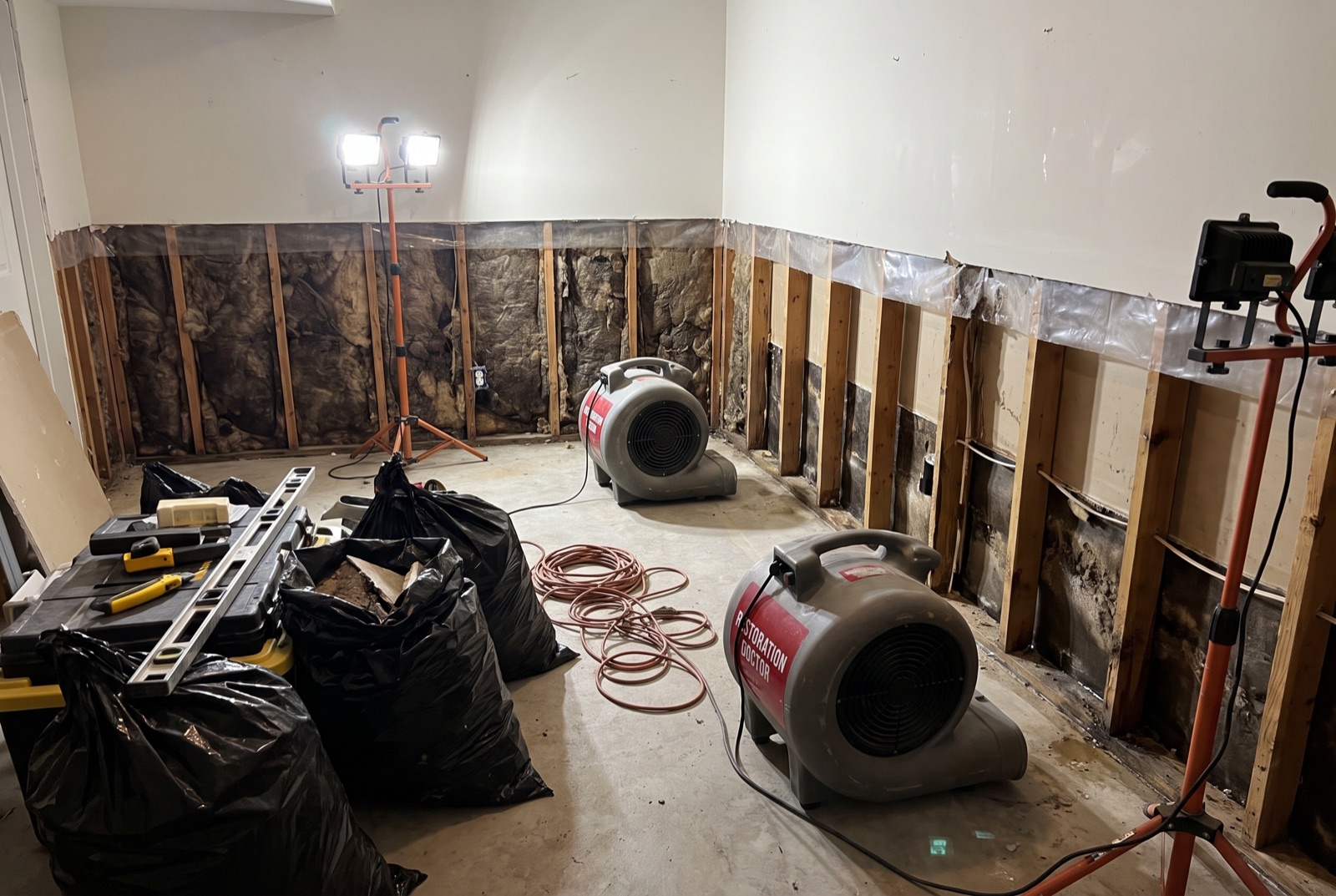
There's also what the water is. A ceiling loaded by a clean supply line is a Category 1 loss; a ceiling under a leaking drain line, an overflowed toilet, or long-standing roof water is contaminated, and the material coming down with it is too. And once the immediate event passes, the cavity above the ceiling — insulation, joists, and the top face of remaining drywall — stays wet and dark, and materials that stay wet past 24 to 48 hours are at risk for mold growth. A ceiling event that looks handled from below can be quietly growing a remediation project above.
What professional response looks like
A restoration crew treats a loaded ceiling as both a safety problem and a drying problem: controlled drainage and removal of compromised board, moisture mapping to establish how far water traveled along the cavity, removal of wet insulation, and directed drying of the framing and remaining materials, verified with daily meter readings. Everything is photographed as found — Restoration Doctor's CompanyCam documentation runs from the first arrival photo through the final dry reading, which is precisely the record an insurance adjuster needs for a ceiling loss.
If your ceiling is sagging, stained and spreading, or has already dropped material, keep the room clear and call 1-888-29-FLOOD. Crews respond 24/7, and the difference between a controlled drain-and-dry and an uncontrolled collapse is usually measured in hours.
Water Damage Restoration
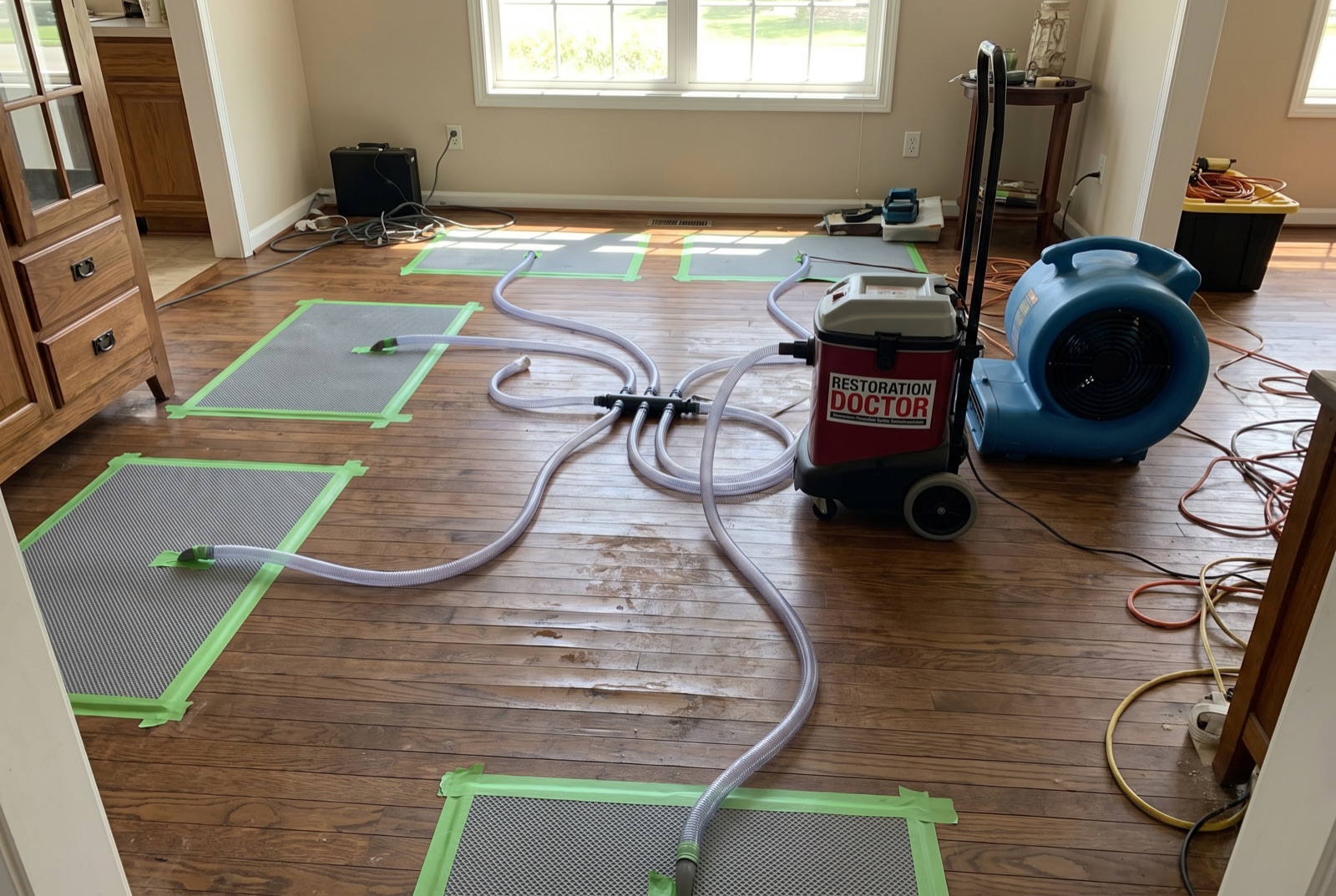
Extraction, structural drying, and moisture verification for burst pipes, appliance leaks, and basement flooding.
Frequently asked
Related questions
How can you tell if a ceiling has water damage?
Does water damaged drywall need to be replaced?
What should I do immediately after water damage?
Can a house collapse from water damage?
Active water, mold, fire, or sewage event?
Connect directly with the Restoration Doctor team for your region. Crews are on standby 24/7 with documented response protocols.