
How can you tell if a ceiling has water damage?
Look for brown or yellow ring-shaped stains, peeling or bubbling paint, hairline cracks spreading from a discolored area, and any sagging or bulging in the drywall. A sagging ceiling means water is actively pooling above it — clear the room and get help immediately, because saturated ceiling board can fall without warning.
The visual signs, from earliest to most urgent
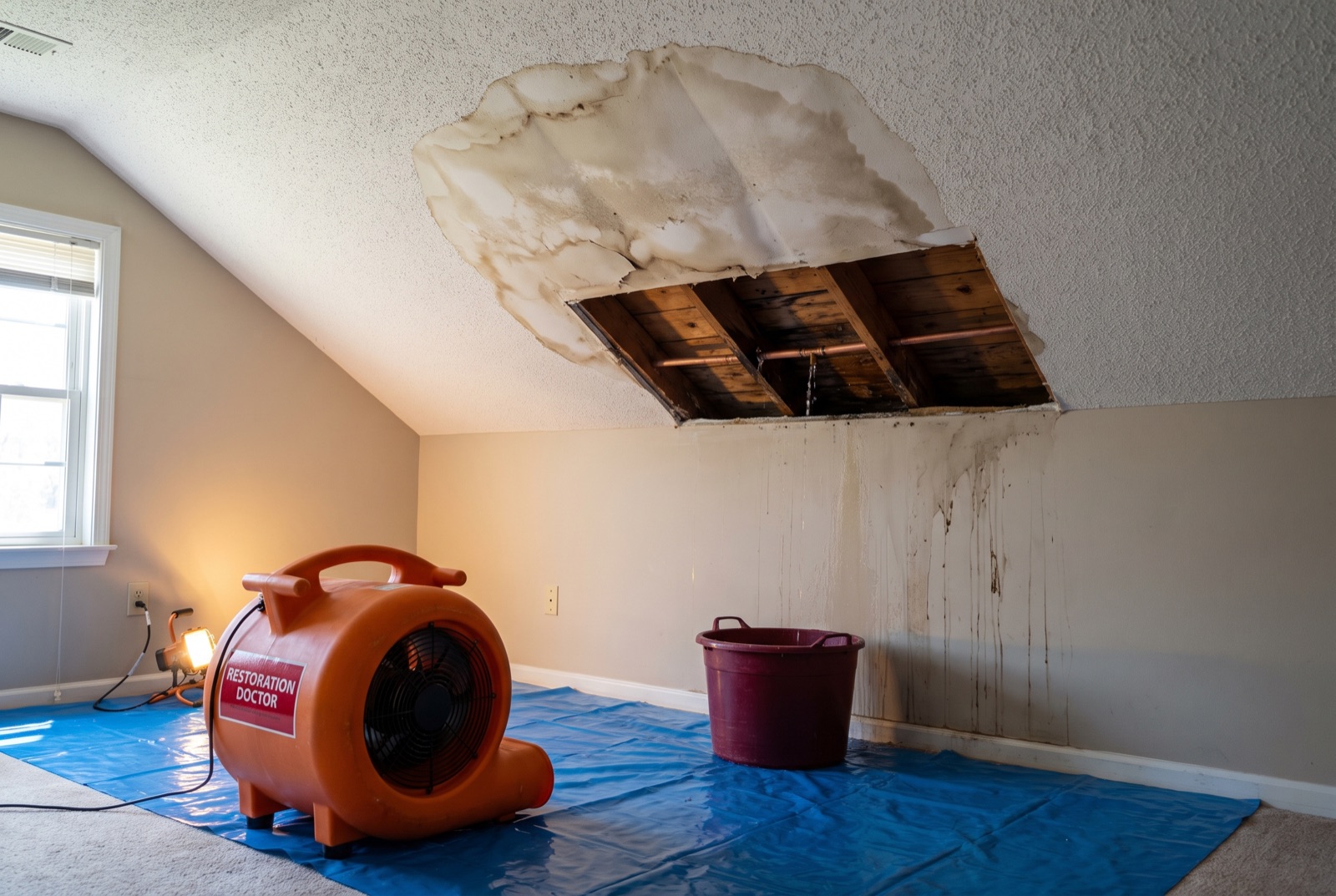
Ceiling water damage announces itself in a fairly predictable sequence. The earliest sign is discoloration: a yellowish or tan patch, often with a darker brown ring around its edge. The ring forms because dissolved minerals and tannins migrate to the wet spot's perimeter as it dries — concentric rings mean the spot has wetted and dried more than once, which points to an intermittent leak rather than a one-time event.
Next comes paint and texture failure. Water breaks the bond between paint and drywall, so you'll see bubbling, blistering, flaking, or peeling. Textured ceilings may shed or soften in the affected area. Hairline cracks that radiate outward from a stained patch mean the board has swelled and moved.
The urgent sign is deformation: any sag, bow, or bulge. Drywall holds a surprising amount of water before it fails, and a visible belly means water is pooling on top of the board right now. This is no longer an inspection question — it's a safety issue.
Signs you can't see: smell, sound, and touch
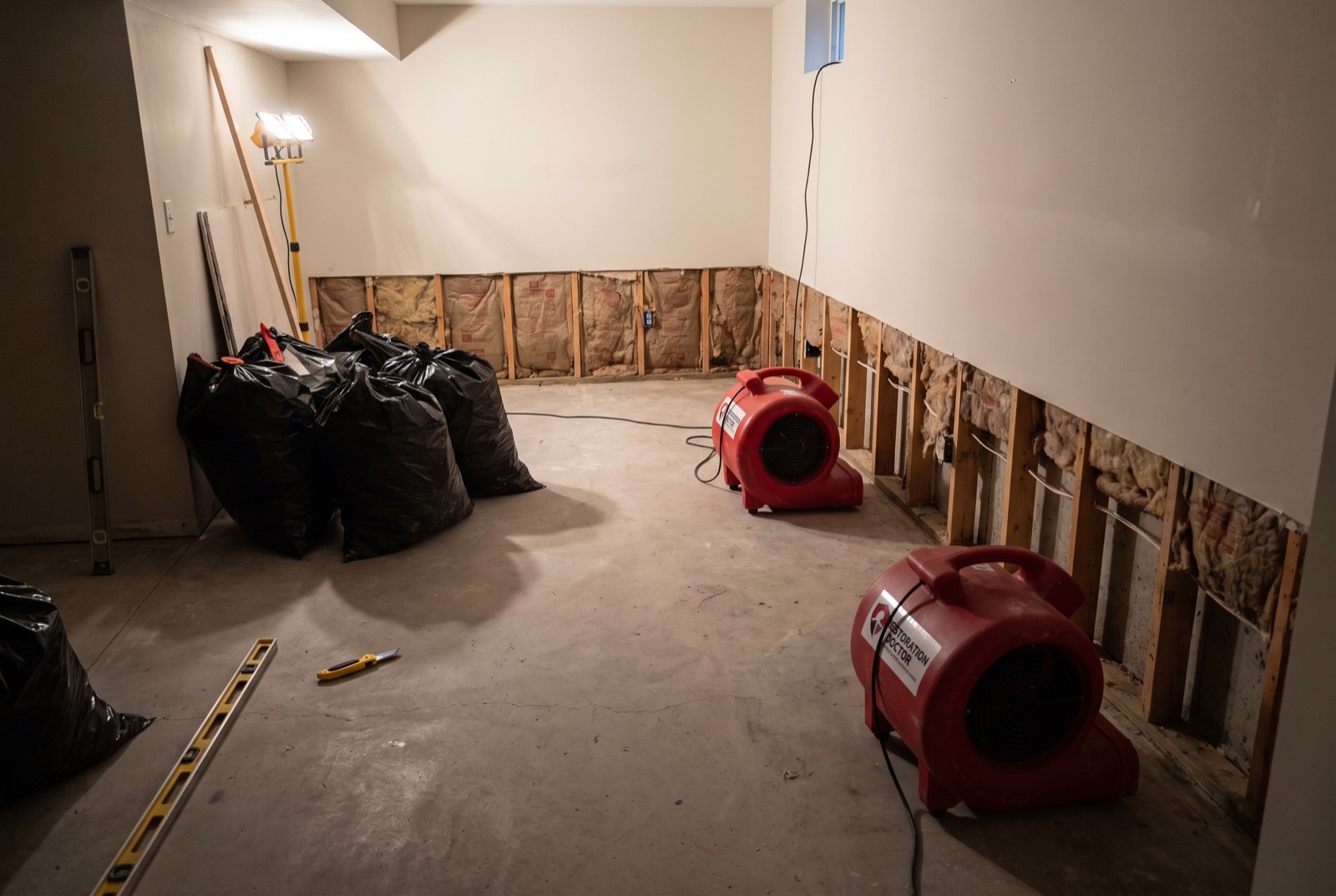
Not every ceiling leak stains promptly. A musty, earthy odor in a room with no visible damage often means moisture is trapped above the ceiling — in insulation, on the top face of the drywall, or on framing — where mold can establish before anything shows on the finished side.
Listen after water use: dripping or trickling sounds above a ceiling while a shower, washing machine, or dishwasher runs upstairs points to a supply or drain leak in the floor system. And a gentle press with a broom handle (never directly under a sag) tells you a lot — sound drywall feels rigid, while wet board flexes and feels soft.
Finding the source matters as much as finding the damage, because ceiling stains rarely sit directly below the leak. Water travels along joists, pipes, and the top face of the drywall before it finds a seam or fixture to drip through. Roof leaks, bathroom plumbing, HVAC condensate lines, and radiant or supply lines in the floor above are the usual suspects.
What a professional inspection adds
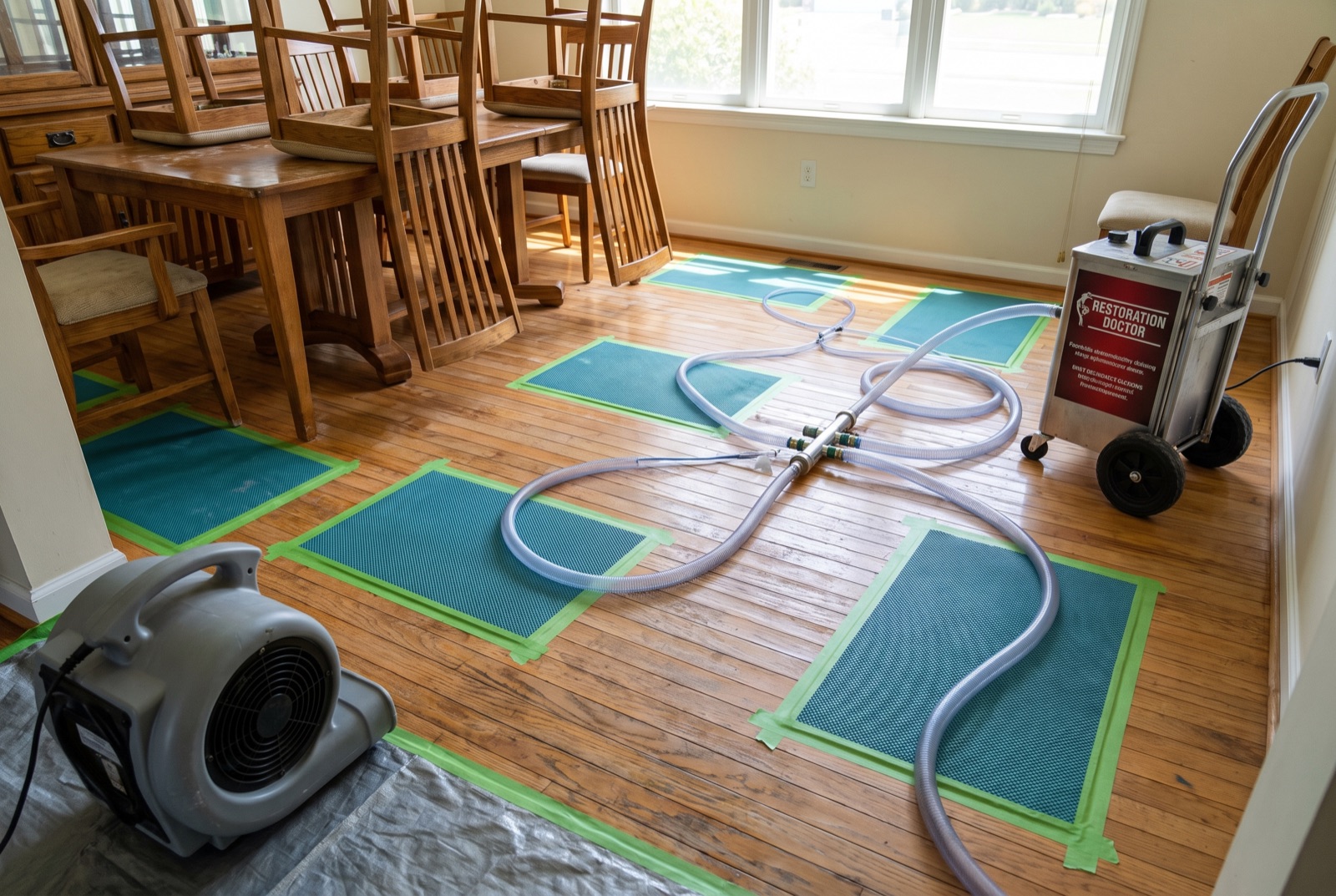
A moisture meter turns guesswork into data: it reads the actual moisture content of the ceiling board and can trace the wet footprint far beyond the visible stain. Thermal imaging cameras spot the temperature signature of evaporating moisture across a whole ceiling in seconds, which is how crews find the true extent of a leak — and its likely path back to the source — without opening anything up.
That mapping matters for the repair decision. A stain with dry readings behind it is a cosmetic fix: seal and paint. A stain with elevated readings means active or recent moisture, and the drying or removal scope should follow the meter, not the paint line. It also matters for insurance: a documented moisture map dated close to the loss is strong evidence of what the water actually touched.
When to treat it as an emergency
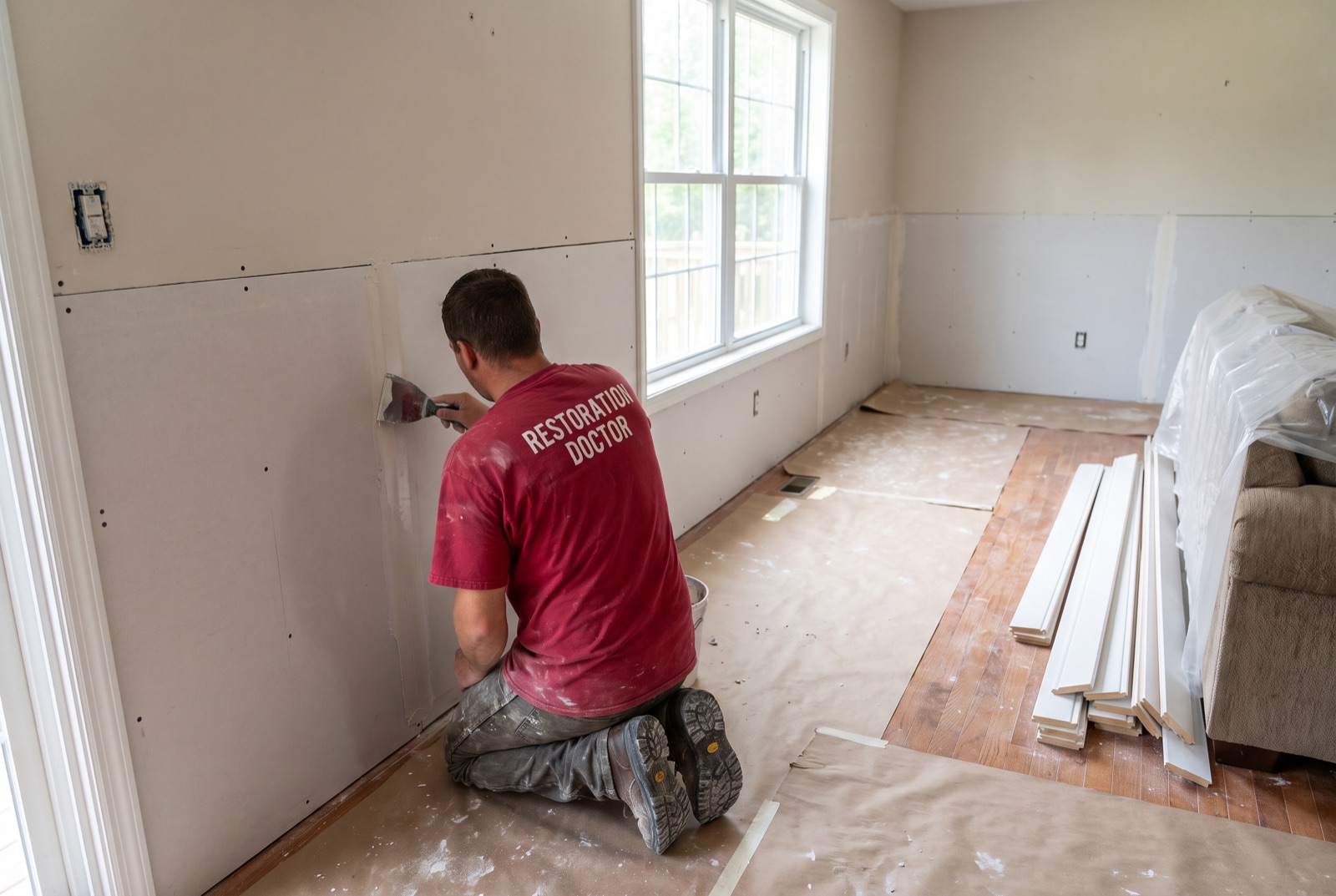
A stain that appears suddenly, grows while you watch, drips, or comes with any sagging is an active leak — shut off the water if the source could be plumbing, keep people out from under the affected area, and get mitigation moving the same day. Water above a ceiling doesn't stay put; it spreads along the drywall until it finds more area to soak.
Restoration Doctor responds 24/7 across Northern Virginia, Maryland, and D.C. with moisture mapping, controlled drainage of loaded ceilings, structural drying, and a documented CompanyCam photo record from first arrival onward. If your ceiling is showing any of these signs, call 1-888-29-FLOOD — catching a ceiling leak at the stain stage instead of the collapse stage is the cheapest outcome available.
Water Damage Restoration
Extraction, structural drying, and moisture verification for burst pipes, appliance leaks, and basement flooding.
Frequently asked
Related questions
Is a water damaged ceiling dangerous?
Does water damaged drywall need to be replaced?
Can you just paint over water damage?
What are the first signs of water damage?
Active water, mold, fire, or sewage event?
Connect directly with the Restoration Doctor team for your region. Crews are on standby 24/7 with documented response protocols.