
Can you just paint over water damage?
Only under two conditions: the water source is fixed, and the material is verified dry with a moisture meter. Then a stain-blocking primer and paint restore it. Painting over damp drywall seals moisture inside, feeds hidden mold, and the stain bleeds through ordinary paint within weeks anyway.
Why paint alone fails on water damage
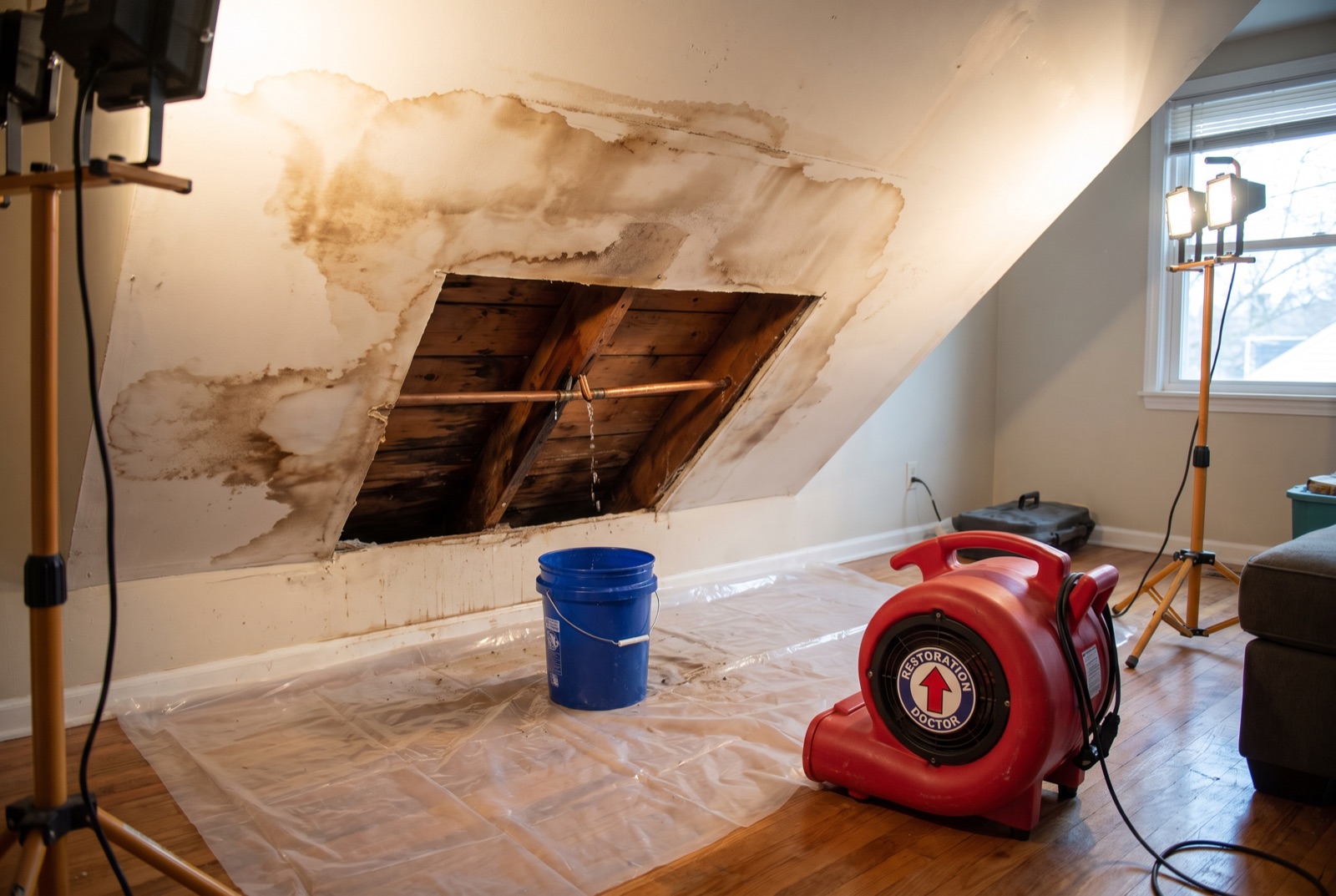
Two separate problems defeat the paint-only shortcut. The first is chemical: water stains carry tannins and water-soluble residues that migrate straight through standard latex paint — the ghost of the stain reappears through fresh paint, sometimes within days. Covering a water stain requires a dedicated stain-blocking primer (shellac- or oil-based blockers are the standard) before the finish coat.
The second problem is the serious one: paint is a vapor barrier, and painting a damp wall seals the moisture in. The surface looks fixed while the drywall core, the cavity, and the framing behind stay wet — now with even less ability to dry outward. That trapped moisture feeds mold on the back of the board, softens the core, and eventually pushes the new paint off as bubbling and peeling. A painted-over water problem is not solved; it's hidden, and hidden in the direction that makes it worse.
The two questions to answer before any paint
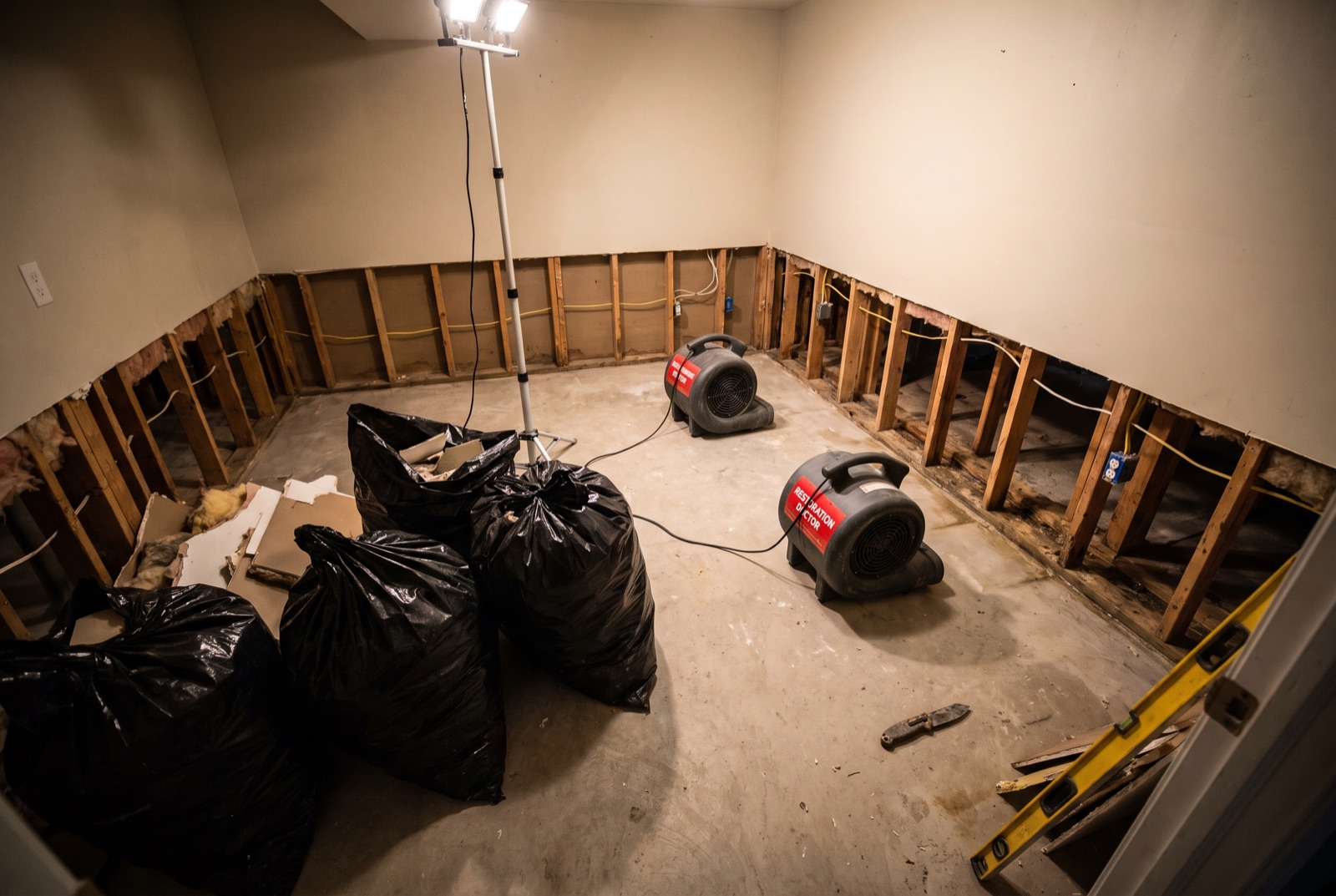
First: is the source fixed? A stain is a symptom. If the roof still leaks, the flashing still fails, or the supply line still weeps, the stain returns no matter what's applied over it — and each wetting cycle does more damage than the last. Recurring or growing stains, or a ring of rings, mean an active source that needs finding first.
Second: is the material actually dry? Not "feels dry" — drywall surfaces feel dry days before the core and cavity are — but verified dry with a moisture meter against an unaffected reference area. This is a two-minute check that separates a legitimate cosmetic repair from sealing a problem into your wall. If readings are elevated, the wall needs drying (or opening) before anyone touches a brush.
The correct repair sequence
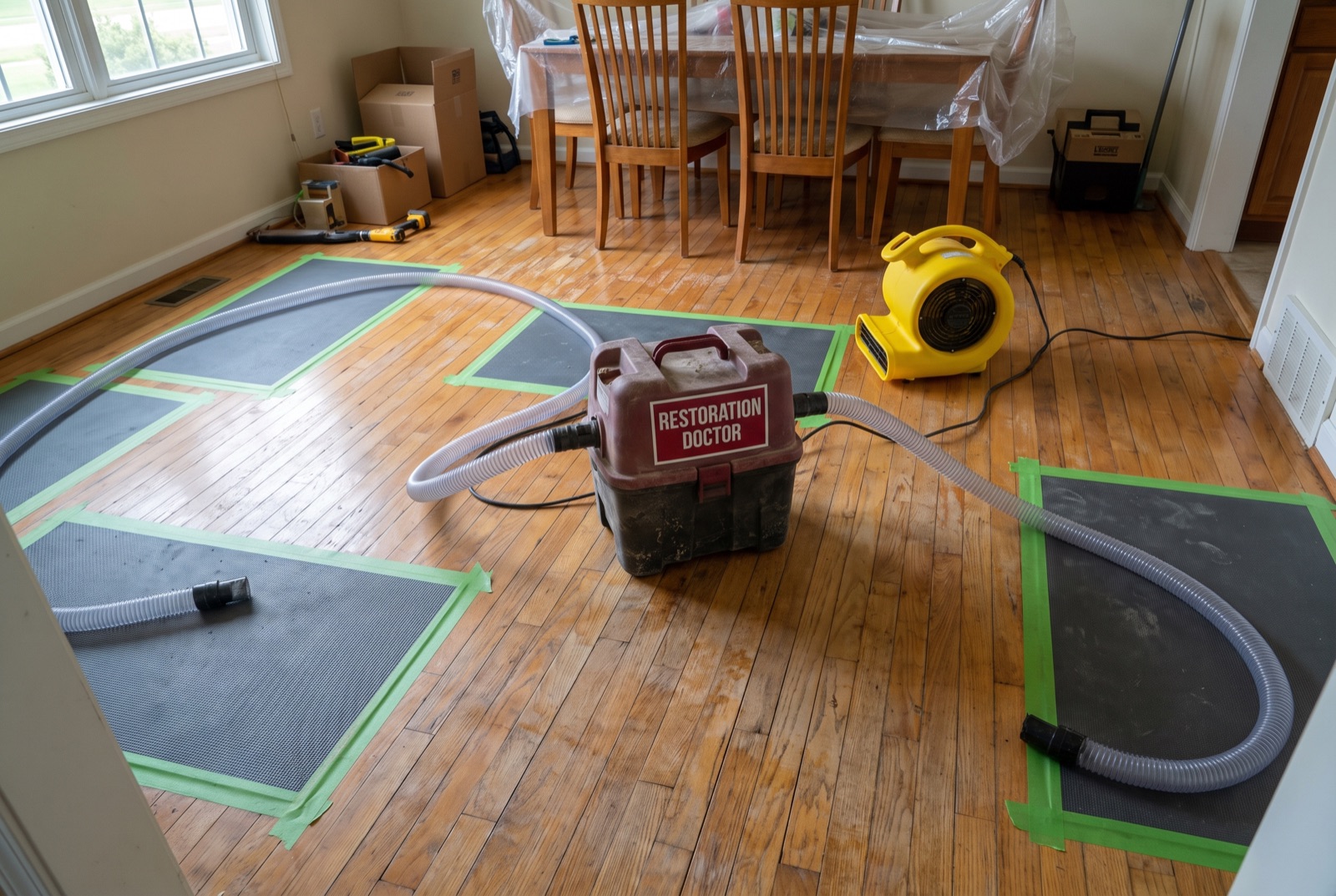
Once the source is fixed and readings confirm dry: assess the surface honestly. Flat, firm drywall with staining only is a true paint-grade repair — spot-prime the stain with a stain blocker, then repaint the surface. Texture damage, bubbled paper, or hairline cracking needs skim-coating and sanding first. Soft, sagging, crumbling, or mold-affected board is past cosmetics: those sections get cut out and replaced, and any growth beyond a trivial area is handled under proper mold remediation practice before closing up.
One matching note: paint ages on a wall, so a spot repair in the middle of an old paint field often reads as a visible patch even with the original color. The standard for an invisible result is repainting the affected surface corner to corner — a scoping detail that matters on insurance repairs, where the goal is pre-loss condition, not a patch.
Where a repaint fits in a real water loss
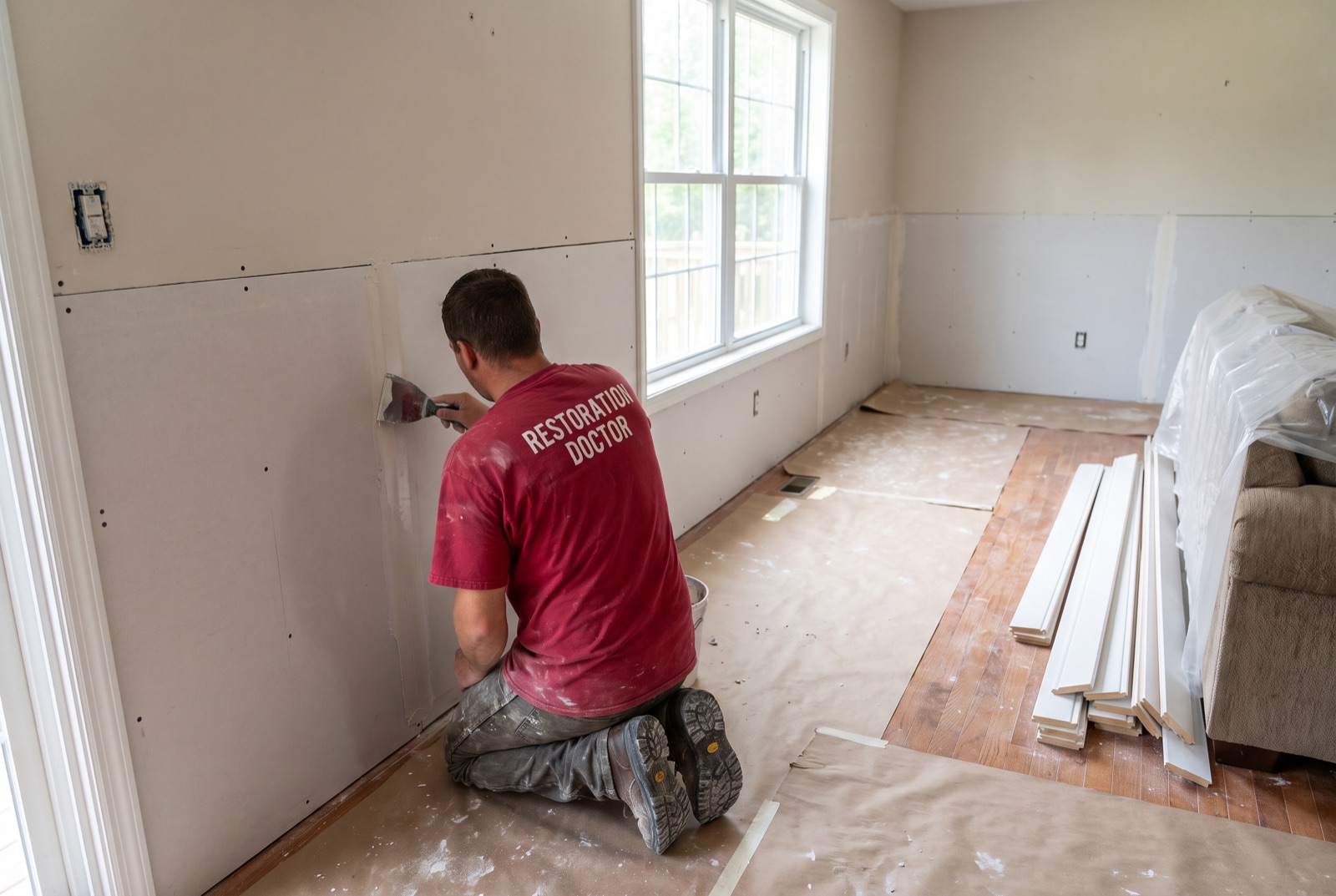
In a professionally handled loss, paint is the last step of a documented chain: source repair, verified structural drying with daily meter logs, replacement of unsalvageable materials, then finishes. That chain is what protects you twice over — from mold surfacing behind a fresh coat, and from an insurance dispute about whether the damage was actually addressed.
Restoration Doctor performs the whole chain with in-house crews, from moisture mapping and drying through drywall, trim, and final paint, with a CompanyCam photo record at every step. If you're staring at a stain and tempted by a can of primer, call 1-888-29-FLOOD for a moisture check first — if it reads dry, paint away with confidence; if it doesn't, you just avoided sealing a problem into the wall.
Reconstruction & Repairs
Drywall, flooring, cabinetry, trim, and paint — the same in-house crew that dried the loss rebuilds it, with no handoff between mitigation and reconstruction.
Frequently asked
Related questions
Does water damaged drywall need to be replaced?
How can you tell if a ceiling has water damage?
How do you know when walls are completely dry?
What does water damage look like on walls?
Active water, mold, fire, or sewage event?
Connect directly with the Restoration Doctor team for your region. Crews are on standby 24/7 with documented response protocols.