
What does water damage look like on walls?
Water damage on walls appears as yellow-brown stains with darker rings at the edges, bubbling or peeling paint, soft or bulging drywall, swollen baseboards pulling from the wall, and on masonry, white chalky mineral deposits called efflorescence. Fresh damage looks damp and dark; older damage leaves dry, tide-lined stains.
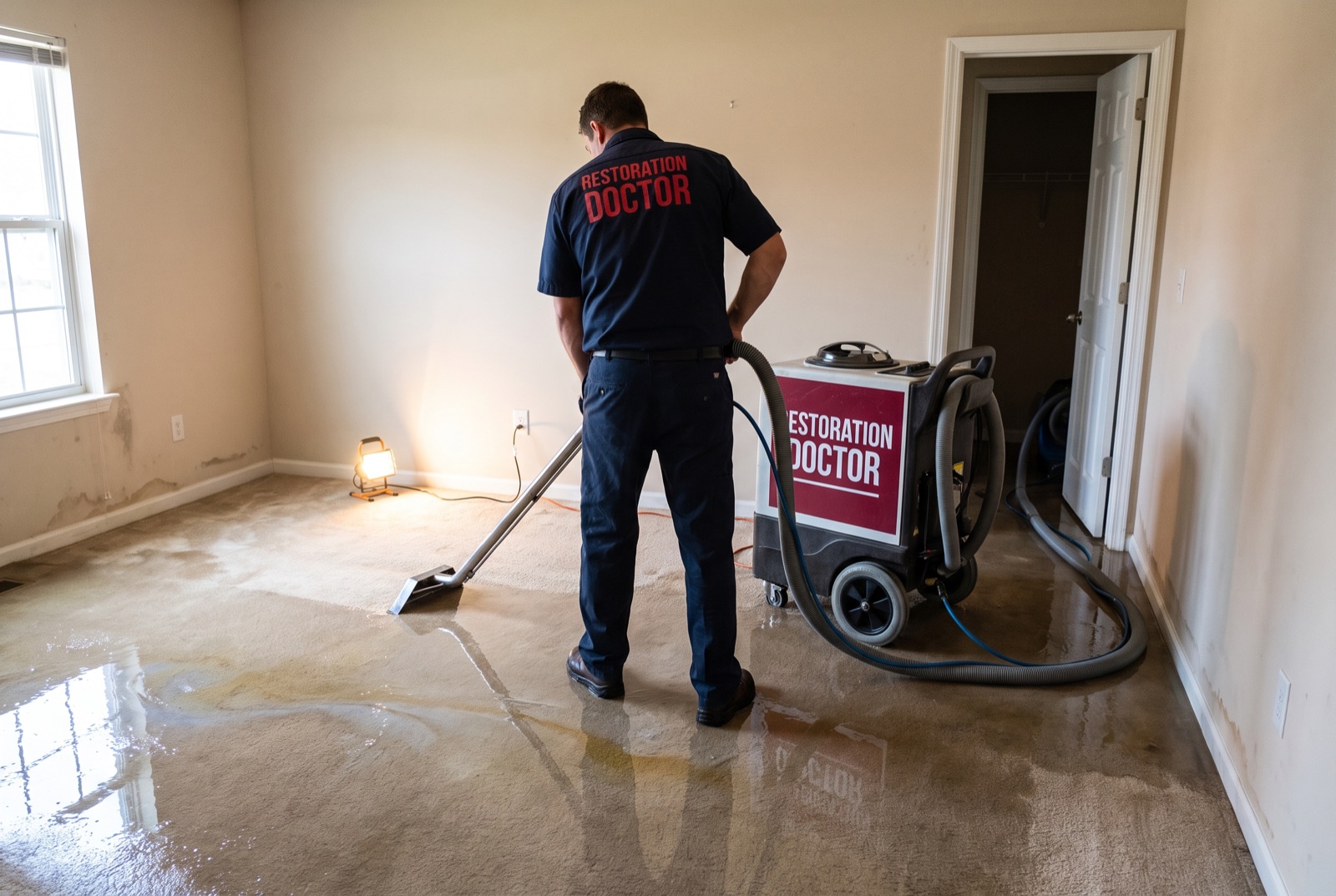
Stains: reading the rings
The classic wall stain is yellow to brown, irregular in shape, with a darker ring around its perimeter. The ring forms at the wetting boundary — as water spreads and evaporates, it carries dissolved minerals and material residues to the edge and deposits them there. Multiple concentric rings mean multiple wetting events: the leak has happened more than once.
Location tells you about the source. Stains high on a wall or at the wall-ceiling joint suggest a roof, gutter, or upstairs plumbing issue. Stains climbing from the floor line — a tide mark — mean water on the floor wicked up into the drywall, typical of a leak that ran across the floor or a flooding event. A stain isolated mid-wall usually sits below a concealed pipe run or a window that's leaking at its flashing.
Color adds information. Fresh wetting looks darker and may glisten; old resolved damage is a dry, flat stain. Brown staining is typical of water through building materials; gray-to-black speckling within or around a stain suggests mold growth has joined the picture.
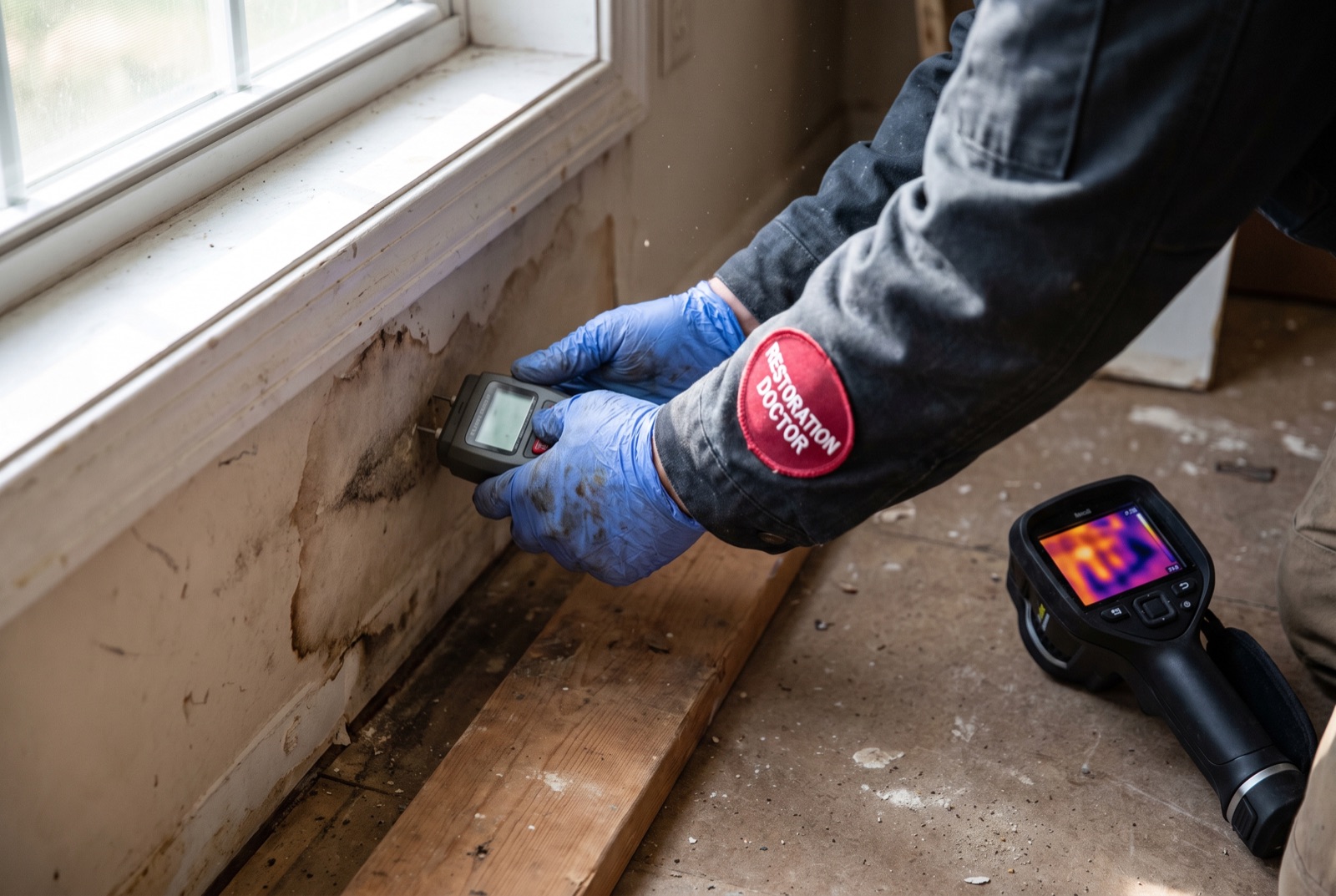
Paint, texture, and surface changes
Paint reacts to moisture from behind in recognizable ways: bubbling and blistering (moisture vapor pushing the film off the surface), peeling and flaking, and a cracked, alligatored texture over areas that have cycled wet and dry. Wallpaper lifts at seams and corners as its adhesive fails.
The drywall itself changes too. Damp drywall goes soft — press gently and it gives where sound drywall feels firm. Saturated drywall bulges, sags, or bellies, and its paper face may wrinkle or delaminate. Nail and screw heads may telegraph through as rust spots. Textured finishes flatten or dissolve where water has run.
Trim completes the picture: MDF baseboards swell, lose their crisp edges, and push off the wall; caulk lines split; door casings near the damage may swell enough that doors rub. Because trim sits at the wet floor line, it's often the first visible casualty of water inside a wall.
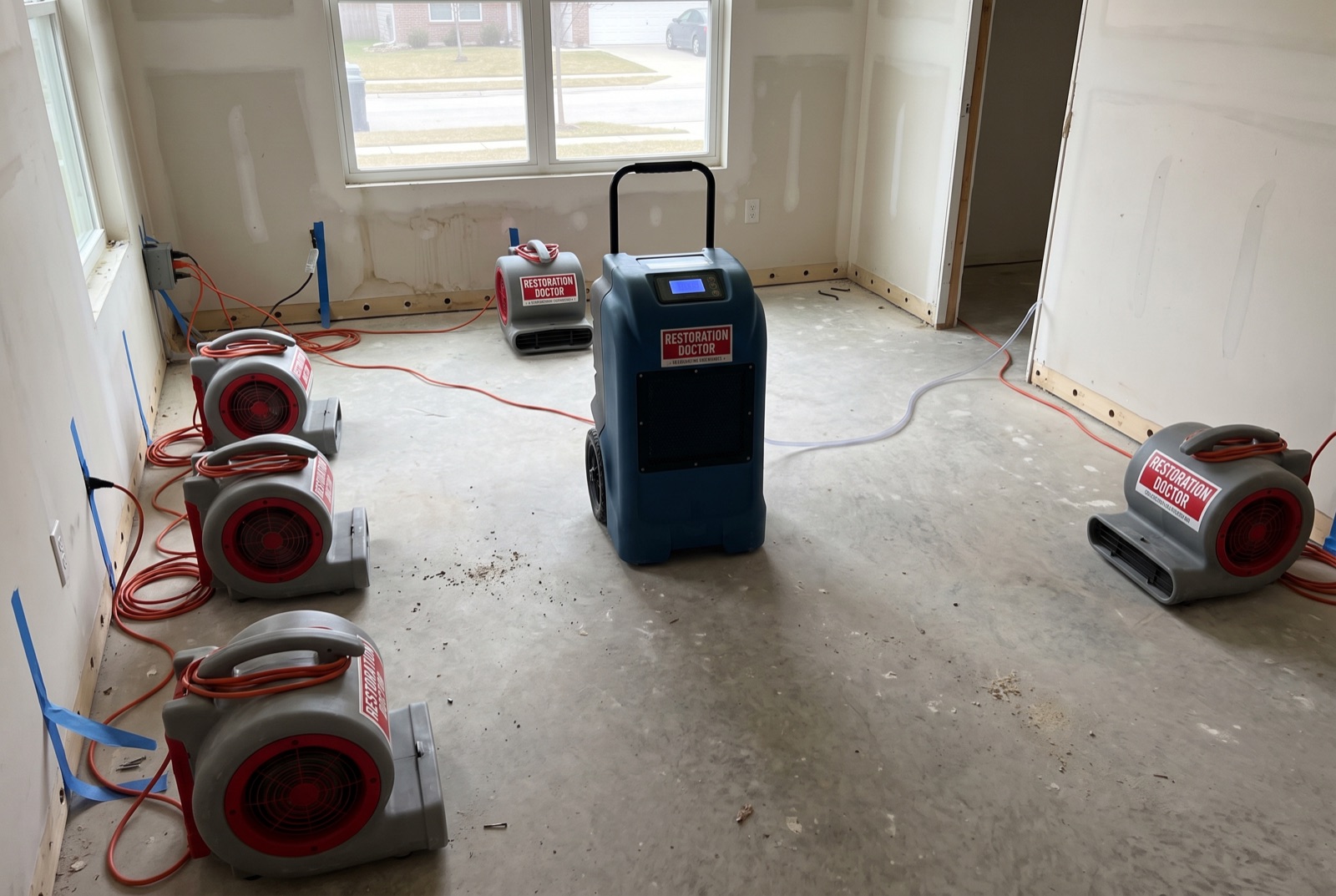
Masonry, plaster, and what you smell
On basement and masonry walls, water leaves a different signature: efflorescence — a white, chalky, crystalline deposit left when water migrates through concrete or block and evaporates, leaving dissolved salts behind. Efflorescence itself is harmless, but it's proof of water movement through the wall. Damp patches that come and go with rain, spalling (flaking concrete surfaces), and dark mortar joints tell the same story.
Plaster walls in older homes show water as brown staining, bubbling finish coats, and eventually soft, crumbling, or detached sections where the plaster has lost its bond.
And on any wall type, trust your nose: a musty odor near a wall that shows any of these signs strongly suggests active moisture and probable microbial growth in the cavity behind it.
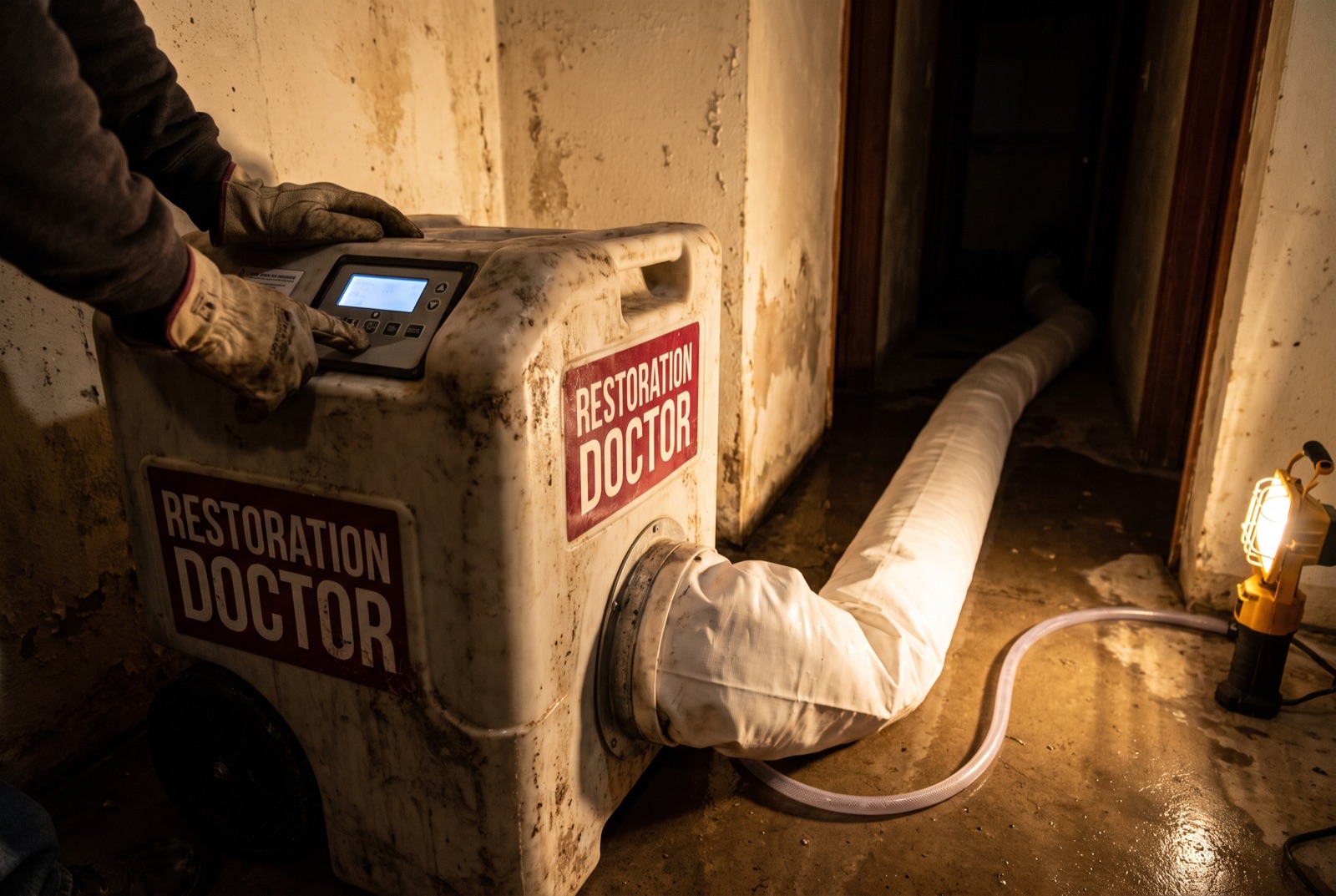
What to do with what you're seeing
The visible wall damage is the messenger, not the message — the meaningful questions are whether the material is still wet and where the water is coming from. A professional moisture inspection answers both without guesswork: meters establish whether the stain is history or active, thermal imaging traces the moisture path toward its source, and readings determine whether the drywall can be dried in place or needs replacement.
Whatever you do, don't just repaint. Stain-blocking primer over a verified-dry wall with a fixed source is a legitimate finish repair; paint over an active leak traps moisture and hides the evidence while the cavity behind it deteriorates. Restoration Doctor inspects, dries, and repairs water-damaged walls across Northern Virginia, Maryland, and D.C. — if a wall in your home is showing these signs, call 1-888-29-FLOOD and find out what's behind it.
Water Damage Restoration
Extraction, structural drying, and moisture verification for burst pipes, appliance leaks, and basement flooding.
Frequently asked
Related questions
What are the first signs of water damage?
How do you know when walls are completely dry?
How do I know if mold is growing behind my walls?
Does water damaged drywall need to be replaced?
Active water, mold, fire, or sewage event?
Connect directly with the Restoration Doctor team for your region. Crews are on standby 24/7 with documented response protocols.