
How do you know when walls are completely dry?
The only reliable confirmation is a moisture-meter reading that matches an unaffected reference wall of the same construction elsewhere in the home. Touch is useless — wall surfaces feel dry days before the drywall core, insulation, and framing behind them are. Professionals log daily readings until affected walls meet that dry standard.
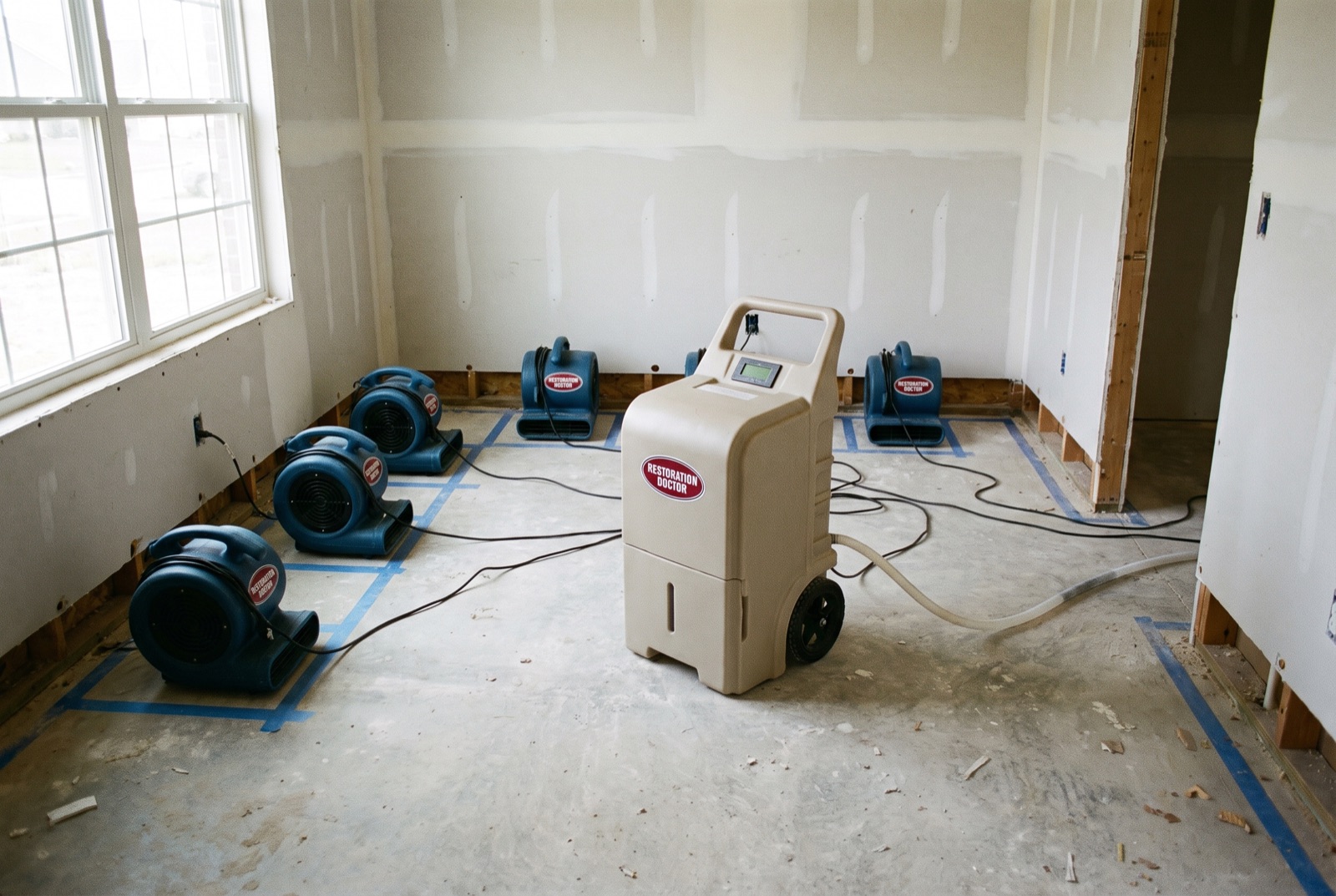
Why touch and appearance can't be trusted
A wall dries from the surface inward — which means the part you can touch is always the driest part. Room-side air pulls moisture off the paint film quickly, so a wall can feel bone-dry to the hand while the gypsum core is still wet, the insulation behind it is damp, and the framing at the wall base is saturated. The gap between feels dry and is dry is routinely several days, and on dense assemblies it can be a week or more.
Appearance misleads the same way. Stains fade as the surface dries regardless of what's happening in the cavity, and paint hides moisture entirely. The failure mode is predictable: a homeowner (or a hasty contractor) declares victory by hand, closes everything up, and the moisture sealed inside the wall feeds mold growth over the following weeks. The musty odor shows up a month later, and what would have been two more days of drying becomes a remediation and rebuild.
How professionals actually verify dryness
Professional verification runs on instruments and a reference point. On day one, technicians establish a dry standard: moisture readings taken from walls of the same construction in unaffected areas of your home. That baseline matters because 'normal' moisture content varies by material, season, and even by house — dryness is defined relative to your home, not an arbitrary number.
Two meter types do the daily work. Non-penetrating meters scan across the wall surface reading moisture through the material without leaving marks — ideal for mapping and daily tracking. Penetrating pin meters measure precisely at depth, including through baseboard-line holes into the wall cavity, confirming what's happening inside the assembly rather than at its face. Thermal imaging supplements both by revealing the cooler signature of evaporating moisture across large areas, catching wet spots the point measurements might miss.
A wall is declared dry when its readings match the dry standard — every monitoring point, not just most of them. Under IICRC S500 practice those readings are logged daily, so the drying record shows the trend from saturated to verified dry.
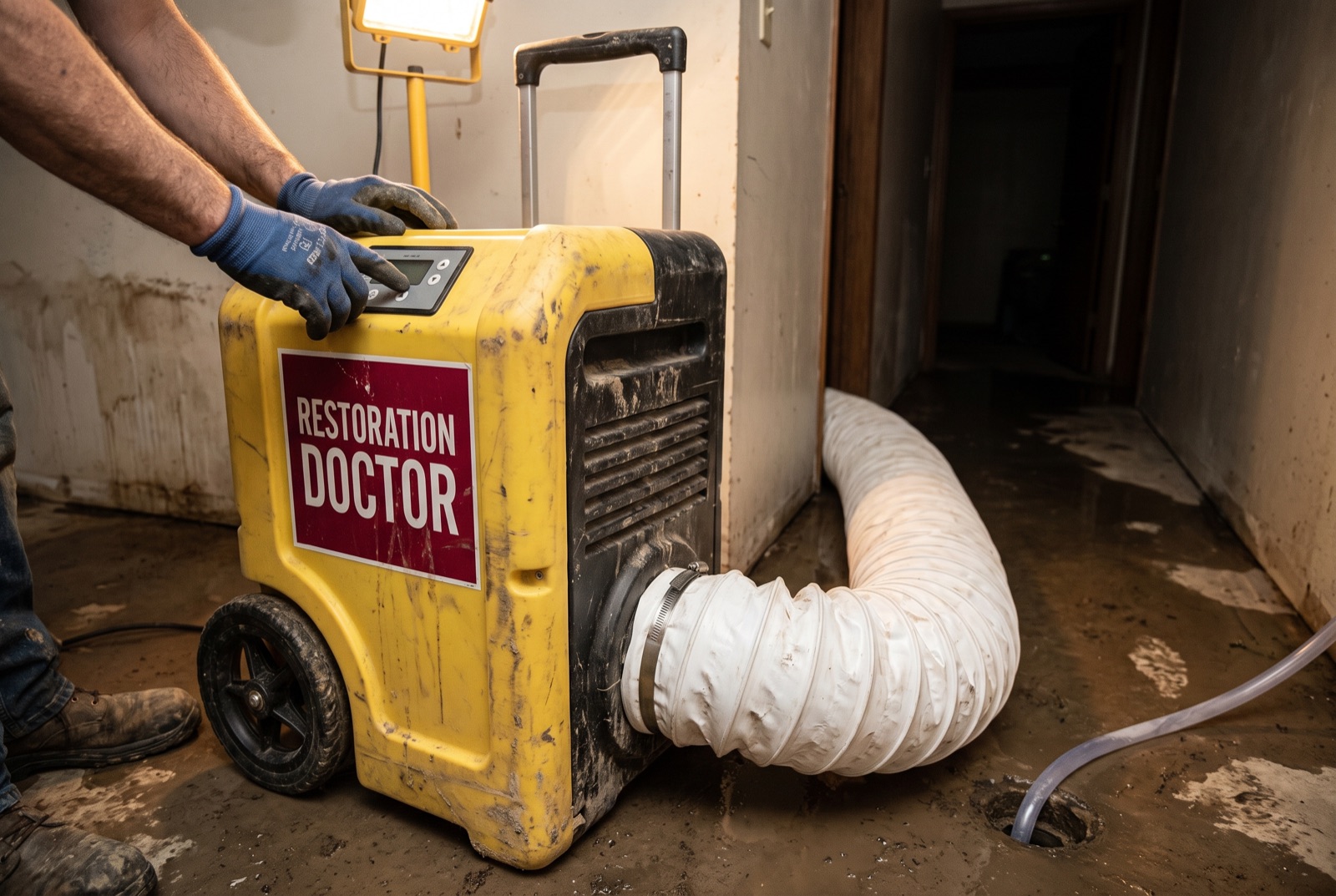
The hidden places that stay wet longest
Verification exists because of where water hides. The wall base assembly — bottom plate, sill area, and the drywall edge behind the baseboard — is almost always the last place to dry, since water pools there and airflow reaches it least. Insulated cavities hold moisture dramatically longer than empty ones; wet fiberglass drains and dries slowly, and wet cellulose often doesn't recover at all. Double layers of drywall, tile-backed walls, vapor barriers, and exterior sheathing all create moisture traps that surface observation will never see.
This is also why proper drying setups open those areas up — baseboards detached, small vent holes into cavities, toe-kicks removed — so the meter has something honest to measure and the airflow has a path to the water.
Getting certainty instead of hoping
If walls in your home got wet — even weeks ago — and no one verified them with meters, the question of whether they're dry is genuinely open. A moisture inspection settles it in under an hour: mapped readings against a reference standard, with thermal imaging to catch anything lurking.
Restoration Doctor performs moisture verification and full structural drying across Northern Virginia, Maryland, and D.C., logging daily readings on every project so 'dry' is a documented fact, not an opinion. Call 1-888-29-FLOOD to schedule an inspection or an emergency response — either way, you'll know instead of wondering.
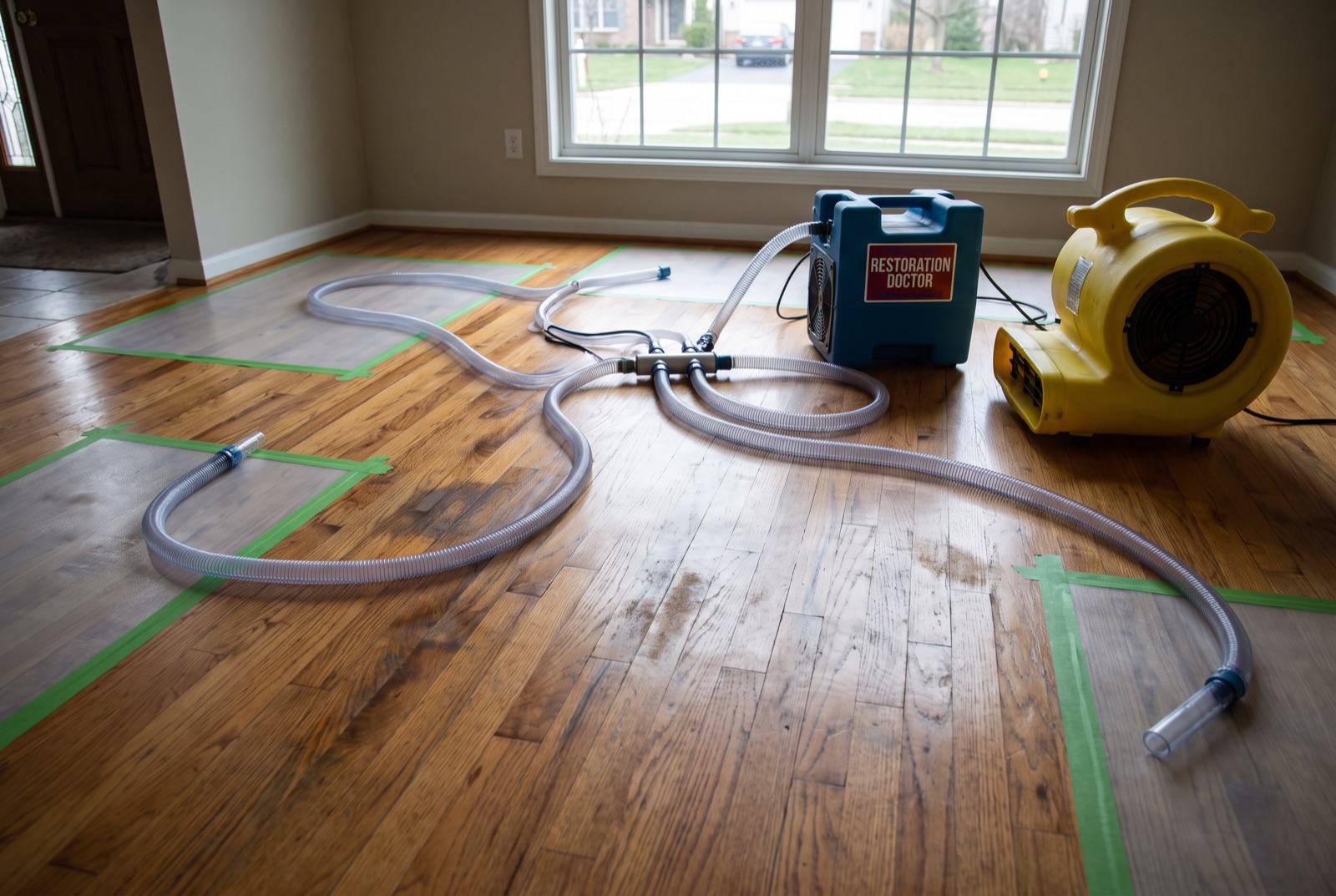
Water Damage Restoration
Extraction, structural drying, and moisture verification for burst pipes, appliance leaks, and basement flooding.
Frequently asked
Related questions
How long do walls take to dry after a leak?
What does water damage look like on walls?
Does water damaged drywall need to be replaced?
How do professionals dry out a house after water damage?
Active water, mold, fire, or sewage event?
Connect directly with the Restoration Doctor team for your region. Crews are on standby 24/7 with documented response protocols.