
How do professionals dry out a house after water damage?
Professionals dry a house in a controlled sequence: extract standing water, remove unsalvageable materials, then create an engineered drying environment with air movers and LGR dehumidifiers sized and positioned per IICRC S500 psychrometric calculations. Daily moisture readings track every affected material against a dry standard until the structure verifies dry — typically three to five days.
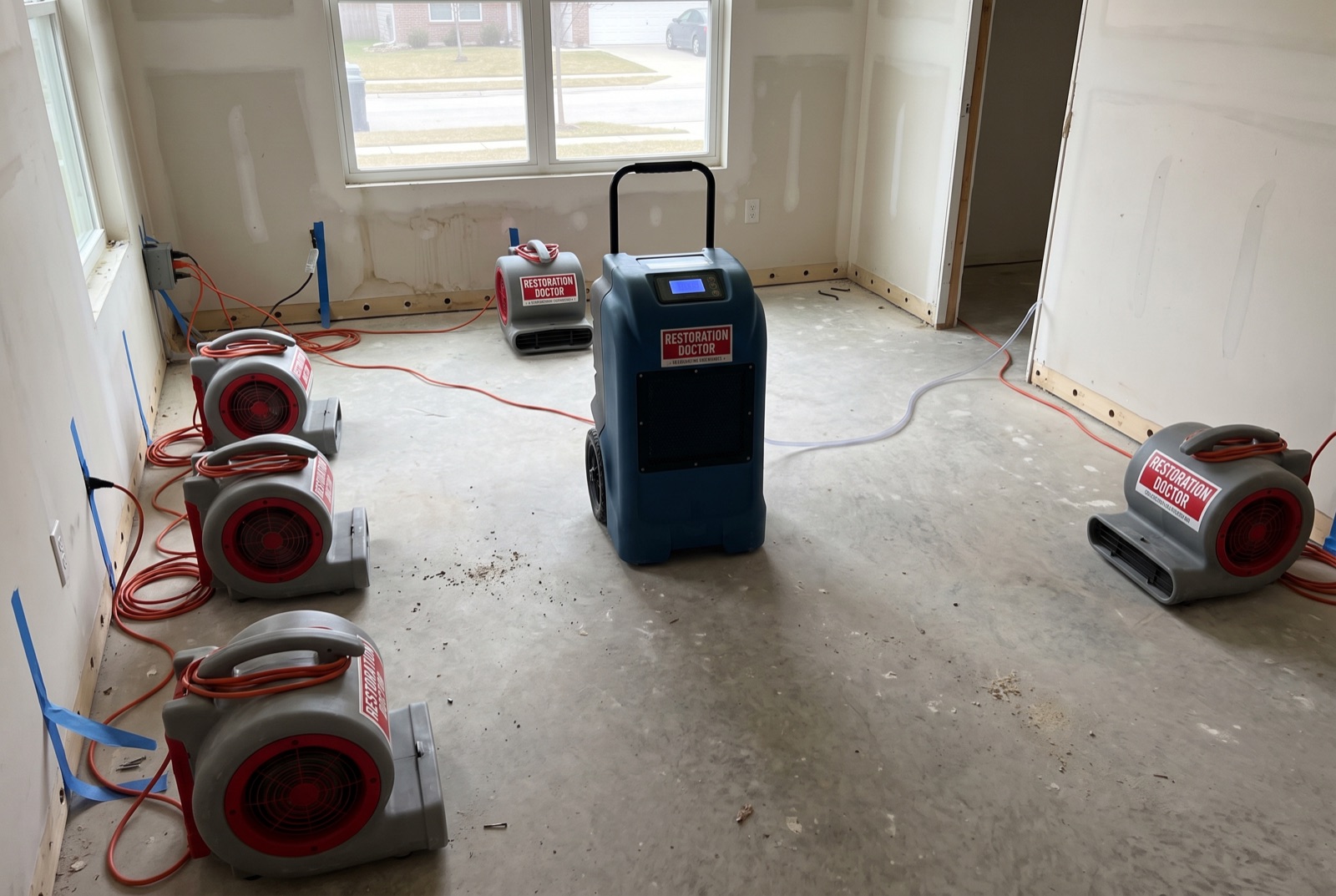
Step one: assess and map the moisture
Professional drying starts with knowing exactly where the water went — which is rarely just where it's visible. Technicians work the affected area with moisture meters (penetrating and non-penetrating) and thermal imaging cameras, tracing water through walls, under flooring, and into adjacent rooms. The result is a moisture map: a documented picture of every wet material and how wet it is.
Two classifications come out of this assessment. The category (1, 2, or 3 under the IICRC S500 standard) describes contamination — clean supply water versus gray water versus sewage or floodwater — and dictates safety protocol and what must be removed. The class (1 through 4) describes how much water the materials absorbed and how difficult the structure will be to dry, which drives equipment calculations.
The map also establishes the dry standard: baseline readings from unaffected materials of the same type elsewhere in the home. Those numbers define what 'dry' will mean for this specific house.
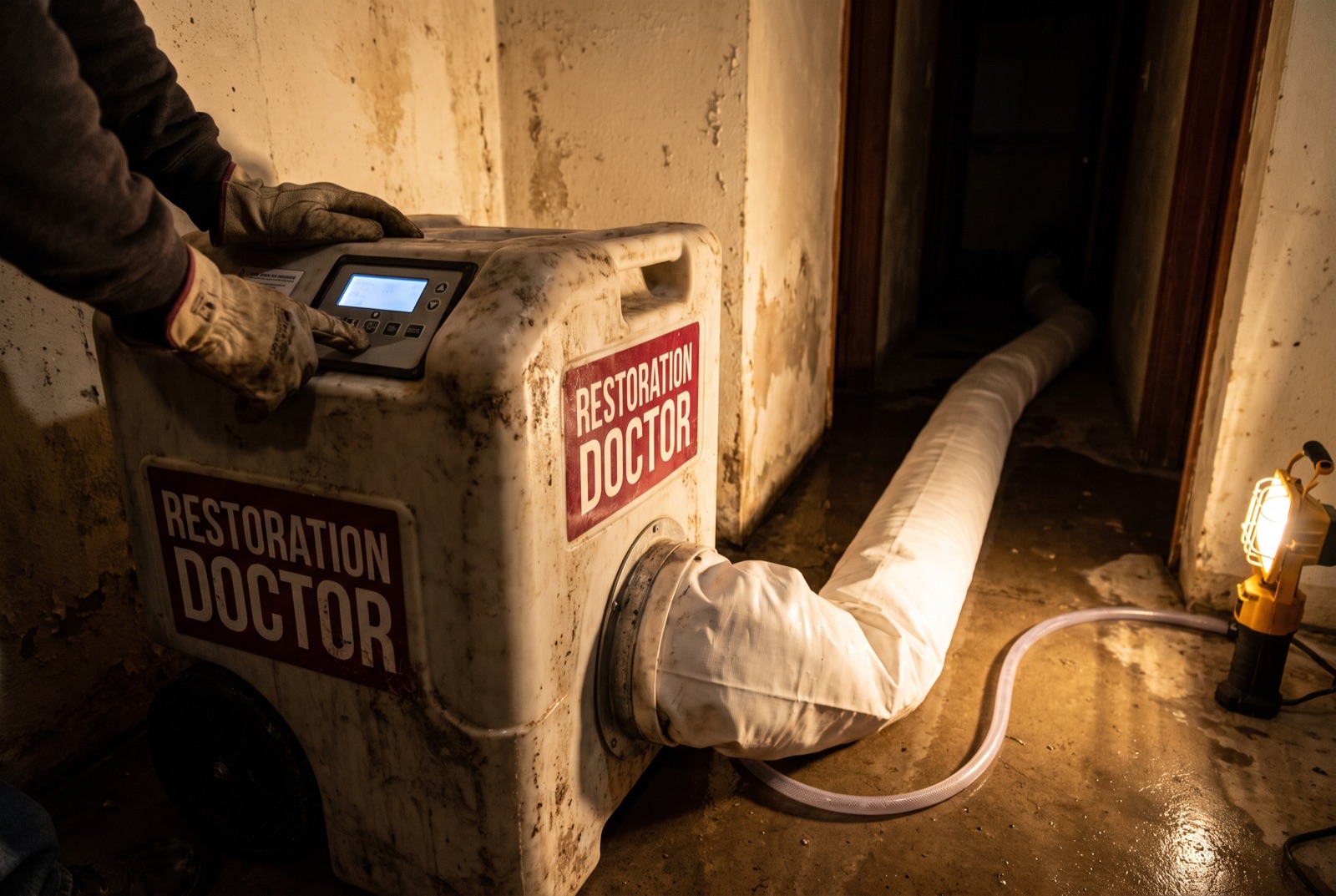
Step two: extract, remove, and open up
Liquid water leaves first, because extraction removes water hundreds of times faster than evaporation ever will. Truck-mounted or portable extractors pull standing water off floors and out of carpet; weighted extraction wands compress carpet and pad to squeeze out far more than a surface pass.
Next comes selective removal — taking out materials that can't be economically saved and would only stall the dry-down. Wet carpet pad is the standard removal on most losses; Category 3 contamination adds carpet, affected drywall, and insulation to the list. This isn't demolition for its own sake: every saturated item removed shortens the drying schedule for everything that stays.
Finally, crews create drying access where water is trapped: detaching baseboards and drilling small vent holes at the wall base so air can enter the cavity, floating carpet on air, removing toe-kicks to reach under cabinets, or deploying mat systems that pull moisture up through hardwood. These small openings are what let equipment dry the inside of assemblies instead of just the room.
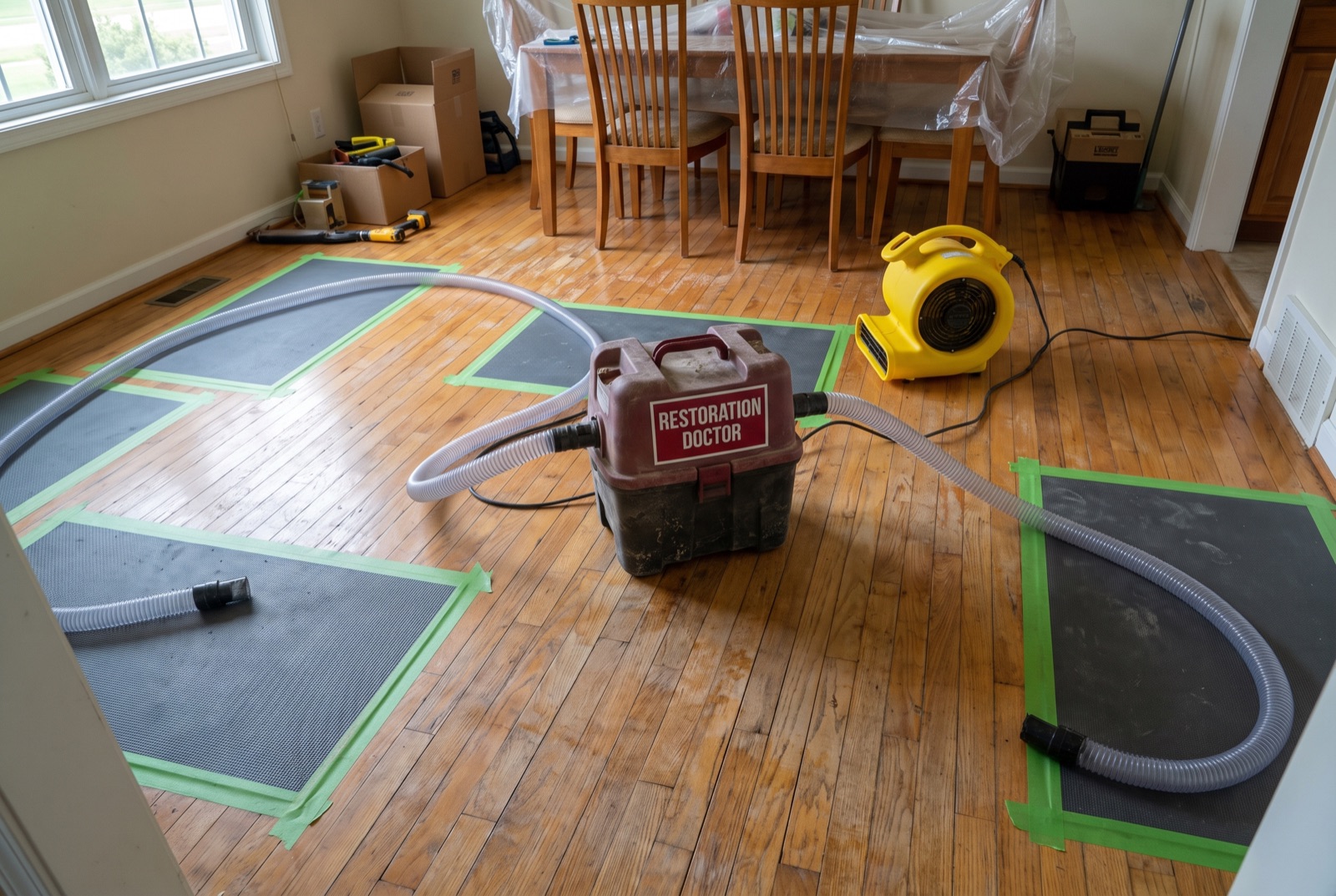
Step three: the engineered drying environment
Structural drying is applied psychrometrics — managing the relationship between air temperature, humidity, and the moisture in materials so that water continuously moves from the structure into the air and out of the building.
Air movers handle the first half: positioned at intervals around the affected area and angled along walls, they sweep the boundary layer of humid air off wet surfaces so evaporation keeps running at full rate. Low-grain refrigerant (LGR) dehumidifiers handle the second half: they strip that evaporated moisture out of the air, and unlike household units they keep extracting efficiently even as the air gets quite dry — which is precisely when the last, most stubborn bound water is coming out of materials.
The two work as a system, sized by S500 calculations to the cubic footage and class of the loss — too little dehumidification and the air movers just redistribute humidity; too little airflow and the dehumidifiers starve. The area stays closed to outside air, a point that matters enormously in the humid Mid-Atlantic.
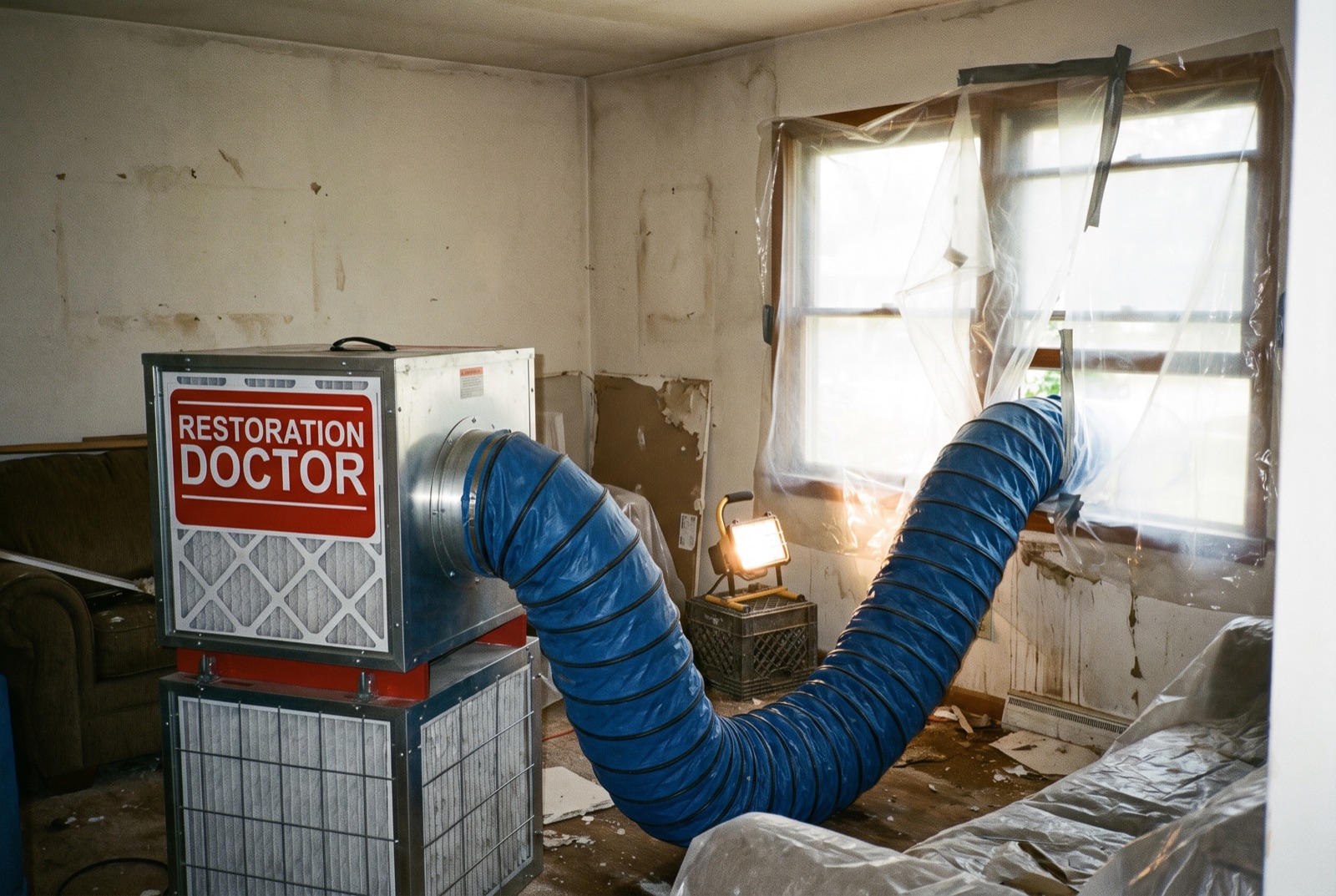
Step four: monitor daily, verify, document
From setup until completion, technicians return daily to read every monitoring point, log the numbers, and adjust — repositioning air movers as areas come dry, pulling equipment that's no longer needed, escalating (heat drying, specialty mats, injection systems) on materials that aren't trending. Drying is declared complete only when the affected materials match the dry standard established on day one.
The paper trail is part of the product: daily psychrometric readings, moisture logs, photos, and equipment records that show your insurance carrier exactly what was wet, what was done, and proof the structure reached dry standard. Restoration Doctor runs this process across Northern Virginia, Maryland, and D.C. — 24/7 dispatch at 1-888-29-FLOOD, extraction to verified-dry, fully documented.
Water Damage Restoration
Extraction, structural drying, and moisture verification for burst pipes, appliance leaks, and basement flooding.
Frequently asked
Related questions
What is structural drying?
What equipment do water restoration companies use?
How long does it take to dry out water damage?
What is the water damage restoration process step by step?
Active water, mold, fire, or sewage event?
Connect directly with the Restoration Doctor team for your region. Crews are on standby 24/7 with documented response protocols.