
What equipment do water restoration companies use?
The core kit: truck-mounted or portable extractors that remove standing water, low-grain refrigerant (LGR) dehumidifiers that strip moisture from the air, air movers that sweep wet surfaces, HEPA air scrubbers for contaminated losses, and the measurement tools — moisture meters and thermal imaging cameras — that find hidden water and prove the structure is dry.
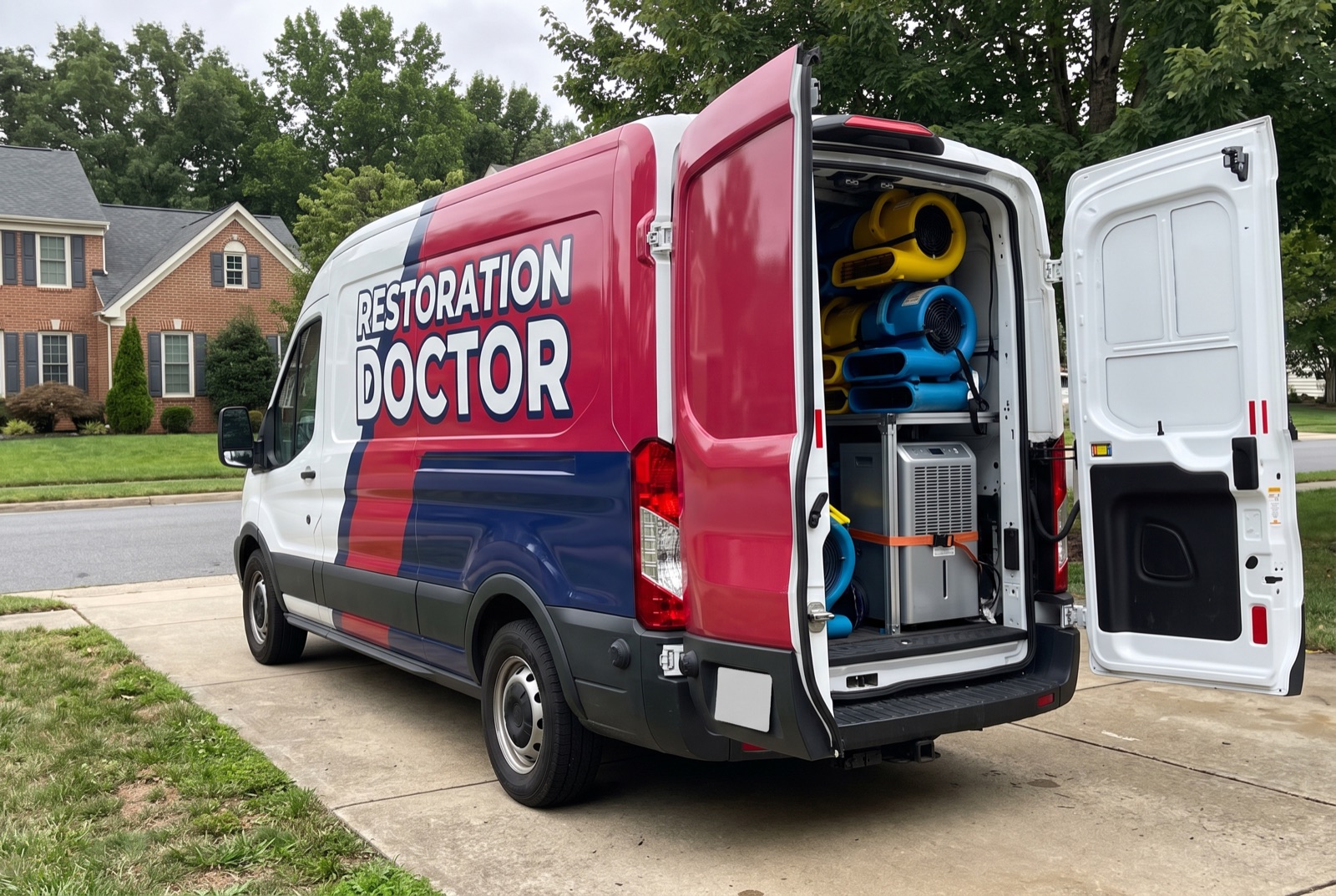
Extraction: the heavy lifters
Extraction equipment removes liquid water mechanically, and it's the most valuable hour of the whole project — every gallon extracted is a gallon that never has to be evaporated out of the structure over days. Truck-mounted extractors are the workhorses: engine-driven vacuum systems in the vehicle, delivering suction through hoses that portable units can't match, with the recovered water tanked outside your home. Portable extractors handle upper floors and spots the hose can't reach; weighted extraction wands press water out of carpet and pad; and for deep standing water, submersible pumps knock the level down before extraction finishes the job.
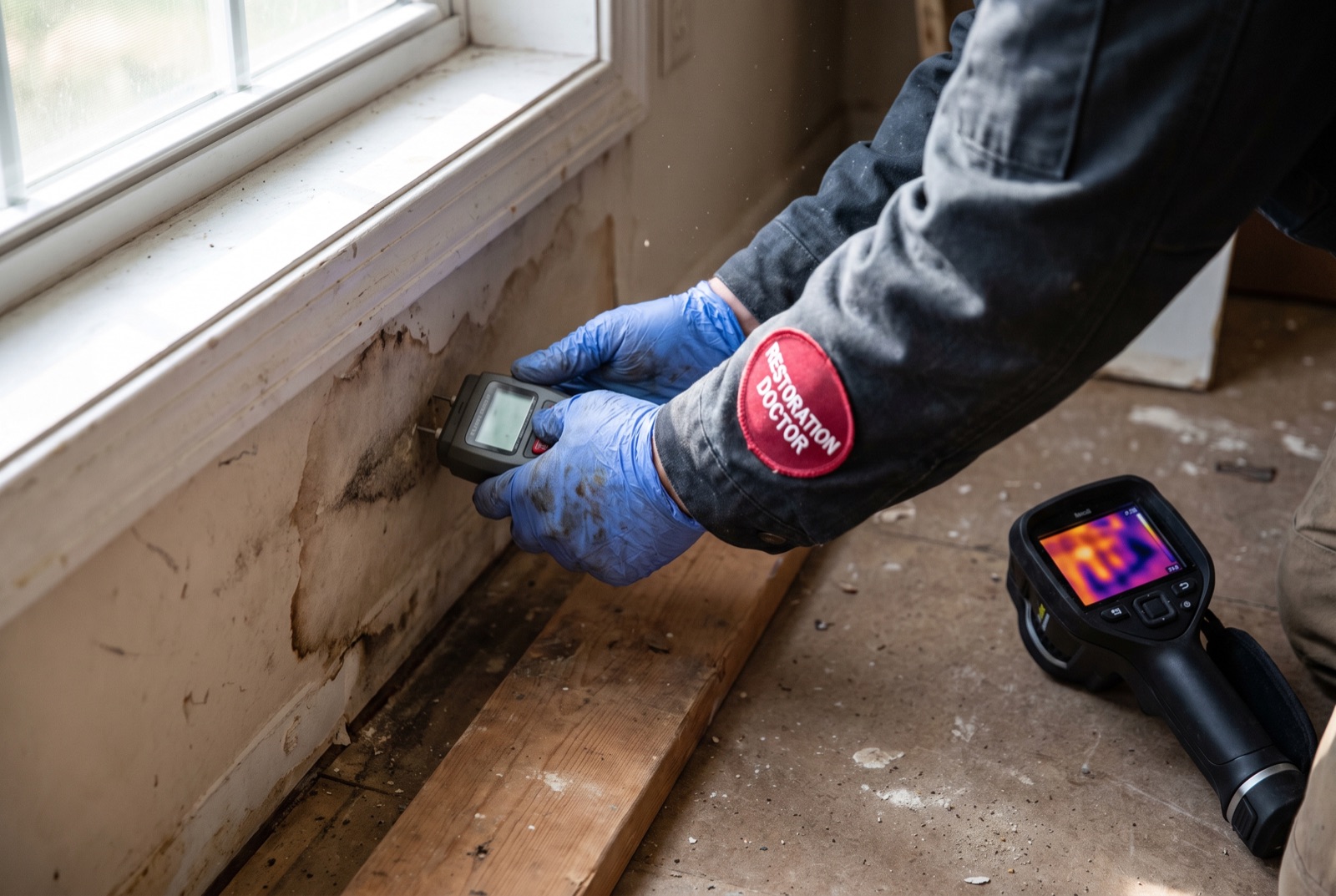
The drying system: dehumidifiers and air movers
Drying is a two-part system, and the parts only work together. Air movers — the low, loud snail-shaped fans — sweep high-velocity air across wet surfaces, constantly replacing the humid boundary layer so materials can keep evaporating. On their own they'd just relocate moisture; that's where dehumidification comes in. Low-grain refrigerant (LGR) dehumidifiers are the professional standard: refrigerant units engineered to keep extracting water even from already-dry air, wringing the moisture out and draining it away so the room's air can absorb more from the structure.
Placement is engineering, not decoration. Under IICRC S500 practice, crews calculate equipment counts from the affected area and saturation class, position air movers to sweep walls and floors at the correct angles, and adjust daily as readings come in. Specialty gear extends the system into hidden spaces: drying mats that pull moisture up through hardwood floors, and cavity-drying setups that push air inside walls through small holes behind the baseboard line.
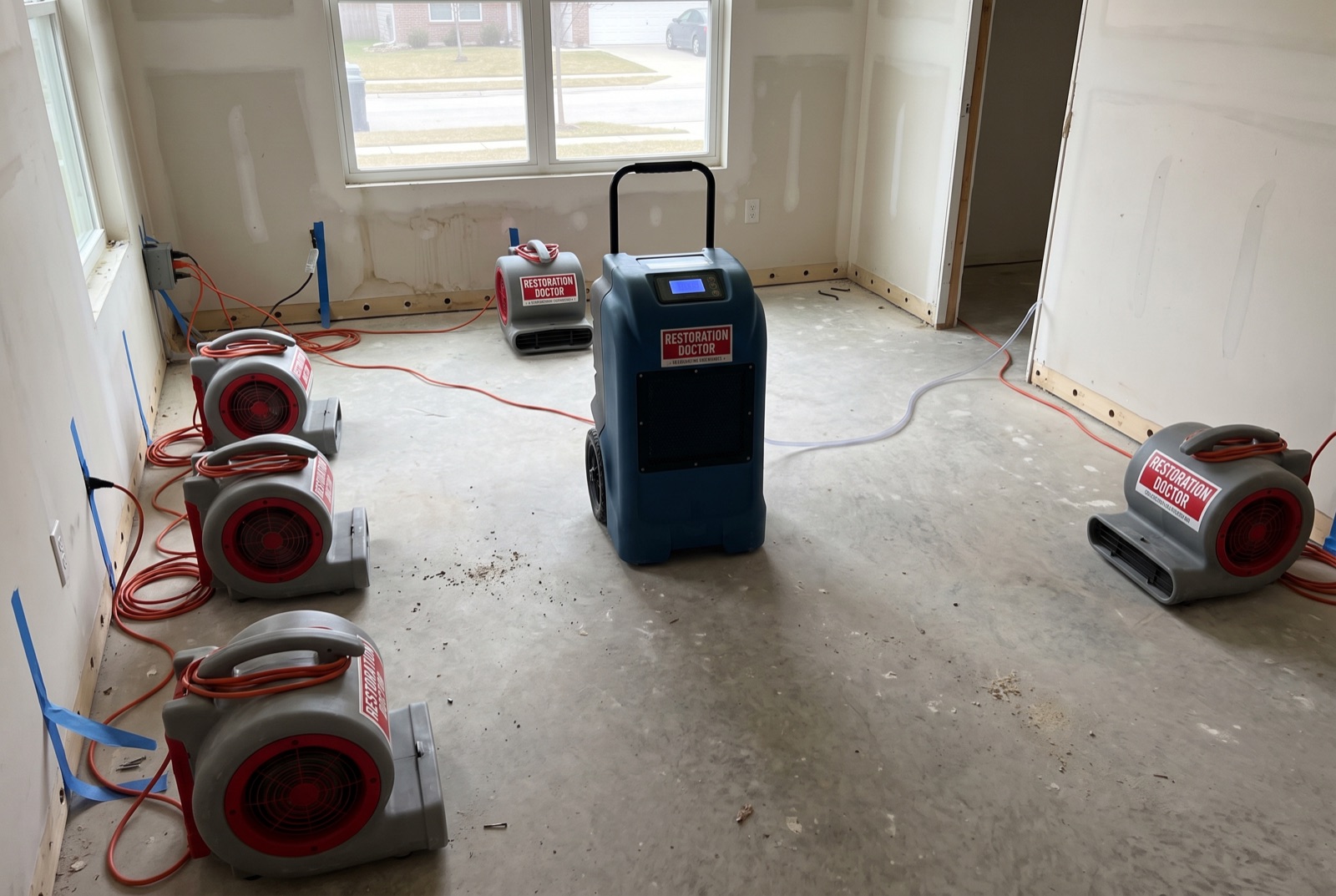
Air quality and measurement: the quiet professionals
HEPA air scrubbers run whenever contamination or demolition is in play — Category 3 losses, mold-adjacent work, or heavy dust — pulling air through fine filtration and exhausting it clean. They're what keep a sewage or mold job from spreading through the house's air.
The measurement tools are the real difference between professional and improvised drying. Penetrating and non-penetrating moisture meters read actual moisture content in drywall, wood, and subfloor; thermal imaging cameras reveal the cooling signature of evaporating water across whole walls and ceilings in seconds, catching wet areas no one would think to probe; and thermo-hygrometers track the temperature and humidity numbers that drive the psychrometric calculations behind equipment choices. Machines dry the house — the meters are how anyone knows it worked.
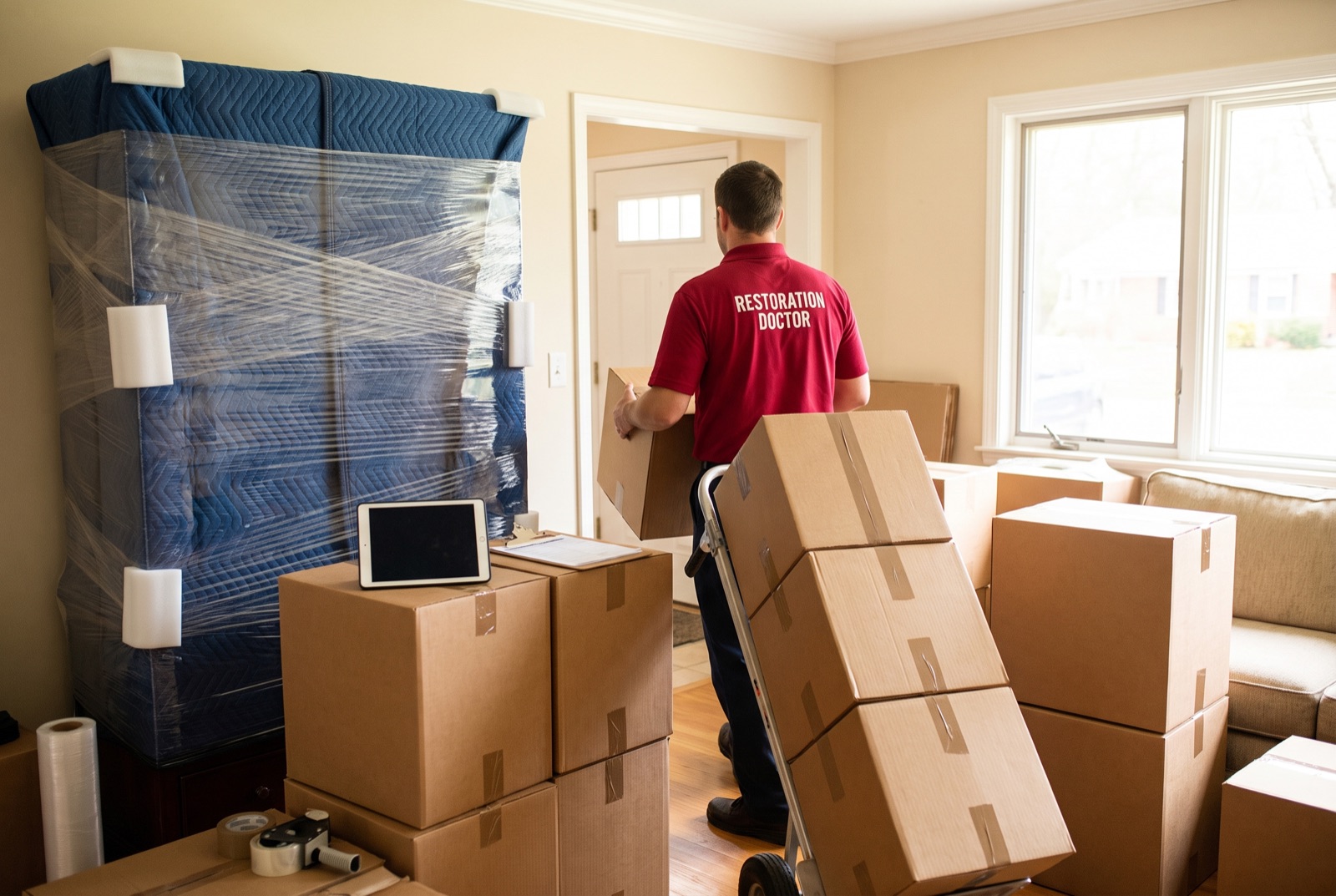
Why the equipment stays for days — and how it's justified
Homeowners meet this equipment as noise and a few days of disruption, and the natural questions are "how long" and "who pays for all this." Drying runs until measurement says done — typically three to five days — because bound moisture leaves materials slowly even under ideal conditions, and shutting the system down early lets the structure re-absorb humidity and quietly undoes the progress.
On insured losses, each machine and each day it ran is an itemized line the carrier reviews, which is why equipment logs and daily readings matter: they justify the drying bill with data. Restoration Doctor logs equipment placement and daily psychrometric readings on every loss, photographs setups in CompanyCam, and bills through itemized Xactimate scopes your adjuster can verify machine by machine, day by day. When the equipment shows up at your house, you'll know exactly what each piece is doing — and if water just showed up instead, call 1-888-29-FLOOD.
Water Damage Restoration
Extraction, structural drying, and moisture verification for burst pipes, appliance leaks, and basement flooding.
Frequently asked
Related questions
How do professionals dry out a house after water damage?
What is structural drying?
What does a water damage restoration company do?
How long does it take to dry out water damage?
Active water, mold, fire, or sewage event?
Connect directly with the Restoration Doctor team for your region. Crews are on standby 24/7 with documented response protocols.