What does a water damage restoration company do?
A water damage restoration company performs emergency water extraction, maps moisture with meters and thermal imaging, dries the structure with commercial equipment, applies antimicrobial treatment, removes unsalvageable materials, and documents everything for your insurance claim. Full-service firms also handle the rebuild — drywall, flooring, trim, and paint — back to pre-loss condition.
The emergency phase: stop the loss from growing
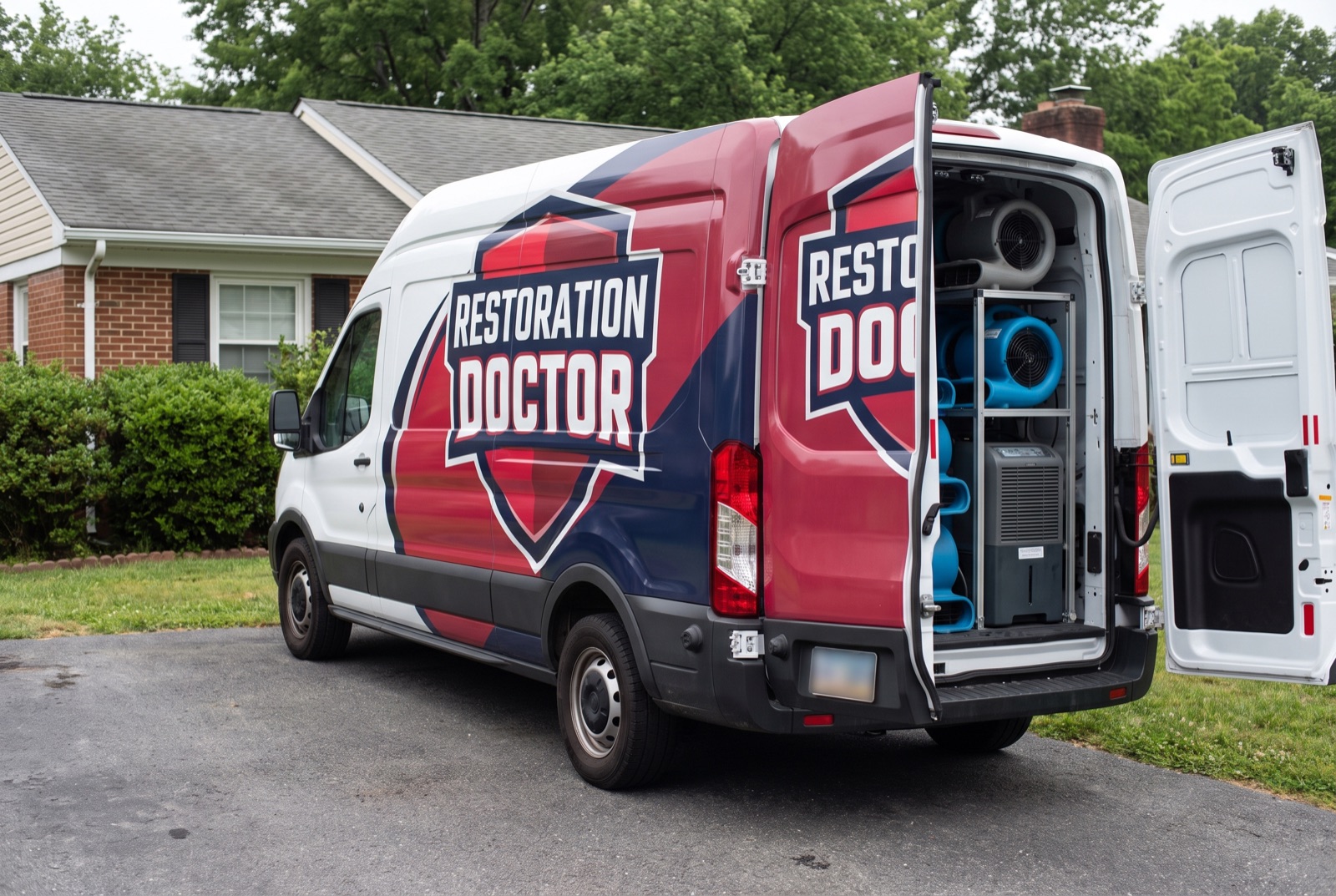
The first job is triage. A crew arriving at an active loss stabilizes it: confirming the water source is stopped, addressing safety hazards like energized fixtures in wet areas or loaded ceilings, and extracting standing water with truck-mounted or portable extractors. Extraction is the highest-leverage step in the entire process — removing liquid water mechanically is hundreds of times faster than evaporating it later, and every gallon extracted is a gallon that never soaks deeper into the structure.
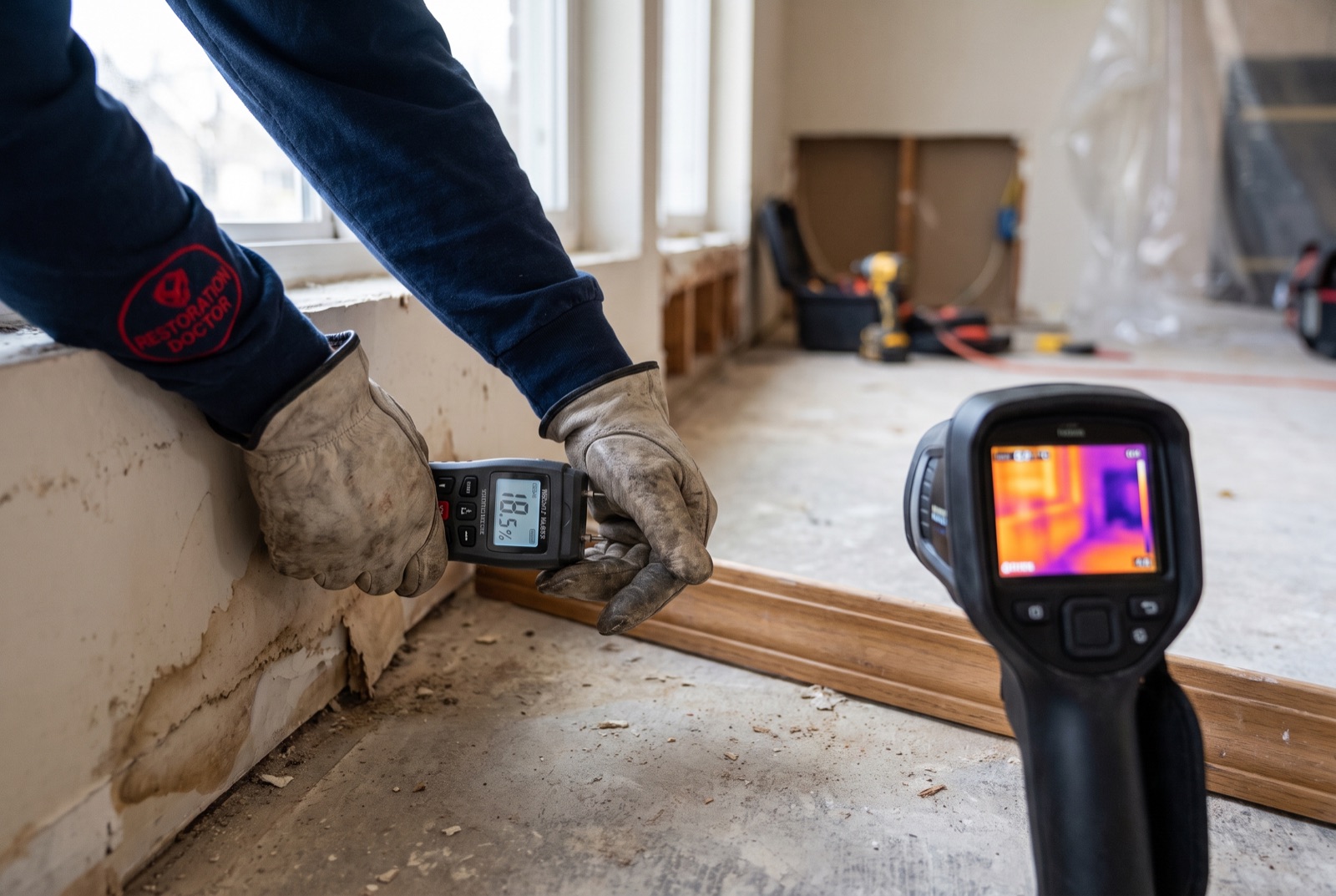
Alongside extraction comes assessment. Technicians identify the water's category under the IICRC S500 standard — clean supply water, gray water from appliances, or contaminated Category 3 water from sewage or outdoor flooding — because category determines what can be saved and what protective protocol applies. Then they map where the water actually went, using moisture meters and thermal imaging, because water always travels farther than it looks: under flooring, up drywall, along framing into adjacent rooms.
The drying phase: engineered, measured, verified
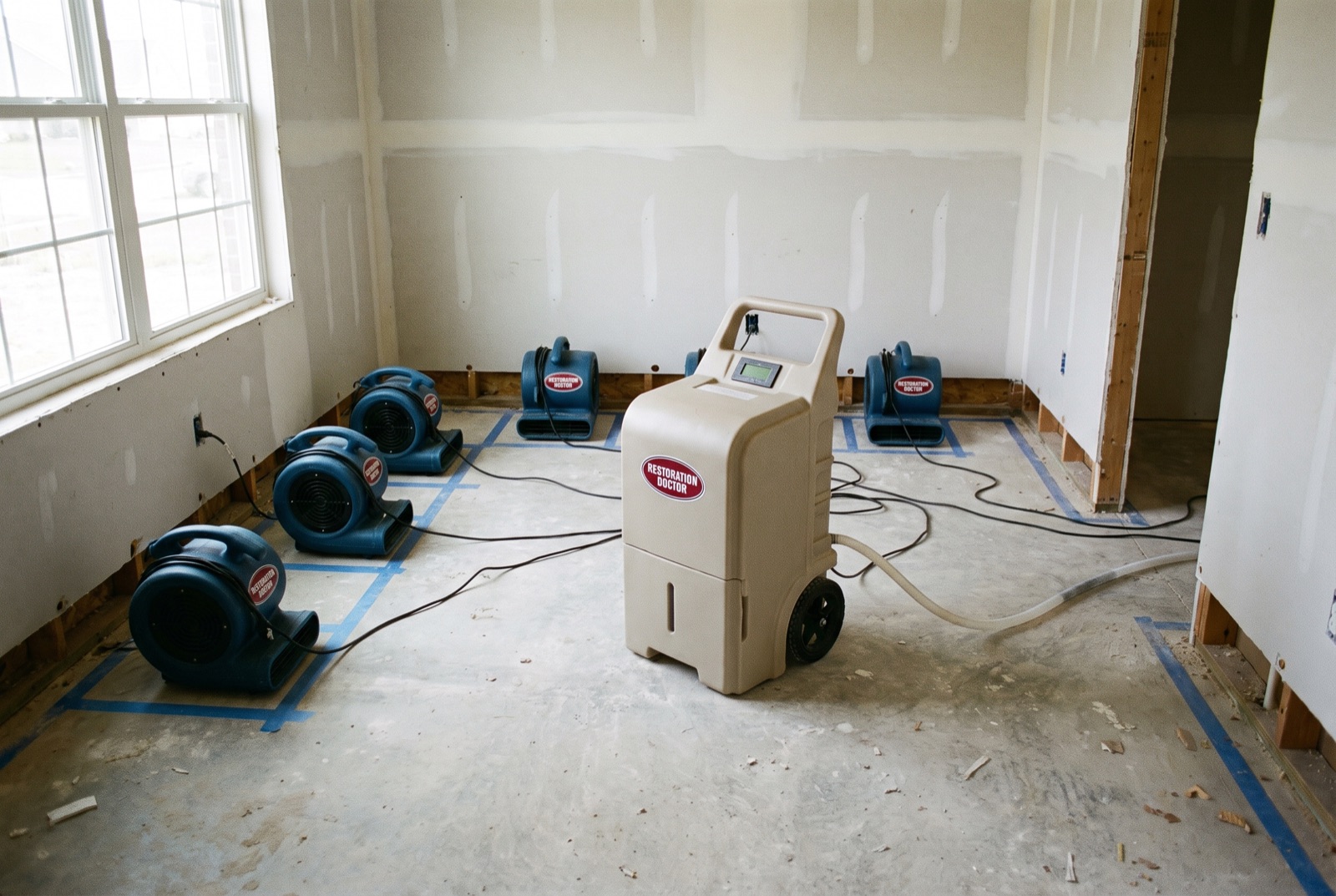
With liquid water out, the company builds a drying system: air movers positioned to sweep moist air off wet surfaces, and commercial dehumidifiers sized to the space that strip that moisture from the air. Where water entered wall cavities or under floors, crews create drying access — pulling baseboard, venting cavities, or laying specialty mats that pull moisture up through wood flooring.
What separates professional drying from fans-and-hope is verification. Technicians return daily to record moisture readings at mapped points, compare them against dry standards for each material, and reposition equipment as the wet footprint shrinks. Materials that can't be economically saved — soaked carpet pad, swollen MDF trim, saturated drywall, contaminated porous items — are removed in a controlled way, cut to clean lines that make the rebuild straightforward. Antimicrobial treatment is applied where the category or dwell time warrants it.
The documentation your claim runs on
For insured losses, the paper trail is as much of the product as the drying. A competent firm produces a photo record of the loss as found and every stage after, a moisture map with daily readings, an equipment log justifying each machine and each day it ran, and an itemized scope in the estimating format insurance carriers use. That documentation is what lets your adjuster verify the work line by line.
Restoration Doctor builds this record on every job — a CompanyCam photo trail from the first arrival photo through the final dry reading, daily drying logs, and carrier-ready itemized scopes. To be clear about roles: a restoration contractor documents and performs the mitigation your policy requires, but is not a public adjuster and doesn't negotiate or represent you with your carrier. Good documentation simply means the facts of your loss are established and verifiable.
The rebuild: back to pre-loss condition
Once the structure reaches dry standard, restoration's second half begins: replacing what was removed. Drywall is hung and finished, insulation replaced, flooring installed, trim run, and paint matched — the goal defined by the insurance concept of pre-loss condition. Full-service firms carry the job from extraction through final paint; mitigation-only firms hand off to a separate general contractor, which adds a coordination seam mid-project.
Restoration Doctor performs both phases with in-house crews across Northern Virginia, Maryland, and D.C., so the same documentation trail and accountability run from the first extraction to the last coat of paint. If you have water where it shouldn't be, call 1-888-29-FLOOD — crews dispatch 24/7.
Water Damage Restoration
Extraction, structural drying, and moisture verification for burst pipes, appliance leaks, and basement flooding.
Frequently asked
Related questions
What is the water damage restoration process step by step?
What is the difference between water mitigation and restoration?
What equipment do water restoration companies use?
Do restoration companies do the repairs too?
Active water, mold, fire, or sewage event?
Connect directly with the Restoration Doctor team for your region. Crews are on standby 24/7 with documented response protocols.