
Do restoration companies do the repairs too?
Full-service restoration companies do — they handle emergency mitigation and then rebuild everything the loss took: drywall, insulation, flooring, trim, and paint, back to pre-loss condition. Mitigation-only firms stop once the structure is dry, leaving you to hire a separate contractor for repairs. Ask which model a company runs before you hire.
Two business models, one important question
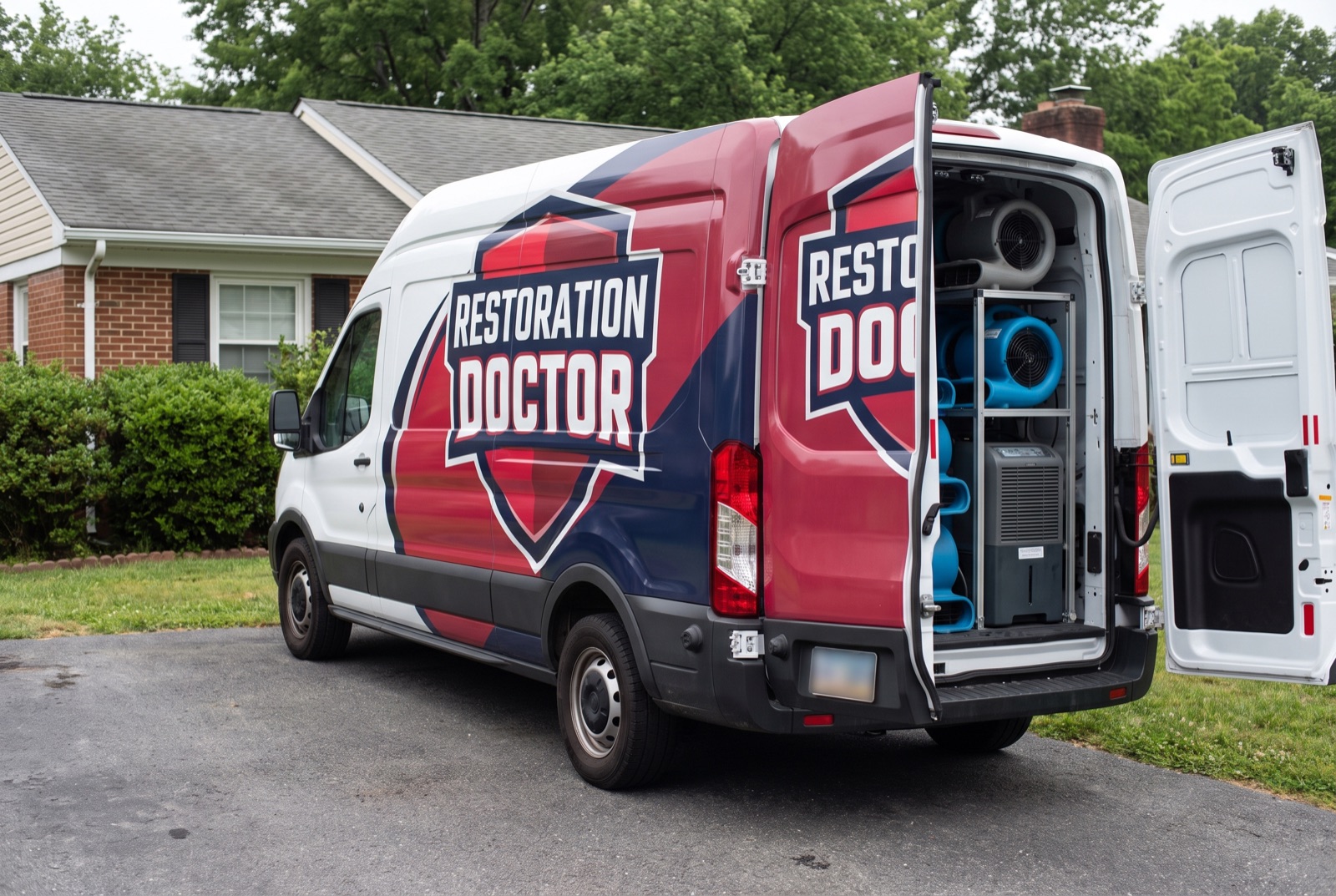
The restoration industry splits into two models. Mitigation-only firms specialize in the emergency phase — extraction, demolition, drying — and consider the job done when the moisture readings hit dry standard. Full-service firms carry the project through reconstruction: hanging and finishing drywall, replacing insulation and flooring, running trim, painting, and handing back a finished room.
Neither model is illegitimate, but they produce very different homeowner experiences. With a mitigation-only firm, "done" means a dry house with flood-cut walls, bare subfloor, and missing baseboard — and a homework assignment: find a general contractor willing to take a mid-claim insurance repair, get them up to speed, and coordinate the handoff. With a full-service firm, the crew that dried the structure rolls into rebuilding it.
Why the seam between contractors costs you
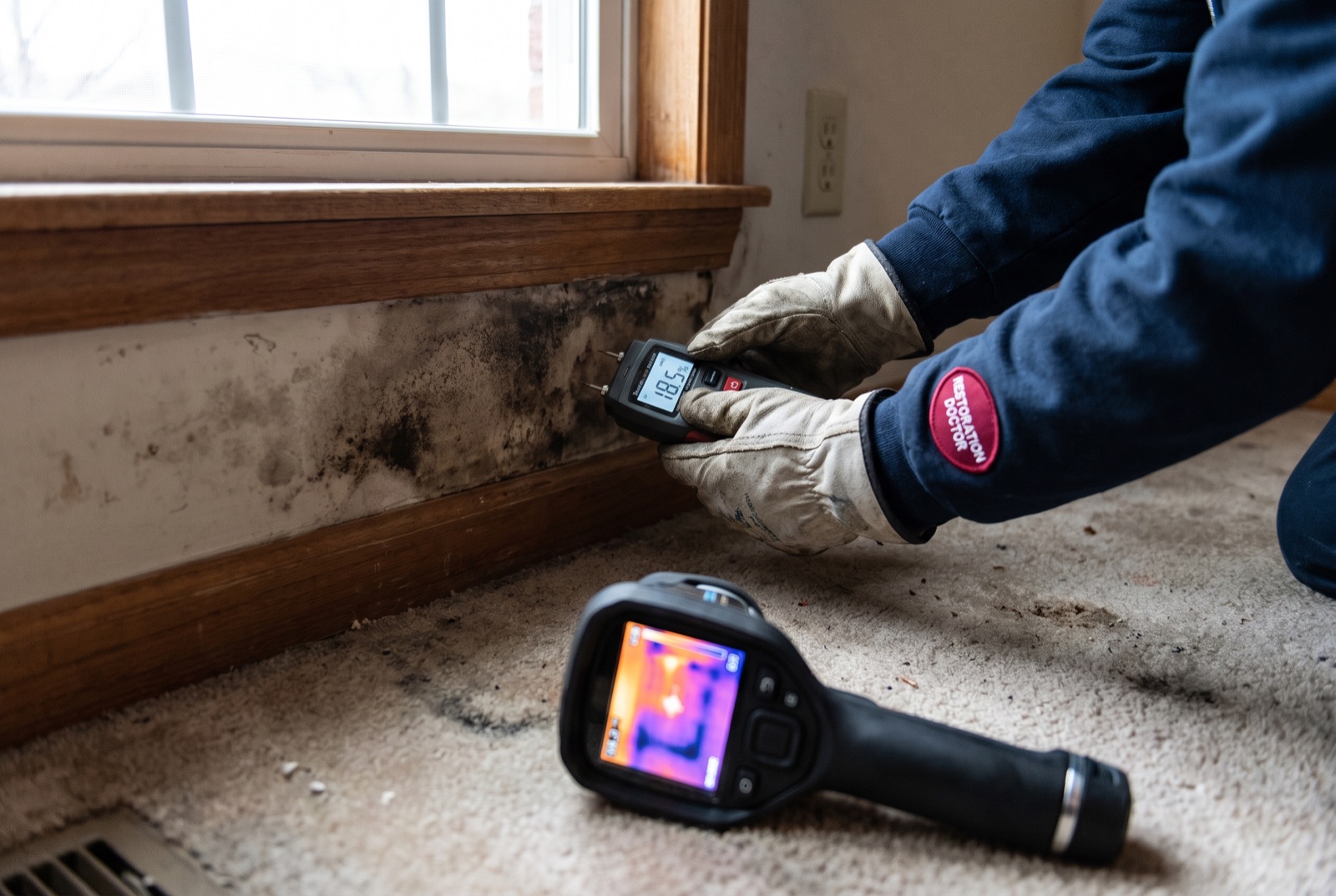
The handoff between a drying contractor and a rebuild contractor is where projects stall and details drop. The rebuild contractor wasn't there for the loss — they're scoping from someone else's photos and demolition lines, which invites disputes about what the flood cut heights were for or whether the subfloor was verified dry. Scheduling adds weeks: many general contractors treat insurance repairs as small, awkward jobs and queue them behind larger work.
There's an accountability seam too. If paint bubbles above a repaired wall six months later, the rebuild contractor points at the drying, the drying contractor points at the rebuild, and the homeowner holds the phone. One firm owning both phases means one warranty conversation and no one to point at.
How the insurance scope maps to the two phases
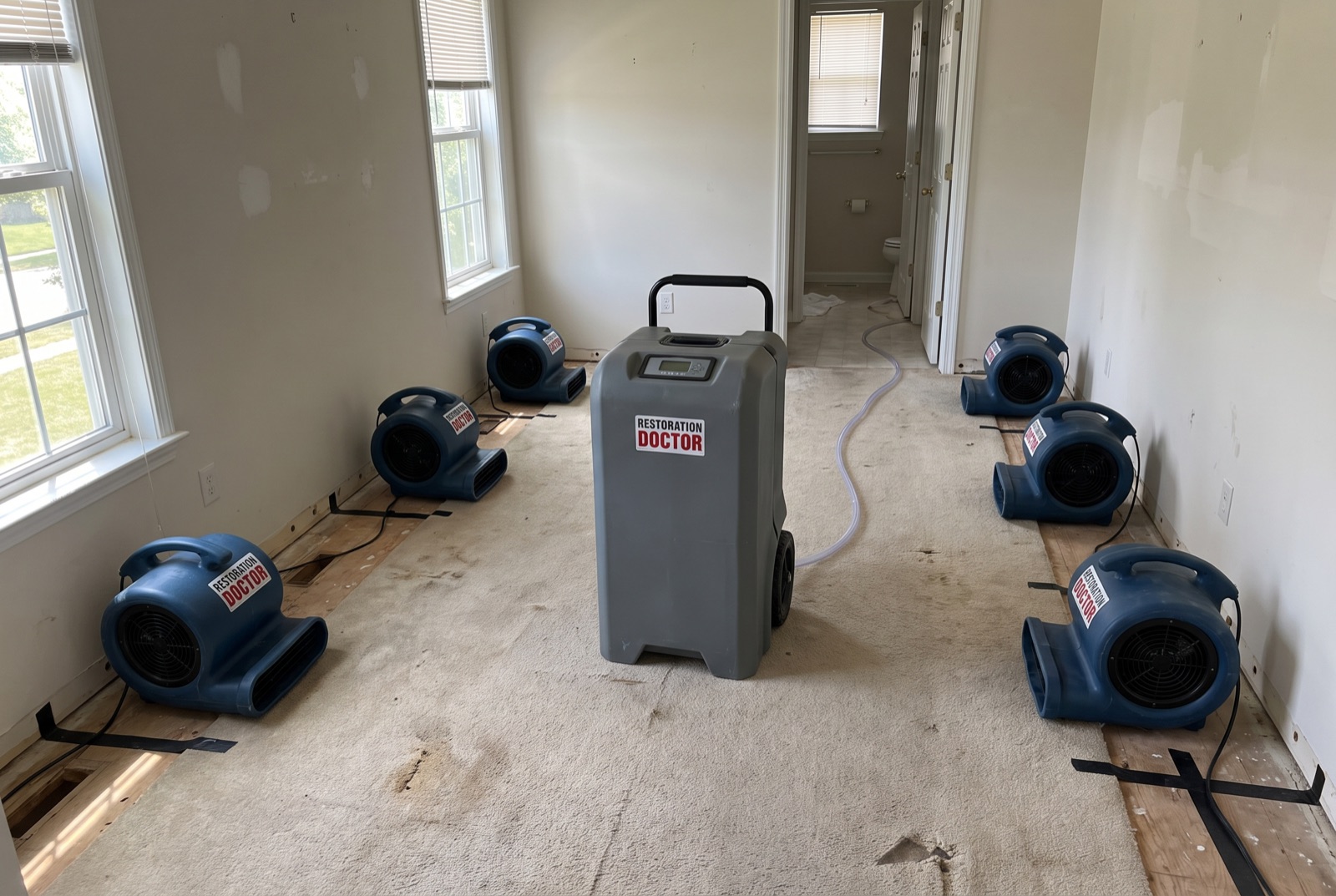
Carriers commonly scope mitigation and repairs separately — the emergency work justified by drying documentation, the rebuild priced as an itemized construction estimate. A full-service firm works both scopes from the same file: the moisture map and demolition photos that justified mitigation become the basis of the rebuild estimate, in the same Xactimate format the adjuster reviews. Continuity in the file is what keeps line items from being questioned twice.
One homeowner protection worth stating: whoever does your rebuild, the standard is pre-loss condition — including reasonable matching of finishes, like replacing flooring to a logical break so the room reads uniform. A rebuild contractor experienced in insurance work knows how to scope and document that; a general remodeler often doesn't.
What to confirm before hiring
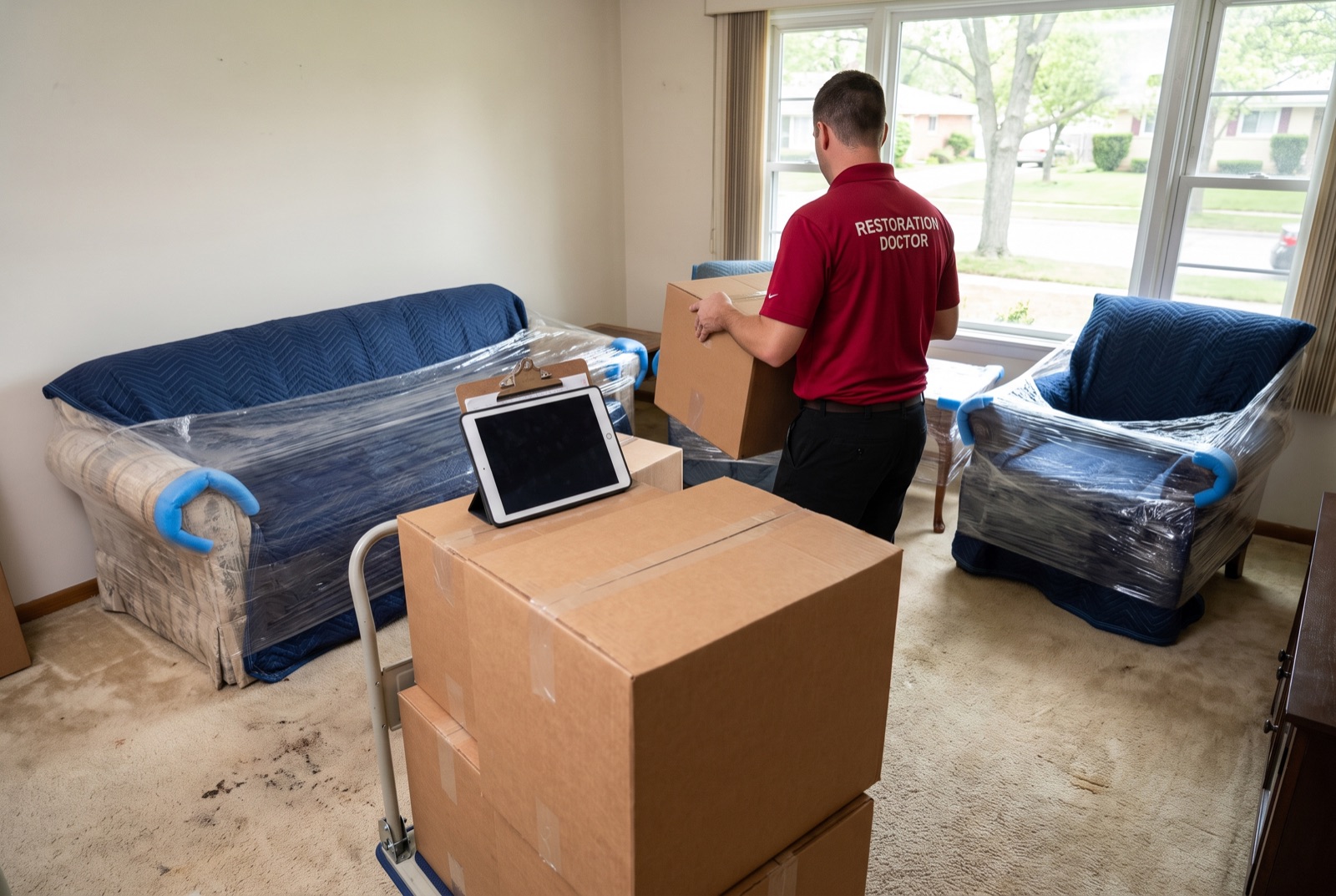
Ask directly: "Do you perform reconstruction with your own crews, and can I see a completed project?" Some firms advertise full service but subcontract the rebuild entirely — which recreates the seam inside one invoice. In-house crews for both phases mean the accountability actually is unified, not just billed that way.
Restoration Doctor is built as a full-service operation: in-house crews perform mitigation and reconstruction across Northern Virginia, Maryland, and D.C., under one documentation trail — CompanyCam photos from the first extraction through final paint, drying logs, and itemized Xactimate scopes for both phases. One call owns the whole job: 1-888-29-FLOOD.
Reconstruction & Repairs
Drywall, flooring, cabinetry, trim, and paint — the same in-house crew that dried the loss rebuilds it, with no handoff between mitigation and reconstruction.
Frequently asked
Related questions
What is the difference between water mitigation and restoration?
What is the water damage restoration process step by step?
How do I choose a water damage restoration company?
What does a water damage restoration company do?
Active water, mold, fire, or sewage event?
Connect directly with the Restoration Doctor team for your region. Crews are on standby 24/7 with documented response protocols.