
What is the water damage restoration process step by step?
Water damage restoration runs in five phases: inspection and assessment (mapping moisture and water category), water extraction, structural drying and dehumidification verified by daily readings, cleaning and antimicrobial treatment, and finally repairs and reconstruction. Emergency losses typically dry in three to five days, with rebuild time added for repairs.
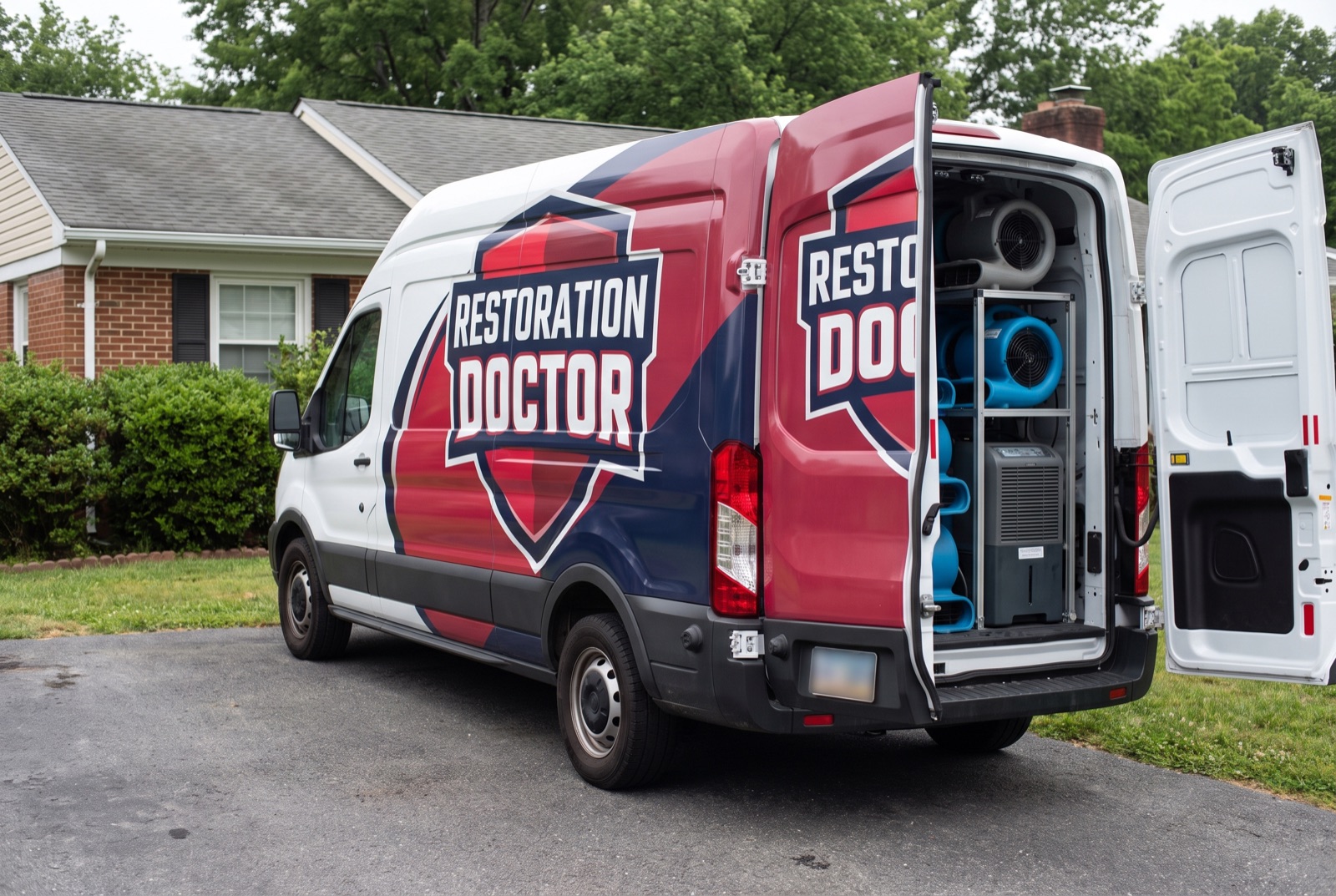
Phase 1: Inspection and assessment
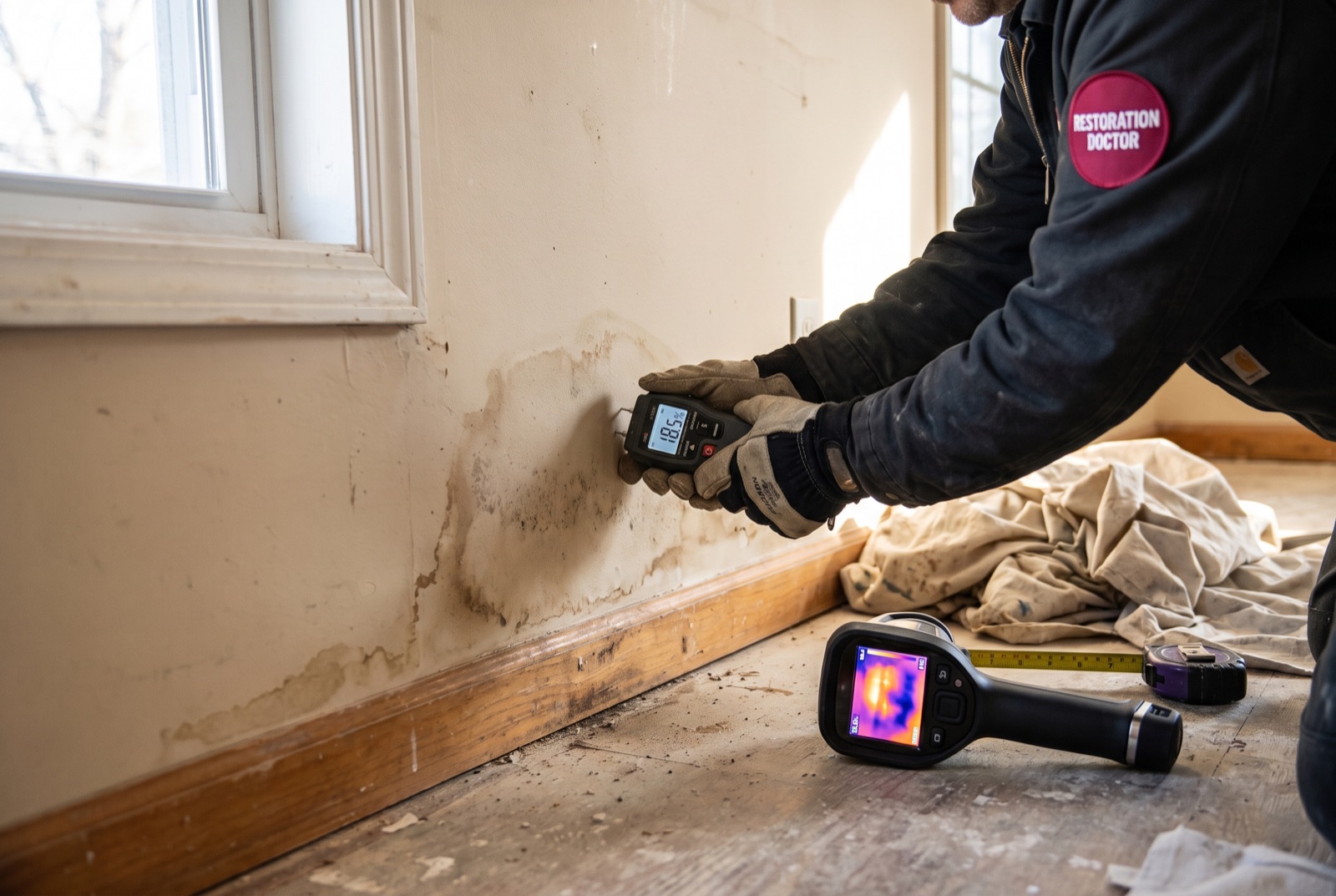
Restoration starts with understanding the loss, not with equipment. Technicians confirm the source is stopped, identify the water's category under the IICRC S500 standard — Category 1 clean supply water, Category 2 gray water, or Category 3 contaminated water from sewage or outdoor flooding — because category governs safety protocol and what can be saved. Then they map the moisture: meters and thermal imaging trace where water actually traveled, which is reliably farther than it looks — up walls, under flooring, into adjacent rooms.
This first visit also starts the documentation: photos of the loss as found, the initial moisture map, and the scope of affected materials. On an insured loss, this arrival record is the foundation of the entire claim — it establishes the loss's condition before anything was touched.
Phase 2: Extraction — and Phase 3: Drying
Extraction removes liquid water mechanically with truck-mounted or portable extractors and, for deep standing water, submersible pumps. It's the highest-leverage step in restoration: extraction removes water hundreds of times faster than evaporation, and every gallon extracted is drying time the structure never has to endure. Unsalvageable materials — soaked carpet pad is the classic — come out now, while wet.
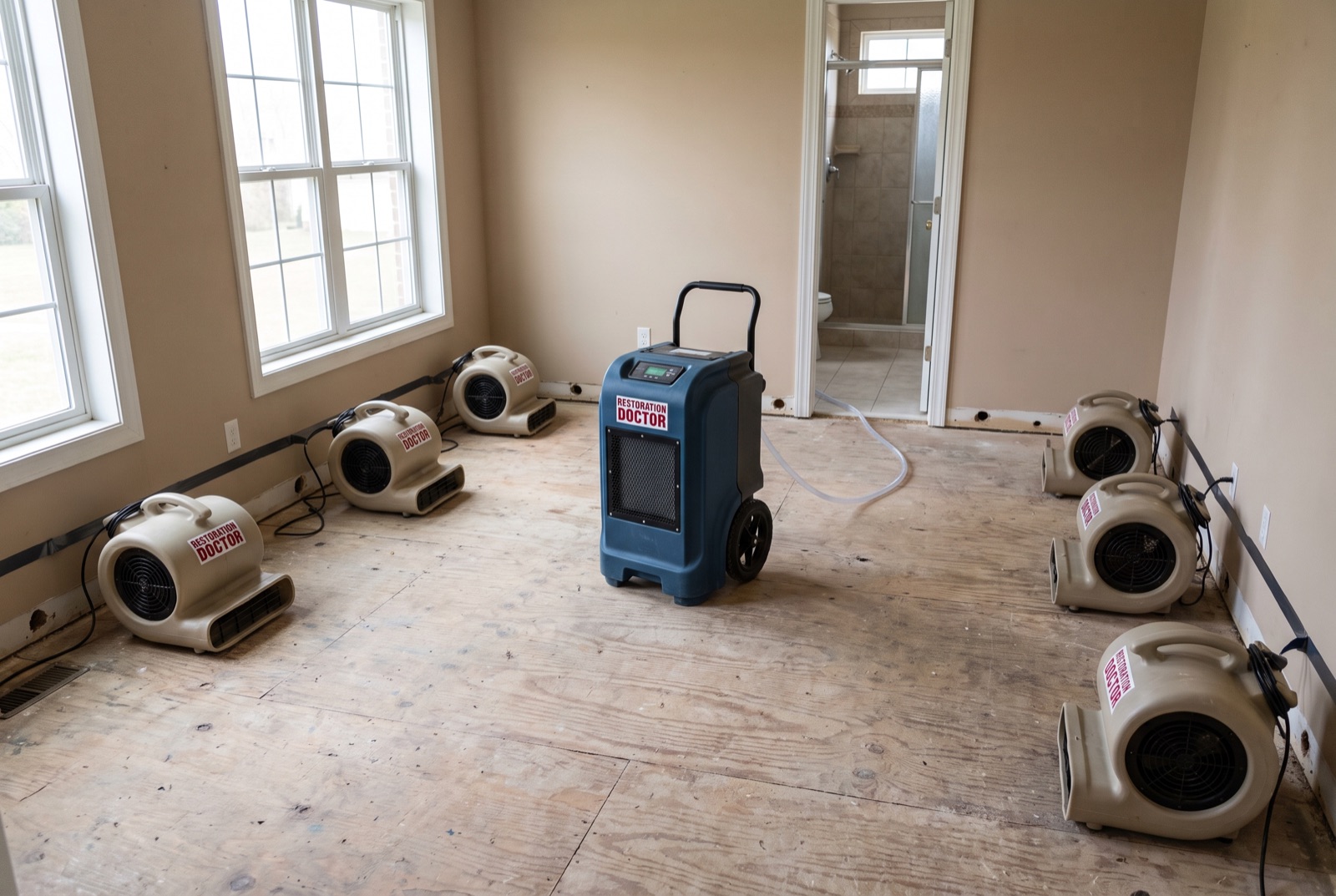
Drying is where the science lives. Crews build a closed drying system: air movers sweeping moist air off wet surfaces, commercial low-grain dehumidifiers pulling that moisture out of the air, positioned according to S500 psychrometric practice. Wall cavities get vented behind baseboard lines; hardwood gets specialty drying mats. Then the defining discipline: technicians return daily, record moisture readings at mapped points, compare against dry standards for each material, and adjust equipment until the numbers — not the look or feel — say the structure is dry. Typical structural drying runs three to five days.
Phase 4: Cleaning and sanitizing
Once dry (or during removal for contaminated losses), the affected areas are cleaned and treated. For Category 1 losses this may be modest — cleaning affected surfaces and applying antimicrobial treatment where dwell time warrants it. For Category 2 and 3 losses it's central: contaminated porous materials are removed and disposed of, remaining surfaces are cleaned and disinfected, and air scrubbers with HEPA filtration run during the work. Contents get triaged — cleaned and restored where possible, documented and listed where not.
Odor tells you whether this phase worked: a properly dried and cleaned structure smells normal. Persistent mustiness after "completion" means moisture or contamination was missed, and it's worth raising before the rebuild closes anything in.
Phase 5: Repairs and reconstruction
The final phase replaces what the loss took: drywall hung and finished at the flood-cut lines, insulation replaced, flooring installed, trim run, and paint matched — the target being pre-loss condition. Depending on scope this runs from a couple of days for a drywall-and-paint repair to several weeks for multi-room losses with flooring.
The handoff between drying and rebuild is where projects with two contractors often stall; full-service firms eliminate the seam. Restoration Doctor runs all five phases with in-house crews across Northern Virginia, Maryland, and D.C., under one documentation trail — CompanyCam photos from arrival through final paint, daily drying logs, and itemized Xactimate scopes. To start at phase one tonight, call 1-888-29-FLOOD.
Water Damage Restoration
Extraction, structural drying, and moisture verification for burst pipes, appliance leaks, and basement flooding.
Frequently asked
Related questions
What does a water damage restoration company do?
What is the difference between water mitigation and restoration?
How do professionals dry out a house after water damage?
How long does water damage restoration take?
Active water, mold, fire, or sewage event?
Connect directly with the Restoration Doctor team for your region. Crews are on standby 24/7 with documented response protocols.